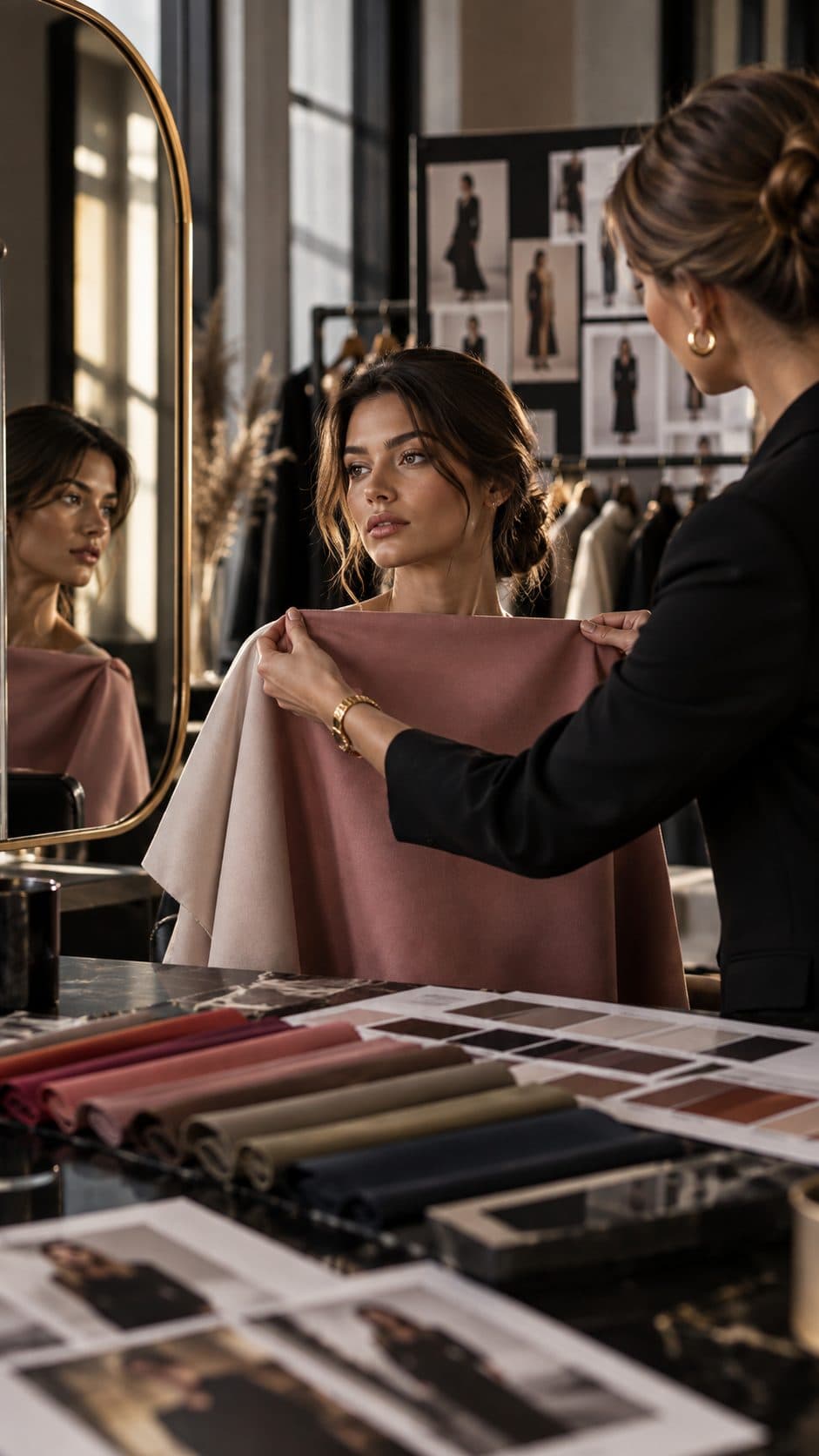
Crepe fabric
A weave: wool, silk, polyester or viscose. Highly twisted yarns give a grainy, crinkled surface.
How it feels
Pebbly, matte, drapey.
Season: All year round – depends on the weight.
What it's used for
Suits, dresses, trousers, blouses.
Office dresses, suits and wide trousers – drapes well and stays crease-free all day.
Pros
- Hides creases well
- Drapes elegantly
Cons
- Can shrink in the wash
Care: a typical label
Always follow your own garment's label – blends and finishes change the care.
How it's constructed
Crêpe weave. Highly twisted yarns pull the cloth into a grainy, matte surface that drapes well and hides creases.
A little history
Crêpe was the mourning cloth of Victorian England; later it became the base of elegant suits and dresses.
How to recognise it
Read the surface: diagonal lines mean twill, shiny and slippery means satin, a raised nap means pile, sideways stretch means a knit.
Sustainability
A weave's footprint depends on the fibre it's made from – check the composition on the label.
When buying
The same weave behaves differently in different fibres: silk and polyester satin look alike, but only silk breathes. Always read the composition.
Frequently asked
01What is crepe?
A weave: wool, silk, polyester or viscose. Highly twisted yarns give a grainy, crinkled surface.
02Is crepe a natural fabric?
It's a weave or knit – whether it's natural depends on the fibre it's made from.
03Does crepe shrink?
It can: crepe may shrink about 3–5% the first time it's washed hot. Cool water and no dryer prevent it.
04Is crepe breathable?
Moderately: it depends on the weave – open crepe breathes far better than dense.