Chiffon fabric
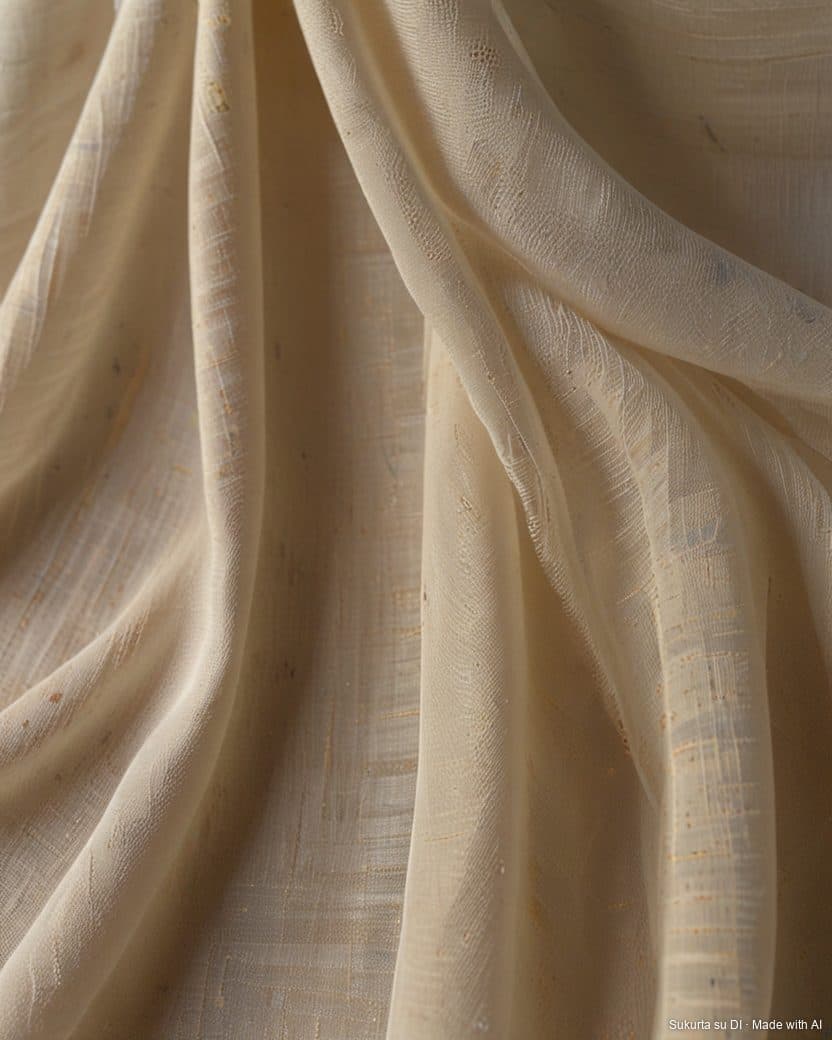
A weave: silk, polyester or nylon. A very fine, sheer plain weave of tightly twisted (crêpe) yarns, which gives it a slight grain.
How it feels
Featherlight, sheer and floaty.
Season: Summer and hot days – it keeps you cool.
What it's used for
Evening and bridal gowns, blouses, scarves.
Layered gowns, floaty blouses and scarves. Wear with a lining or slip underneath.
Pros
- Floats beautifully
Cons
- Tears easily and is hard to sew
- Needs lining
Care: a typical label
Always follow your own garment's label – blends and finishes change the care.
How it's constructed
Sheer open weave. Very fine yarns, openly woven – sheer and light, but fragile.
A little history
Chiffon was originally silk only; nylon chiffon arrived in 1938 and polyester chiffon in 1958.
How to recognise it
Read the surface: diagonal lines mean twill, shiny and slippery means satin, a raised nap means pile, sideways stretch means a knit.
Sustainability
A weave's footprint depends on the fibre it's made from – check the composition on the label.
When buying
The same weave behaves differently in different fibres: silk and polyester satin look alike, but only silk breathes. Always read the composition.
Frequently asked
01What is chiffon?
A weave: silk, polyester or nylon. A very fine, sheer plain weave of tightly twisted (crêpe) yarns, which gives it a slight grain.
02Is chiffon a natural fabric?
It's a weave or knit – whether it's natural depends on the fibre it's made from.
03Does chiffon shrink?
A little: chiffon can shrink 1–2%, mostly in the first wash.
04Is chiffon breathable?
Yes: chiffon lets air through and absorbs moisture – cool in the heat.