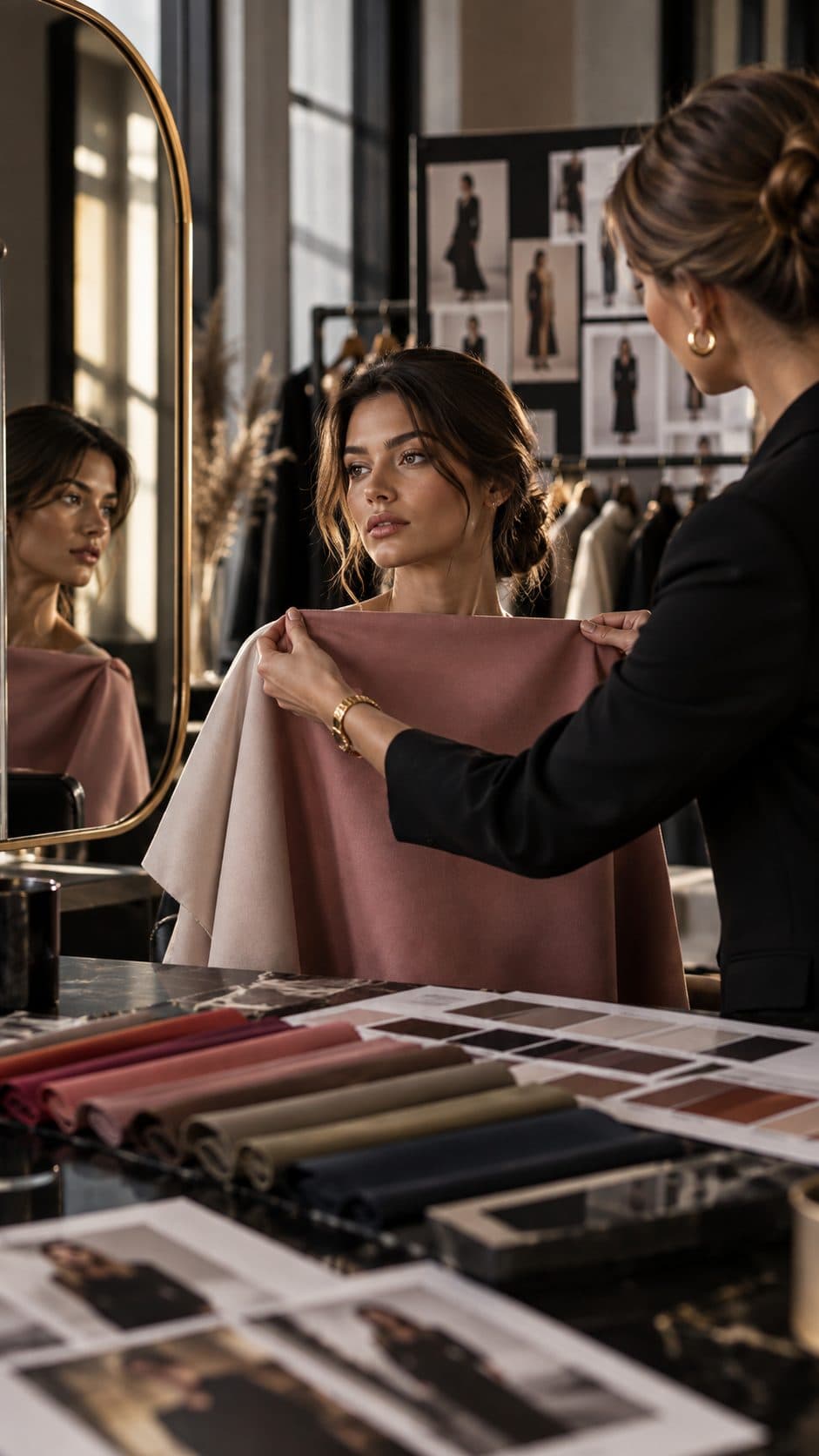
Taffeta fabric
A weave: silk, polyester or acetate. A tight plain weave of lustrous yarns that rustles as it moves.
How it feels
Crisp, stiff and rustling.
Season: Spring and autumn; next to skin it can feel stuffy in the heat.
What it's used for
Ball gowns, party dresses, skirts.
Sculptural party dresses and skirts – when you want volume and rustle.
Pros
- Holds a sculptural shape
Cons
- Creases and water marks
Care: a typical label
Always follow your own garment's label – blends and finishes change the care.
How it's constructed
Plain weave. The simplest weave: each thread goes over one, under one. Strong, matte, the same on both sides, but creases more easily.
A little history
From the Persian 'tāftah' – 'twisted'. Taffeta rustled through 18th-century courts and 1950s ball gowns.
How to recognise it
Read the surface: diagonal lines mean twill, shiny and slippery means satin, a raised nap means pile, sideways stretch means a knit.
Sustainability
A weave's footprint depends on the fibre it's made from – check the composition on the label.
When buying
The same weave behaves differently in different fibres: silk and polyester satin look alike, but only silk breathes. Always read the composition.
Frequently asked
01What is taffeta?
A weave: silk, polyester or acetate. A tight plain weave of lustrous yarns that rustles as it moves.
02Is taffeta a natural fabric?
It's a weave or knit – whether it's natural depends on the fibre it's made from.
03Does taffeta shrink?
A little: taffeta can shrink 1–2%, mostly in the first wash.
04Is taffeta breathable?
Only so-so: taffeta doesn't absorb moisture, it moves it along – fine for sport, less so next to skin on a hot day.