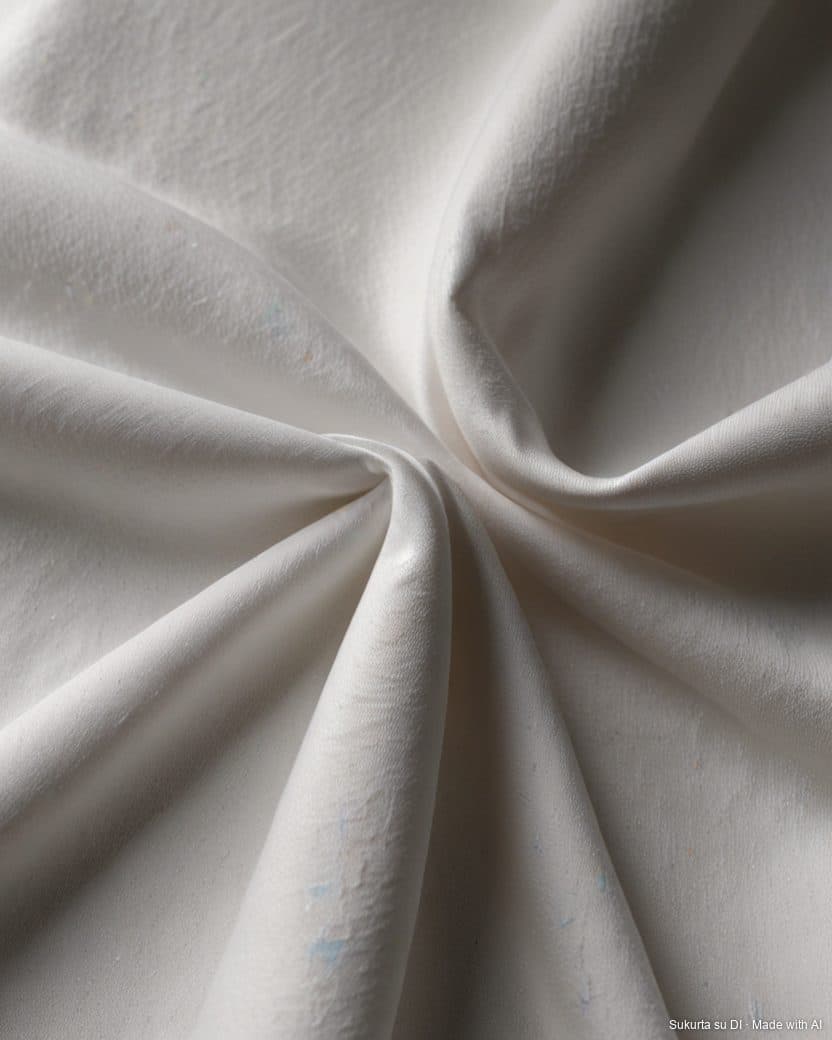
Cotton fabric
The fluffy fibre around cotton plant seeds. The fibre is combed, spun into yarn and woven or knitted. Long staples (Pima, Egyptian) are softer and stronger.
How it feels
Cool, dry and kind to skin; softens with age.
Season: All year round – depends on the weight.
What it's used for
T-shirts, shirts, jeans, underwear, bedding.
The wardrobe basics: a white tee, an Oxford shirt, chinos. Crisp poplin reads polished, jersey reads casual.
Pros
- Breathes and absorbs moisture
- Hypoallergenic, good for sensitive skin
- Washes easily, even hot
Cons
- Creases
- Shrinks in heat, especially jersey
- Slow to dry
Care: a typical label
Always follow your own garment's label – blends and finishes change the care.
How it's constructed
Plain weave. The simplest weave: each thread goes over one, under one. Strong, matte, the same on both sides, but creases more easily.
A little history
Cotton has been grown for 7,000 years, from the Indus Valley to Peru. In the 18th century, cotton-spinning machines set off the Industrial Revolution.
How to recognise it
Plant fibres are matte and cool to the touch, crease when you squeeze them and soak up a drop of water fast. They burn smelling of paper and leave grey ash.
Sustainability
Biodegradable. Cotton needs a lot of water and pesticide (organic far less); linen and hemp need little.
When buying
Look at density and staple length: denser, long-staple cloth shrinks less and lasts longer. Labels: GOTS (organic), OEKO-TEX (tested for harmful substances).
Compare it
Frequently asked
01What is cotton?
The fluffy fibre around cotton plant seeds. The fibre is combed, spun into yarn and woven or knitted. Long staples (Pima, Egyptian) are softer and stronger.
02Is cotton a natural fabric?
Yes – a natural plant fibre.
03Does cotton shrink?
Yes – cotton shrinks in hot water and the dryer, especially as a knit. Wash at 30 °C and dry without heat.
04Is cotton breathable?
Very well: cotton is one of the most breathable fabrics – the coolest choice for hot weather.