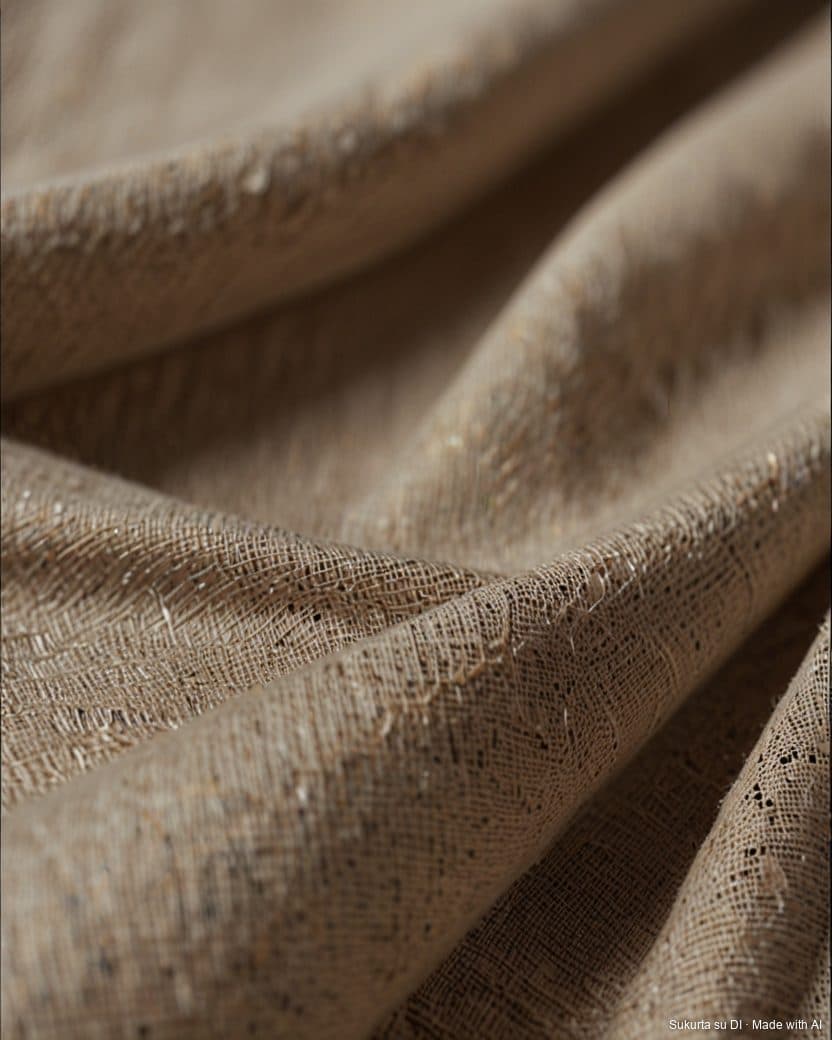
Linen fabric
Fibre from the stalks of the flax plant. The stalks are retted, broken and combed, and the long fibres spun. One of the oldest fabrics in the world, and a Lithuanian tradition.
How it feels
Cool, dry and slightly crisp – softens with every wash.
Season: Summer and hot days – it keeps you cool.
What it's used for
Summer shirts, trousers, dresses, jackets, bedding.
Creases are linen's charm – don't over-dry it and wear it loose. Pair with leather sandals, straw bags and natural colours.
Pros
- The best fabric for hot weather
- Very strong and long-lasting
- Grown with little water
Cons
- Creases a lot
- Can shrink 3–5% the first time
Care: a typical label
Always follow your own garment's label – blends and finishes change the care.
How it's constructed
Plain weave. The simplest weave: each thread goes over one, under one. Strong, matte, the same on both sides, but creases more easily.
A little history
Linen was woven in ancient Egypt, and in Lithuania it is one of the oldest crafts – linen towels and tablecloths are handed down for generations.
How to recognise it
Plant fibres are matte and cool to the touch, crease when you squeeze them and soak up a drop of water fast. They burn smelling of paper and leave grey ash.
Sustainability
Biodegradable. Cotton needs a lot of water and pesticide (organic far less); linen and hemp need little.
When buying
Look at density and staple length: denser, long-staple cloth shrinks less and lasts longer. Labels: GOTS (organic), OEKO-TEX (tested for harmful substances).
Frequently asked
01What is linen?
Fibre from the stalks of the flax plant. The stalks are retted, broken and combed, and the long fibres spun. One of the oldest fabrics in the world, and a Lithuanian tradition.
02Is linen a natural fabric?
Yes – a natural plant fibre.
03Does linen shrink?
It can: linen may shrink about 3–5% the first time it's washed hot. Cool water and no dryer prevent it.
04Is linen breathable?
Very well: linen is one of the most breathable fabrics – the coolest choice for hot weather.