
Business professional for men: what to wear
A suit + shirt + tie (usually) + leather shoes.
Banks, law and consulting firms, job interviews, client presentations.
- When
- Working hours
- Tie
- Depends
- Jeans
- No
- Sneakers
- No
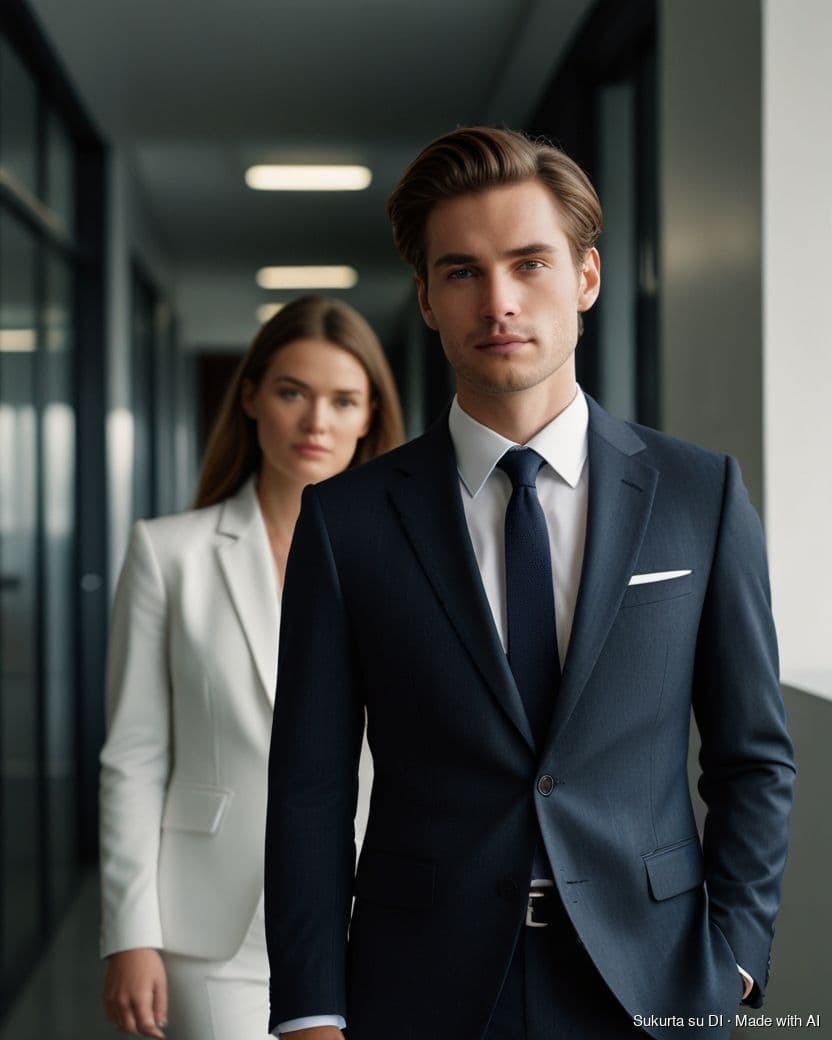
Three outfit ideas
Everyday
A grey suit, white shirt, tie and brown derbies.
Blazer
A navy blazer, grey wool trousers, shirt and tie.
Client day
A navy suit, light blue shirt and silk tie.
What to wear
- Suits, or blazers with wool trousers
- Classic dress shirts
Shoes
Oxfords, derbies.
Accessories
A belt, a watch.
What to avoid
- Polo shirts, jeans
Colours
Neutrals: navy, grey, beige, black.
In summer
In summer: lightweight suits, short-sleeved blouses under a jacket.
In winter
In winter: wool suits, fine knits under a jacket, knee boots for women.
Details that make the difference
- Belt and shoes in the same leather colour; a simple watch on leather or metal.
- Your collar should sit close: one finger's room between collar and neck.
- The tie tip should reach the belt buckle – no higher, no lower.
- Without a tie, undo only the top button.
About business professional
Everyday dress in a traditional office: a suit or blazer with trousers/skirt, a shirt, leather shoes. The term arose in the US workplace to separate traditional office dress from business casual, which spread in the 1990s.
Business formal for men
A dark suit + white or light-blue shirt + silk tie + black oxfords.
Business casual for men
Chinos or wool trousers + a collared shirt + (blazer or knit) + leather shoes or loafers. No tie needed.
Other codes for men
Frequently asked
01Business professional: is a tie required?
Optional, but safer with one – it's easier to take off than to put on.
02Business professional: are jeans OK?
No – jeans are too casual for this code; choose tailored trousers.
03Business professional: are sneakers OK?
No – choose leather shoes.
04Does business professional require a tie?
Usually yes, especially with clients, though many offices drop it day to day.