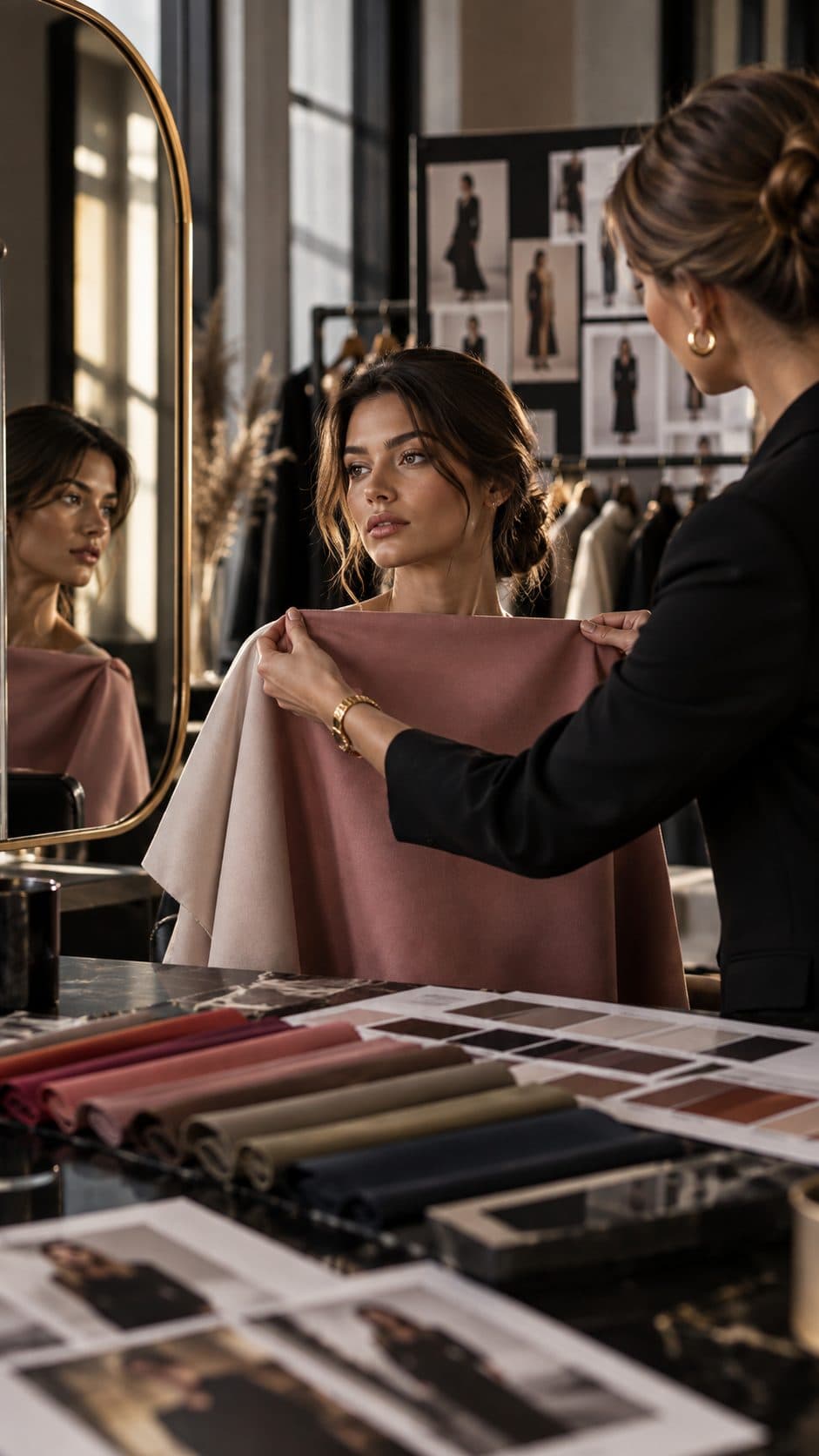
Bamboo fabric fabric
Bamboo cellulose. Most 'bamboo' clothing is bamboo viscose – made by the same chemical process as viscose. Mechanically processed 'bamboo linen' is rare.
How it feels
Very soft and cool.
Season: Summer and hot days – it keeps you cool.
What it's used for
Socks, underwear, baby clothes, pyjamas.
Socks, underwear, baby clothes and pyjamas – where softness matters most.
Pros
- Soft and breathable
Cons
- The eco claims are often overstated – it's viscose
- Shrinks
Care: a typical label
Always follow your own garment's label – blends and finishes change the care.
How it's constructed
Knit. One yarn interlocked in loops – so the fabric stretches sideways and creases less, but can stretch out.
A little history
Bamboo fabrics took off in the 2000s as 'eco'; US and EU regulators have fined brands for misleading labels.
How to recognise it
Regenerated fibres are smooth, slightly lustrous, very drapey and cool to the touch. Noticeably weaker when wet. They burn smelling of paper, like cotton.
Sustainability
Renewable and biodegradable, but viscose production is chemical-heavy. Lyocell (Tencel) is made in a closed loop – the cleanest choice. Look for FSC or Lenzing EcoVero.
When buying
'Bamboo' on a label usually means viscose. Modal and lyocell shrink less than plain viscose – worth paying more for clothes you wash often.
Frequently asked
01What is bamboo fabric?
Bamboo cellulose. Most 'bamboo' clothing is bamboo viscose – made by the same chemical process as viscose. Mechanically processed 'bamboo linen' is rare.
02Is bamboo fabric a natural fabric?
Partly: the raw material is natural (wood cellulose) but the fibre is made chemically – it's regenerated, neither natural nor synthetic.
03Does bamboo fabric shrink?
Yes – bamboo fabric shrinks in hot water and the dryer, especially as a knit. Wash at 30 °C and dry without heat.
04Is bamboo fabric breathable?
Yes: bamboo fabric lets air through and absorbs moisture – cool in the heat.