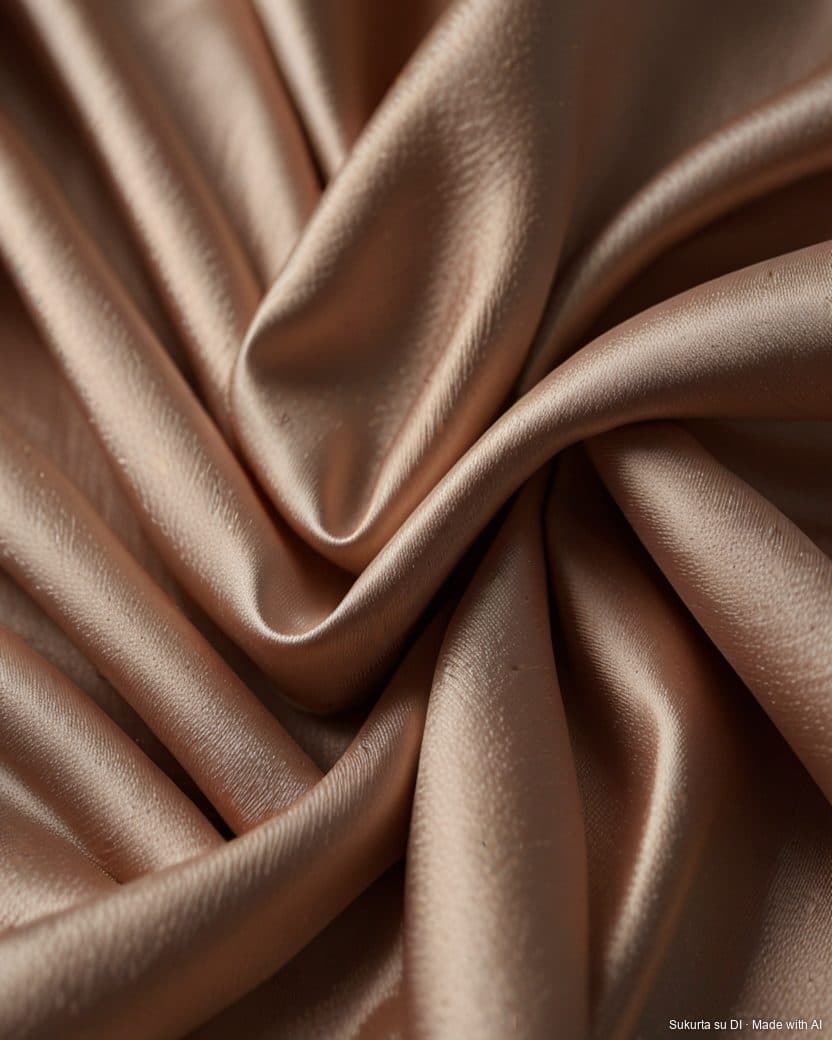
Silk fabric
The filament of the silkworm's cocoon. The cocoon is unwound into one long filament (up to 1 km). It's woven into silk satin, crêpe de Chine, chiffon.
How it feels
Smooth, lustrous, cool in summer and warm in winter.
Season: All year round – depends on the weight.
What it's used for
Blouses, dresses, scarves, lingerie.
A silk blouse with jeans is the classic high-low pairing. In the evening, a silk slip dress with minimal accessories.
Pros
- Luxurious sheen and drape
- The strongest natural fibre
Cons
- Water and sweat marks
- Sun yellows it
Care: a typical label
Always follow your own garment's label – blends and finishes change the care.
How it's constructed
Satin weave. Long floating threads cover the surface – smooth and shiny, but quicker to snag.
A little history
China discovered silk 5,000 years ago and guarded the secret for millennia; the Silk Road linked China with Europe.
How to recognise it
Animal fibres feel warm and springy – they bounce back when crushed. They burn smelling of hair and leave brittle black ash.
Sustainability
Biodegradable and long-lasting. Animal welfare matters: look for RWS (wool), the Good Cashmere Standard, and non-mulesed labels.
When buying
Rub the knit – if it pills at once, the fibres are short. '100%' or a high share of the natural fibre is warmer than acrylic blends.
Frequently asked
01What is silk?
The filament of the silkworm's cocoon. The cocoon is unwound into one long filament (up to 1 km). It's woven into silk satin, crêpe de Chine, chiffon.
02Is silk a natural fabric?
Yes – a natural animal fibre.
03Does silk shrink?
A little: silk can shrink 1–2%, mostly in the first wash.
04Is silk breathable?
Yes: silk lets air through and absorbs moisture – cool in the heat.