

In short
- Occasion first, body shape second: the dress code on the invitation decides length and fabric, your body shape decides silhouette, neckline and where the waist sits.
- The five body shapes, hourglass, pear, apple, rectangle and inverted triangle, are defined by the ratio of shoulders, waist and hips, never by size or weight.
- Each shape has two or three silhouettes that work almost every time: sheath and wrap for the hourglass, A-line for the pear, empire waist for the apple, peplum for the rectangle, a full skirt for the inverted triangle.
- The most beautiful dress fails on the wrong size: shop by centimetres or inches, not by the letter on the label, and leave one to two weeks for alterations.
Occasion dresses are one of the few purchases most women make under pressure: a lot of people will see the dress, it will be in the photographs, and it has to be worn for a whole evening, not an hour. Online shops show thousands of styles but almost never say which of them will suit your shoulders, waist and hips, or whether it belongs at the event you are going to at all.
This guide approaches the choice from two sides. First, the occasion and the dress code, which set the length, the fabric and the colour limits. Second, your body shape, which sets the silhouette, the waistline, the neckline and the sleeves. At the end you will find a fabric table, advice on shoes and accessories, sizing and alteration rules, and the mistakes we see most often at castings and photo shoots.
Occasion first: what the dress code tells you
Most occasion dresses that go wrong are not bad dresses, they are dresses for a different event. A long satin gown at a cocktail party looks as if you had the wrong address, and a short cocktail dress at a black tie dinner looks as if you had not read the invitation. So the first step is the invitation: the dress code, the time of day and the venue.
 Image consultationOutfits for your own occasionsIn the consultation we put together outfits for your work, events and weekends from what suits your figure and colours.About the consultationfrom €79
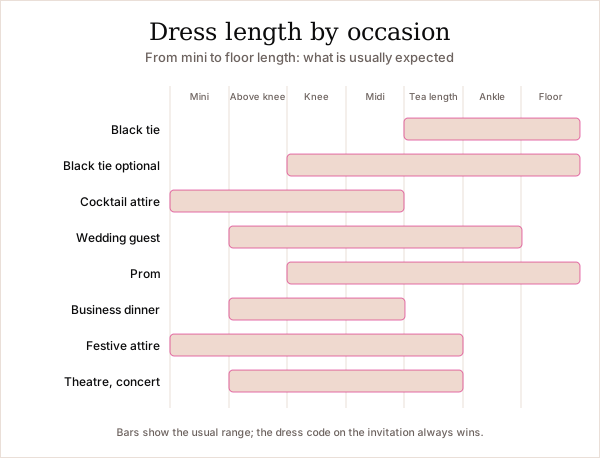
| Occasion or code | Length | Fabric and details | Read more |
|---|---|---|---|
| Black tie | Floor or ankle length; tea length only at a less formal event | Silk, satin, crepe, chiffon, velvet; evening bag, tights | Black tie for women |
| Black tie optional | Knee length to floor length | Evening gown or a dressy cocktail dress; a little black dress works | Black tie optional |
| Cocktail attire | Above the knee, knee length or midi | Fitted or flared cocktail dress, evening fabric, bolder colour allowed | Cocktail attire |
| Wedding guest | Usually midi; long for an evening wedding | No white, ivory or cream; skirt volume to suit the venue (garden, restaurant, ballroom) | What to wear to a wedding |
| Prom | Long or midi; short if the evening is informal | Satin, tulle, chiffon; youthful silhouettes, a little shine | Occasion makeup |
| Festive attire | Mini to tea length | Shiny fabric, print, colour, evening accessories | Festive attire |
| Business dinner | Knee length or midi | Calm silhouette, higher neckline, matte fabric | Semi-formal |
The second thing to check is the venue and the time. At a garden wedding a thin stiletto sinks into the lawn, and in a restaurant full of tables a long tulle skirt gets in the way of you and the waiters. An afternoon event allows lighter colours and matte fabrics; an evening event allows shine and a darker palette. If there is no code on the invitation, go by the venue: a hotel ballroom means a long or dressy midi dress, a restaurant means a cocktail dress, a café or a home means festive attire.
How to work out your body shape
Body shape has nothing to do with size: a woman in a US 6 and a woman in a US 18 can both have an hourglass silhouette. It is set by the ratio of shoulders, bust, waist and hips. The apparel industry uses the FFIT system, developed by researchers at North Carolina State University, which assigns a figure to a shape from the differences between bust, waist and hip measurements. At home a tape measure and a mirror are enough.
- Measure your shoulders from the edge of one shoulder bone to the other across the back, keeping the tape straight.
- Measure your bust at the fullest point, your waist at the narrowest (usually 2–3 cm or about an inch above the navel) and your hips at the widest point of the seat.
- Compare: shoulders and hips about equal with a waist at least 20 cm (8 in) narrower than the hips is an hourglass. Hips clearly wider than the shoulders is a pear. A waist wider than or equal to the hips is an apple. All three similar with little waist definition is a rectangle. Shoulders wider than the hips is an inverted triangle.
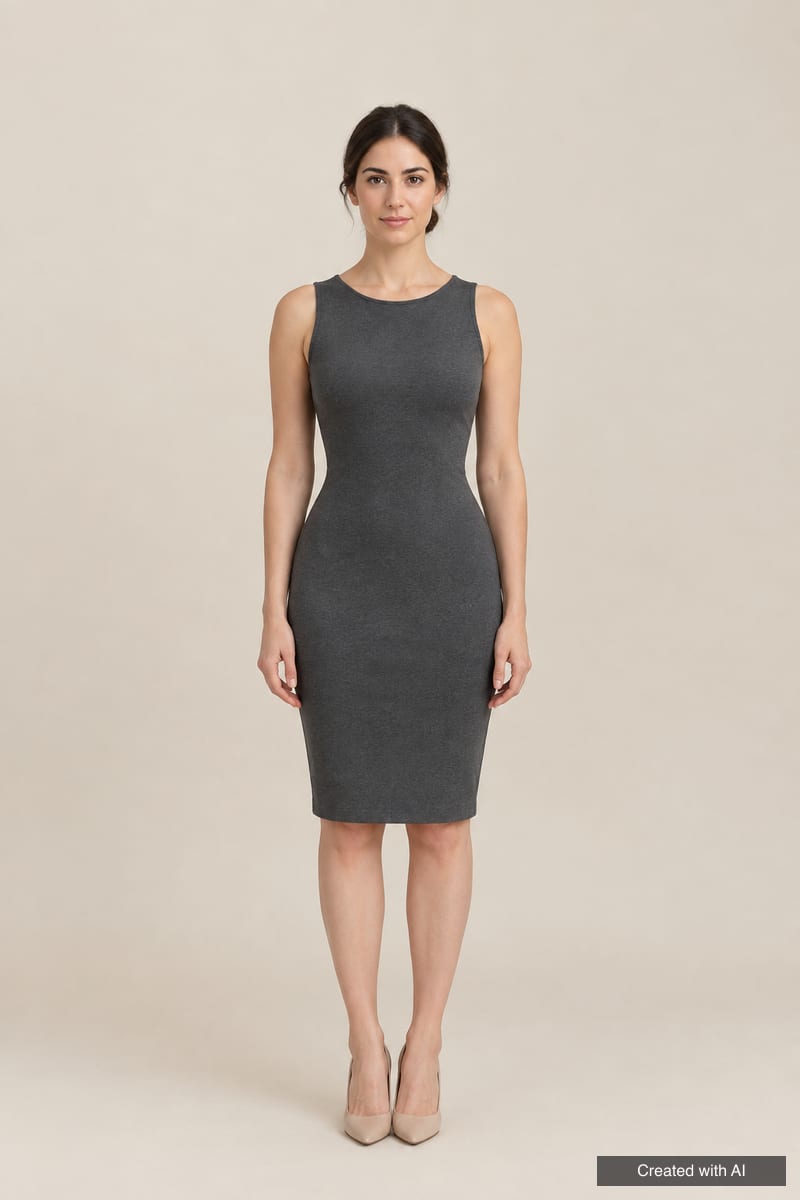
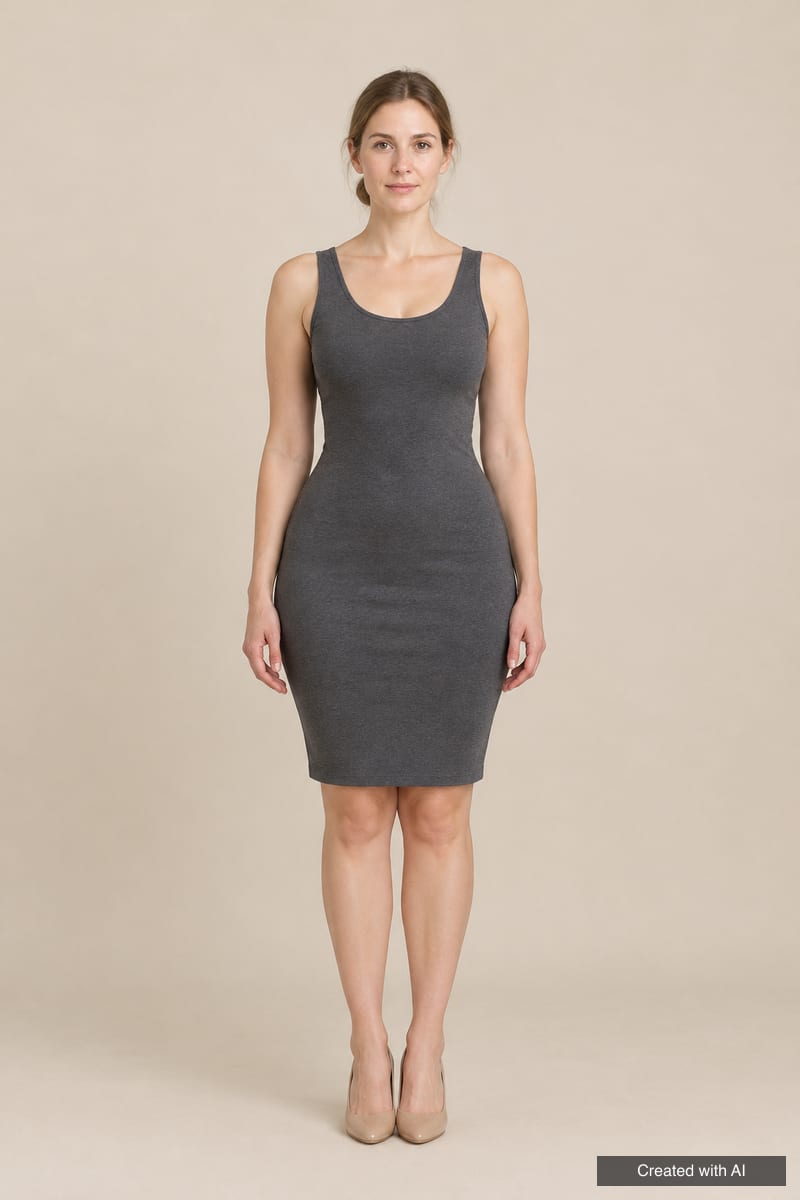
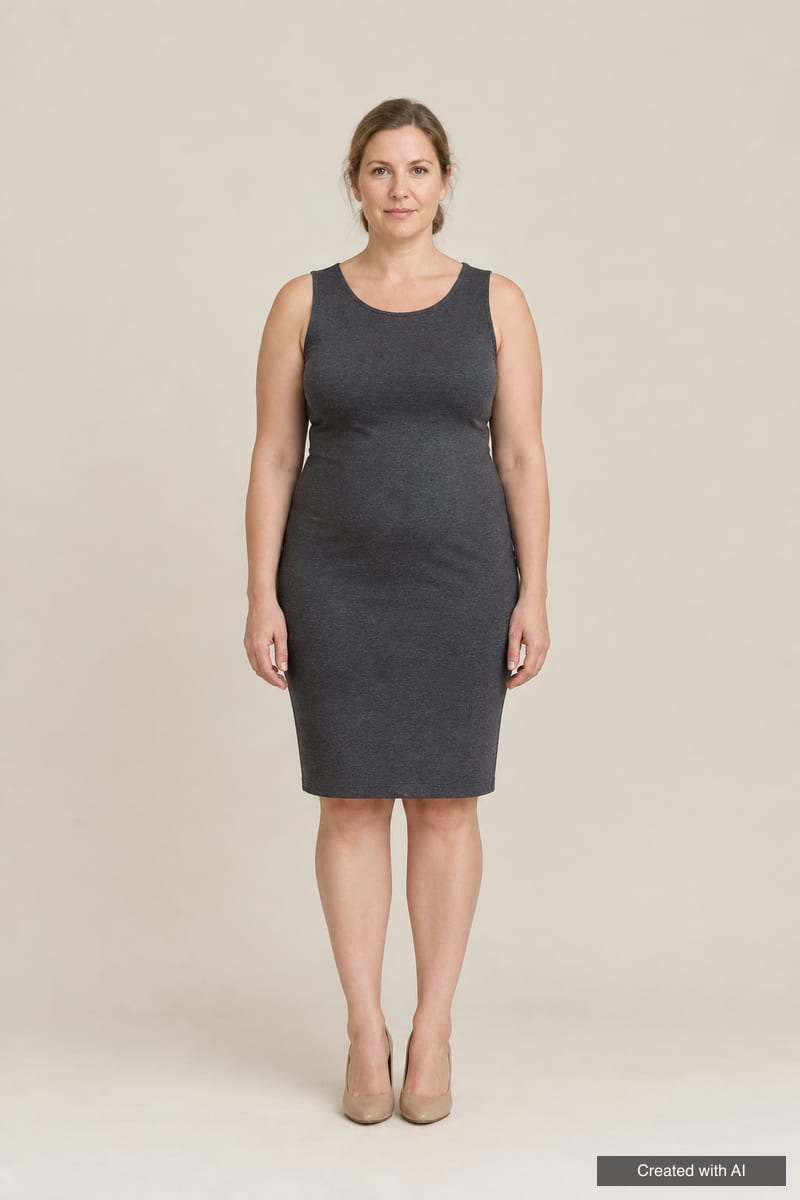
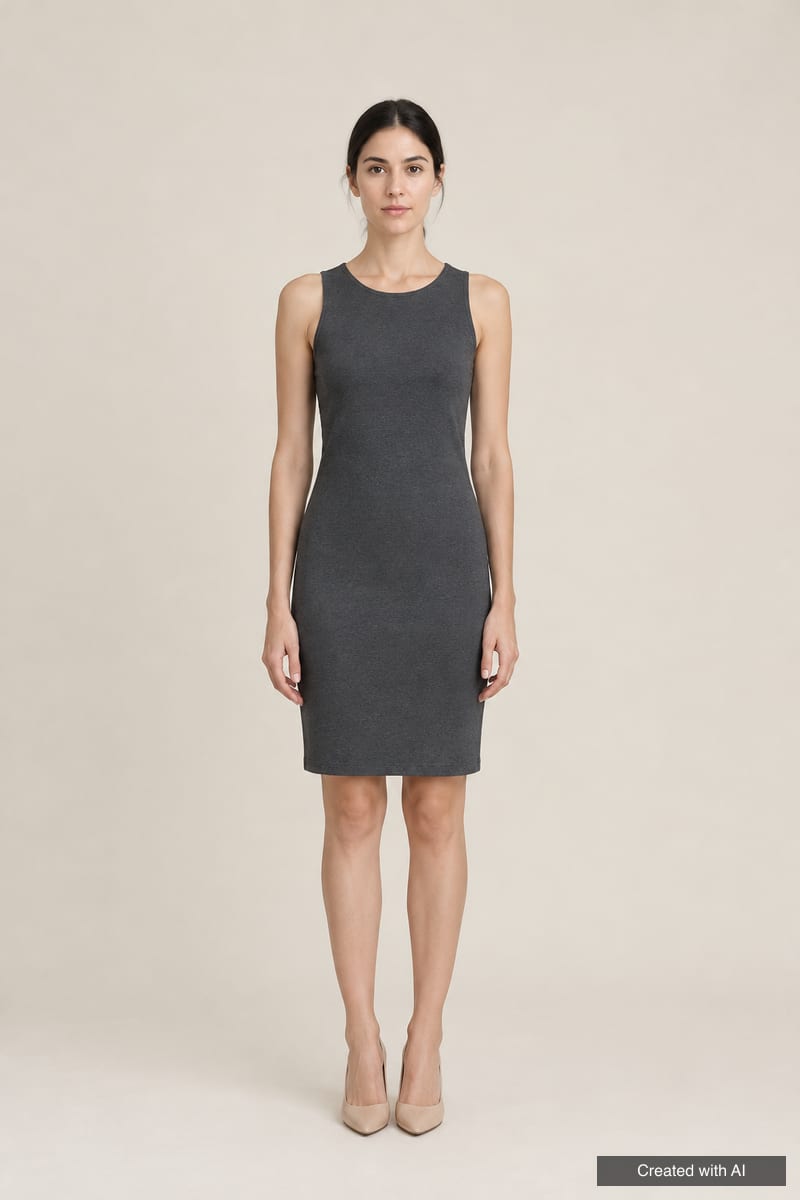
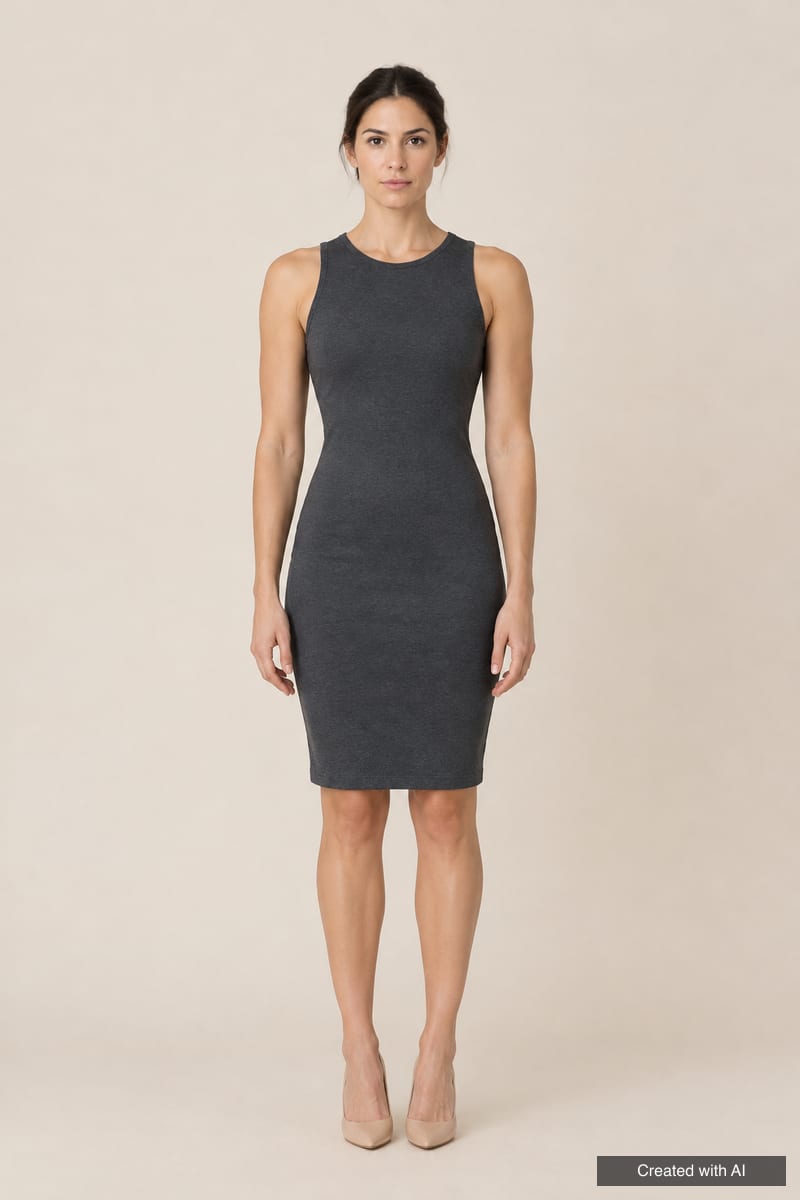
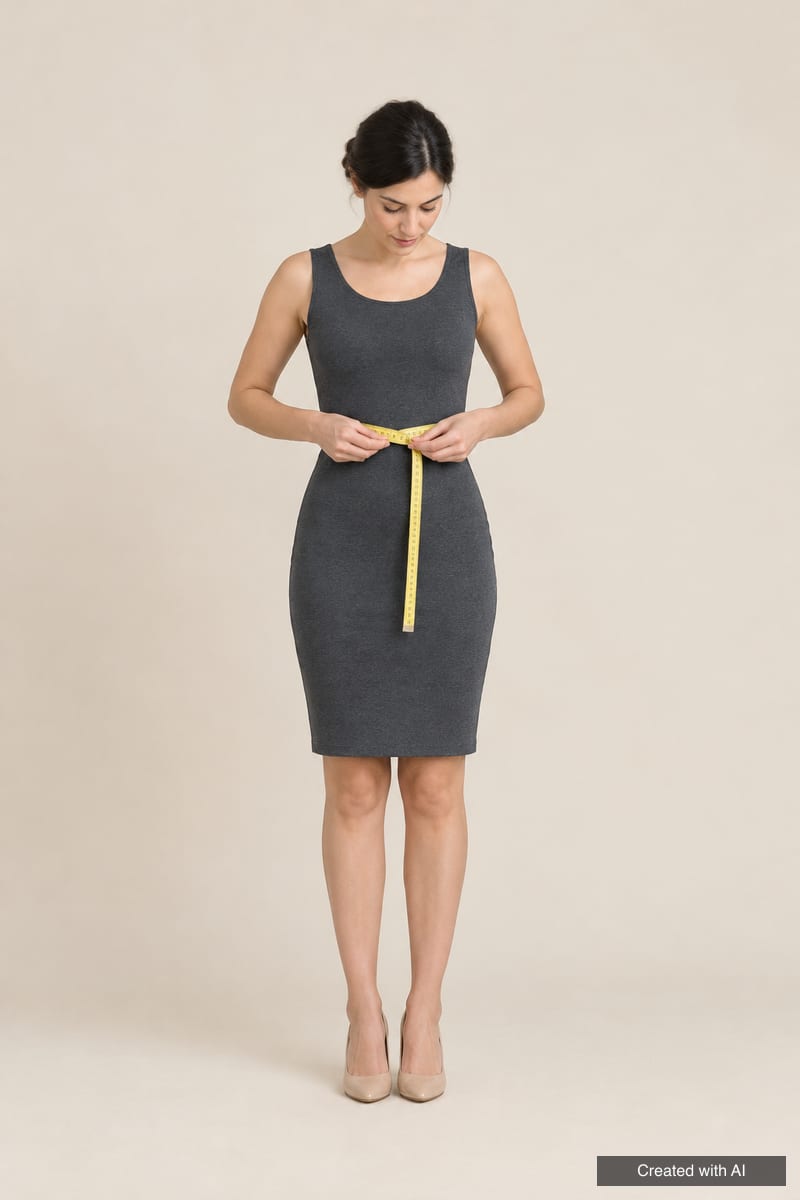
The same measurements will serve you when choosing a size: shop size charts are based on bust, waist and hip, not on height or weight. How to measure correctly and what the sizes of different countries mean is explained in the clothing size guide.
Hourglass: show the waist, do not hide it
What harms an hourglass figure most are straight, loose silhouettes: they hide the waist and make the body look wider than it is. Everything that follows the waist and the line of the body works: a sheath dress with a V or sweetheart neckline, a wrap dress, which defines the waist on its own, and for a formal occasion a mermaid dress, fitted to the knee and flaring below.
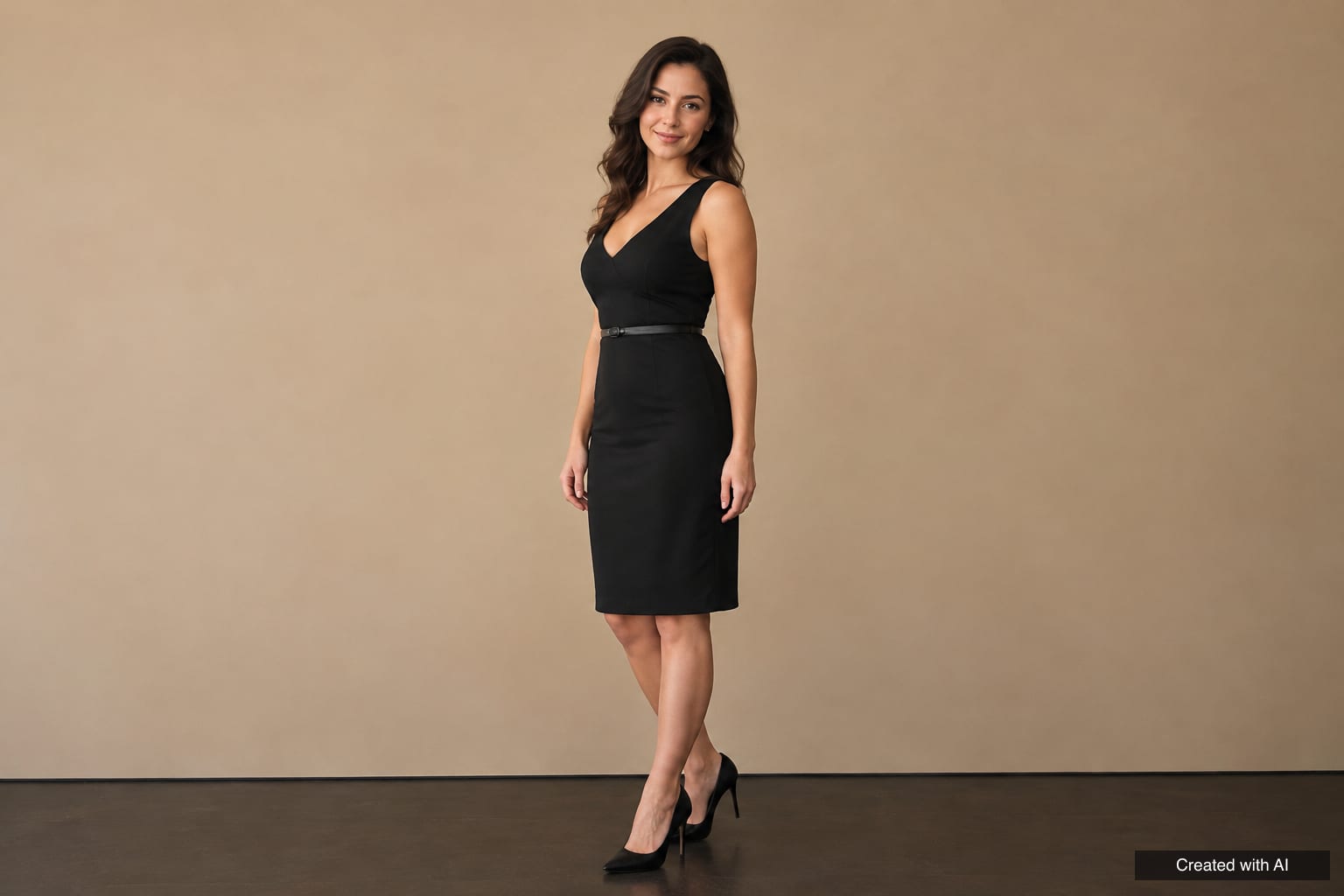
The fabric can be fitted or slightly structured, but without artificial volume at the hips or shoulders: big puff sleeves, full skirts and high collars throw the proportions off. The waistline should sit in its natural place, neither raised nor dropped, and the belt should be thin: a wide belt cuts the waist in half. If you have a large bust, choose a V neckline and straps at least 3–4 cm (about an inch and a half) wide so the bra stays comfortable all evening.
Pear: attention up top, volume below
A pear shape, narrower shoulders and wider hips, suits everything that broadens the top and falls freely from the waist. The best place to start is an A-line dress with a fitted bodice and a skirt that flares from the waist: it hides the hip measurement because the skirt does not cling to it. A fit-and-flare dress with a fuller skirt works the same way, and for a cocktail event a cocktail dress with a boat neckline.
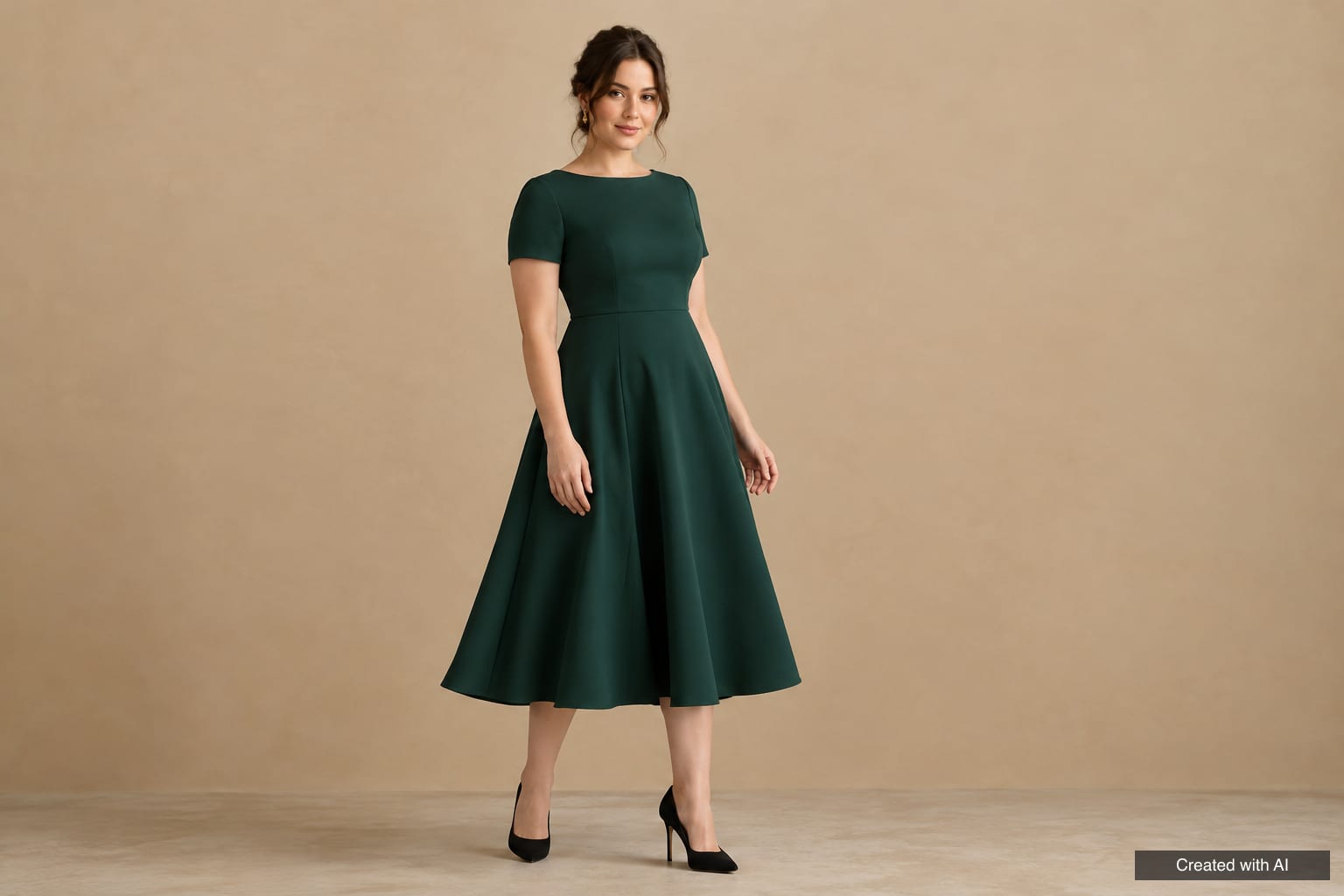
Up top you can be bolder: a boat or square neckline, an off-the-shoulder dress, an embellished or shiny bodice, wider sleeves. Below, keep it calm: a plain, matte or barely shiny skirt without large prints, pockets or horizontal details at the hips. For a formal occasion both an empire-waist and an A-line gown work; the only one to avoid is the mermaid silhouette, which emphasises the hips most.
Apple: a line from the bust down
For an apple shape, a fuller midsection, often a good bust and slim legs, the aim is to create a vertical line and not interrupt it at the waist. That is what an empire-waist dress does, with a seam right under the bust and fabric that falls freely from there, and so does a long A-line dress with a V neckline. A deeper V here is not daring but a tool for proportion: it lengthens the neck and draws the eye upwards.
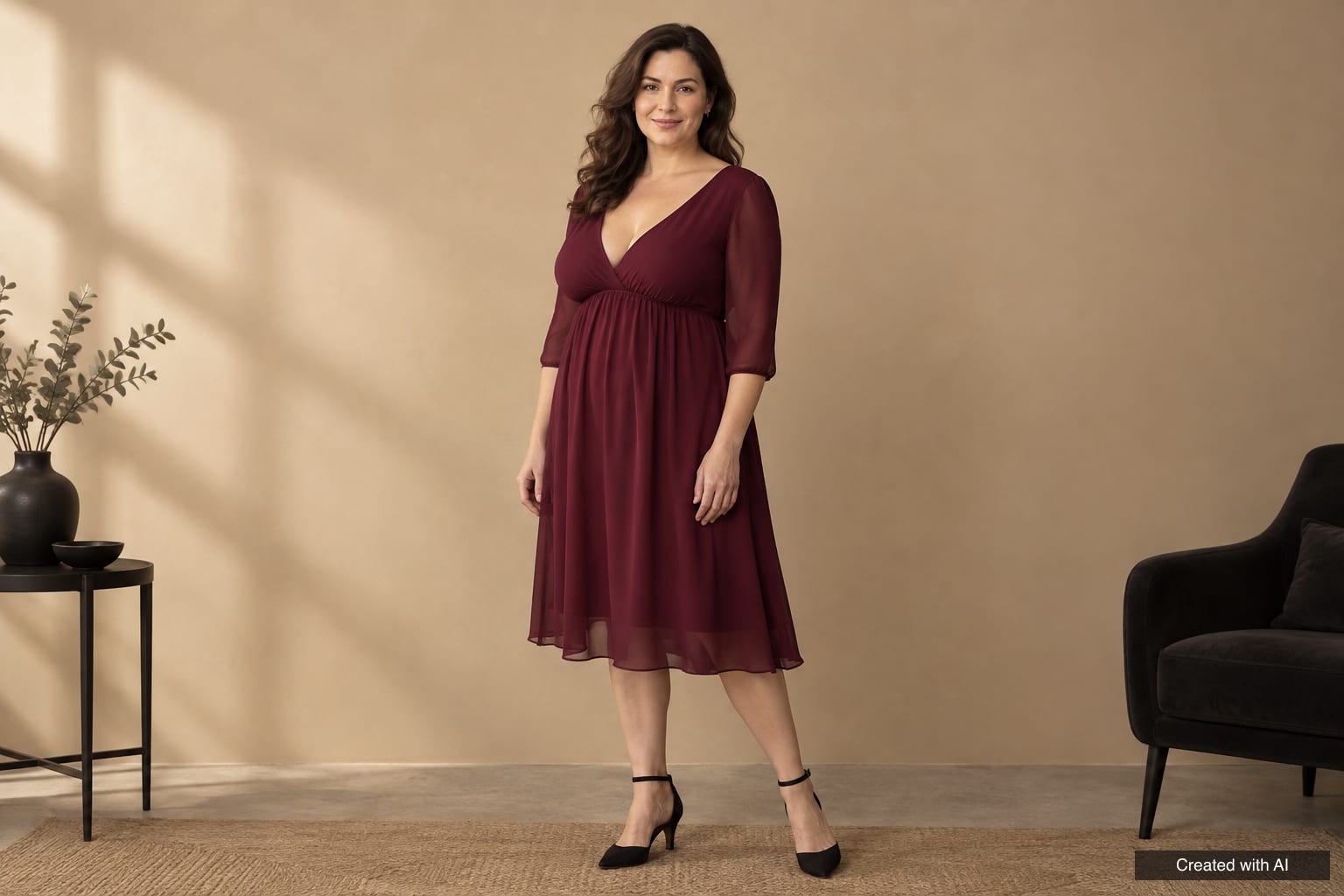
The fabric should drape, not cling: chiffon, crepe, light viscose, double-layered matte jersey. Avoid shiny satin at the waist, belts through the middle and large prints over the stomach. Legs are the apple shape's asset, so a knee-length cocktail dress or a midi with a slit suits as well as a gown. A sleeve to the elbow or three-quarter length balances the proportions better than no sleeve at all.
Rectangle: create a waist
A rectangle shape, shoulders, waist and hips of similar width, is the most common runway figure, and most designer dresses are cut for it. The only task is to create the impression of a waist. A peplum dress, whose flounce at the waist adds volume to the hips, a fit-and-flare dress with a belt, and a wrap dress, whose diagonal line narrows the middle optically, all do that.
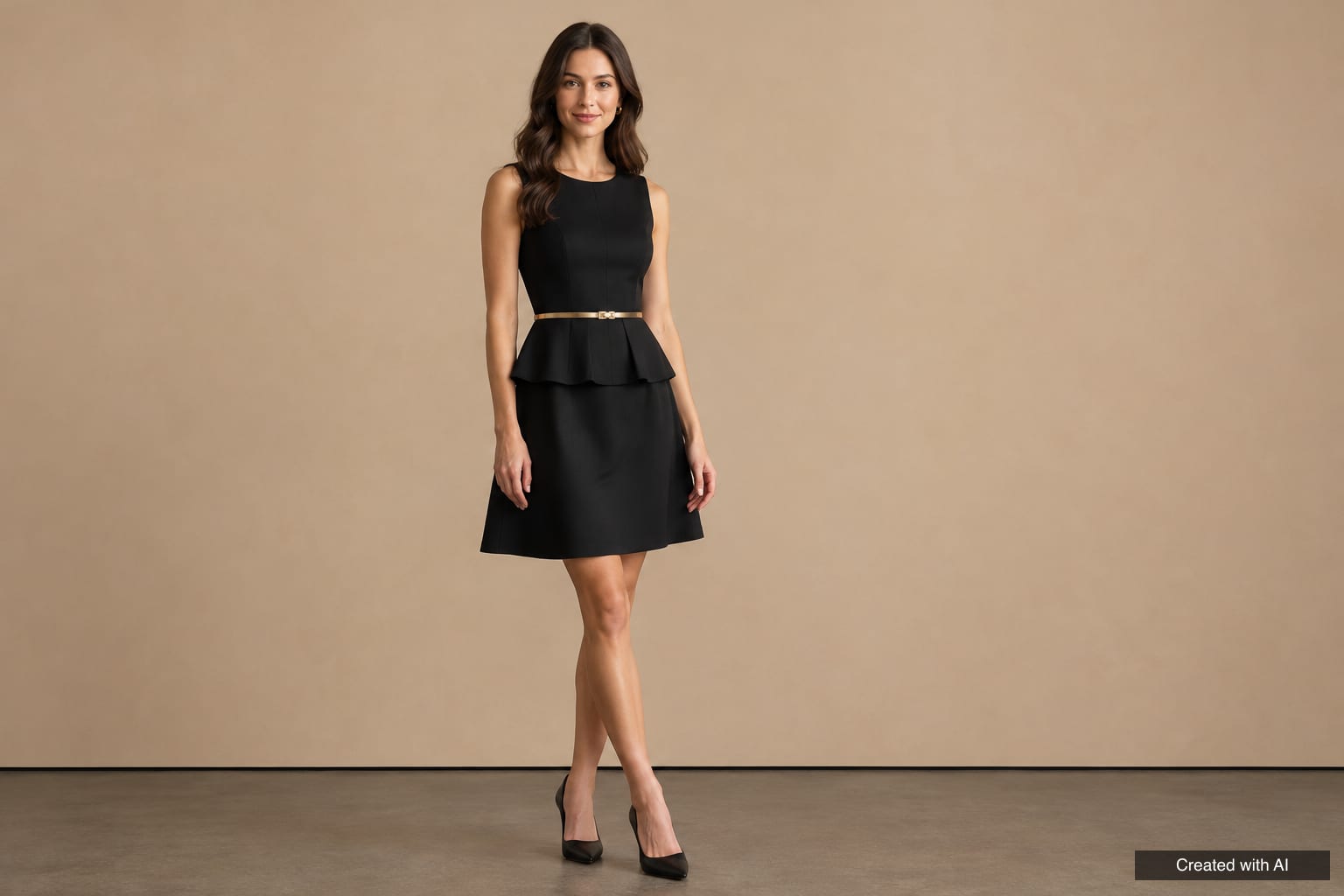
The rectangle is allowed what is risky for other shapes: bold prints, draping across the whole body, complicated necklines, contrasting top and bottom blocks. The only thing to avoid is a straight column in stiff fabric with no waistline, which merely repeats the flatness of the figure. For a formal occasion both a full skirt and a bodycon dress in stretch fabric work, as long as it has a belt or a seam at the waist.
Inverted triangle: volume below the waist
An inverted triangle, broad shoulders, narrow hips, often an athletic build, needs the opposite of the pear: calm the shoulders, add volume below. A V or deep U neckline, thin straps instead of wide ones, an A-line and a full, pleated or tiered skirt do that. A maxi dress with thin straps and a flared skirt is close to a safe choice for a formal occasion.
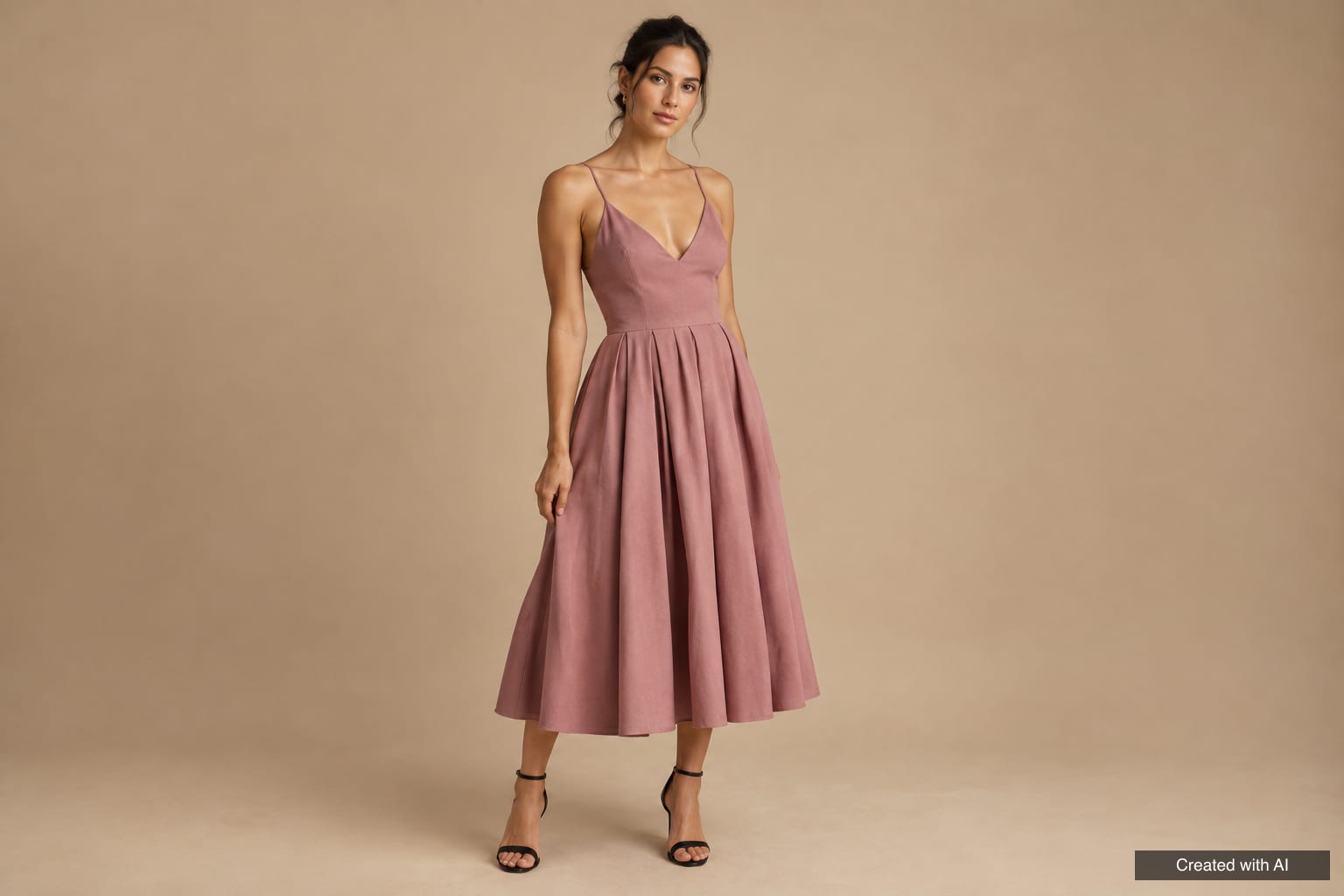
Avoid everything that widens the shoulders: boat necklines, puff and bell sleeves, shoulder pads, horizontal bands across the bust, one-shoulder and off-the-shoulder styles. Below, shine, print and colour are welcome: a lighter or printed skirt with a darker top balances the figure without effort.
Necklines, sleeves and details that change proportions
The silhouette is the base, but the final impression often comes down to details. The neckline is the first thing others notice: V and sweetheart necklines lengthen the neck and suit a large bust, boat and square necklines broaden the shoulders, a high neck suits a small bust and a long neck. All the types of necklines with drawings are collected in the clothing guide.
The sleeve changes both the proportions and the formality of the occasion. A sleeveless dress gives the most freedom of movement but needs arm care and the right bra; a three-quarter sleeve is the most versatile, it suits a wedding and a business dinner alike; a long sleeve in sheer fabric lets a more covered dress count as evening wear. The types of sleeves are described separately.
- Vertical seams, diagonal draping and a slit lengthen the figure; horizontal bands, tiers and prominent pockets widen it.
- Waistline: the natural waist suits everyone; a raised (empire) waist suits the apple shape and shorter women; a dropped waist only the rectangle and tall women.
- Shiny fabric and embellishment draw the eye to where they are: put them where you want the attention.
- A slit to the knee or a little above is elegant; a higher slit belongs only where the dress code allows daring.
Fabrics and the season
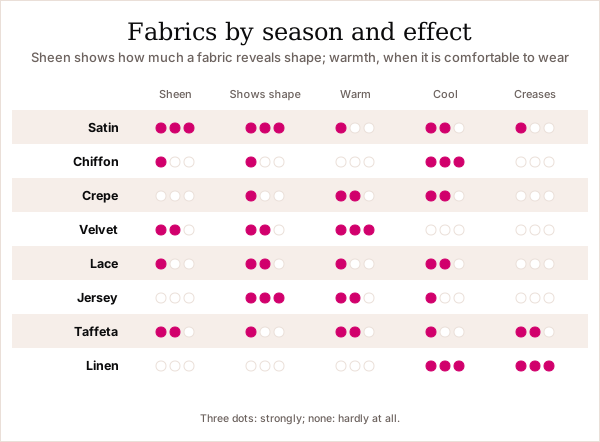
Fabric decides three things: how much the dress shows the shape of the body, how it looks in photographs and whether it is comfortable for a whole evening. Satin and silk satin show every line and bounce the flash back, so they suit a firm silhouette and good underwear. Chiffon and crepe fall softly and forgive imperfections, velvet is warm and only for the cool season, taffeta holds its shape and creases, jersey is the most comfortable and the most clinging, lace needs a lining that fits as well as the lace does.
| Season | Works | Risky |
|---|---|---|
| Winter, late autumn | Velvet, heavy crepe, lined satin, lace over a lining, long sleeves | Thin unlined chiffon, linen, bare shoulders without a wrap |
| Spring, early autumn | Crepe, viscose, silk, light satin, three-quarter sleeves | Velvet in daytime, heavy brocade |
| Summer | Chiffon, organza, light silk, linen for daytime events, bare shoulders | Polyester satin (does not breathe), velvet, dark stiff fabrics |
The lining often matters more than the fabric itself: an unlined dress goes see-through in flash, clings to tights and shows underwear seams. Before buying, check the label and the care symbols: silk, velvet and taffeta are usually dry clean only, which is an extra cost every single time.
Colour: what is allowed and what is not
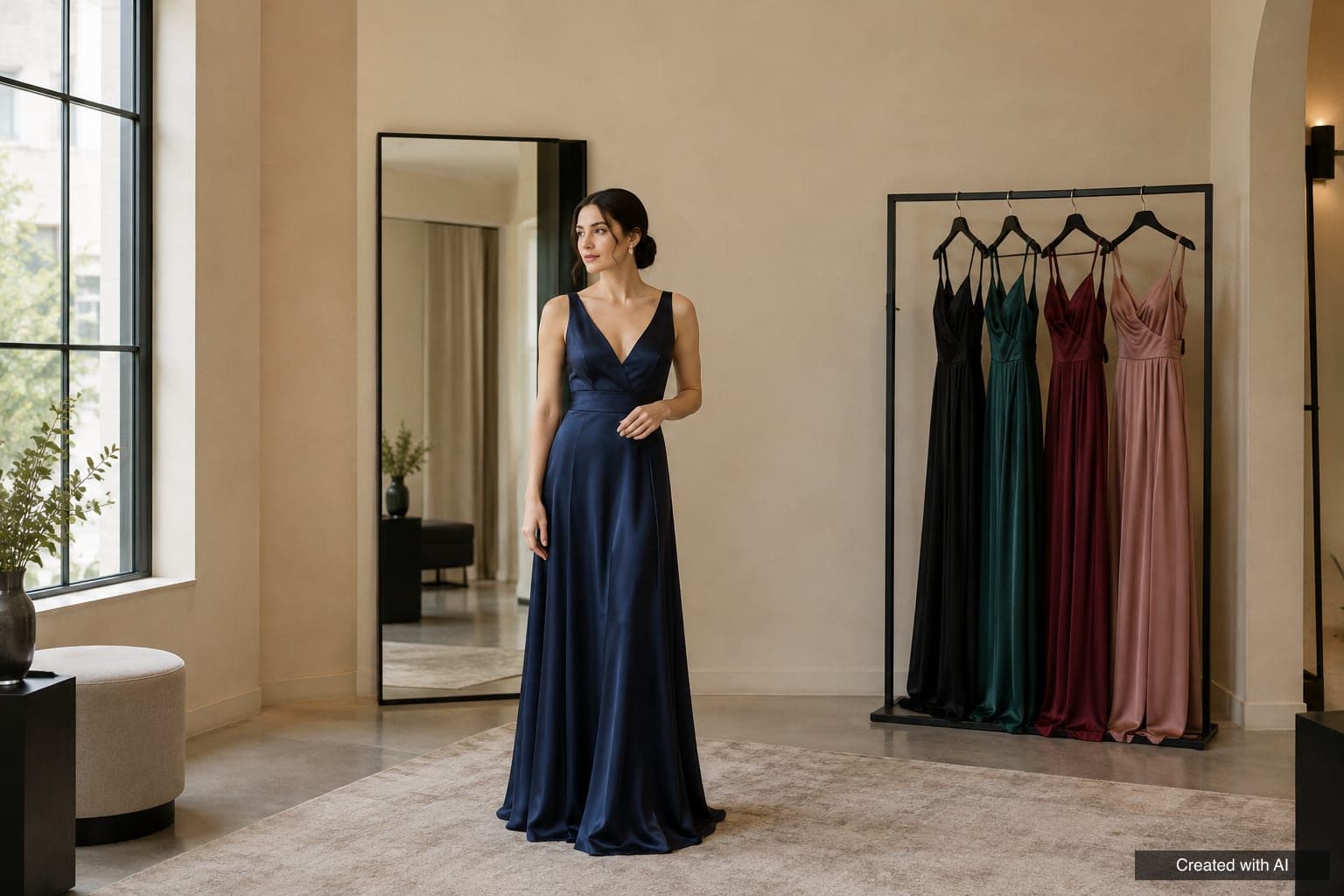
Few colour rules are left for occasion dresses, but the ones that remain are strict. A wedding guest does not wear white, ivory, cream or champagne unless the bride asks otherwise, and some families avoid red as well. Funerals, memorial evenings and some religious events call for dark, quiet tones. Everywhere else colour is freedom: navy, emerald, burgundy, dusty rose and champagne gold look no less formal in photographs than black, and more often look unexpected.
A black dress is a safe but not always the best choice: at an afternoon garden wedding it looks too heavy, and at an evening black tie dinner it can disappear into the crowd. If in doubt, pick a rich dark colour instead of black, or black with one bright detail, shoes, a bag, a piece of jewellery. Which colours suit your skin and hair tone is a separate subject that an hour with a specialist can settle.
In an image consultation (€79, online or in person in Vilnius) we spend an hour working out your colour type and body shape, choose silhouettes and lengths for a specific occasion and write a summary you can take to the shop or the tailor. The consultation is run by people who prepare models for castings and photo shoots every day.
Image consultation: €79Shoes, accessories and underwear
The dress chooses the shoes, not the other way round. For a long dress you need to know the heel height before the hem is shortened: the hem should sit 1–2 cm (about half an inch) off the floor in the shoes you will wear. A midi length likes a heel or a pointed toe most, because a wide shoe at the ankle shortens the leg. For a garden or beach wedding choose a thicker heel or a wedge, and keep a few spare heel protectors in your bag. Shoe size charts by country are in the shoe size guide.
The accessory rule is one focal point: a bold dress with quiet jewellery, a quiet dress with one bold piece. An evening bag should be small; a day bag with an occasion dress looks as if you had come straight from work. Underwear is the invisible part of the dress: smooth no-show underwear under satin, a bra with removable straps under open necklines, shapewear under a fitted dress. Try the dress on with the same underwear you will wear to the event.
Size, fitting and alterations
The letter on the label varies by one or two sizes between brands, so shop by measurements: compare your bust, waist and hip with the maker's chart and take the size that fits your largest measurement. A dress is always easier to take in than to let out. When buying online, check the return policy and order one to two weeks earlier than you need to, so there is time for the tailor.
At the fitting do three things: sit down, raise your arms and walk across the room. If the dress rides up, pinches under the arms or gapes at the zip, that will not change in the evening, only get worse. Most occasion dresses look different after alterations: a shortened hem, adjusted straps, a seam at the waist or excess taken out at the back cost little and change everything. Allow at least a week for alterations, two for lace and beading.
- Buying a size down because you will lose weight before the event: if you do not, you will spend the evening holding your breath.
- Trying on without the shoes and underwear you will wear: both the length and the silhouette change.
- Choosing by the figure of a mannequin or an influencer whose shape is different from yours.
- White, cream or champagne at a wedding unless the bride asked for it.
- A short cocktail dress at a black tie dinner, and a long satin gown at a birthday in a café.
- Unlined satin without no-show underwear: the flash will show everything.
- Leaving alterations and stain removal to the last day.
Frequently asked questions
What is the difference between an occasion dress and an evening dress?
An occasion dress is the general term for a dress for any celebration, including daytime events: a christening, an afternoon wedding, a business dinner. An evening dress is its more formal version for evening events: longer, in an evening fabric (satin, chiffon, crepe, velvet), more often with some shine. Every evening dress is an occasion dress, but not every occasion dress works for the evening.
What length of dress suits a wedding guest?
The safest is midi, from the knee to mid-calf: it works for the ceremony and the dinner. For an evening wedding with a black tie code choose a long dress, and for an informal garden wedding knee length works too. More important than the length is the colour: not white and not cream.
How do I choose a dress if I carry weight around the middle?
Start with an empire-waist or A-line dress with a V neckline in a fabric that drapes: chiffon, crepe, double jersey. The seam under the bust and the free-falling fabric create a vertical line, and a three-quarter sleeve balances the proportions. Avoid a belt through the middle, shiny satin at the waist and large prints over the stomach.
Can I wear a black dress to a wedding?
Yes, if the wedding is in the evening or the invitation says black tie or cocktail attire. At an afternoon or garden wedding black looks too heavy; choose a rich colour instead, navy, emerald, burgundy. If you want black, lift it with coloured shoes, a bag or jewellery.
How far ahead should I buy an occasion dress?
Ideally three to four weeks: a week for choosing and delivery, a week or two for the tailor, a few days in reserve. If the dress is made to order, allow six to eight weeks. In the last week the dress should already be hanging in the wardrobe, altered and cleaned.
Which dress suits a petite woman?
A raised waistline, a V neckline, vertical seams, a plain fabric and a length to the knee or a midi that ends at the narrowest point of the calf. A long dress works if it has no horizontal tiers and is worn with a heel. Avoid a dropped waist, tea length and large prints.
Sources
- Simmons K., Istook C., Devarajan P., "Female Figure Identification Technique (FFIT) for Apparel, Part I: Describing Female Shapes", Journal of Textile and Apparel, Technology and Management, 4(1), 2004: body shape classification from bust, waist and hip measurements.
- The Emily Post Institute, "Attire Guide: Dress Codes from Casual to White Tie": dress code definitions for women.
- Debrett's, "Events and Dress Codes": black tie requirements for women, length, fabrics, tights, bag.
- Jurgita dress code guide, types of dresses and fabric guide: silhouette and fabric descriptions used in the tables.

Comments (0)
No comments yet. Be the first!
Only logged-in users can comment. Register — and you'll be able to share your thoughts on this article.
Register