

In short
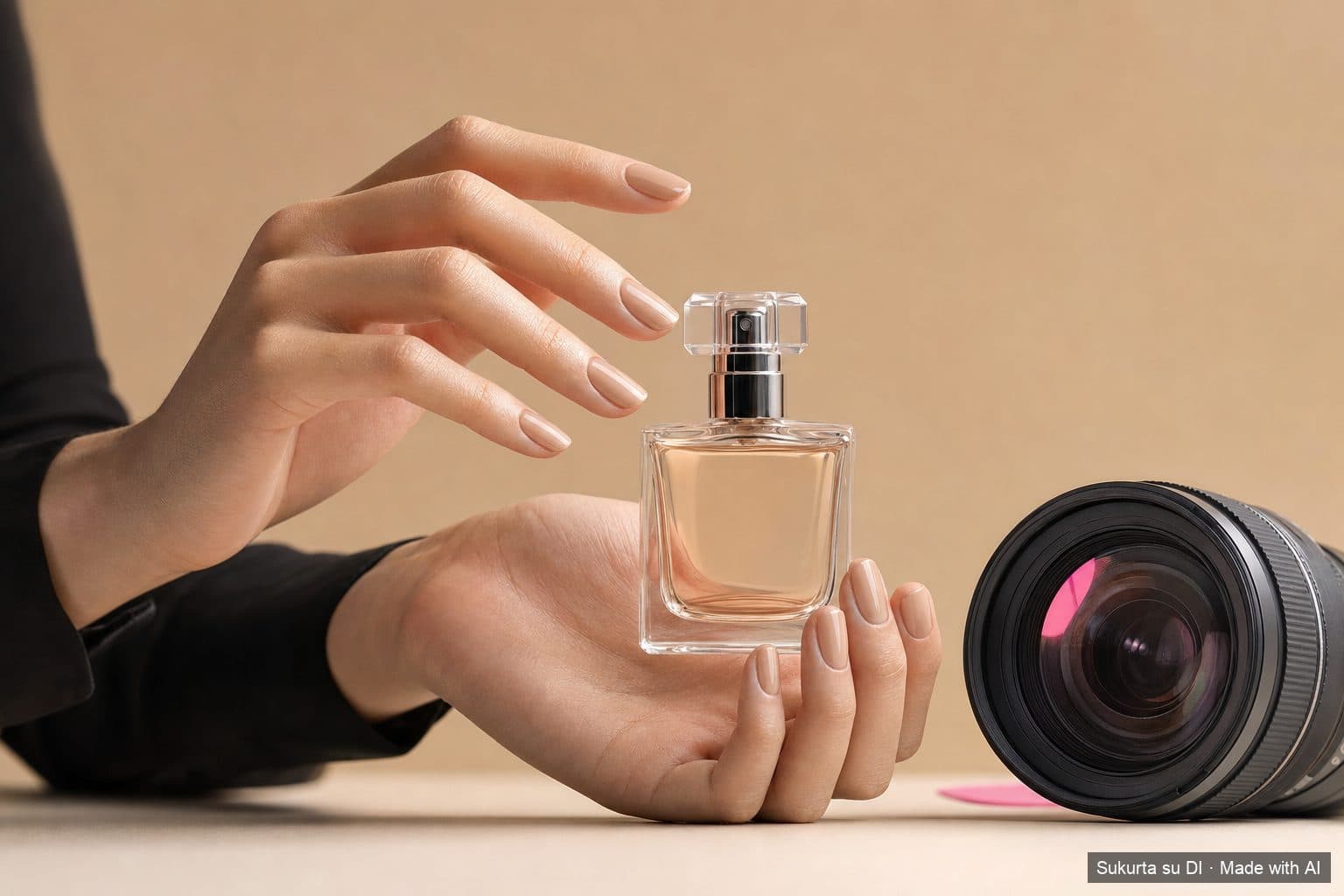
- Hand models appear in close-ups for cosmetics, jewellery, watches, food, phones and medicine ads, where only the hands are in the frame.
- Hand modeling exists as a separate job only in the very largest advertising markets, such as New York, Los Angeles and London. In small markets, including Lithuania, the Baltics and most smaller European countries, agencies do not represent hand models and ad shoots use the main model's hands.
- Top US hand model Ellen Sirot has described pay of about $150 a day for magazines, $150–200 an hour for catalogues and $250–350 an hour for big ad campaigns.
- Even in the US, only about ten people live on hand modeling alone. For almost everyone else it is extra income next to another job.
- Agencies look for even skin with no scars or tattoos, straight, well-proportioned fingers, natural nails and hands that can hold still for minutes.
When you watch an ad for a ring, a cream or a phone, you rarely ask whose hands they are. Often they belong to neither the actor nor the model on the poster but to someone whose job is to hold the product so it looks its best. Hand models are part of a niche called parts modeling, which also covers feet, legs, hair and lips.
This guide explains how much hand models make, where the job exists, what agencies look for and how professionals look after their hands. The figures come from public interviews with working hand models and their agency. For how other kinds of modeling are paid, see how much do models make.
How much do hand models make?
The most reliable numbers come from a Freakonomics Radio episode with Ellen Sirot, one of the best-known hand models in the US, and the head of a New York parts modeling agency.
| Job | Pay |
|---|---|
| Magazine shoot | about $150 for a day (up to 10 hours) |
| Catalogues, pharmaceutical ads | $150–200 an hour |
| Big advertising campaigns | $250–350 an hour |
| TV commercials (SAG-AFTRA union rates) | about $650 for an 8-hour day, paid again for each further commercial that uses the footage |
| Her first foot modeling job | $350 an hour |
In her best years Sirot earned what she called "low six figures", a little over $100,000 a year. Her agent estimated that only about five women and five men in the US make a living from hand modeling alone. The rest combine it with other work or a regular modeling career.
The agency, which represents about 200 parts models, takes 10% on video work and 20% on print. How day rates and usage fees work in general is explained in our guide to modeling rates.
Where hand models exist, and where they don't
This is the most important thing to know before you hope for a hand modeling career. Parts modeling is a real job only where the advertising industry is big enough to book a separate person for the hands.
- The largest advertising markets. New York, Los Angeles and London have specialised parts agencies or parts divisions, and clients there book hand models for beauty, jewellery, food and tech close-ups. The New York agency quoted above represents about 200 parts models.
- Small markets. In Lithuania, the Baltic states and most smaller European countries, hand models do not exist as a type of model. Agencies do not represent them, nobody scouts for them, and ad shoots use the hands of the main model or a member of the client's team.
- What this means for you. If you live in a small market, a beautiful pair of hands will not turn into a separate income. The realistic path is a regular modeling career, where good hands help in close-ups but are not booked on their own.
Even in the big markets, the field is small: a few hundred represented parts models and a handful who earn a full living from it.
 Model training with SupermodelsTry it in practice with an agency teamIn the model training we work on the walk, posing and working on camera, one to one or in a small group.About the trainingfrom €69
What agencies look for in a hand model
- Smooth, even skin with no scars, moles, prominent veins, pigment spots or tattoos.
- Straight, well-proportioned fingers without prominent knuckles. Women's hands are often expected to be long and slim, men's strong but neat.
- Natural, tidy nails with healthy cuticles. Long extensions rarely work, because clients want a natural look.
- Standard size. The hands must fit the product: a ring, a watch, a phone, a cup.
- Patience and control. A hand model may hold a product still for minutes while the photographer and lighting crew find the angle.
Hand models also have types: elegant hands for jewellery and beauty, everyday hands for food and household products, male hands for watches and tech, children's hands.
How hand models look after their hands
- Gloves for washing up, gardening, cold weather and even driving.
- Moisturising several times a day, and overnight masks under cotton gloves.
- Sun protection. Pigment spots end more hand modeling careers than anything else. How to pick a sunscreen is in our guide how to choose sunscreen.
- Care. No cuts, burns, nail biting or risky sports before a shoot.
- Manicure. Natural and neat, without bright polish, because clients often choose the colour. See how to paint your nails.
The best-known hand models insure their hands. Ellen Sirot had a Lloyd's of London policy of about $1 million on hers.
Foot, leg and other parts models
The same logic applies to other body parts. Foot models work for shoes, socks, tights and pedicure products, leg models for hair removal and body care, hair models for shampoo and colour. The requirements are similar: smooth skin, neat nails, a standard size, no scars or tattoos. The same limit applies too: these jobs exist as separate bookings only in the largest advertising markets.
Many parts models also work as fit models, because their bodies match a standard sample size. What a fit model does is explained in our guide to the fit model.
How to become a hand model
Hand modeling is realistic only if you live in, or can work in, one of the big advertising markets where parts agencies operate. If that is your situation:
- Take clear photos in daylight: backs of the hands and palms close up, and hands holding a ring or a cup. No filters.
- Send them to a parts agency or a commercial agency with a parts division in that market.
- Protect your hands from now on: sun, cuts and nail damage can cost you bookings for months.
- Be ready to start small. Magazine and catalogue work pays modestly. Campaigns and TV come later, if at all.
Everywhere else, the better plan is a regular modeling career. What agencies look for and how to apply is in how to become a model.
FAQ
How much do hand models make?
Ellen Sirot, a leading US hand model, has described about $150 a day for magazines, $150–200 an hour for catalogues and $250–350 an hour for big campaigns. TV commercials under SAG-AFTRA rates pay about $650 a shooting day.
Do hand models exist in every country?
No. Hand modeling is a separate job only in the largest advertising markets, such as New York, Los Angeles and London. In small markets, including Lithuania and the Baltics, agencies do not represent hand models and shoots use the main model's hands.
Can you make a living as a hand model?
Rarely. Even in the US only about ten people live on hand modeling alone. For most it is extra income.
How do I become a hand model?
Only if you live or can work in a big advertising market with parts agencies. Take clear daylight photos of your hands, send them to a parts agency there and protect your skin and nails from sun and damage.
How much do foot models make?
Rates are similar to hand modeling. Ellen Sirot's first foot modeling job paid $350 an hour, but such bookings are rare.
Who is the most famous hand model?
One of the best known is Ellen Sirot from the US, whose hands appear in ads for many brands and who insured them for about $1 million.
Sources
- Freakonomics Radio, The Economics of Everyday Things: Hand Models (interview with Ellen Sirot and a New York parts modeling agency).
- Business Insider, What it takes to be a hand model.
- Supermodels agency experience of the Lithuanian and Baltic advertising market.





Comments (0)
No comments yet. Be the first!
Only logged-in users can comment. Register — and you'll be able to share your thoughts on this article.
Register