

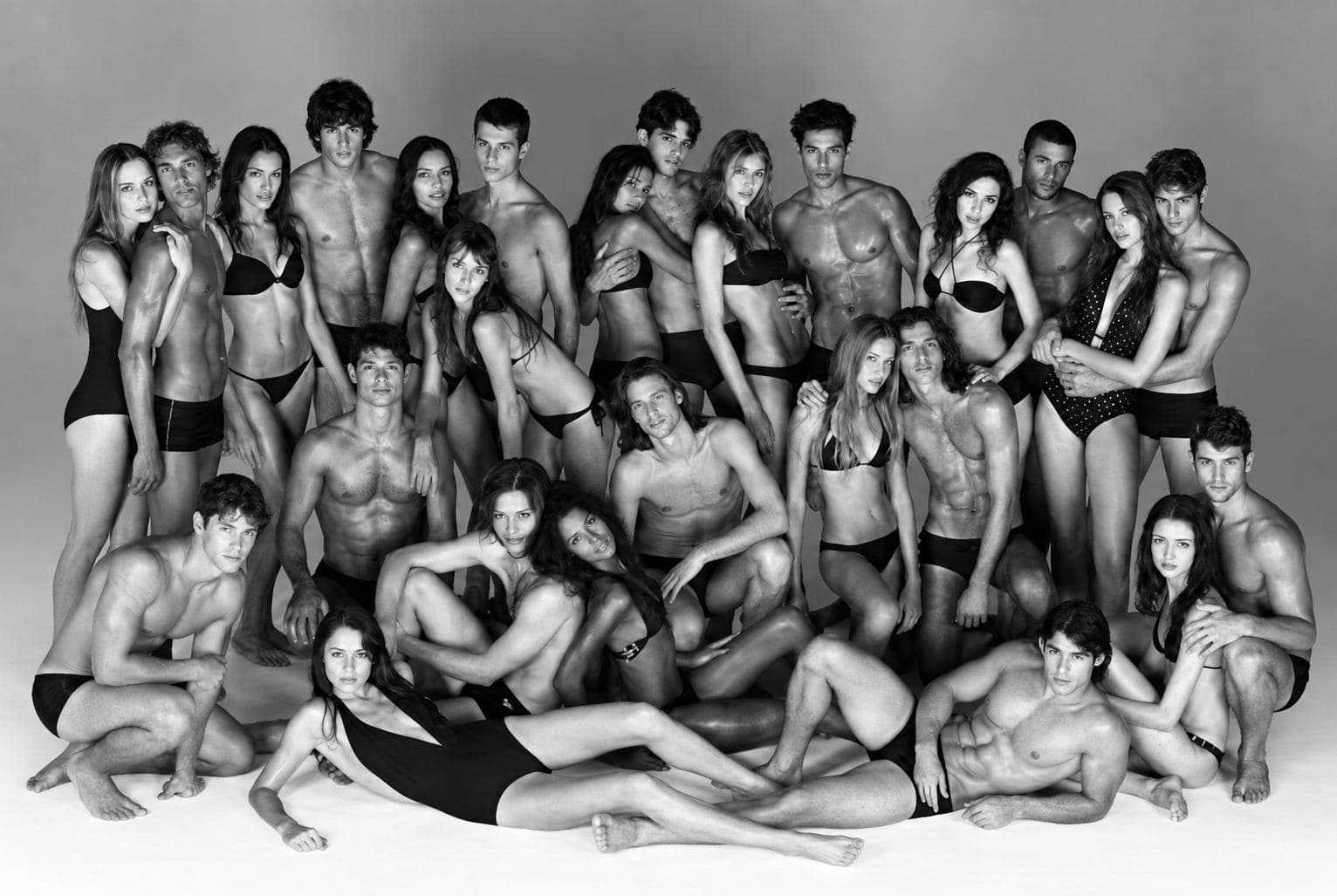
In short
- More people can model than you might think, but not everyone can model on a runway. Fashion models face strict height and measurement requirements; commercial, curve, petite, mature and parts models face different ones.
- Female fashion models are usually 172–181 cm (5'8"–5'11") and male models 183–190 cm (6'0"–6'3"). Major fashion houses do not hire models under 16 to represent adults.
- The first step is simple and free: plain photos without make-up, accurate measurements and an application to a legitimate agency.
- Modeling work is irregular: pay varies enormously and rejection at castings is routine. Preparation helps as much as looks.
Who wants to be a model, and how to become a model if you do? Almost everyone has wondered at some point. Not always out loud, but plenty of girls dream of it after the princess phase, and plenty of boys are drawn to the clothes and the camera flashes.
Why is the job so tempting? Money, fame, parties with beautiful people, or a mother and friends who keep saying you are beautiful enough? The first secret of a modeling career is honesty with yourself. The key question is what sets you apart from countless other attractive people. To be in demand you need a "commercial" look: the client has to believe your face or body will sell their product. And you need a strong personality, because you will often hear that you are not the right look.
What actually decides whether you can model
Agencies and clients do not judge beauty in general. They judge whether your look will sell their product, and several things count at once.
- Your type. A memorable face, strong features, what makes you different. The prettiest face is not always the most booked.
- Proportions and height. Strict for fashion, flexible for commercial work.
- Skin, hair, teeth. Healthy skin and hair show at once, especially in photos without make-up.
- Movement and presence on camera. How you walk, change poses and take a photographer's direction.
- Personality and discipline. Punctuality, languages, travelling alone, taking criticism.
Many want it, few make it. Fashion modeling is tied to selling clothes: campaigns in magazines and on billboards, runway shows, designer presentations, catalogue shoots. That is why the requirements are so strict.
Model height requirements, age and measurements
These are typical requirements for fashion models today. Agencies apply them flexibly: an exceptional face sometimes opens the door without every number fitting.
| Women | Men | |
|---|---|---|
| Height for fashion work | 172–181 cm (5'8"–5'11"); in Europe usually from 174 cm, in Asia from 170–172 cm | 183–190 cm (6'0"–6'3") |
| Starting age | Usually 15–21; at least 16 for adult fashion shows and shoots | Usually 16–24 |
| Clothing size | Usually EU 34–36 (US 2–4, UK 6–8) | Usually EU 48–50 (M) |
| Also judged | Natural look, skin, potential in international markets |
Why such strict numbers? Collection samples are made in one standard size, so runway and fashion catalogues need models who fit them without alterations.
Some things agencies no longer do. In 2017 the two biggest fashion groups, LVMH and Kering, signed a charter under which models under 16 are not hired to represent adults in shows or shoots, and under-18s work only with parental consent and a chaperone. France requires models to hold a medical certificate. A legitimate agency will never ask you to lose weight at any cost: a model's health is now the agency's responsibility too.
Measure yourself and convert between EU, UK and US sizes in our size guide. Agencies ask for height, bust or chest, waist, hips and shoe size.
 Model training with SupermodelsPractise on camera before a castingThe walk, posing and a 20-second introduction: what an agency sees first, practised with the Supermodels team.About the trainingfrom €69
Types of modeling: where you fit
High fashion is not the only kind of modeling. Commercial models work in TV, print and advertising, with no fixed physical limits: any age, gender, size, skin or hair colour. There are also specialist areas for particular looks and body types.
| Type | What it is | What is wanted |
|---|---|---|
| Fashion, editorial | Runway, fashion magazines, luxury campaigns | Strict height and measurements, a distinctive look |
| Commercial | Advertising, catalogues, e-commerce, TV | An approachable look; flexible height and age |
| Plus size, curve | Larger-size fashion, beauty and sport brands | Usually US 12 / UK 14 / EU 42 and up, proportions, skin |
| Petite | Petite collections, e-commerce, beauty | Height up to about 170 cm (5'7"), proportionate build |
| Mature, classic | Advertising, fashion for older customers | From about 30–35 and up, an expressive face |
| Parts | Hands, feet, hair, lips for jewellery, beauty, shoes | An exceptionally well-kept body part |
| Fitness | Sportswear, wellness | An athletic build and sports background |
| Kids | Children's fashion, advertising | Only through an agency and with parents |
So if you do not meet runway requirements, modeling is not necessarily closed to you. The commercial market is far larger than fashion, and it books people of every age, height and size.
How to get into modeling: 6 steps
- Assess yourself honestly. Measure up, check the table above and decide which type of modeling is most realistic for you.
- Take digitals. Face from the front and in profile, full length from the front, side and back. Daylight, a plain wall, no make-up, no filters. You do not need a professional shoot to start.
- Choose an agency. Go for a professional mother agency, not the first one that answers. How to check one: how to choose a modeling agency. Agencies in the Baltics and France are in our catalogue.
- Apply online or attend an open call. Most agencies take online applications; Supermodels holds yearly open calls and takes online applications in between; open calls are posted on their sites and in our fashion calendar. How to prepare: how to prepare for a model casting.
- Sign only after reading the contract. Check the term, exclusivity, commission and expenses.
- Build your book with the agency. Test shoots, a portfolio and a composite card come after signing, not before.
How much do models make?
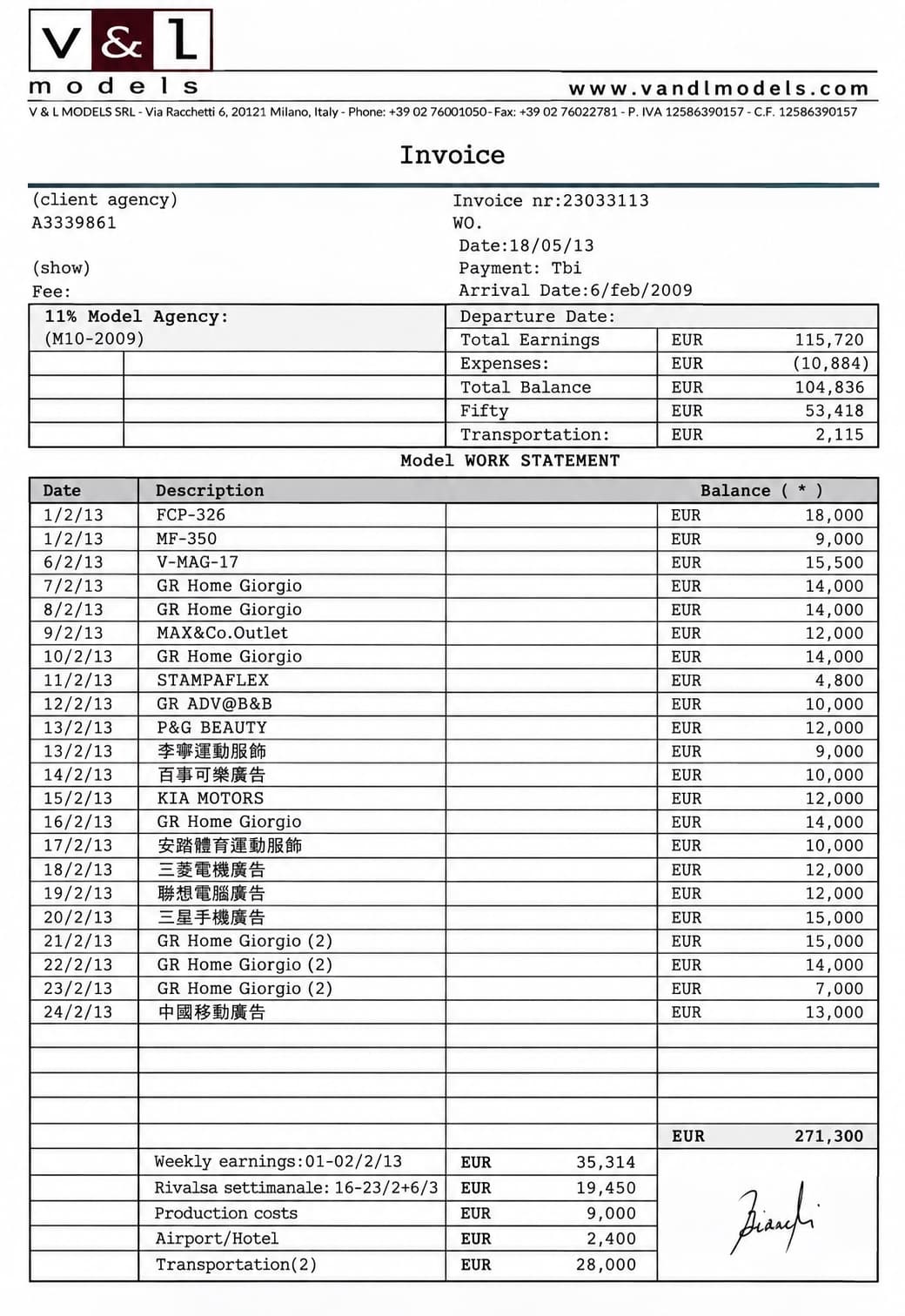
The honest answer is: it varies enormously. Most models are not salaried. They are paid a fee per job, and the agency keeps the commission set in the contract. The fee depends on the client, the market, the length of the job and where the images will be used.
- At the start there are few jobs, and part of what you earn repays costs the agency advanced: travel, housing abroad, test shoots.
- Advertising usually pays better than editorial shoots, which are valuable for your book and your name.
- In the US, the Bureau of Labor Statistics put the median hourly wage for models at $23.30 in May 2025, and notes that most models work part time with unpredictable schedules.
In other words, modeling can be excellent extra income and a way to travel; only a minority live on it alone.
Confidence and rejection at castings
In modeling you hear "no" more often than "yes", and it is not personal: the client simply needed a different type. Learning to take it calmly is part of the job.
- Judge the trend over several months, not each casting on its own.
- Prepare in advance: clothes, digitals, measurements. Preparing the night before is extra stress.
- Separate the job from your self-worth. You are not your height or hip measurement.
- Keep a life outside modeling: studies, friends, interests.
Some people find their own small rituals help before a public moment: breathing exercises, music, a favourite scent. The Mind University shop has essences that the radionics tradition links with confidence and the stage (Charisma) and with tension and calm (NoStress). They are not medicines and no substitute for preparation.
How to spot a modeling scam
The more people want to model, the more people try to profit from it. A legitimate agency earns from your work, so it:
- does not charge for registration, an open call or "a place at the agency";
- does not require paid classes or a photo shoot as a condition of signing;
- does not invite a minor to meet alone or to work abroad without the parents' knowledge;
- does not ask for nude photos.
Training and representation are separate things: training can help you prepare, but nobody may charge you for representation.
How to prepare so agencies notice you
Now that you know the options, choose the type of modeling to aim for. If agencies have turned you down, do not give up. The walk, posing and ease in front of a camera can be learned.
- Free: our guides to castings, agencies, composite cards and working in the fashion capitals.
- In person with the Supermodels team: model training covers the walk, posing, digitals and the intro video.
- To know your strengths: an image consultation works out your colour type, silhouettes and how to present yourself.
- Once you are working: a composite card for castings and agencies, free to create.
Frequently asked questions
How tall do you have to be to be a model?
Female fashion models are usually 172–181 cm (5'8"–5'11"), male models 183–190 cm (6'0"–6'3"). Commercial, petite, curve and parts models have almost no height requirement.
How old do you have to be to become a model?
Children model from an early age, but only through an agency and with parents. Fashion agencies usually scout new faces aged 15–21, and adult fashion shows and shoots use models aged 16 and over.
Is 25 too old to start modeling?
Often too old for the runway, but not for commercial, advertising or mature modeling. Many advertising jobs are aimed at people aged 25–45.
Do you have to pay to become a model?
No. Applying to an agency and attending an open call are free, and a legitimate agency earns from your bookings. You may choose training, but it cannot be a condition of joining an agency.
How much do models make?
It varies hugely: you are paid per job, and at the start part of it repays costs the agency advanced. For most models it is irregular, part-time income.
Do you need professional photos to apply?
No. Simple digitals in daylight, without make-up or filters, are enough. A professional book is built with the agency.
Can men become models?
Yes. The men's market is smaller than the women's, but fashion and advertising clients both book male models. Men usually need to be 183–190 cm tall.
Sources
- Supermodels model agency (supermodels.lt).
- Kering, Charter on working relations with fashion models and their well-being.
- U.S. Bureau of Labor Statistics, Occupational Outlook Handbook: Models.
- Federal Trade Commission, Modeling Scams.




Comments (0)
No comments yet. Be the first!
Only logged-in users can comment. Register — and you'll be able to share your thoughts on this article.
Register