How it works
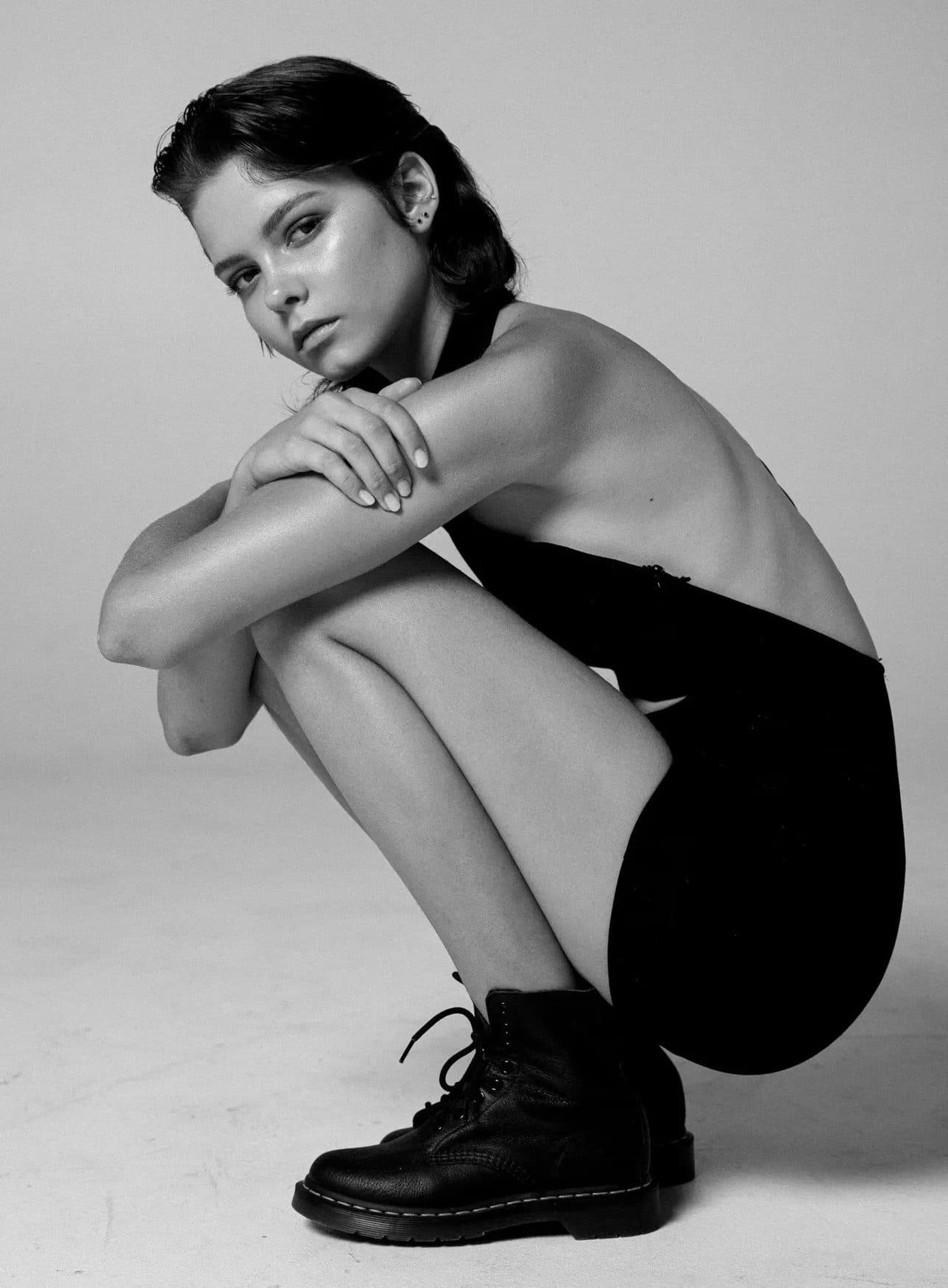
A good pose looks easy, but there is a lot of technique behind it: weight shifted onto one leg, the angles of shoulders and hips, the position of the hands, a long neck, the angle of the chin. A small change can transform the silhouette in frame.
Each type of work has its own style. Catalogues need clear poses that show the garment, magazines freer and more expressive ones, beauty shots barely moving nuances of the face, sport movement.
Posing has to be practised in front of a mirror and a camera. A good model has a "vocabulary" of poses and moves smoothly from one to the next so the photographer can keep shooting.
In practice
On a catalogue shoot a model has three basic poses with two variations each. The photographer shoots in bursts of ten, and every two frames the model changes one thing: a hand, the angle of the head or a step. In an hour there are hundreds of different frames, easy to choose the best from for each garment.
What to watch for
- Change one thing every few frames: hands, angle or gaze.
- Keep your weight on the back leg: the body looks more relaxed.
- Practise in front of a mirror and film yourself.
Related terms
Frequently asked
01How do you learn to pose?
By practising in a mirror, studying magazine pictures, doing tests and training with a coach.
02How many poses do you need to know?
The number matters less than moving smoothly between a few basic poses and their variations.