

In short
- Model poses depend on the job: a commercial shoot sells the garment, a high fashion shoot carries an idea.
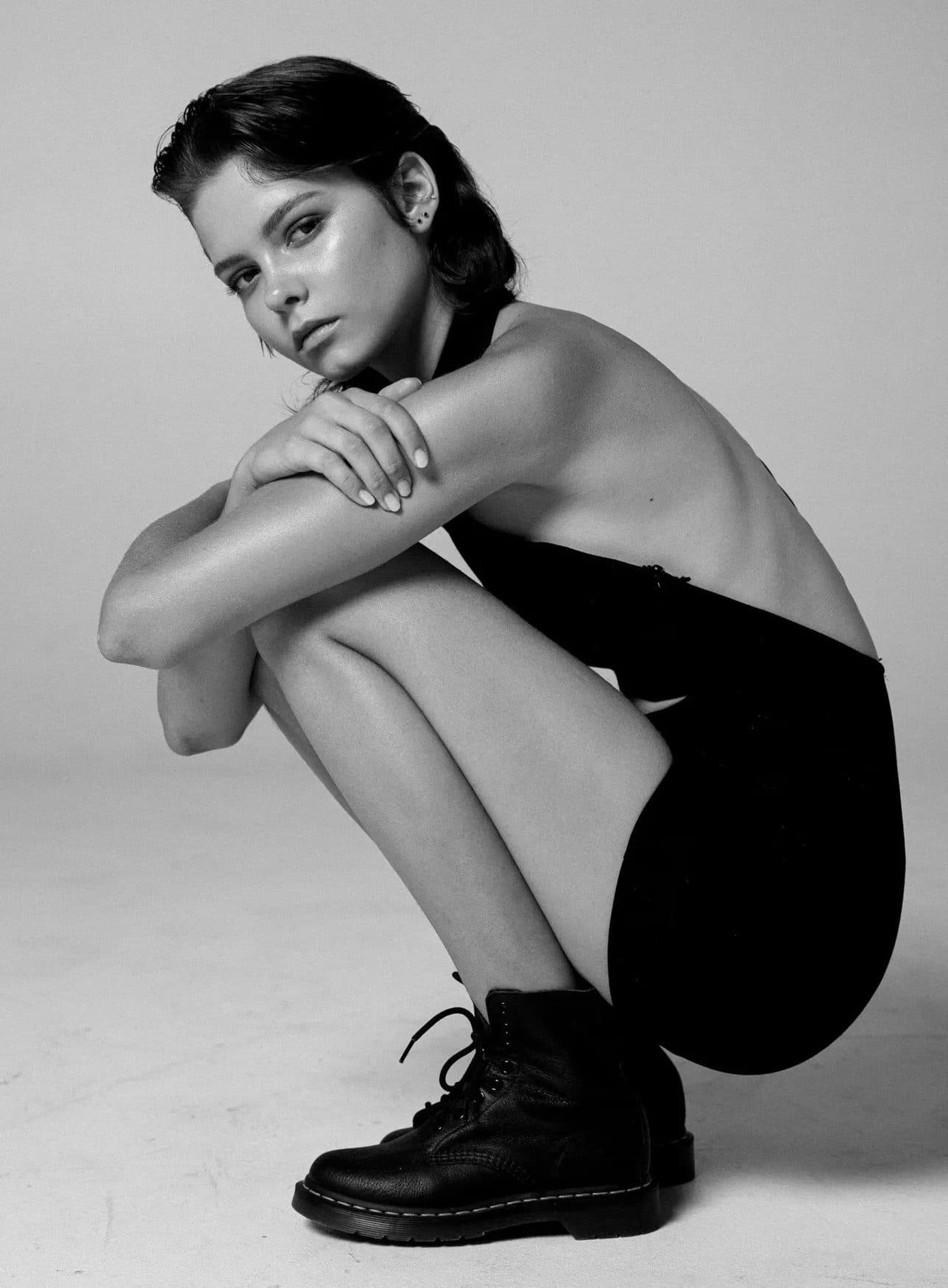
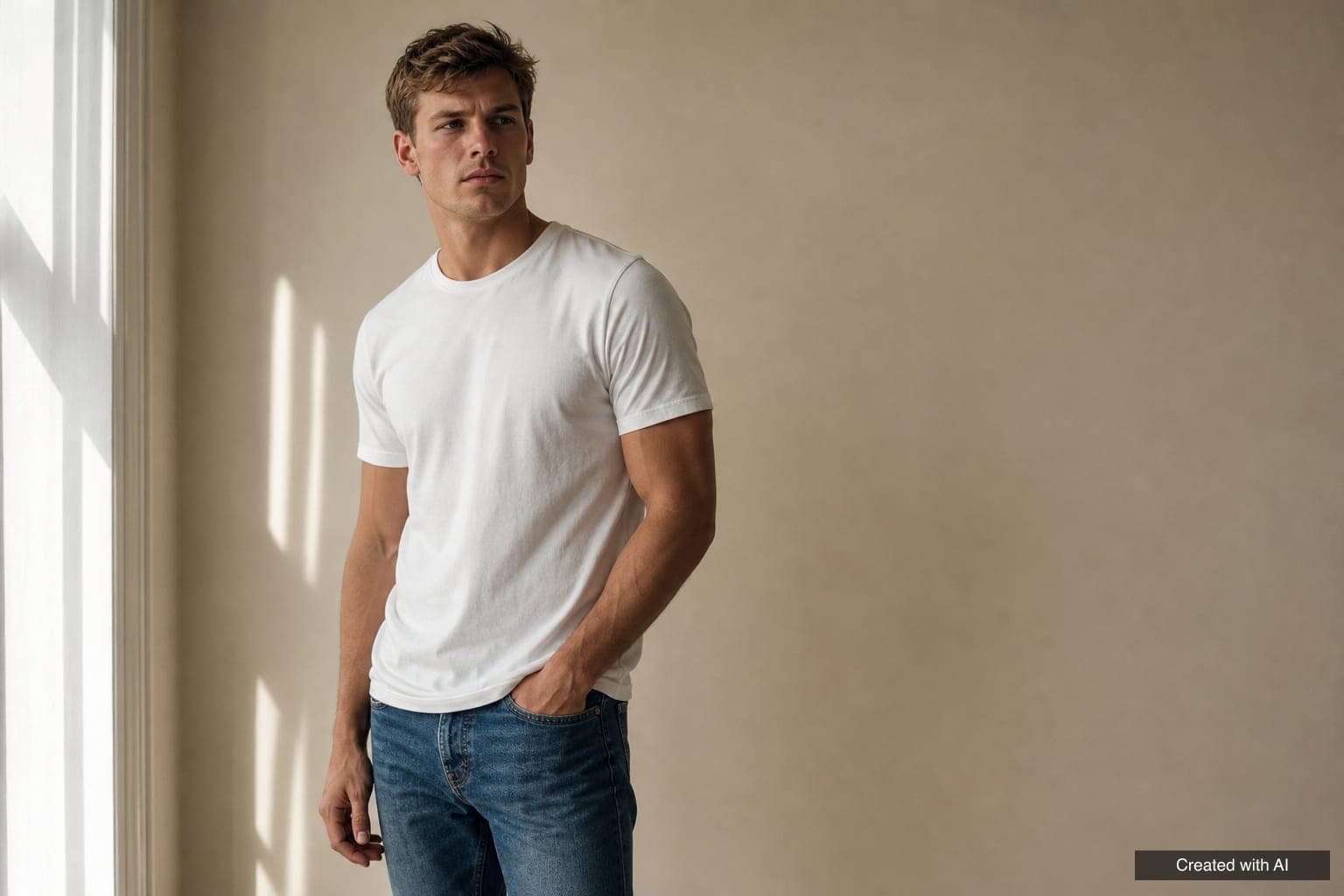
- A good pose starts with your weight on one leg, relaxed shoulders and space between your arms and body.
- At castings in Asia you are almost always asked to pose, and it often decides whether you are booked and what you are paid.
- Hold a pose for a few seconds at most: show variety without overdoing it.
Modeling works much the same everywhere, yet markets differ. The two biggest are the West and Asia, and they differ not only in what they ask of models, height for example, but in how the work is done.
The casting is one of those differences. It is the most important part of the job, a little like a job interview, and it decides whether you are booked. In the West a neutral set of digitals is often enough. In Asia it is normal to be asked to pose and show what you can do, and the fee you are offered often depends less on your measurements than on how you pose.
This guide covers how to pose as a model: commercial versus high fashion poses, 12 poses worth knowing, how to use your face, how to behave at a casting and how to practise at home. It draws on model training at the Supermodels agency in Lithuania and on models who have worked in China and Japan.
Why posing decides jobs and fees in Asia
Going to Asia, you need some posing experience, though not necessarily from the big fashion capitals. You need a feel for the camera and for posing for different products and kinds of fashion. In China most work is catalogue and e-commerce: a model may shoot dozens or even hundreds of outfits in a day, so the client uses the casting to see whether you change poses fast and with confidence. More on those shoot days in our guide to modeling in China. Japan values discipline as well: punctuality and a polished look count.
 Model training with SupermodelsPoses are easiest to learn when someone corrects youIn the training we film your sequence of poses, show where the line breaks and repeat until the poses flow without pauses.About the trainingfrom €69
Commercial vs high fashion poses
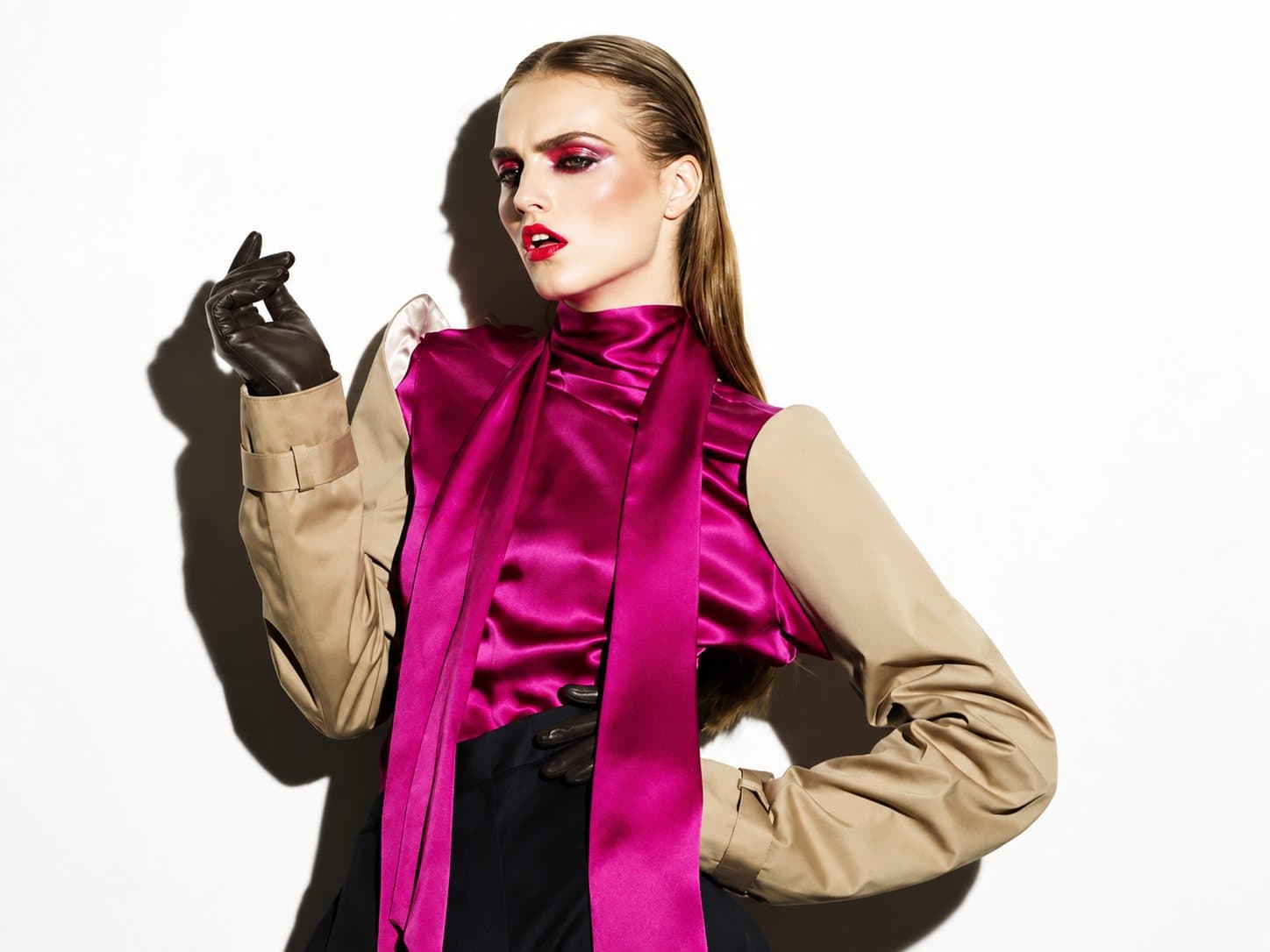
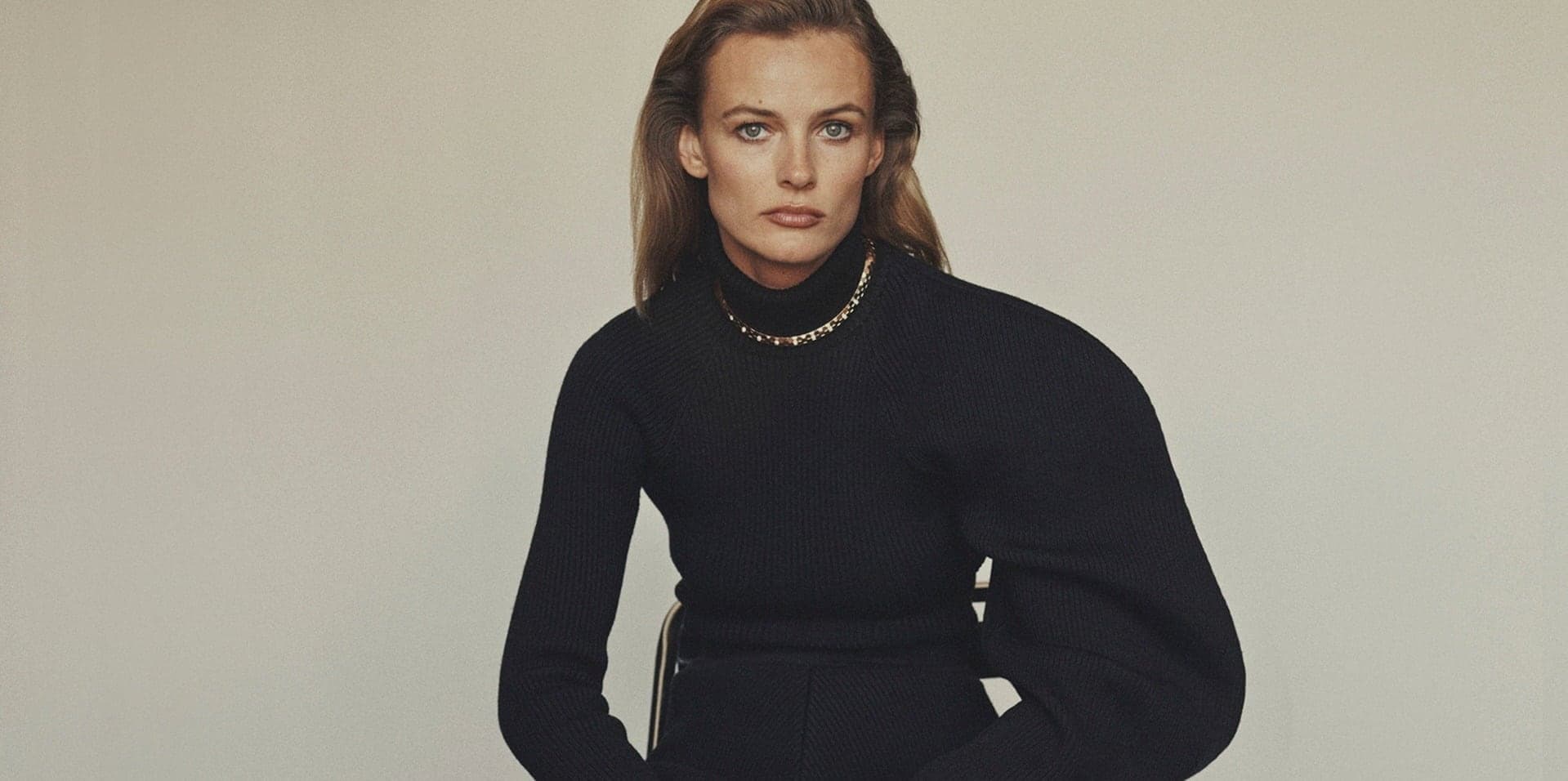
High fashion posing is a form of expression. The point is not to sell the garment but to carry, with body and face, the idea the designer put into it. Expect angular, striking, unusual and often strongly asymmetric poses, and faces that are serious or even fierce rather than happy.
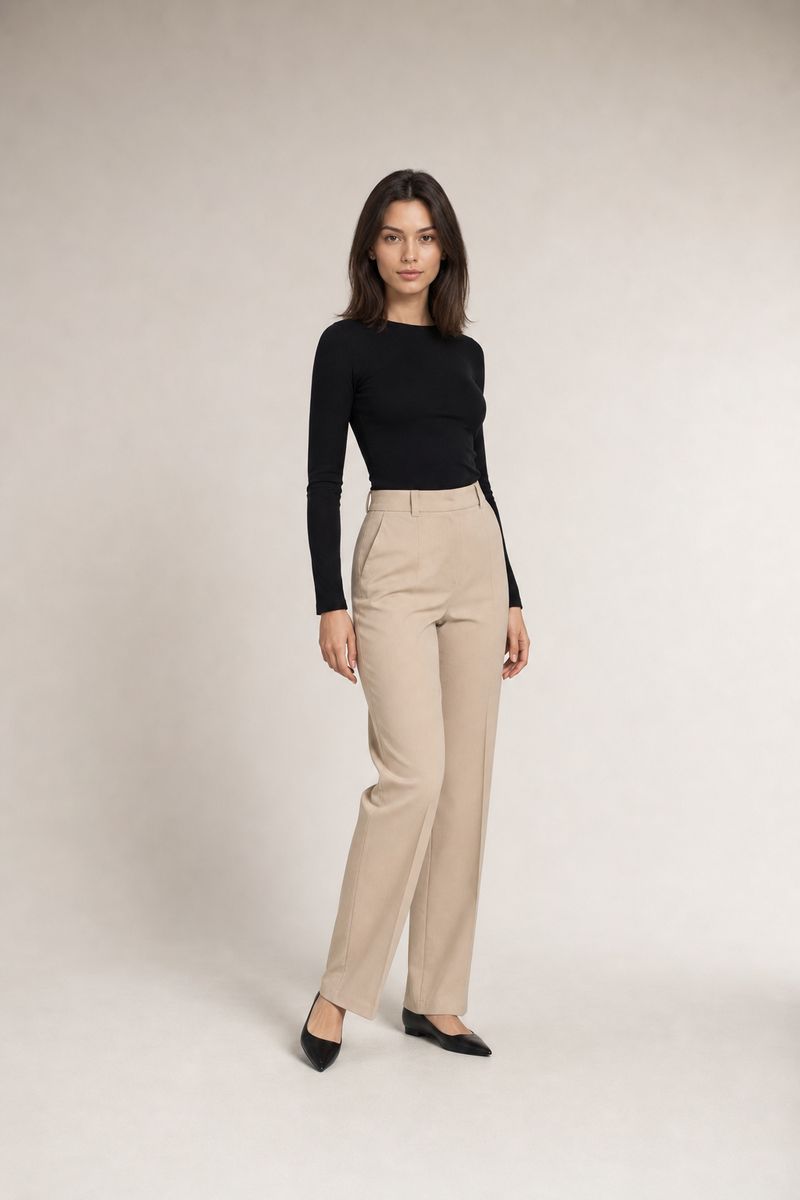
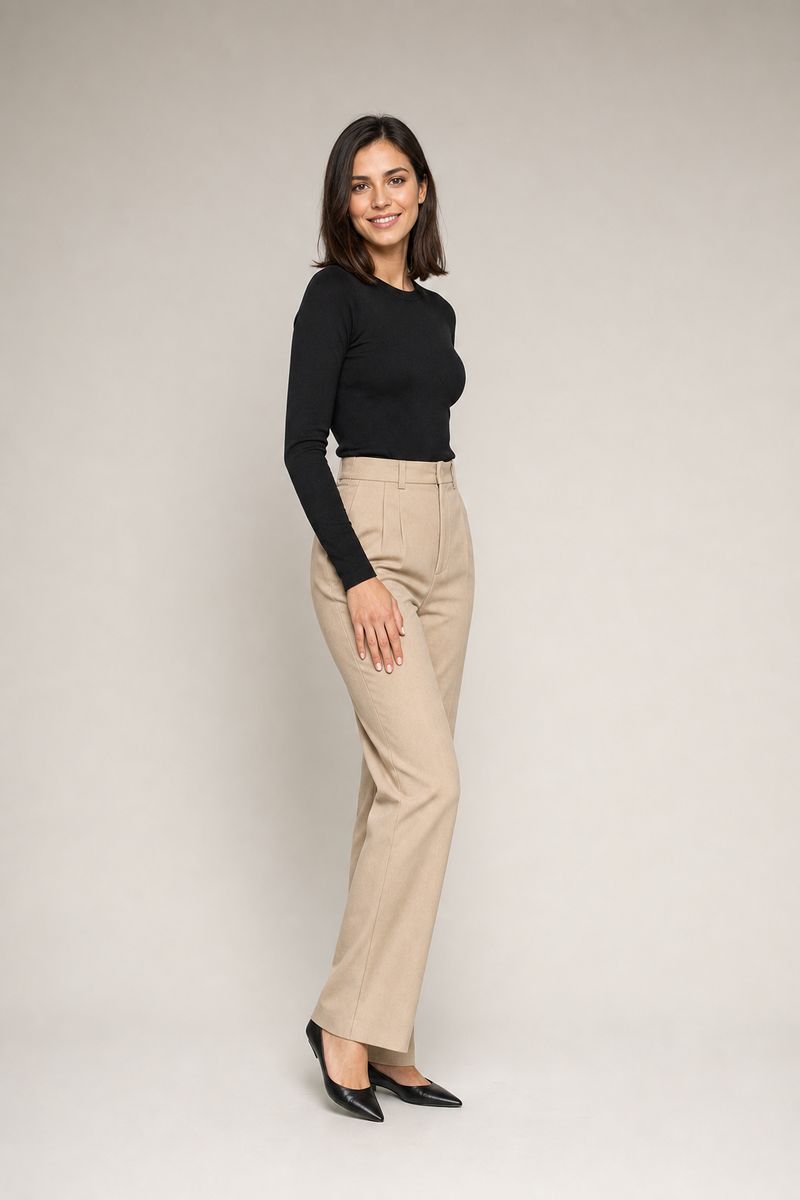
Commercial posing for catalogues and ads is the opposite. Those pictures exist to sell, so your job is to show the garment or accessory attractively and make the buyer want it. Poses are more natural, expressions match the clothes and the mood, and you avoid arms high above the head, sharp angles, a raised chin, aggressive faces and anything that hides the product, such as turning too far sideways.
| Commercial shoot | High fashion shoot | |
|---|---|---|
| Aim | Sell the garment or accessory | Carry an idea or mood |
| Poses | Natural, open, garment visible | Angular, asymmetric, unusual |
| Face | Open, smiling or soft | Serious, focused, sometimes fierce |
| Hands | On hips, in pockets, relaxed | High, near the face, graphic lines |
| Where | Catalogue, e-commerce, advertising | Magazines, campaigns, editorials |
12 model poses worth knowing
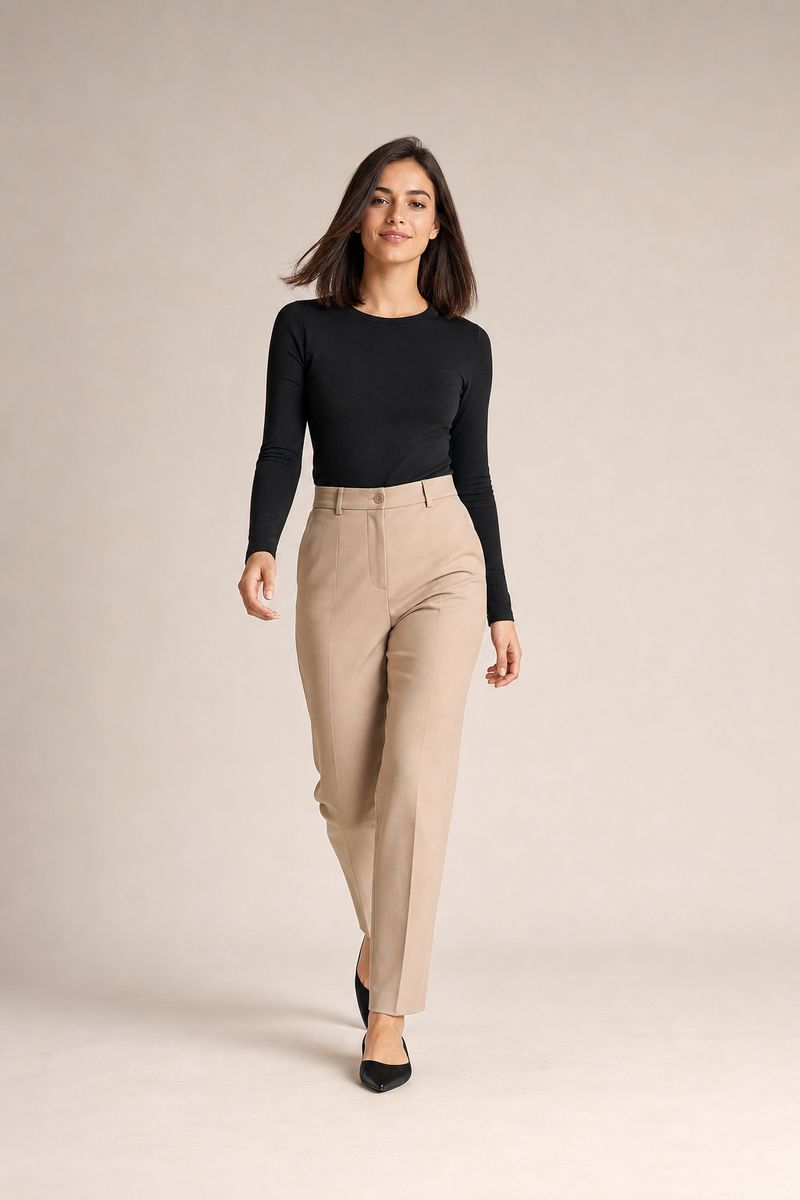
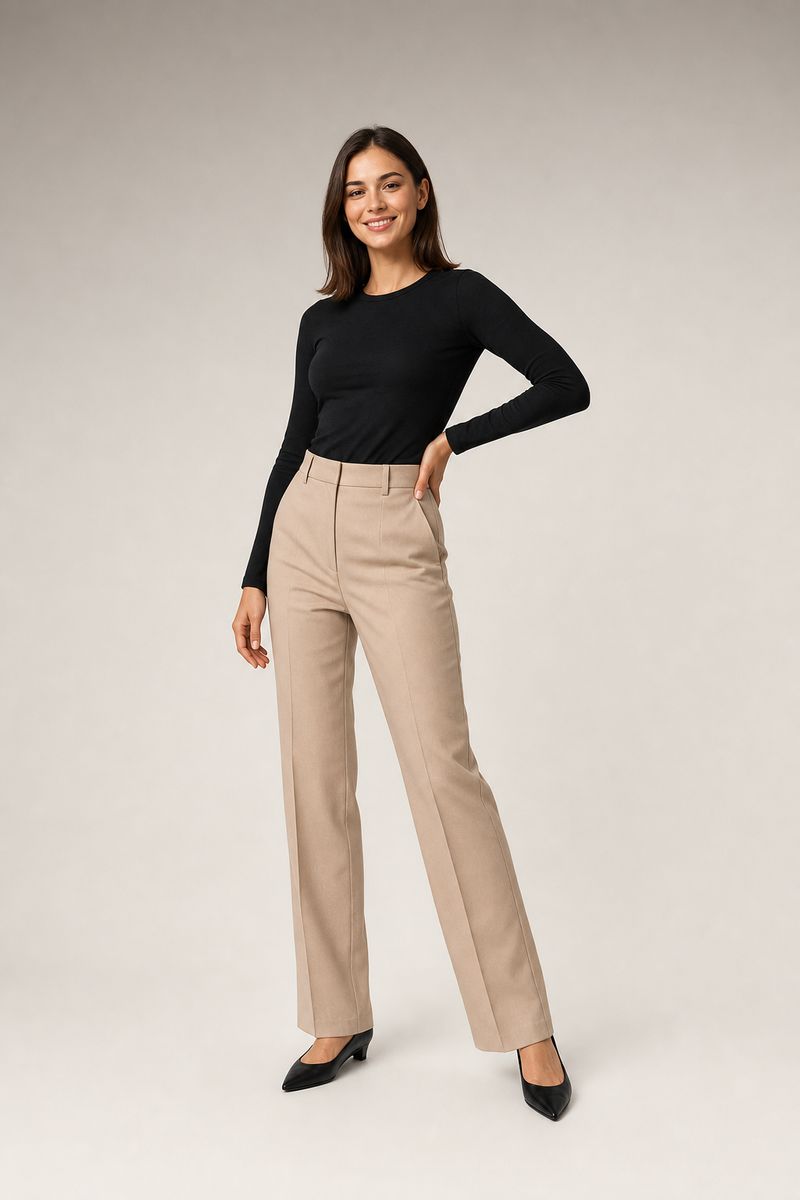
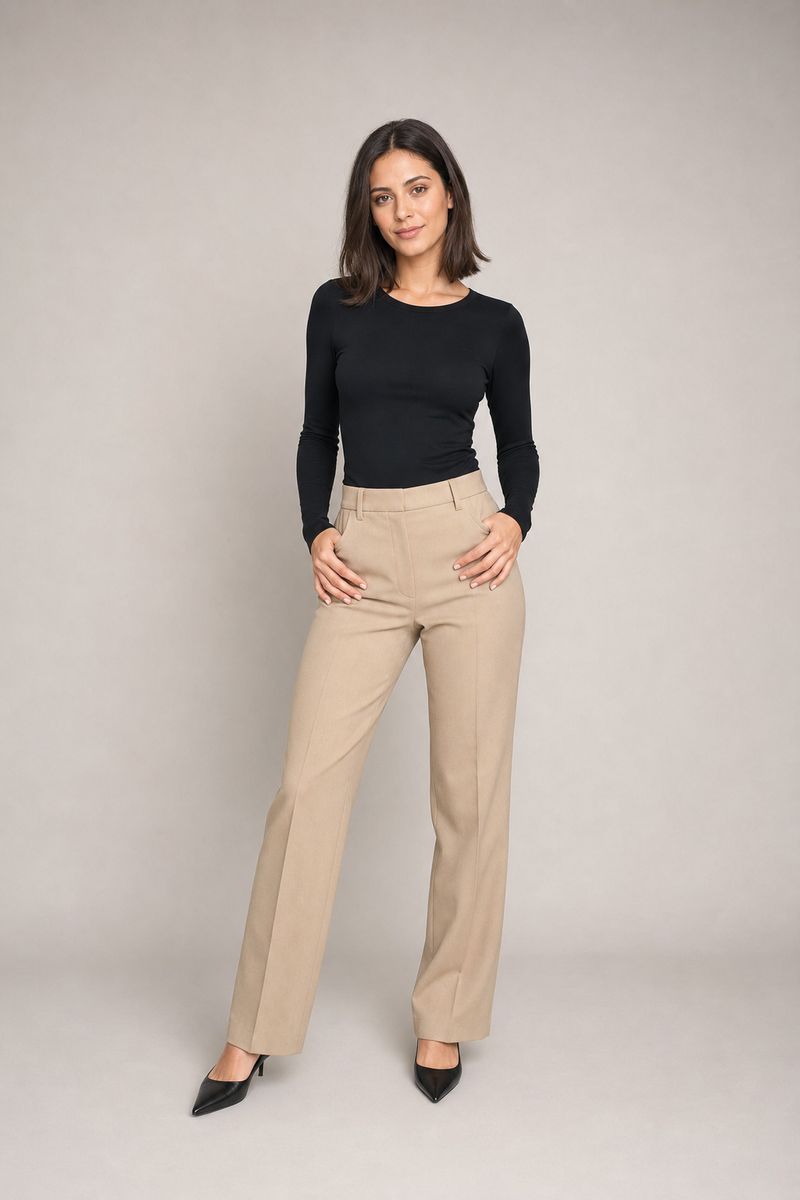
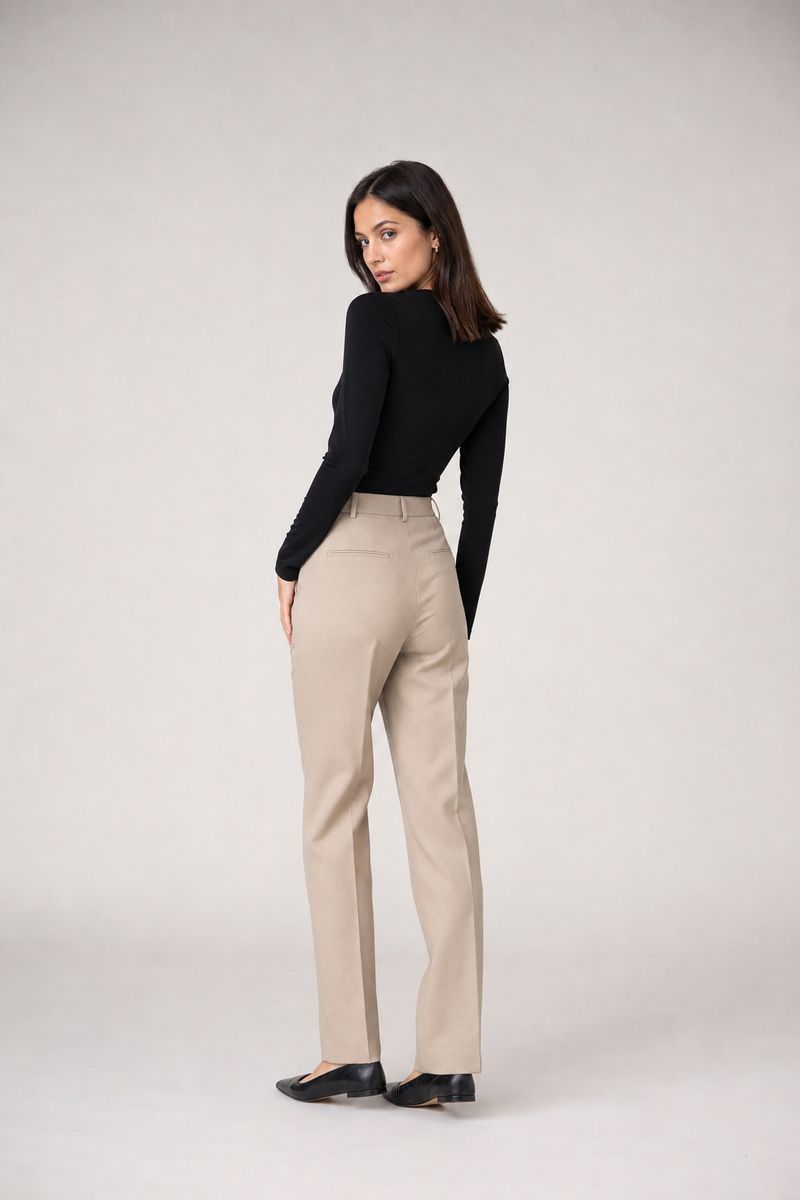
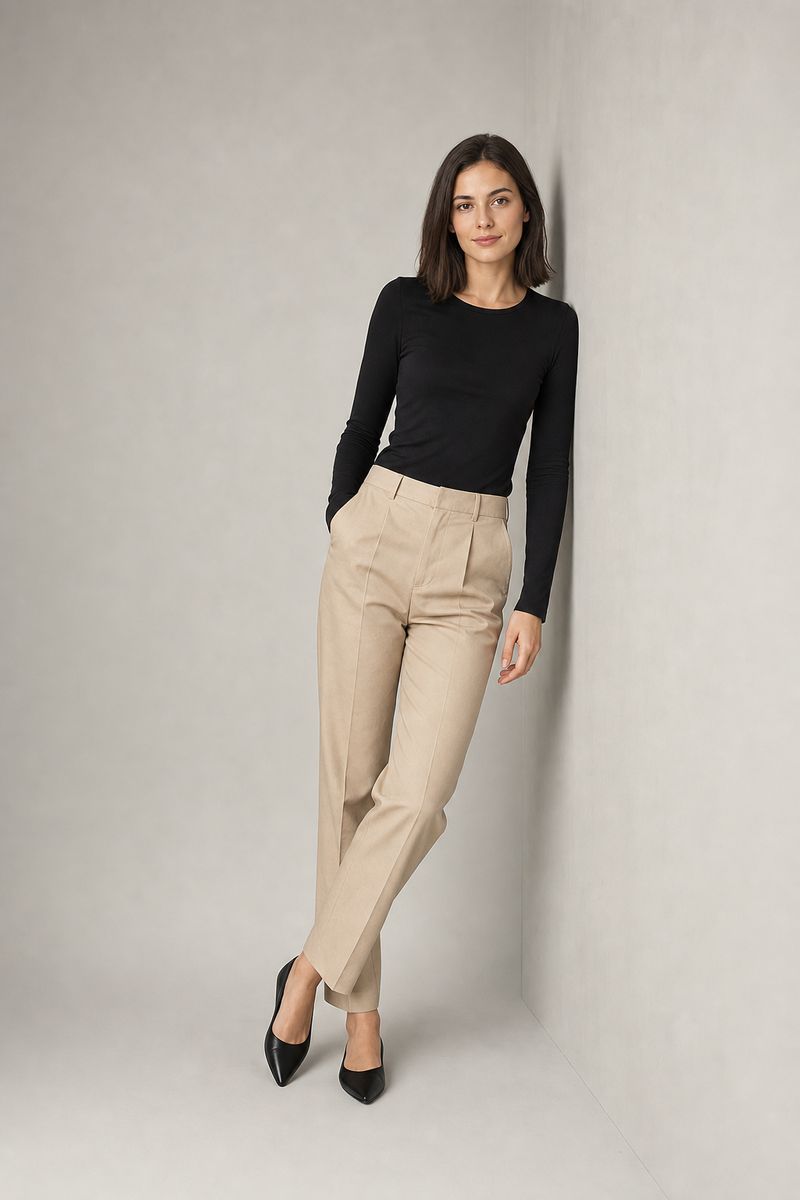
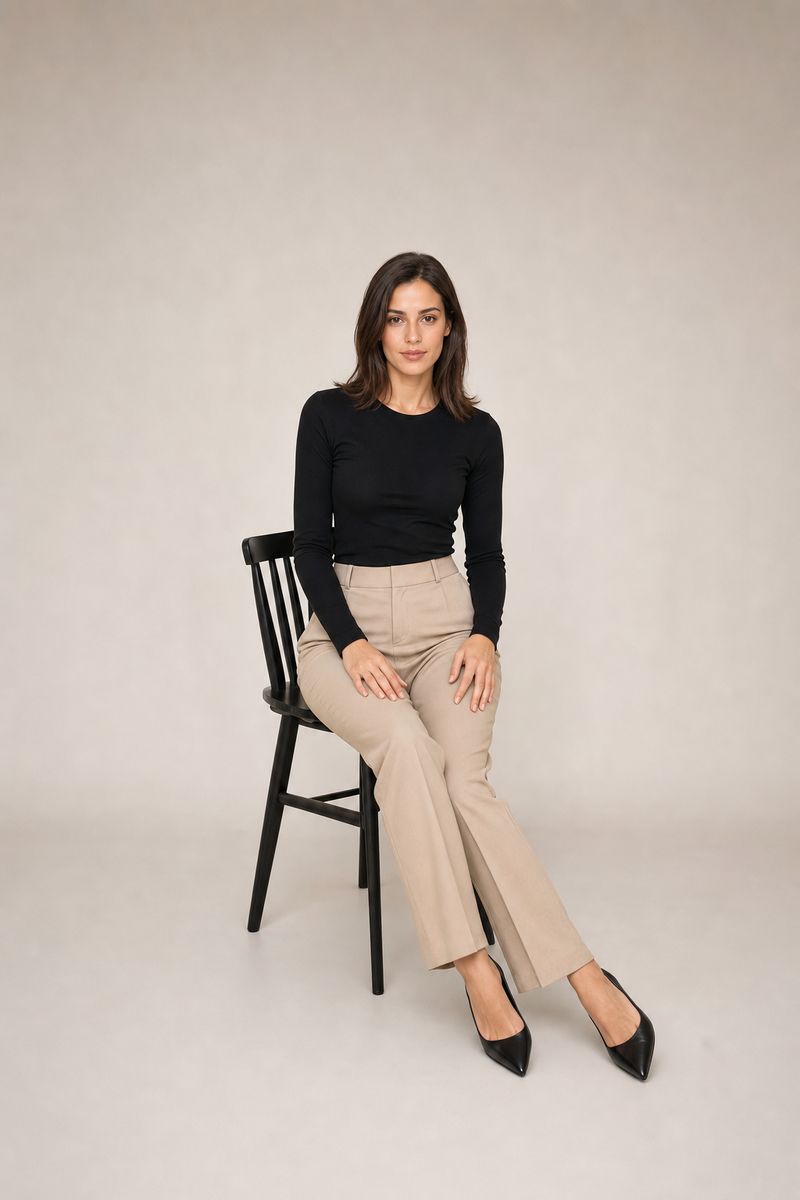
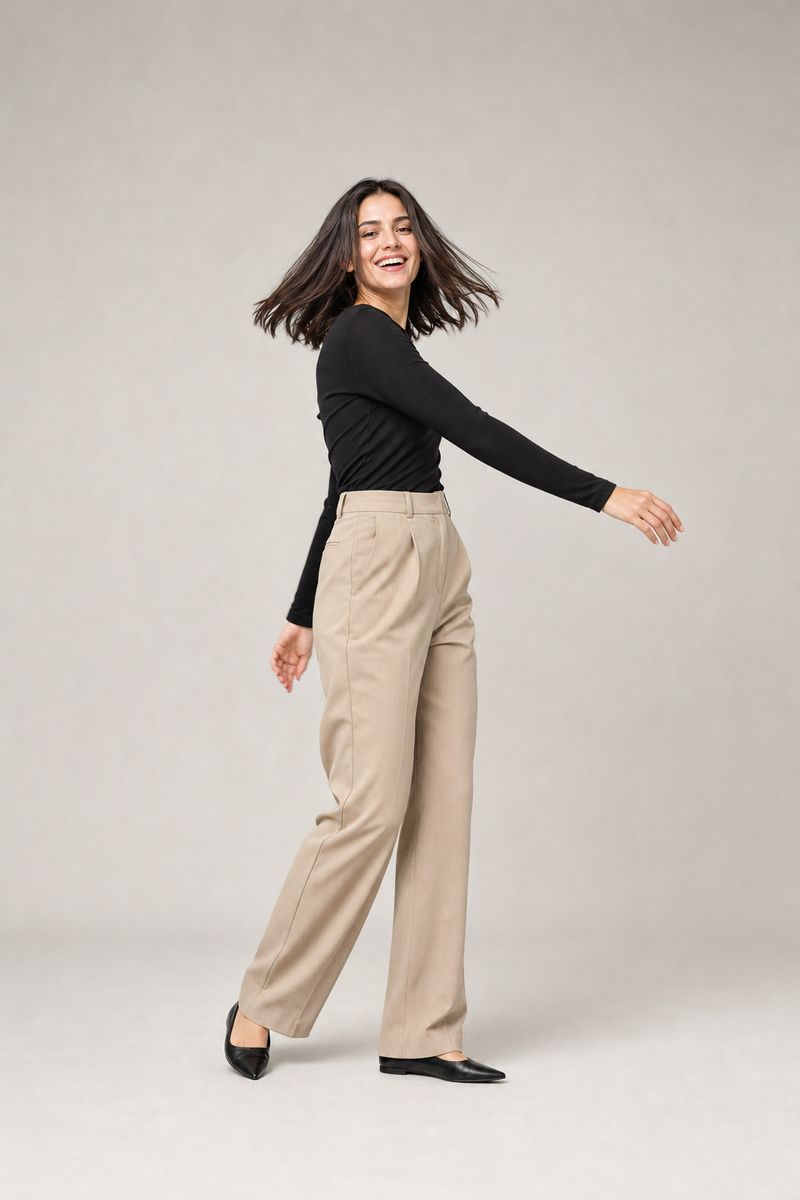
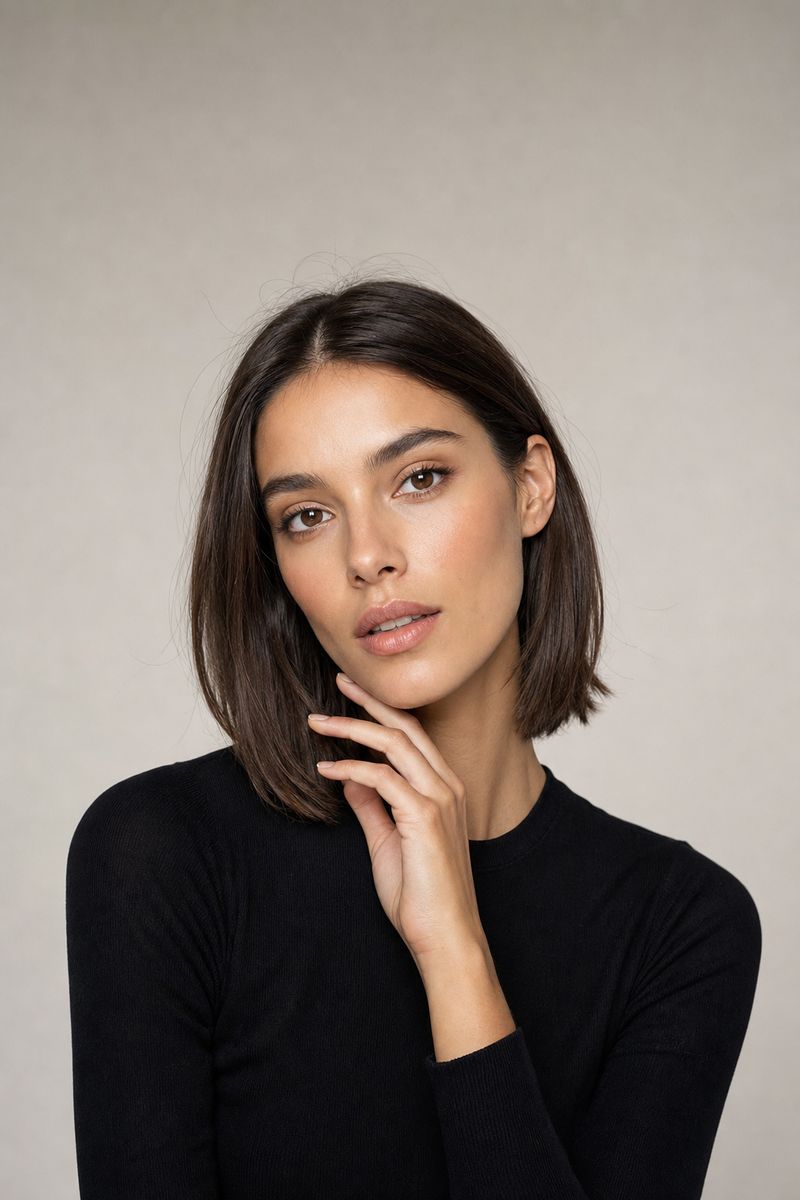
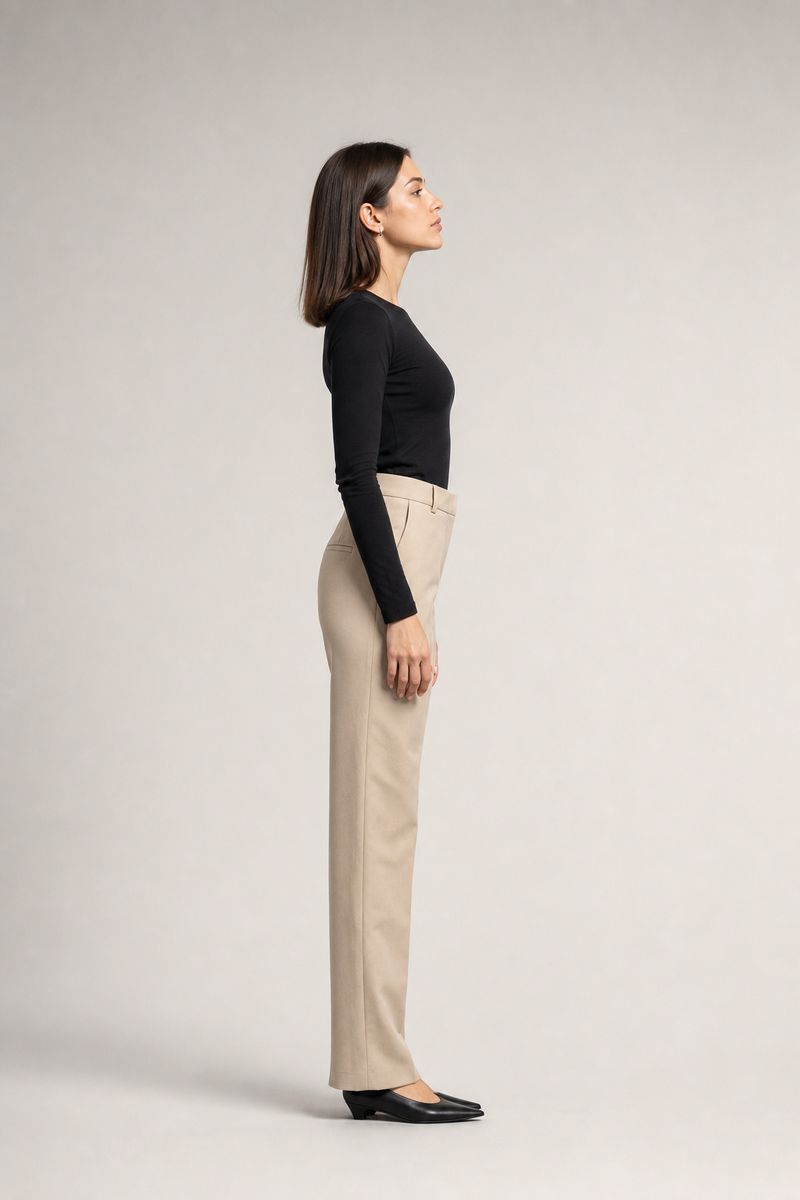
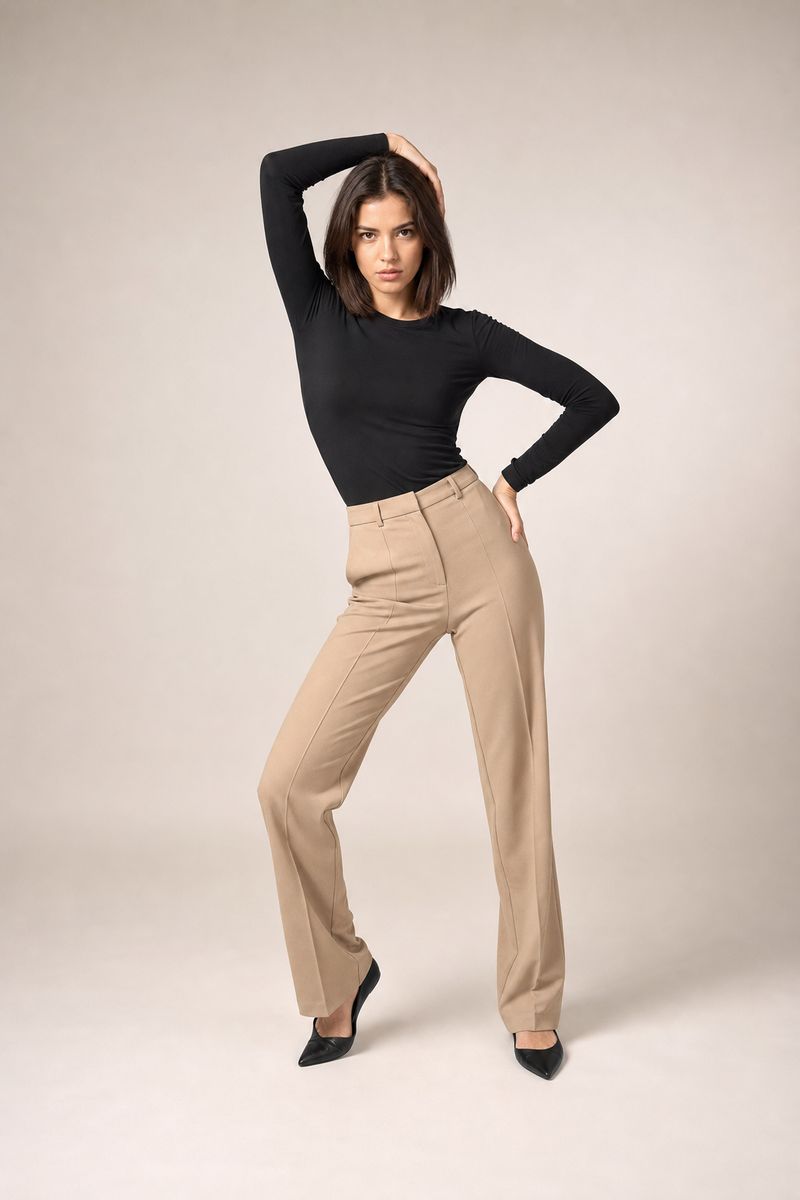
Face and eyes
- Chin slightly forward and down. It defines the jawline and removes a double chin.
- Smile with your eyes. Even without smiling, keep the eyes alive by slightly lifting the lower lids.
- Relaxed mouth. Lips slightly parted, jaw unclenched.
- Blink between frames. Close your eyes briefly before a shot so the look does not freeze.
- Breathe. Holding your breath lifts the shoulders and stiffens the face.
How to pose at a casting
You are often asked for particular moods: natural, sweet, sexy, playful, "high fashion". Your face has to match the body. Do not hold one pose for more than a few seconds, show as much variety as you can, yet do not overdo it: stay natural, relaxed and sure of what you are doing.
Keep two things apart. Digitals (polaroids) are taken without make-up and without posing: stand straight, arms relaxed, face neutral, so the client sees what you really look like. Test shots at a casting, especially in Asia, are the opposite: the client wants to see you pose. Our casting guide covers the rest, and the composite card guide what to bring.
- Ask what the job is: catalogue, campaign or magazine. The poses follow from that.
- Have a sequence of 6–8 poses you know by heart and change every 2–3 seconds.
- Show the clothes: if you wear the client's garment, do not hide it with your arms or a turn.
- Listen to the photographer. "More natural" or "more energy" is a test too, so adjust at once.
How to practise at home
- Mirror. Start with the weight shift and the three-quarter turn until they feel natural.
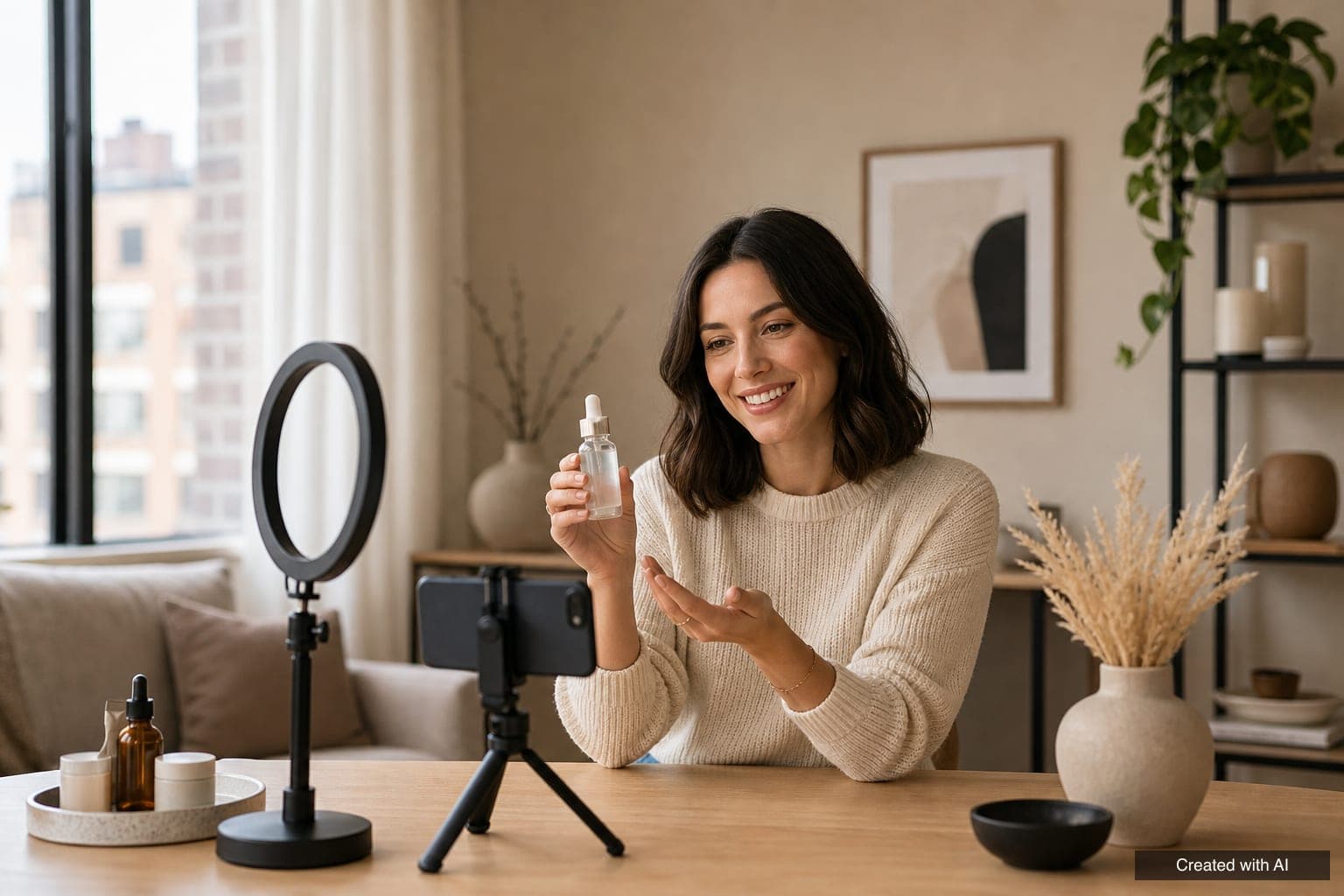
- Phone bursts. Put your phone on a stand, shoot in burst mode and change 10 poses in a minute. Pick the best three.
- Copy campaigns. Take catalogue and magazine pictures and try to recreate the pose.
- Film the movement. Video shows whether your transitions are smooth.
- Ten minutes a day. Posing is muscle memory, not talent.
Common mistakes
- Arms pressed against the body, which widens the silhouette.
- Raised shoulders and held breath.
- Both feet flat with weight split evenly: the pose looks static.
- Palm facing the camera or stiff fingers.
- The same pose throughout, or the opposite: dramatic high fashion poses at a commercial casting.
- Looking through the camera with nothing behind the eyes.
Where to learn to pose
Posing can be learned, and it does not take years. Supermodels teaches posing, the walk and digitals in person in its model training. Online, the Supermodels Masterclass covers the same ground in 4 video modules and 12 guides for 77 €, with a module on Asian markets: Japan, South Korea, China, Singapore, Thailand and Taiwan (in Lithuanian). To understand which clothes, colours and hair work for you on camera, book an image consultation.
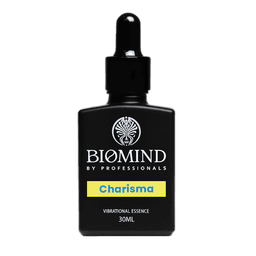
How you feel matters before a big casting. Some models keep a small ritual; the Mind University shop has the Charisma essence, which the radionics tradition links with confidence. It is not a medicine and no substitute for preparation. For skin before shoots, some choose an at-home LED light mask such as the Photon therapy mask for cosmetic facial skin care.
Just starting out? Read how to become a model, and see the Supermodels open call.
Frequently asked questions
How do I learn to pose for photos?
Start with putting your weight on one leg and the three-quarter turn, practise in front of a mirror and with phone bursts for ten minutes a day. A coach who corrects you on the spot is the fastest way.
What is the difference between commercial and high fashion poses?
Commercial poses are natural and show the garment, because the picture has to sell. High fashion poses are angular and asymmetric and carry an idea rather than the details of the clothes.
Do you have to pose at a modeling casting?
It depends on the market. In the West neutral digitals are often enough; at castings in Asia you are almost always asked to pose, and it can decide your fee.
How long should you hold a pose?
A few seconds. Photographers want variety, so change every 2–3 seconds and move smoothly from one pose to the next.
Which poses work for catalogue shoots?
The three-quarter turn, a step towards the camera, hand on hip, hands in pockets and a look over the shoulder. Above all, keep the garment visible.
Sources
- Model training at the Supermodels agency and the Supermodels Masterclass course material.
- Accounts of Lithuanian models who have worked in China and Japan, from the Jurgita archive.

Comments (0)
No comments yet. Be the first!
Only logged-in users can comment. Register — and you'll be able to share your thoughts on this article.
Register