

In short
- There are six classic sleeping positions: fetal, log, yearner, soldier, freefall and starfish. We add two more: half-fetal and stork.
- The personality readings come from a 2003 survey by the British sleep researcher Chris Idzikowski. They are a fun mirror, not a diagnosis.
- For health, most people do best on their side or their back. Sleeping on your stomach puts the most strain on the neck and lower back.
- Side sleeping helps with snoring and reflux, especially on the left side. In pregnancy, from 28 weeks, going to sleep on your side is safest.
- A pillow between or under the knees often fixes morning back pain faster than a new mattress.
Sleep is vital, and it matters for how you look. Adults are advised to sleep seven to nine hours a day, and the best sleep comes at night, in the dark, when bright light and noise do not disturb it. There is a reason night-time sleep is called beauty sleep: in 2010, researchers at Sweden's Karolinska Institute showed that the same people looked tired, less healthy and less attractive in photos taken after a sleepless night.
The position you sleep in may also say something about your character. We all toss and turn and change position several times a night, but most of us have one or two positions we always start the night in. This guide covers eight sleeping positions, each with a picture, and what they are said to reveal about you. It also explains which position is best for your back, neck, snoring, reflux and pregnancy, how to place your pillows, and what helps you fall asleep faster.
Where the link between sleep position and personality comes from
The most quoted classification was presented in 2003 by Professor Chris Idzikowski, director of the UK's Sleep Assessment and Advisory Service. He asked about 1,000 people which position they fall asleep in and linked the six most common positions with typical personality traits. The largest group, 41%, fall asleep in the fetal position, and more than twice as many women as men do so. Only 5% said they sleep in a different position every night.
| Position | How you lie | Share of people |
|---|---|---|
| Fetal | On your side, curled up, knees drawn to the chest | 41% |
| Log | On your side, legs straight, arms down by your sides | 15% |
| Yearner | On your side, both arms stretched out in front | 13% |
| Soldier | On your back, arms pinned to your sides | 8% |
| Freefall | On your front, hands around the pillow, head turned to one side | 7% |
| Starfish | On your back, arms up around the pillow or spread out | 5% |
Keep in mind that this was a survey, not a clinical study. The personality profiles are a popular interpretation, so read them as a playful look at yourself rather than a personality test. The health effects described further down rest on firmer evidence.
Eight sleeping positions and what they say about you
Freefall (face down)
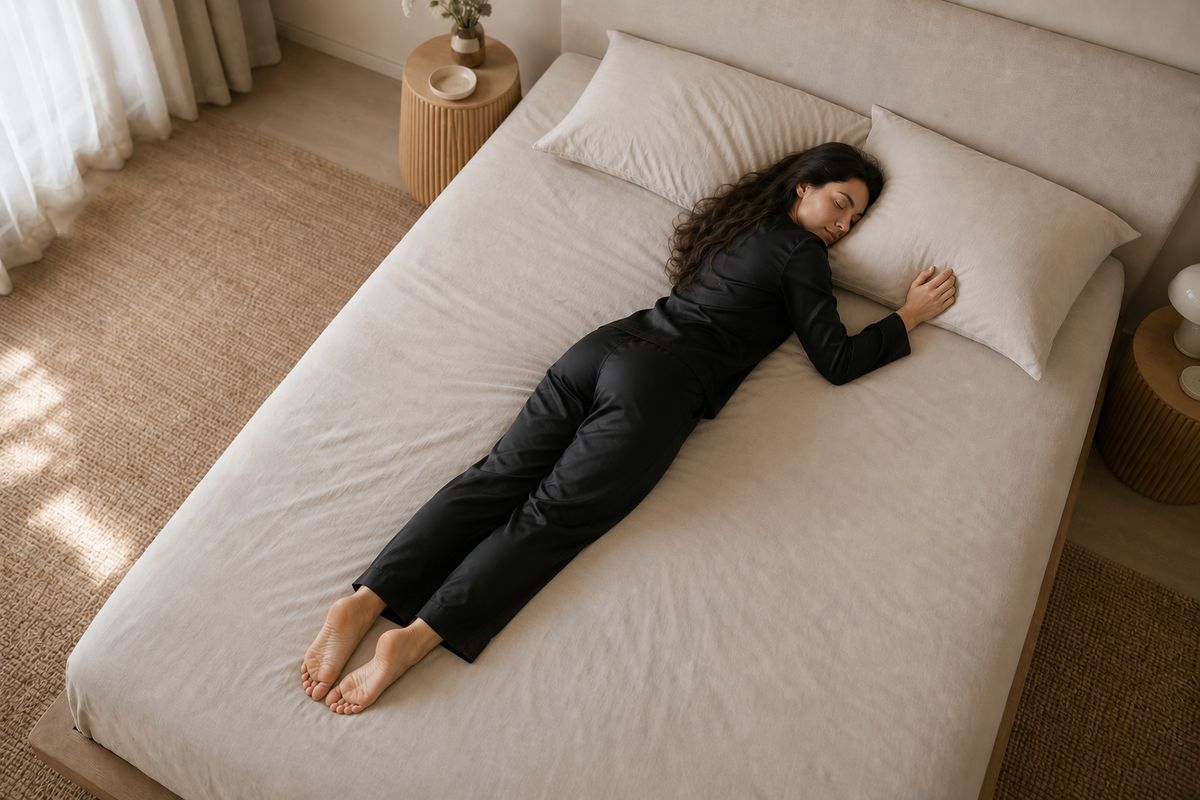
Freefallers lie stretched out on their stomach, arms pushed into or wrapped around the pillow, head turned slightly to the side. They are often the life of the party, outgoing and brash, but underneath they are sensitive to criticism and fierce defenders of their territory and opinions. They may also like to keep an eye on, and control, the people around them.
For your health: Idzikowski noted that this position may help digestion, but lying for hours with the head turned puts the most strain on the neck, and the lower back sags. If your neck or back aches in the morning, this is the first position to change.
Fetal position
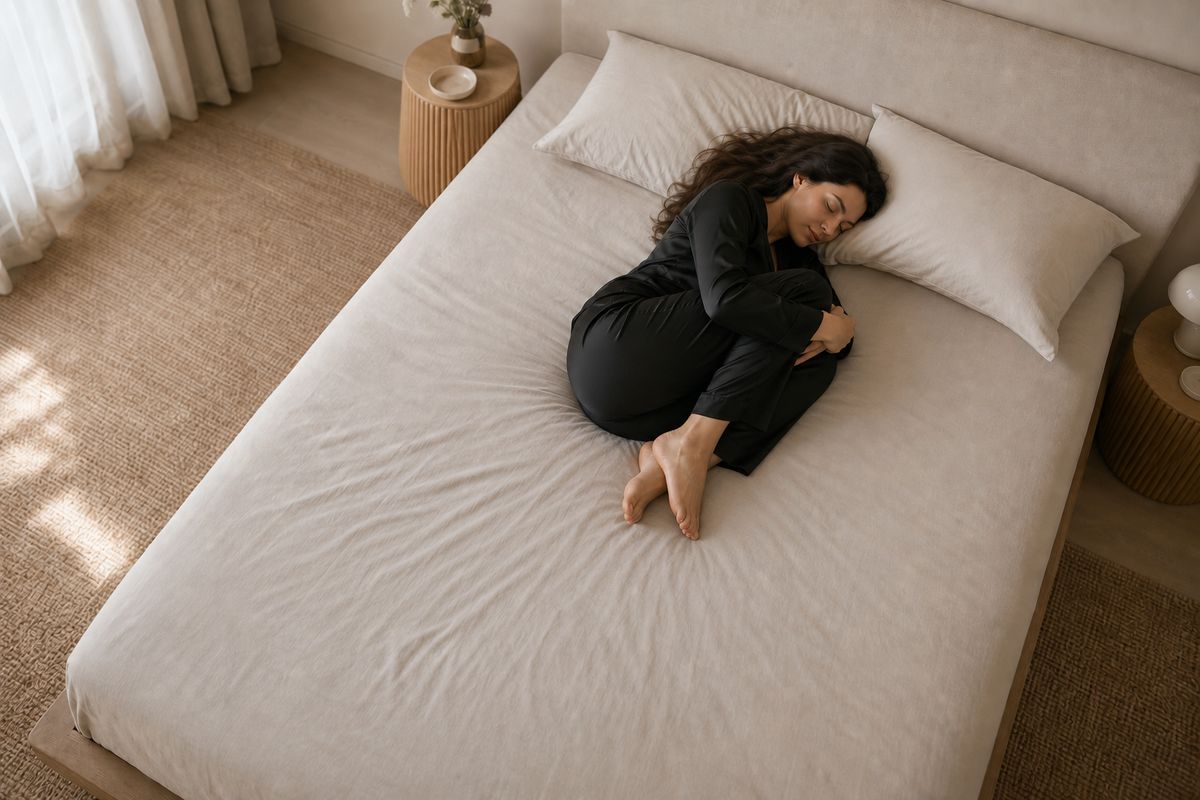
The position is named after the way unborn babies lie in the womb. Fetal sleepers lie on their side, curled up with their knees to their chest and their arms wrapped around their body or knees. They can seem tough to others, but at heart they are sensitive and can feel insecure. They may be shy when they first meet someone, then soon warm up.
For your health: side sleeping reduces snoring, but curling up very tightly can restrict deep breathing and strain the back. The looser half-fetal position with a pillow between the knees is a better choice.
Half-fetal position
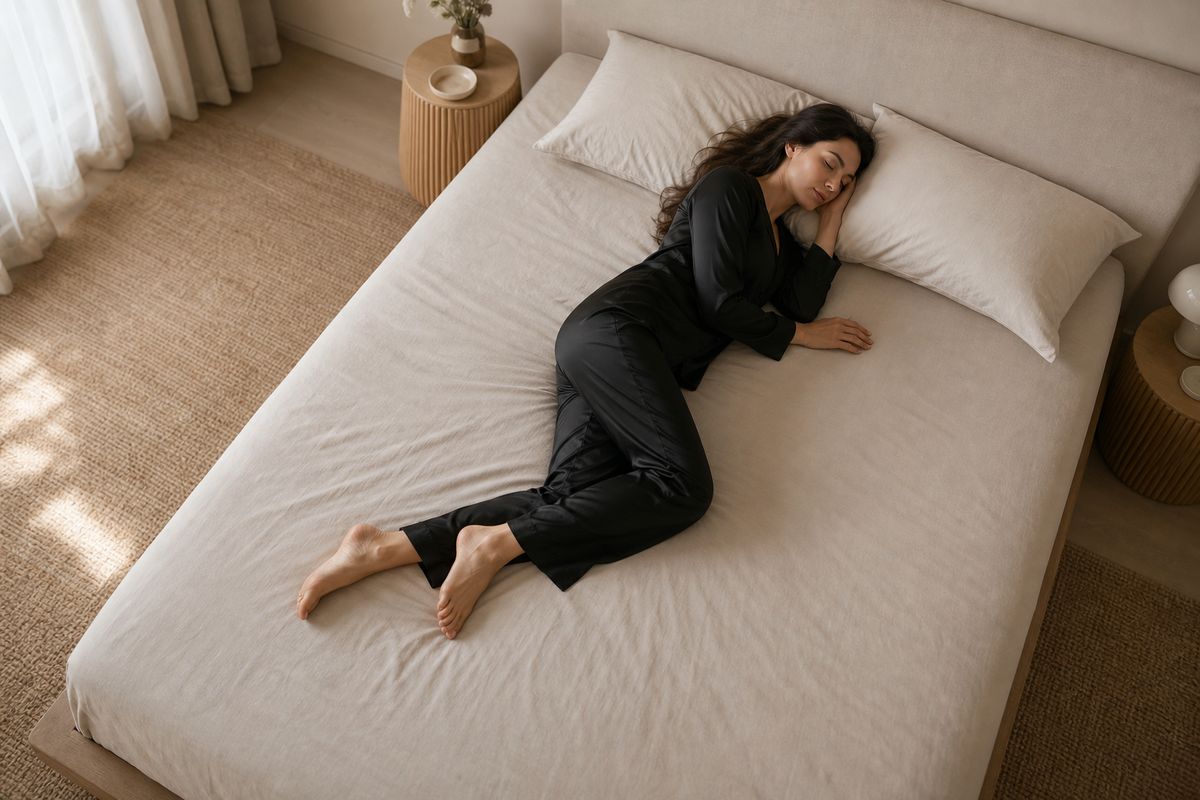
This is the most popular and one of the most comfortable positions. It differs from the full fetal position in that the knees are not pulled tight to the chest, just comfortably bent, and the arms usually rest under the head or against the pillow. Three words are said to sum up these sleepers and their lives: health, harmony and balance, so they tend not to collect many problems or worries.
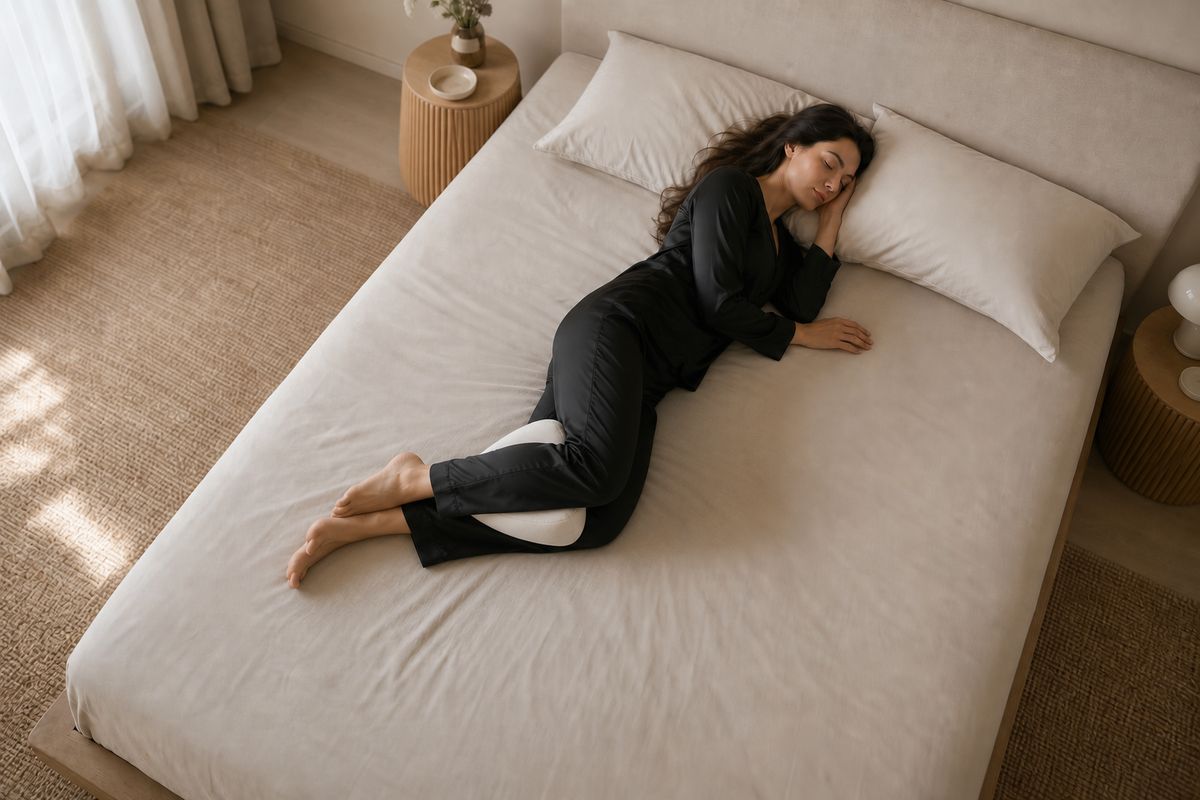
For your health: one of the best positions for most people. The spine stays nearly straight, the airway stays open, and a pillow between the knees stops the top leg from twisting the pelvis.
Log position
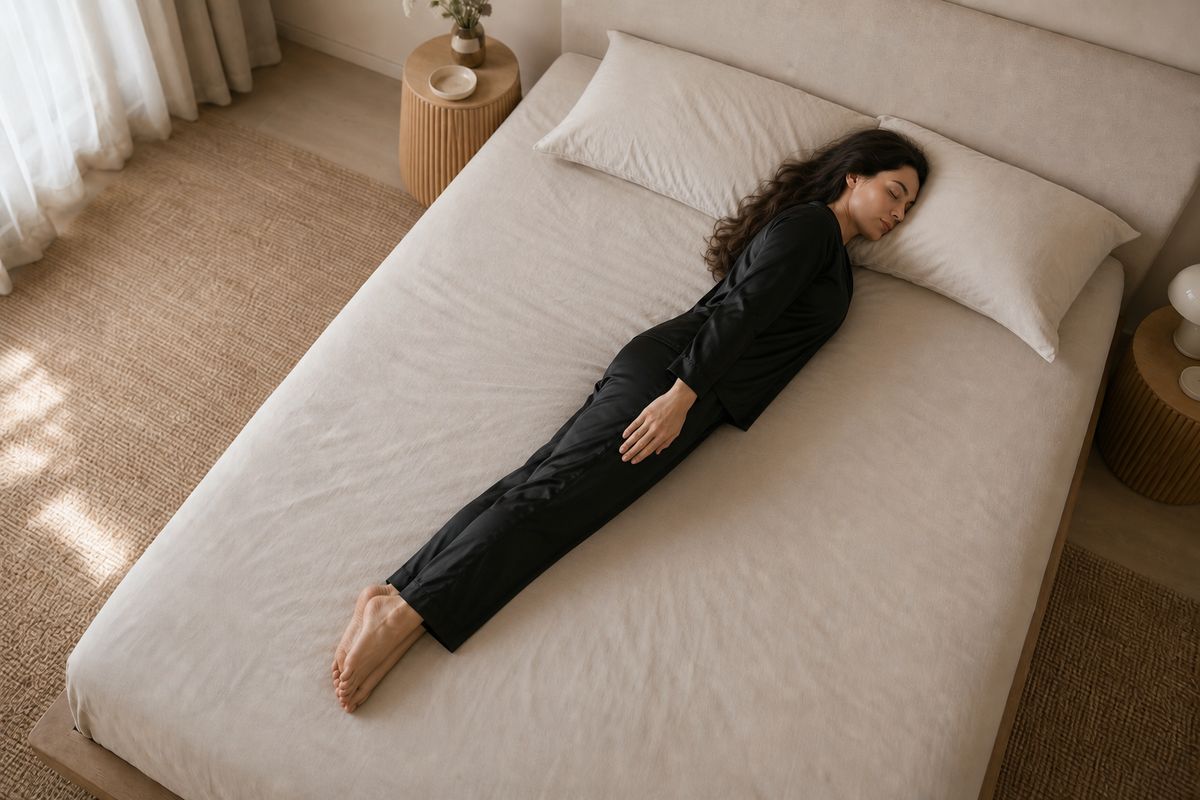
Log sleepers lie on their side with their arms down by their sides, or with the lower arm bent up by the head. They are easy-going and sociable, do not like staying in, want people to think well of them and often follow the latest fashion. They can be too trusting, and others may not always take them seriously.
For your health: a straight side position supports the spine well. The pillow should fill the gap between the shoulder and the head, otherwise the neck bends downwards.
Yearner position
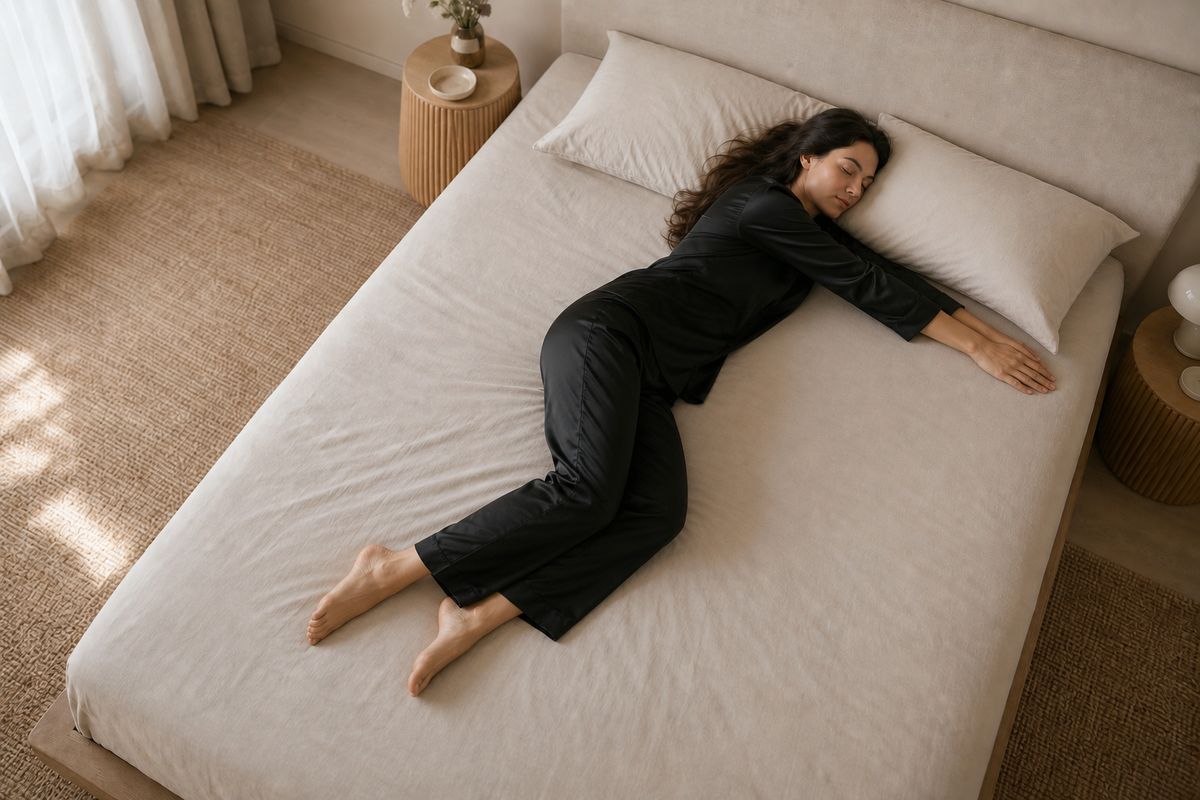
Idzikowski placed the yearner third by frequency. In his description these sleepers have an open nature but can be suspicious and even cynical. They are slow to make up their minds, but once they have made a decision they rarely change it.
For your health: side sleeping is good for breathing, but outstretched arms can go numb and load the shoulders over time. Rest your arms on the pillow or hug a second one.
Stork position
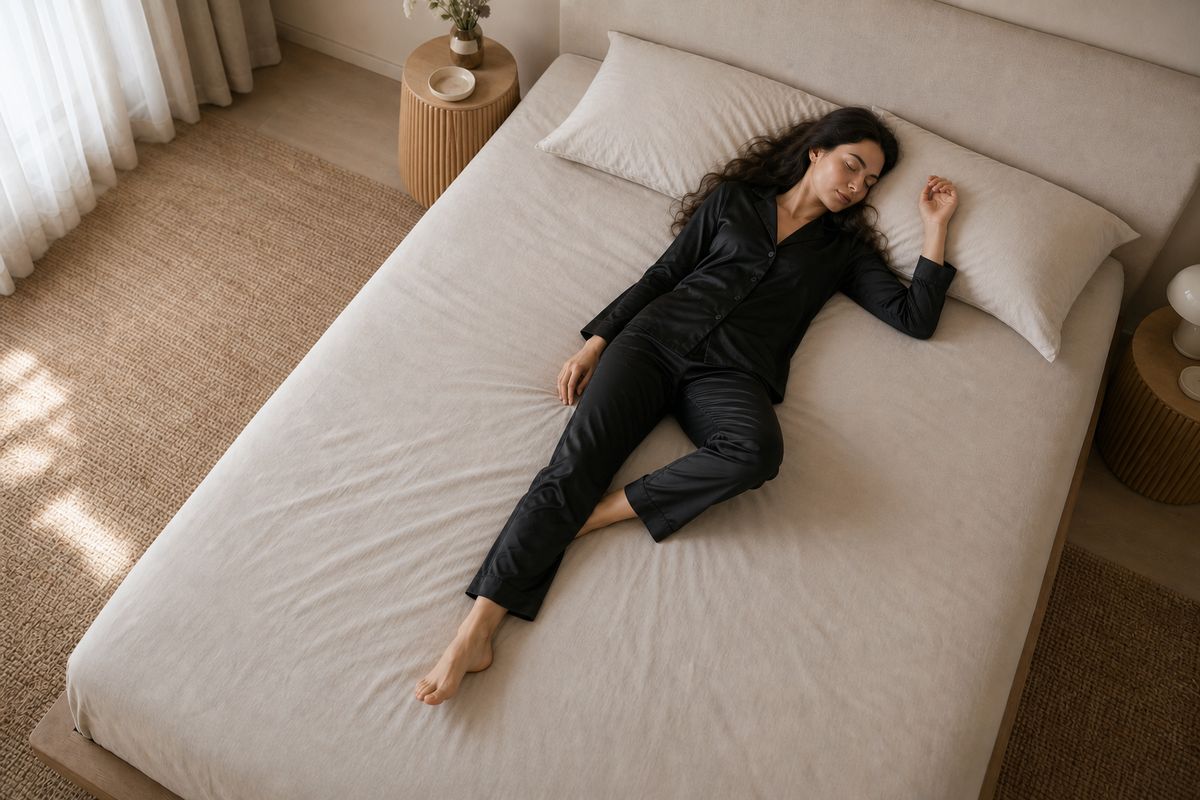
This position is said to look like a stork, with one leg straight and the other bent, and the arms often mirroring them. It is read as a sign of a two-sided personality: someone who looks very confident on the outside but is shy, unsure or self-conscious inside. The reverse also happens, when a person looks shy or slow outside and is in fact determined and self-assured.
For your health: the bent leg often twists the pelvis and lower back. If you wake with tension low in your back, slip a pillow under the bent knee.
Soldier position
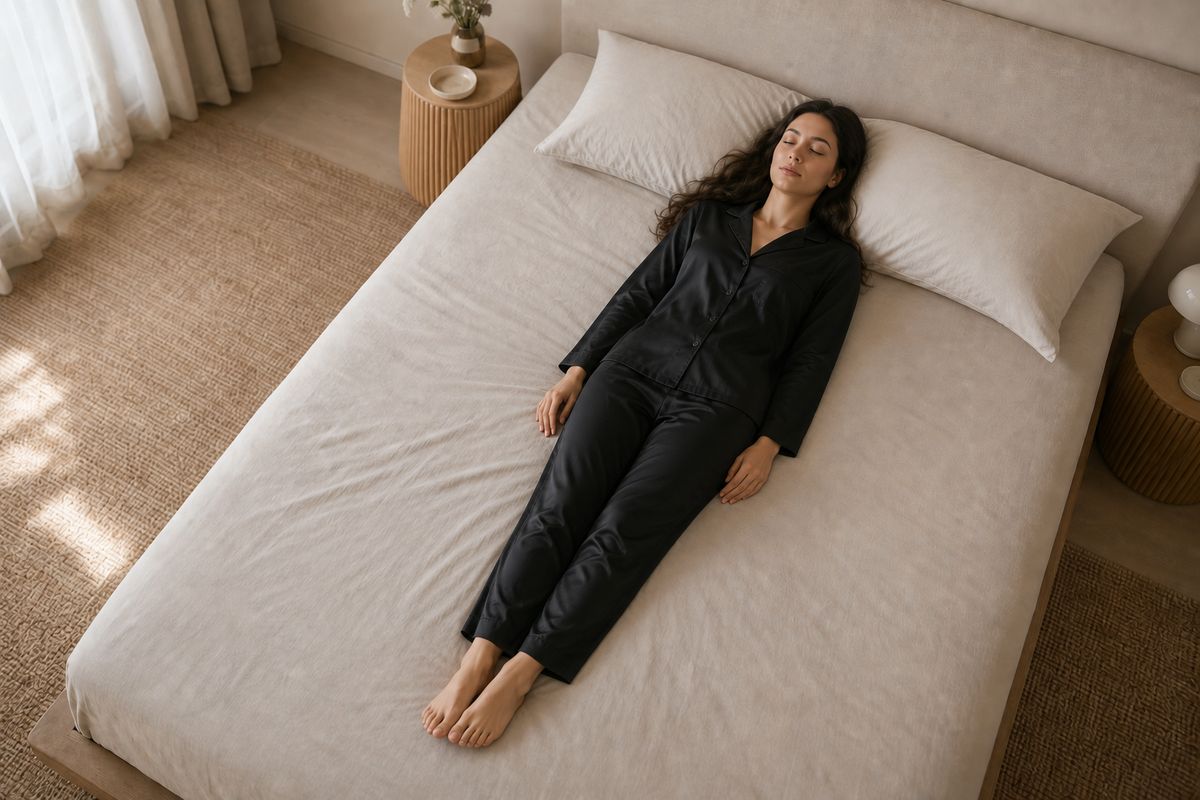
Soldier sleepers lie on their back with their arms pinned to their sides. They are often quiet, reserved and a little shy. They like order, clear boundaries and high standards, are self-critical and expect the same from others.
For your health: on your back, the spine and neck stay neutral and your face is not pressed into the pillow. But this position often makes snoring and sleep apnoea worse, so it does not suit snorers.
Starfish position
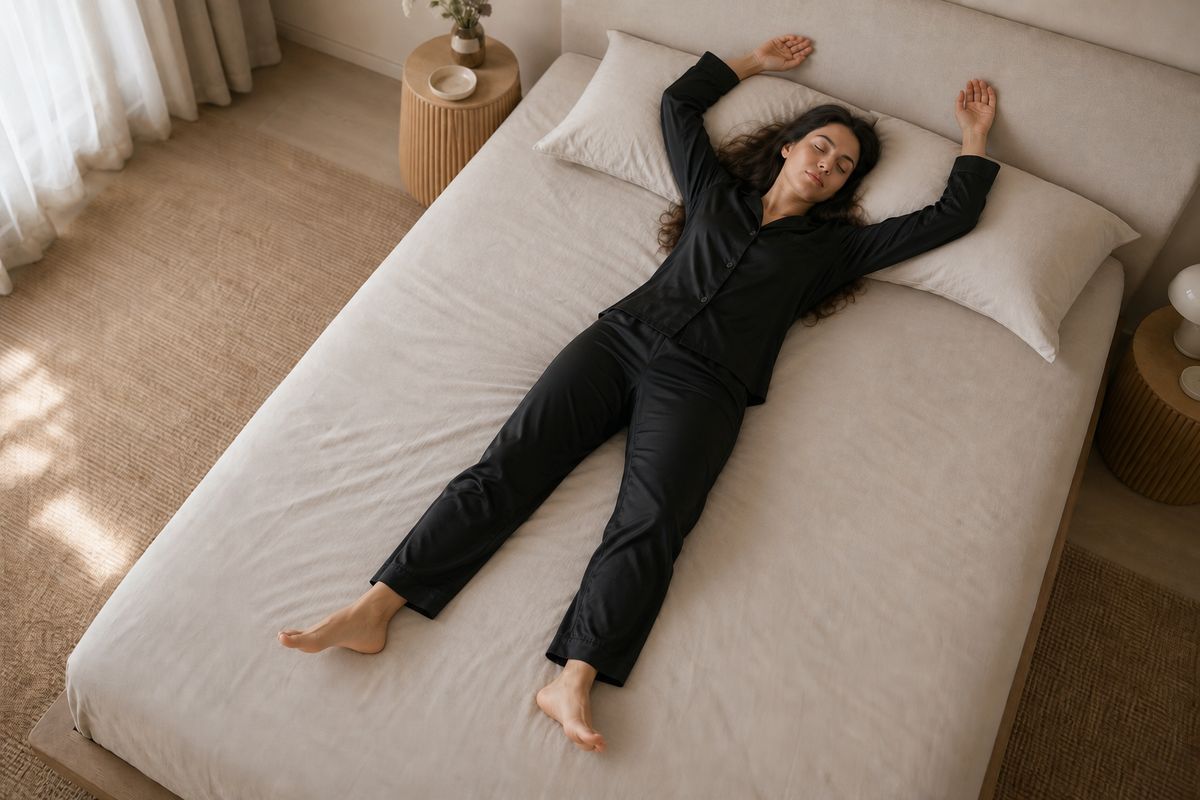
The starfish is like the soldier, except that the arms, and sometimes the legs, are spread out, so it takes up a lot of the bed. Starfish sleepers are friendly, love going out and being surrounded by people, and get on with almost anyone. They can be too trusting or even childlike, but they make up for it with an endless wish to help. In Idzikowski's description they are also good listeners who do not like being the centre of attention.
For your health: like the soldier, it makes snoring worse. Arms held overhead for hours can press on the nerves around the shoulders, which is why your hands may tingle in the morning.
What is the best sleeping position for your health
There is no single position that suits everyone: the best one is the position you sleep well in and wake up without pain. Still, each has clear pros and cons.
| Position | Good for | Not good for |
|---|---|---|
| On your side | Snoring, reflux (left side is better), pregnancy, most people with back pain | Shoulder pain; it presses on the face, which can deepen creases |
| On your back | Neck and spine, facial skin, shoulder pain | Snoring and sleep apnoea, pregnancy after 28 weeks |
| On your stomach | Reduces snoring for some | Neck and lower back pain, pregnancy |
Best sleeping position for back and neck pain
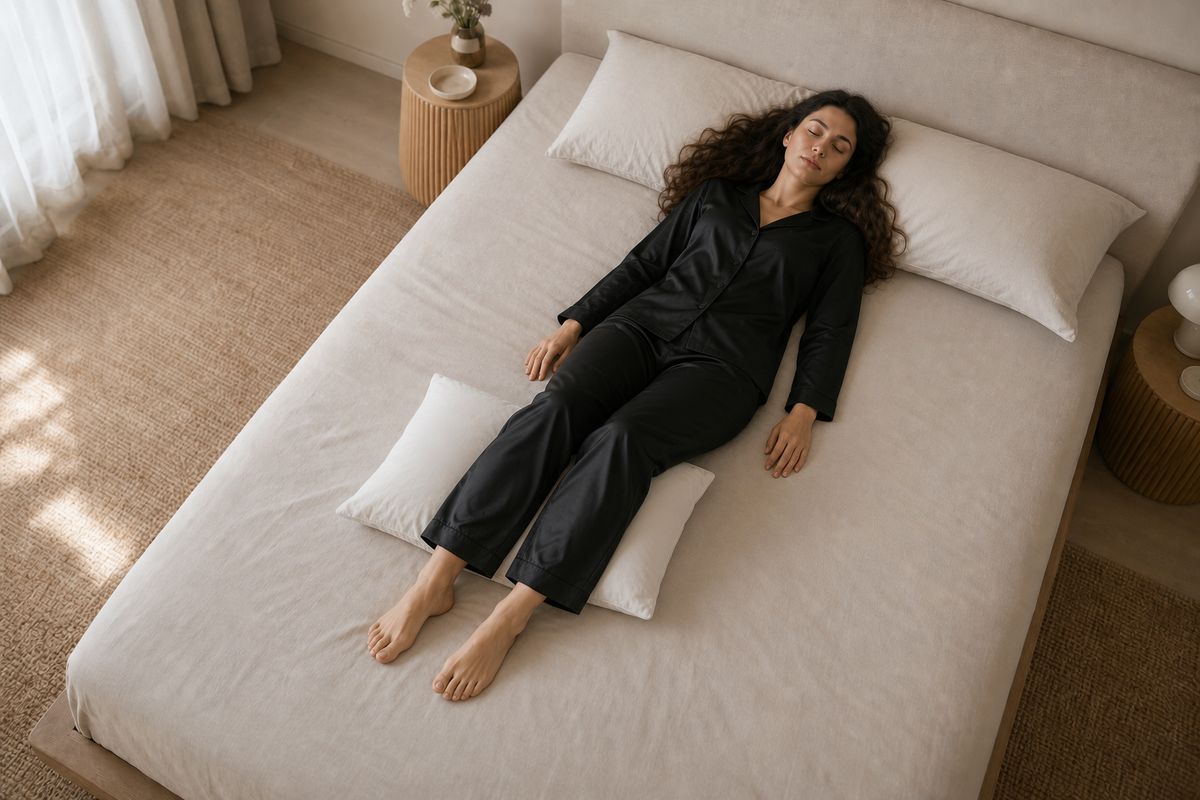
If your lower back hurts, sleep on your side with a pillow between your knees, or on your back with a pillow under your knees. Both keep the lower back neutral. For the neck, pillow height matters most: on your side it should fill the gap to the shoulder, on your back it should be lower. A contoured pillow with a neck dip helps if it matches the width of your shoulders.
Sleeping position for snoring
On your back, the tongue and the soft tissue of the palate fall back into the airway and snoring gets louder. On your side it often eases. The NHS advises snorers to sleep on their side. Loud snoring with pauses in breathing needs a doctor, as it may be sleep apnoea.
Best sleeping position for acid reflux
Sleeping on your left side with the head of the bed slightly raised reduces night-time heartburn. On your right side and on your back, stomach contents reach the oesophagus more easily.
Best sleeping position for pregnancy
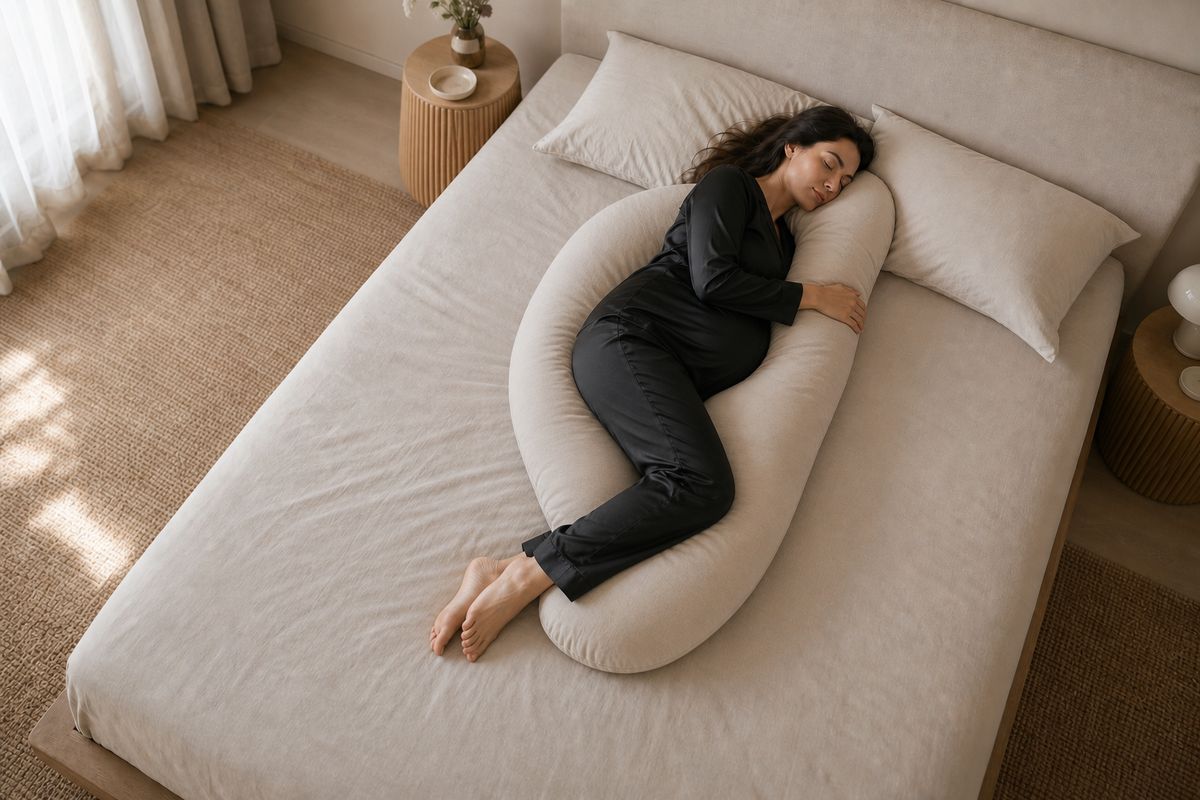
The NHS says the safest way to go to sleep is on your side, left or right. Research suggests that after 28 weeks, falling asleep on your back can double the risk of stillbirth. If you wake up on your back, do not worry: just turn onto your side. A pregnancy pillow behind your back and between your knees helps you stay on your side all night.
Beauty sleep: sleeping position and your skin
When you sleep on your side or stomach, your face is pressed and pulled against the pillow for hours. A 2016 review in the Aesthetic Surgery Journal described so-called sleep wrinkles: they form in different places from expression lines, usually on the side of the face you sleep on. In young skin they smooth out by morning, but with age they can stay.
- On your back your face does not touch the pillow, so this is the kindest position for facial skin.
- A silk pillowcase causes less friction on skin and hair than cotton. It will not erase wrinkles, but your hair will be less tangled and break less in the morning; more on hair care in our guide on how to grow hair faster.
- A higher pillow reduces morning puffiness around the eyes. Read more in our guide to dark circles and puffy eyes.
- For an evening routine, see our skincare routine guide.
Couple sleeping positions
Couples most often sleep spooning, with one hugging the other from behind, back to back, or touching only with their feet. Psychologists sometimes read signs of closeness or independence into these positions, but they usually depend more on comfort, warmth and the size of the bed than on the quality of the relationship. If one partner snores, they should sleep on their side, and the lighter sleeper may want the side of the bed further from the door and window.
How to fall asleep fast
Any position only helps if you sleep long enough. The NHS and sleep specialists recommend:
- going to bed and getting up at the same time, even at weekends;
- keeping the bedroom cool, dark and quiet, with an eye mask and earplugs if needed;
- putting screens and bright light away an hour before bed;
- avoiding caffeine after lunch, and heavy meals and alcohol in the evening;
- if you are not asleep within 20 minutes, getting up and doing something calm in dim light.
Slow breathing before bed helps, for example the 4-7-8 rhythm: breathe in for 4 seconds, hold for 7 and breathe out for 8. It is easy to follow with a free breathing timer. If a steady sound helps you drift off, mind.university has white noise and binaural beats generators, and a meditation timer for a short wind-down.
For an evening ritual, the mind.university shop has the SleepWell essence, which the radionics tradition links with sleep and evening calm, and the SleepWell biotag, kept by the bed. They are not medicines and do not treat sleep disorders. If insomnia lasts more than a few weeks, see a doctor.
Questions and answers
What is the best sleeping position?
For most people, on the side or on the back. Side sleeping means less snoring and easier breathing; back sleeping puts the least strain on the spine and facial skin. Sleeping on your stomach strains the neck and lower back the most.
Does your sleeping position reveal your personality?
The link was described in 2003 by the British sleep researcher Chris Idzikowski after surveying about 1,000 people. It is a popular interpretation, not a scientifically validated personality test.
What is the most common sleeping position?
The fetal position on the side: 41% of people in Idzikowski's survey fell asleep that way, women twice as often as men.
Which side is better to sleep on?
For heartburn and reflux, the left side. In pregnancy either side is fine. Otherwise, choose whichever side feels more comfortable.
Is it bad to sleep on your stomach?
Not if nothing hurts, but turning the head strains the neck and the lower back sags. A thin pillow under the head and another under the stomach reduce the load.
How should you sleep when pregnant?
From 28 weeks it is safest to go to sleep on your side. If you wake up on your back, turn over. A pregnancy pillow between the knees and behind the back helps you stay on your side.
Can sleeping position cause wrinkles?
Sleeping on your side or stomach presses the face into the pillow and can cause sleep wrinkles. Back sleeping is kindest to the skin, and a silk pillowcase causes less friction.
How much sleep do I need?
Adults are advised to get seven to nine hours a day; teenagers need more.
This article is for information only and does not replace a doctor's advice. If you snore with pauses in breathing, struggle to fall asleep for weeks or regularly wake up with back pain, see a doctor.
Sources
- BBC News, Sleep position gives personality clue (Professor Chris Idzikowski's survey).
- NHS, How to get to sleep and Snoring.
- NHS, Tiredness and sleep problems in pregnancy.
- Sleep Foundation, Best sleeping positions and GERD and sleep.
- Anson G. et al., Sleep Wrinkles: Facial Aging and Facial Distortion During Sleep, Aesthetic Surgery Journal, 2016.
- Axelsson J. et al., Beauty sleep: experimental study on the perceived health and attractiveness of sleep deprived people, BMJ, 2010.

Comments (0)
No comments yet. Be the first!
Only logged-in users can comment. Register — and you'll be able to share your thoughts on this article.
Register