

In short
- Most "viking braids" you see today are Dutch braids (outer strands cross under the middle one), placed close to the scalp. Learn that one technique and you can do almost every style below.
- Men: the undercut braid needs a top strip of at least 20 cm with clipped sides; short-hair viking braids work from about 7 cm on top.
- Women: two Dutch braids into a ponytail, a crown braid or a knot with a hanging ponytail all work from medium length; a single side braid works even on a bob.
- Archaeology shows Vikings cared a lot about grooming (combs are among the most common finds), but the shaved-sides look is a modern TV design, not a documented Viking cut.
Viking braids are one of the most searched hairstyles in the world: the phrase alone gets around 27,000 searches a month in the US, and "viking braids for men" another 12,000. Most of that interest goes back to television, above all to Ragnar Lothbrok's shaved sides and top braid in the series Vikings, and to the shieldmaiden braids worn by the women in the same show.
Below are the styles that people ask for most, with step-by-step instructions for men and women and for short, medium and long hair. We also separate what is known about real Viking Age hair from what was invented for the screen, so you can choose between a historical look and a modern one with your eyes open.
What makes a hairstyle "viking"
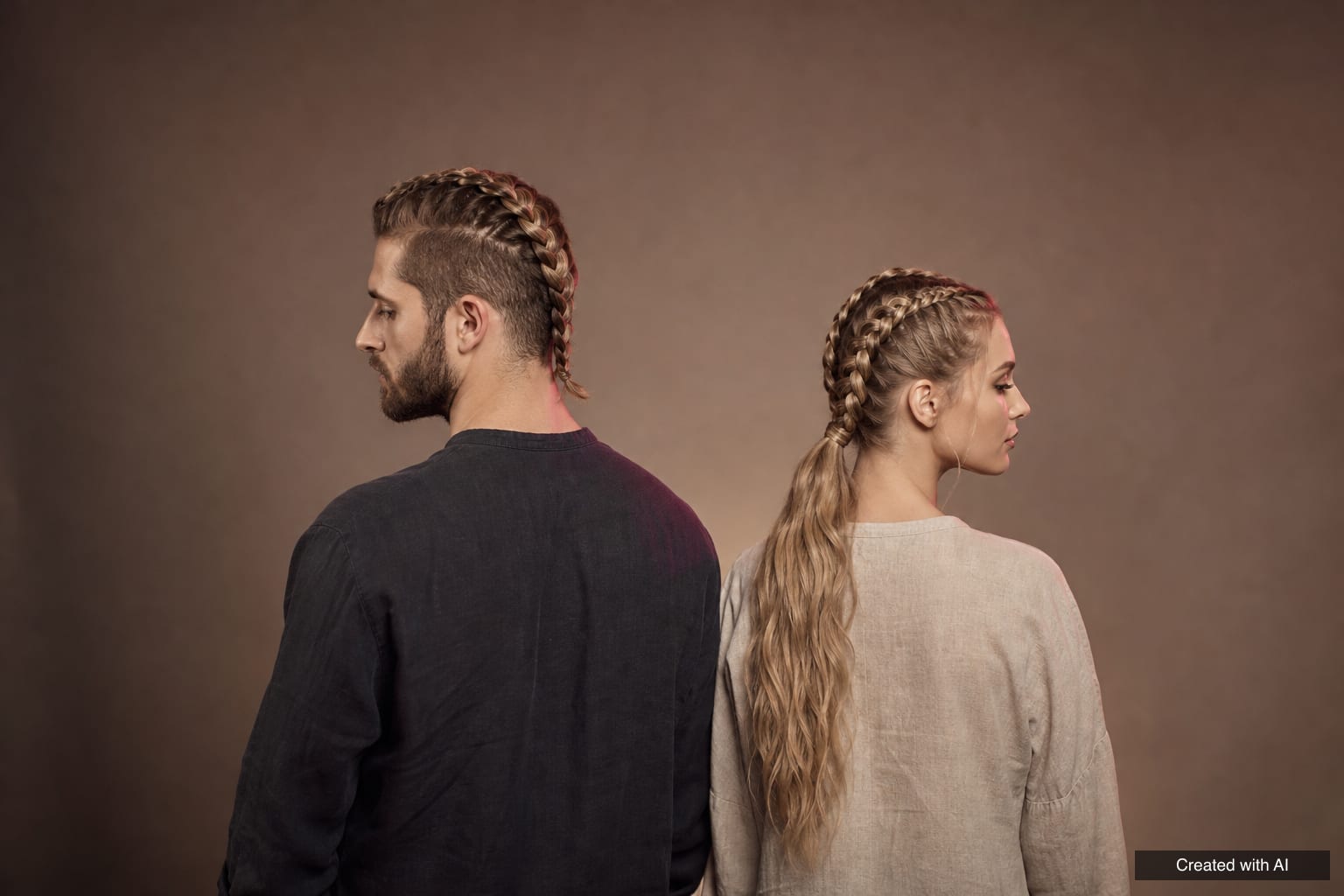
There is no single historical viking haircut that we can copy from a photograph. What people call a viking hairstyle today usually combines three elements: braids that sit close to the scalp, a contrast between short and long sections, and a slightly rough, natural texture rather than a polished finish. Beards are often part of the look for men, which is why many people search for viking beard styles at the same time.
 Image consultationA cut for your face, not for a trendIn the consultation we work out the cut, hair colour and everyday make-up that suit your face shape and colours.About the consultationfrom €79
| Style | Who wears it | Hair length needed | Historical basis |
|---|---|---|---|
| Undercut braid | Men | Top 20 cm +, sides clipped | Modern, made famous by TV |
| Short-hair viking braids | Men | About 7–10 cm on top | Modern |
| Half-up side braids | Men and women | Shoulder length | Loosely inspired by long hair in Viking art |
| Two Dutch braids into a ponytail | Women (also men) | Medium to long | Modern |
| Crown braid | Women | Medium to long | Modern, common in Nordic folk styles of later centuries |
| Knot with a hanging ponytail | Women | Medium to long | Close to female figures in Viking Age art |
Viking braids for men
Men's styles fall into two groups: an undercut with long hair on top, and braids on hair of medium length without clipped sides. If your hair is very short now, start with the short-hair braids and let the top grow; our guide to growing hair faster explains what helps while you wait.
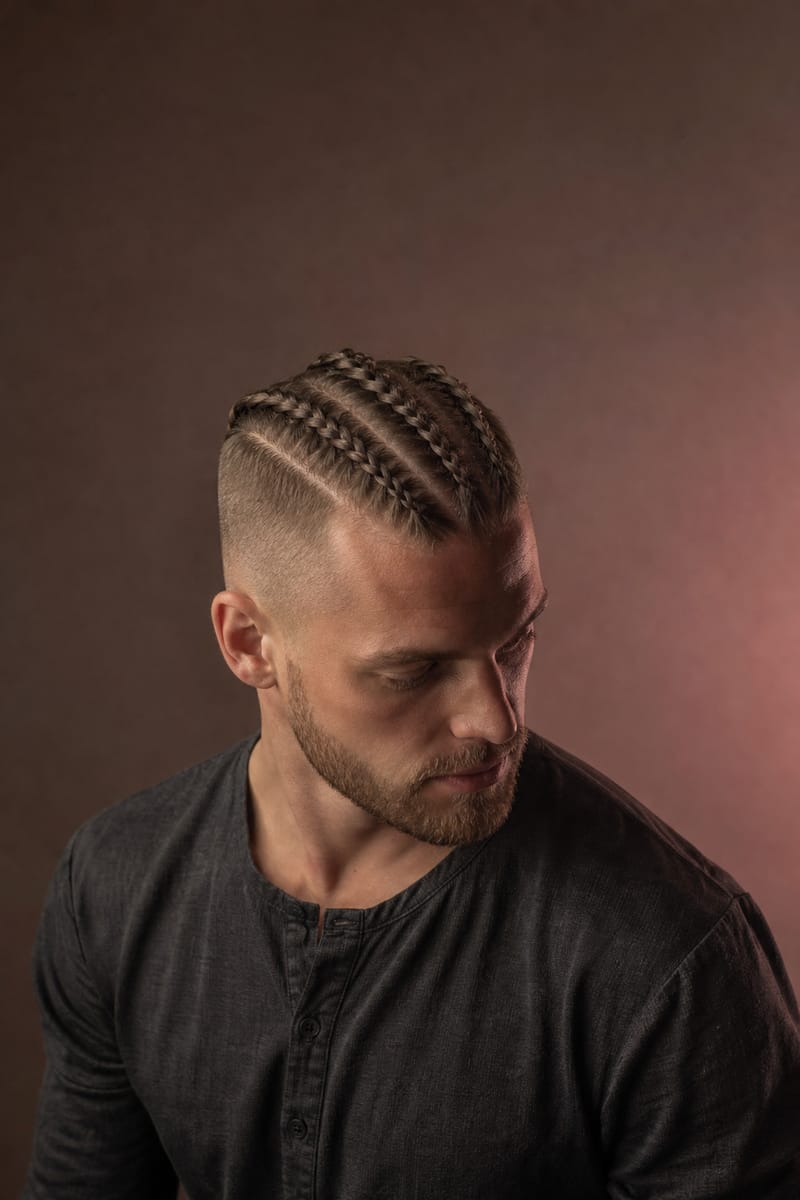
The undercut braid (the "Ragnar haircut")
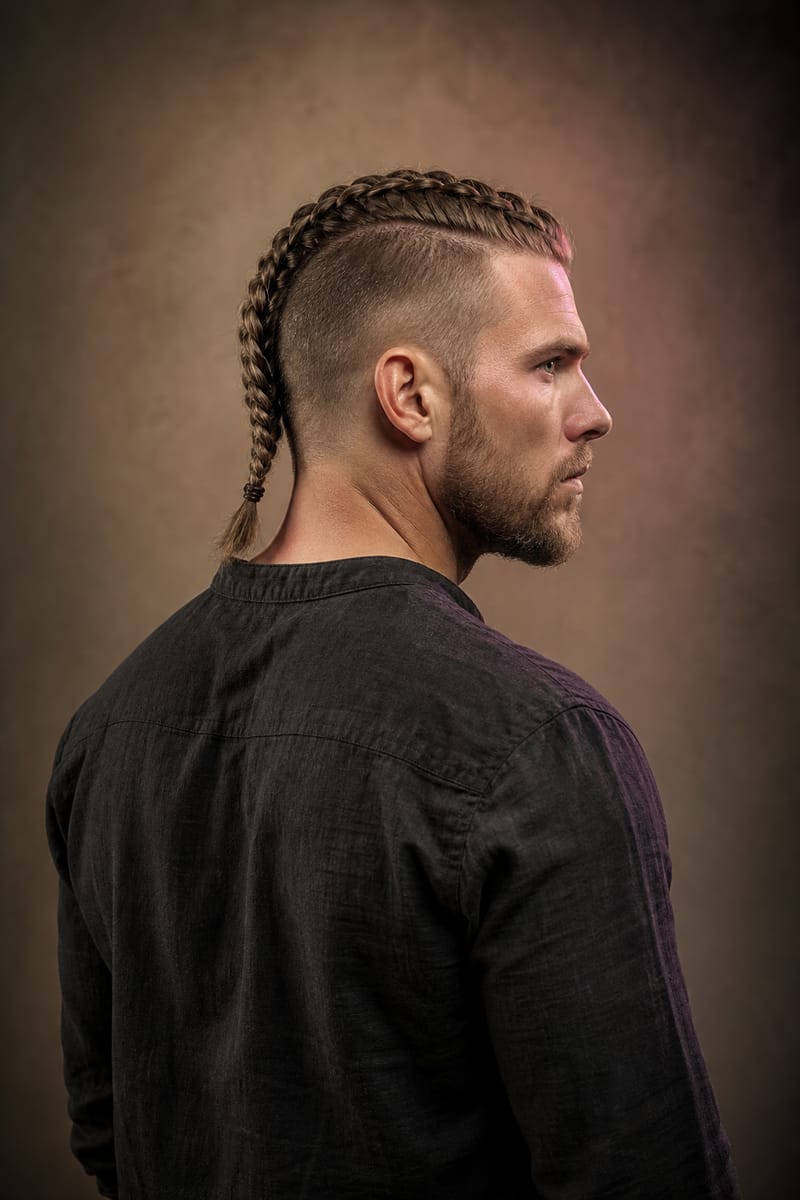
This is the style most people mean by "viking undercut" or "Ragnar haircut": the sides and back are clipped short and a strip of long hair on top is braided from the forehead to the nape.
- Ask the barber to keep a strip on top about 5–8 cm wide, running from the hairline to the crown, and to clip the sides and back to 1–6 mm. Keep the line roughly level with your temples.
- Brush the top strip straight back and mist it with water or a light leave-in conditioner. Slightly damp hair braids more tightly.
- Take a small section at the front hairline and split it into three strands.
- Braid with the Dutch technique (outer strands under the middle one), adding hair from the strip on both sides before each cross.
- When you run out of hair to add, finish with a plain three-strand braid and tie it at the nape with a small elastic or leather cord.
- Pull the outer loops gently to make the braid flatter and wider, if you want it to look fuller.
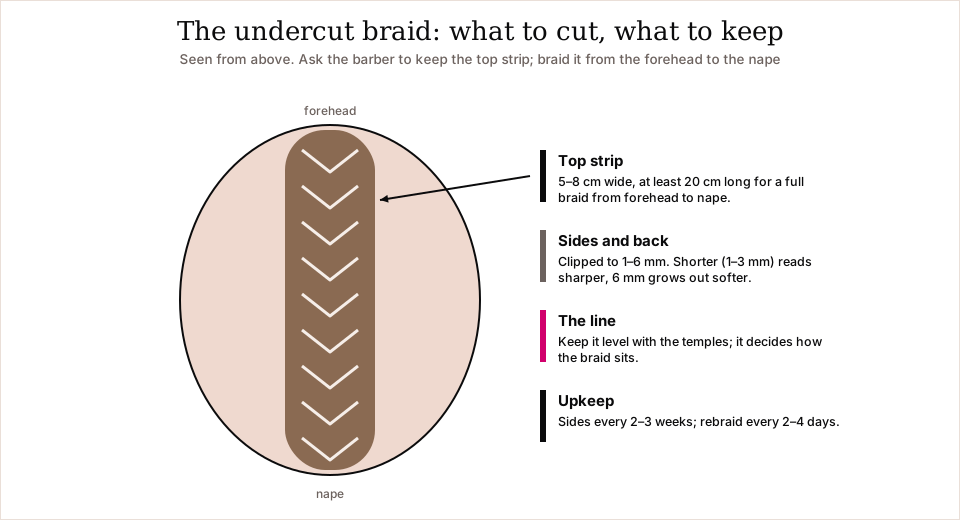
Upkeep is the part people underestimate. The sides need a trim every two to three weeks to keep the contrast sharp, and the braid itself lasts two to four days before it looks tired. Sleeping on a satin pillowcase or with a loose cap helps it survive longer.
Short-hair viking braids for men
Short hair can still be braided if the top is at least 7 cm. Instead of one large braid you make two or three small, tight braids that lie flat along the top of the head. "Short hair viking braids" and "viking braids short hair male" are among the fastest-growing searches in this group, because the style works for men who do not want to grow their hair long.
- Part the top into two or three straight sections running front to back. Clip the ones you are not working on.
- Use a strong-hold cream or a little pomade: short hair slips out of the strands more easily than long hair.
- Braid each section with small Dutch stitches, picking up very little hair at a time, and finish each braid just past the crown.
- Secure the ends with tiny clear elastics. Faded or clipped sides make the braids stand out.
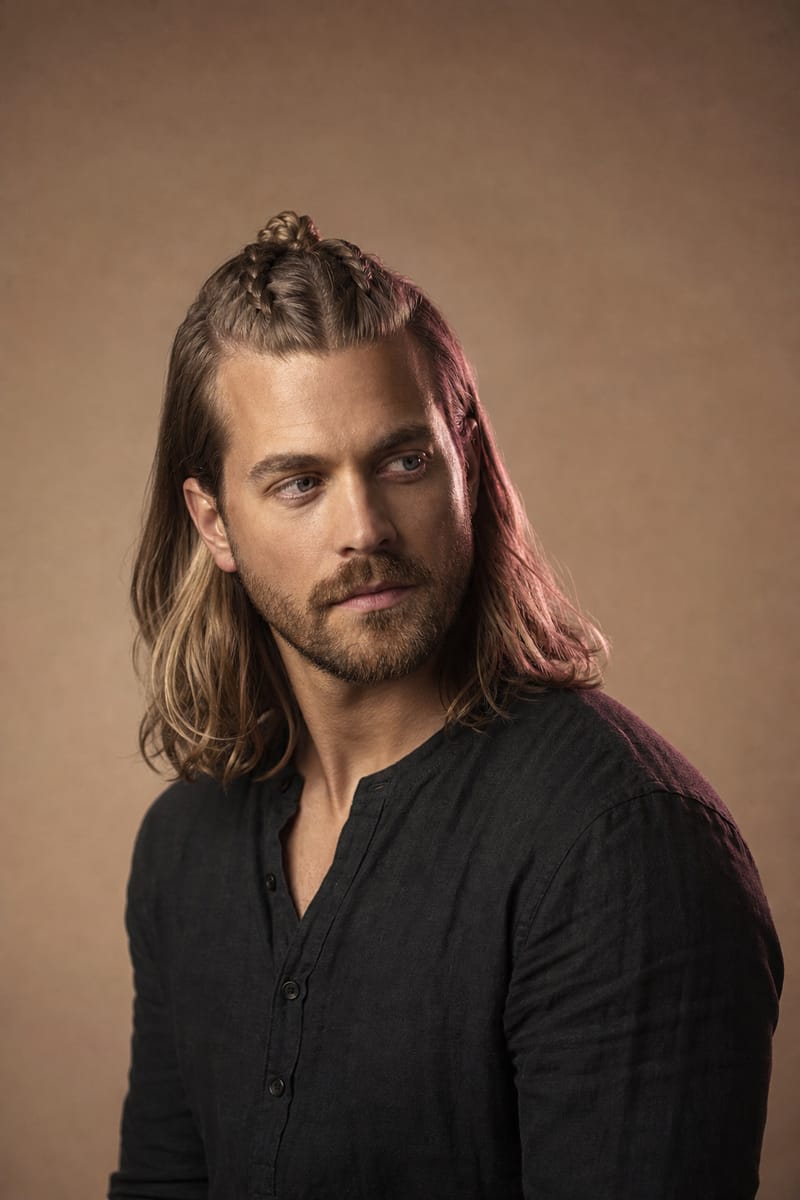
Half-up side braids for long hair
For shoulder-length or longer hair, the most practical style keeps the hair out of your face without tying all of it back. Two thin braids start at the temples, go back over the head and meet the top section in a small knot at the crown. The rest of the hair stays loose. It suits men who want a viking look at work, because from the front it reads as a simple half-up style.
Viking hairstyles for women
Women's viking styles are usually built from the same Dutch braid, worn in different places on the head. Thick hair holds them best, but fine hair works too if you braid it slightly damp and pull the loops wider afterwards.
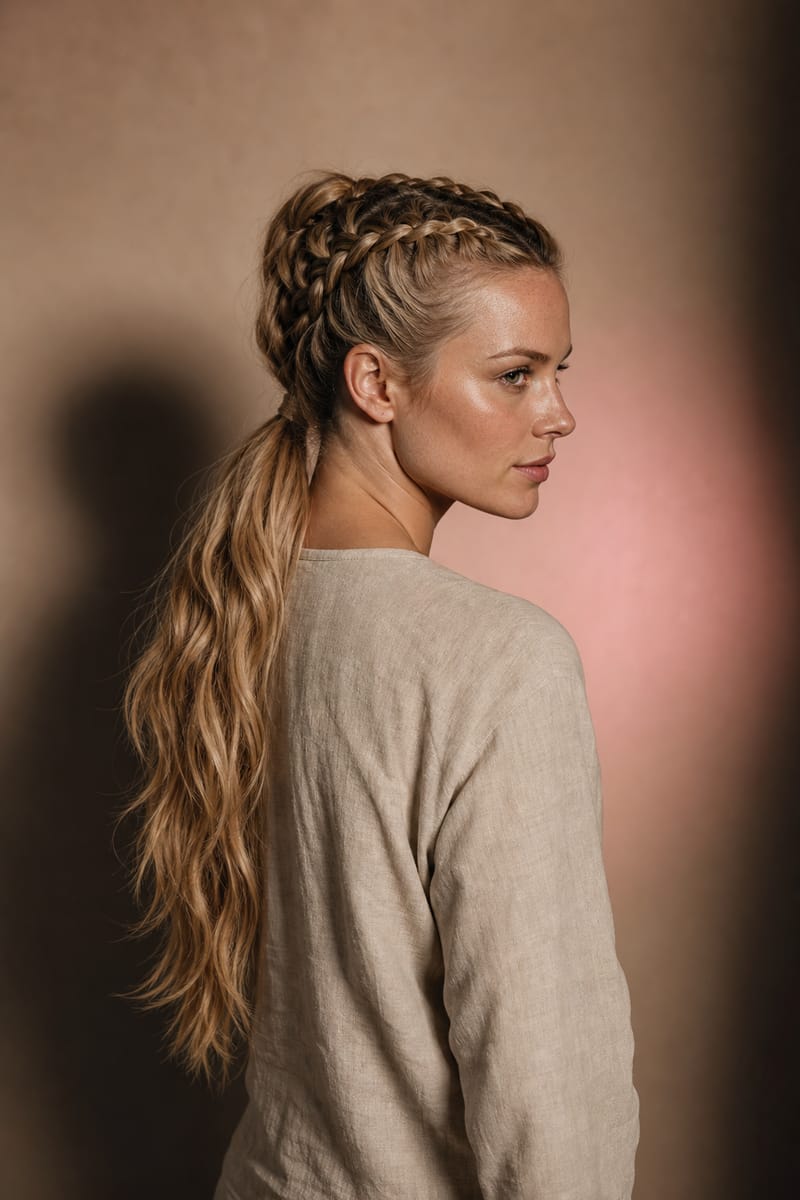
Two Dutch braids into a ponytail
The "shieldmaiden" style that most people picture. Part the hair in the centre, Dutch-braid each side from the hairline back over the head and stop at the crown. Tie both braids together with the rest of the hair into one high ponytail. It is sporty, holds through a whole day and is a good first style to practise.
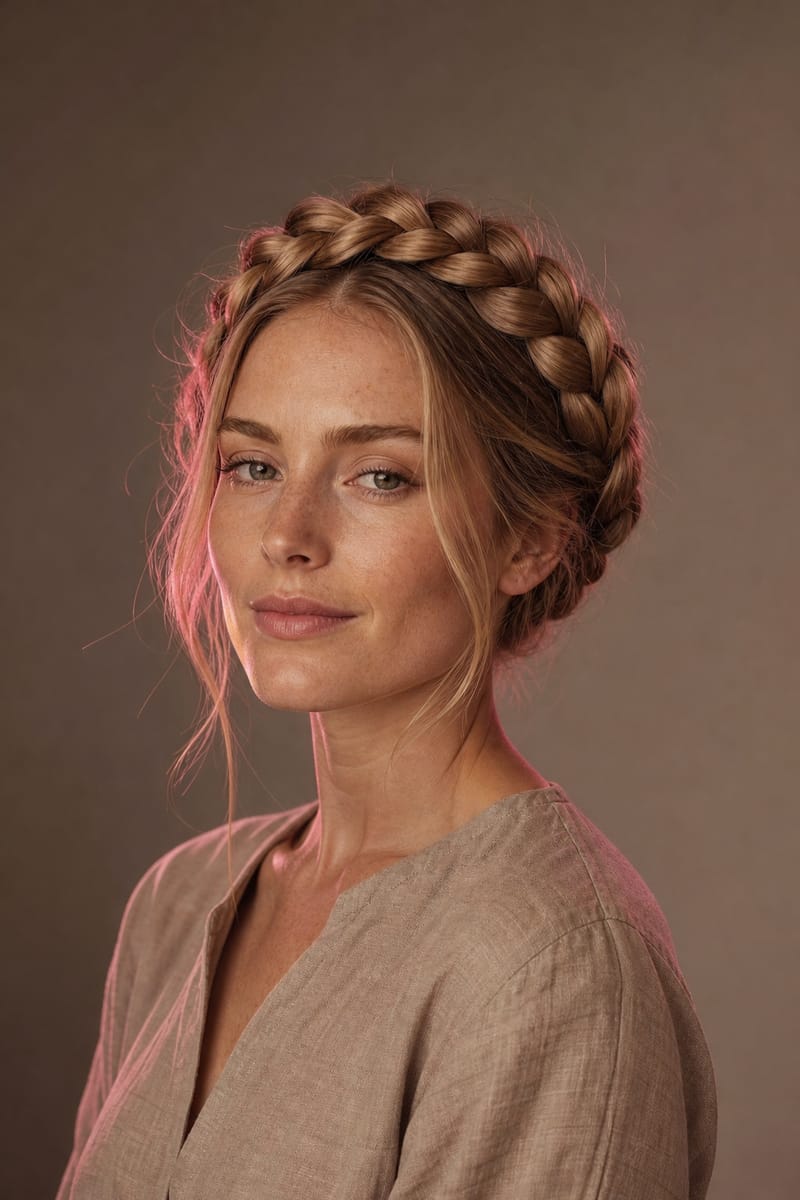
Crown braid
One braid wraps all the way around the head like a halo. Start at the nape behind one ear, braid along the hairline over the top of the head and back down the other side, then tuck the end under the start and pin it. Leave a few soft strands in front for a less formal look. This is the style that most often turns up for festivals, folk events and weddings.
The knot with a hanging ponytail
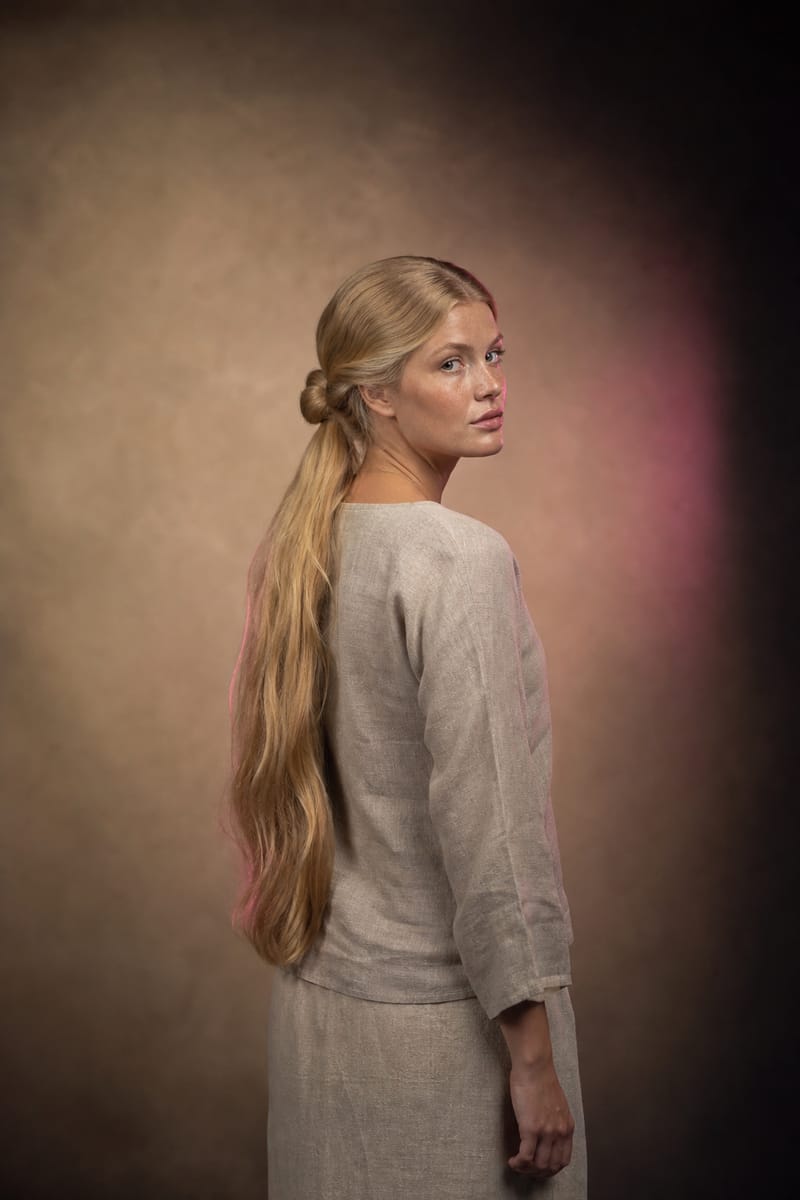
This is the closest modern style to how women are shown in Viking Age art. The hair is parted in the middle, smoothed back and gathered at the back of the head into a firm knot, and the remaining length hangs down the back. Make a low ponytail, twist it once around its base, secure it with pins and let the rest fall free.
A side braid for short hair
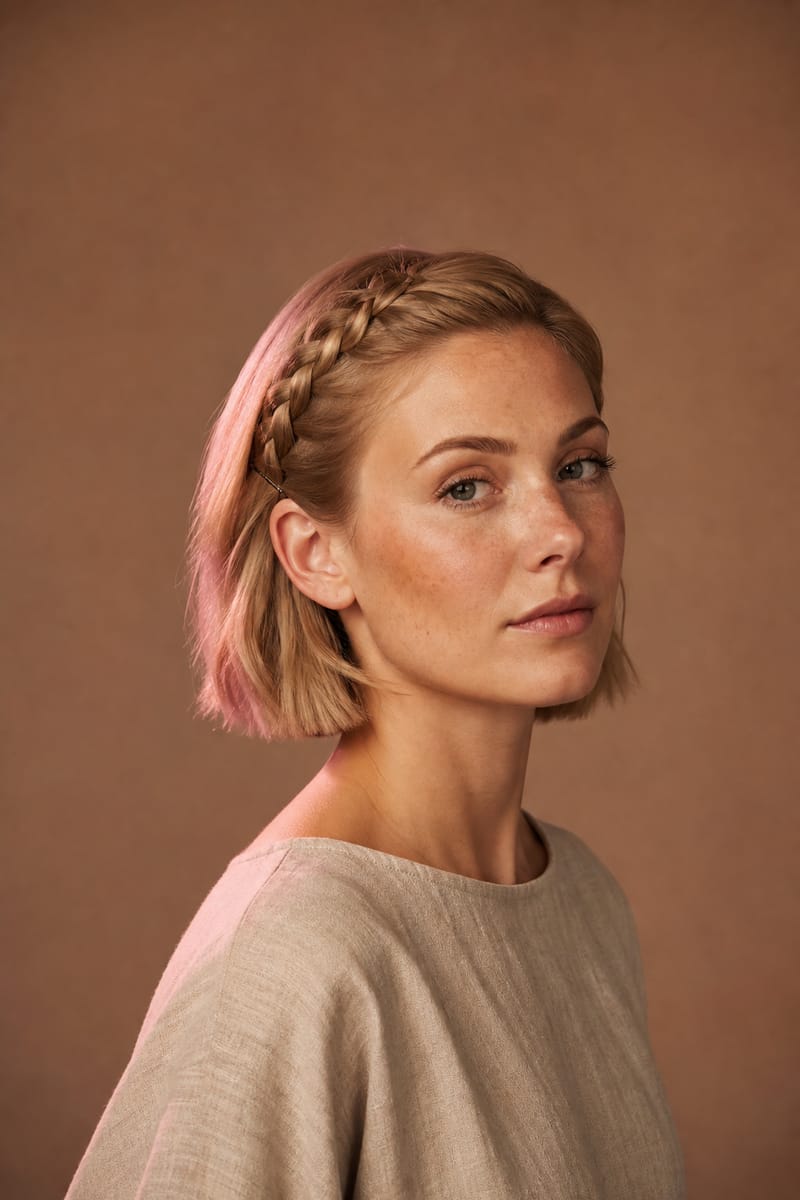
A bob is too short for a crown braid, but a single Dutch braid along one side works well: start at the front hairline, braid back above the ear and pin the end behind it. The rest of the bob stays smooth, so the braid looks deliberate.
How to do a Dutch braid, the base of every viking braid
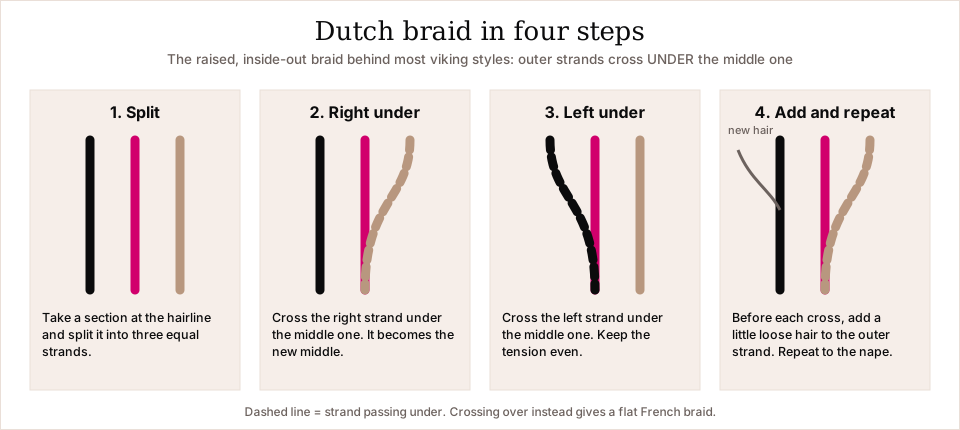
If you already know the French braid, you are almost there: the only difference is that the outer strands go under the middle one instead of over it. That is what makes the braid stand up from the head instead of lying flat inside it.
- Detangle the hair and dampen it lightly. A little texturizing spray or cream gives grip.
- Take a section at the hairline and split it into three equal strands.
- Cross the right strand under the middle strand, then the left strand under the new middle strand.
- Before each cross, add a thin section of loose hair to the outer strand you are about to move.
- Keep your hands close to the scalp and the tension even. Uneven tension is the main reason a braid twists to one side.
- Finish with a plain three-strand braid and secure the end. Gently pull the loops outward if you want a fuller braid.
Which style for your hair length
The most common question we see is "is my hair long enough". Measure the hair on top of your head from the scalp to the tips and compare it with the chart.
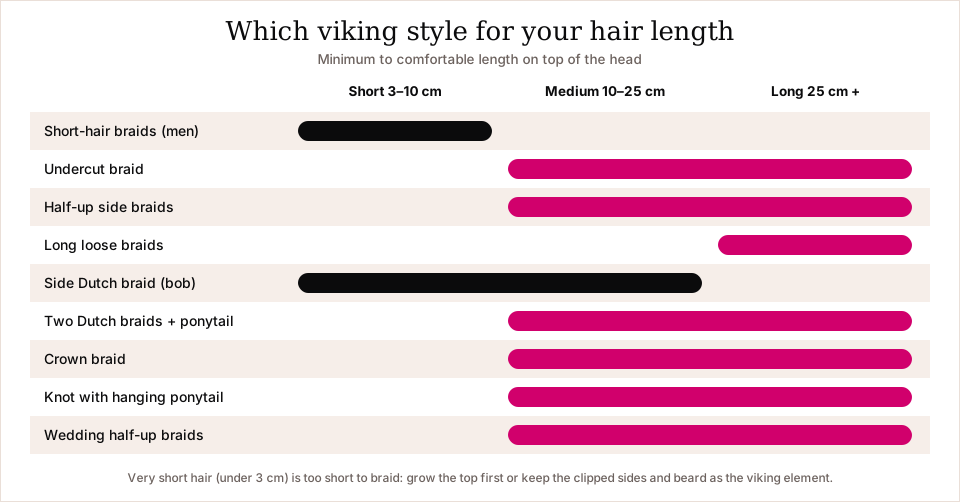
Face shape matters less than length for these styles, but it still plays a part: a high undercut lengthens a round face, while a crown braid softens a long one. Our guide to hairstyles for your face shape goes through each shape.
Viking wedding hairstyles
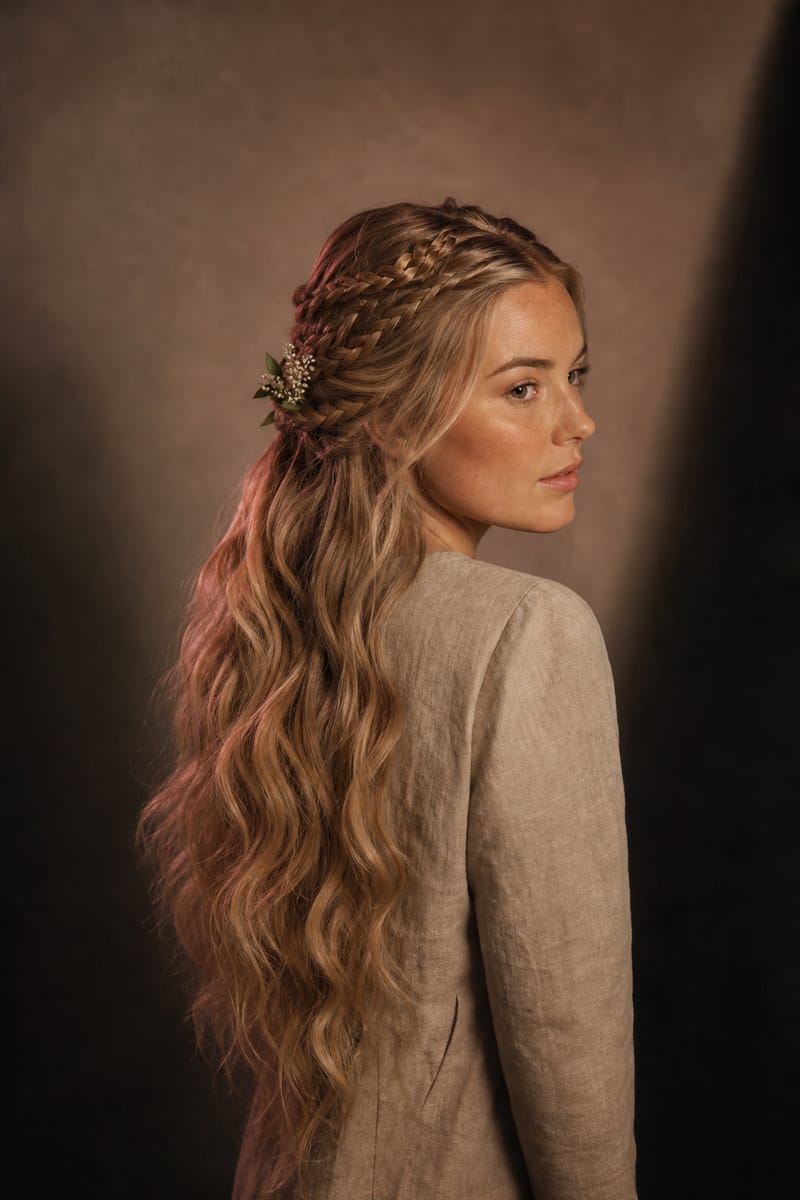
For a wedding, most brides choose a softer version of the braids above: long hair in loose waves, with several thin braids from the temples and the top gathered half-up at the back of the head. Fresh greenery, small flowers or a simple metal ring tucked into the knot are popular details. A crown braid is the other common choice, especially under a flower wreath. Book a trial with your hairdresser: a style that has to last ten hours needs more pins and more product than a practice run at home.
What Viking Age hair looked like
Searches for "historically accurate viking hairstyles" keep growing, and it is fair to be clear: very little hair survives from the Viking Age, so what we know comes from tools, a few written sources and small figures in metal and wood.
- Combs everywhere. Bone and antler combs are among the most common Viking Age finds, often decorated and sometimes kept in their own cases. The archaeologist Steven Ashby, who catalogued medieval combs from Northern Europe, treats them as personal objects that people carried and were buried with. Combs also fought lice, which were a normal part of life.
- "Danish fashion" in England. In a letter written around the year 1000, the English abbot Ælfric of Eynsham scolded a "brother Edward" for following Danish fashion "with bared necks and blinded eyes". Scholars read the bared necks as a shaved or cropped nape; the "blinded eyes" may mean a long fringe falling over the eyes, or eye makeup.
- Eye makeup. The traveller Ibrāhīm ibn Ya'qūb, who visited the trading town of Hedeby in the 10th century, wrote that both men and women there used a kind of indelible cosmetic around their eyes. That is the only real basis for "viking eyeliner".
- Daily combing. Ibn Faḍlān, who met the Rus on the Volga in 921–922, described men washing their faces and hair and combing it every morning over a shared basin. He found the shared water disgusting, but the habit of daily combing is clear.
- Women's hair in art. The silver figure found at Hårby on Funen in 2012, about 3.4 cm tall and usually read as a valkyrie, has her hair tied at the back of the neck with the length hanging down her back. Similar female figures appear on pendants and picture stones.
What is not documented: the shaved-sides undercut, rows of tight braids on men, and braids "for warding off evil". If you want a historical look, choose long hair, a cropped nape and fringe for men, a knot with hanging length for women, and a well-kept beard; leave the undercut for a modern version.
Ragnar Lothbrok's look in Vikings
The style that made "viking undercut" a search term belongs to Ragnar Lothbrok, played by the Australian former model Travis Fimmel. According to the show's head of hair, Dee Corcoran, the look was created together with the actor: he arrived with short hair, sat for eight hours to have extensions put in, and then the sides and back were shaved. The extensions stayed in during filming and were washed every night, with "loads of conditioner", she told IBTimes in 2014. You can read more about the actor himself, from his Calvin Klein contract to Vikings, in our Travis Fimmel profile, and all his roles are listed in Travis Fimmel's movies and TV shows.
- Early seasons: shaved sides and back, long top braided back from the forehead, a long beard. This is the "Ragnar haircut" and "Ragnar braids" people ask barbers for.
- Later seasons: the top gets shorter and the head is eventually fully shaved, with dark designs on the scalp that grow more detailed as the character changes. That is the "Ragnar Lothbrok tattoo" in search. If you want it without a lifetime commitment, temporary tattoos or henna are the honest way to try it first.
- Eyes: a smudge of dark liner around the eyes, which echoes the Hedeby account above.
- Costume: layered leather, linen and fur in dark earth tones. For a costume, a tunic, a belt and a fur or wool cloak matter more than any helmet. Real Viking helmets did not have horns.
The beard is half of Ragnar's look. How to grow, trim and braid it is covered in our separate guide to the viking beard.
Care: keeping braids from damaging your hair
Braids that are too tight, worn for too long, pull on the hair follicles. The American Academy of Dermatology warns that hair that is often pulled back tightly can lead to permanent hair loss, a condition called traction alopecia. Warning signs are small bumps, soreness or broken hairs along the hairline and at the temples.
- Braid firmly but not painfully. If your scalp hurts after an hour, redo the braid looser.
- Do not wear the same tight style for weeks. Give the hairline a few days off between braids.
- Use soft elastics or cord rather than thin rubber bands, which cut the hair.
- Wash and condition the scalp normally; braided hair still needs it.
If you already notice thinning at the temples, read our guide to hair loss causes and treatment before you braid again.
Common mistakes to avoid
- Clipping the sides before the top is long enough. With only 8 cm on top there is nothing to braid, so you are left with a plain undercut. Grow the top first, cut the sides last.
- Braiding dry, freshly washed hair. Clean, slippery hair falls out of braids within hours. Braid on second-day hair or add some texture.
- Too much hair in each stitch. Viking braids look best with small, even stitches close to the scalp.
- Copying a costume, not a hairstyle. Beads, rings and leather are fine as details, but the braid should work without them.
Frequently asked questions
How long does hair need to be for viking braids?
For small braids on top, about 7 cm is enough. An undercut braid from forehead to nape needs a top strip of at least 20 cm, and a crown braid or two braids into a ponytail work best from about 25 cm.
Did real Vikings wear braids?
There is little direct evidence of braids on men. Written sources and finds point to well-combed hair, cropped necks and fringes for men, and long hair tied in a knot at the back of the head for women. The braided undercut is a modern style made popular by television.
What is the Ragnar haircut called?
Barbers usually call it an undercut braid or viking undercut: clipped sides and back with a long top strip braided from the forehead to the nape.
Can I do viking braids on short hair?
Yes, from about 7 cm on top. Make two or three small, tight braids along the top of the head and use a cream or pomade for grip. Women with a bob can do a single braid along one side.
What is the difference between a Dutch braid and a French braid?
In a French braid the outer strands cross over the middle strand and the braid lies flat. In a Dutch braid they cross under it, so the braid stands up from the head. Viking styles almost always use the Dutch version.
Are tight braids bad for your hair?
Worn too tight and too often, yes. Constant pulling can cause traction alopecia, which can become permanent. Braid firmly but comfortably and give your hairline breaks between styles.
Sources
- Steven P. Ashby, "An Atlas of Medieval Combs from Northern Europe", Internet Archaeology 30, 2011.
- Medieval Institute, University of Notre Dame, "Eyeliner Across Oceans: Cosmetic Practices in the Medieval World", 4 November 2019 (Ælfric's letter to Edward, Ibrāhīm ibn Ya'qūb on Hedeby).
- Ibn Faḍlān, Mission to the Volga, translated by James E. Montgomery, New York University Press, 2014 (account of the Rus, 921–922).
- Wikipedia, "Valkyrie from Hårby", and Videnskab.dk, "Fynboer finder valkyrieansigt i mulden" (in Danish), on the figure found in 2012.
- IBTimes, "'Vikings' stylist Dee Corcoran talks Lagertha's fierce hair", 2 May 2014.
- American Academy of Dermatology, "Hair loss: Who gets and causes", checked October 2026 (traction alopecia).
- Search volumes: DataForSEO, Google Ads data for the US, October 2026.

Comments (0)
No comments yet. Be the first!
Only logged-in users can comment. Register — and you'll be able to share your thoughts on this article.
Register