How to recognise it
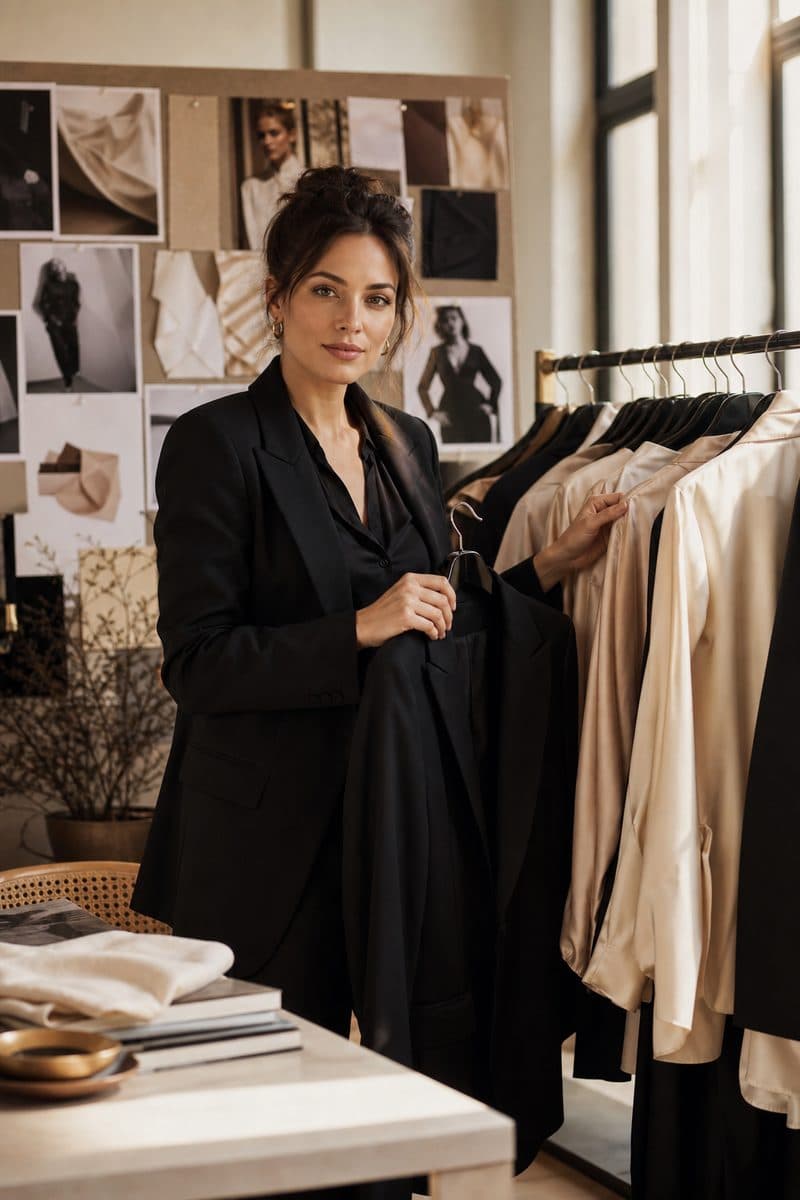
You recognise it by notched lapels, one or two rows of buttons, flap pockets and structured shoulders. A blazer is lined and often has shoulder pads, so it keeps its shape.
Where it comes from
The name is linked to an 1825 Cambridge rowing club whose members wore bright red "blazing" jackets. In women's fashion Yves Saint Laurent established the blazer, and in the 1980s it became the badge of the working woman.
Who and when it suits
The most versatile piece in a wardrobe: it works for the office, meetings, evenings and weekends with jeans. It instantly makes an outfit look sharper.
Variations and look-alikes
It comes single- or double-breasted, fitted or oversized, long to the thigh or cropped, in wool, linen, tweed, velvet or bouclé. A tuxedo jacket has silk lapels, and a double-breasted blazer looks more formal. It differs from a jacket in its tailored shape, lapels and lining.
How to style it
- With jeans and a T-shirt at the weekend.
- With matching trousers it makes a suit.
- The sleeves should end at the wrist.
- An oversized blazer suits a slim bottom half.
Similar styles
Frequently asked
01What is the difference between a blazer and a suit jacket?
A suit jacket comes with matching trousers; a blazer is worn as a separate with anything.
02How many buttons should a blazer have?
Usually one or two in a single row; a double-breasted blazer looks more formal.