

In short
- In France a model agency must hold a state licence and a financial guarantee. Operating without them is a criminal offence punishable by up to 6 months in prison and a €75,000 fine.
- A model here is an employee: every booking is an employment contract with minimum rates, 10% holiday pay and social contributions.
- Children under 16 can only be hired by an agency holding a prefectoral approval, and most of a child's earnings are held in a state account until they come of age.
- EU citizens need no visa and no work permit. Others can work up to 3 months on a short-stay visa with a collaboration agreement from a licensed agency.
- The catalogue lists 137 agencies in France, 94 of them in Paris: all those that represent models. We do not vouch for them; each profile shows what we found, good and bad, and whether a licence number and SYNAM or FFAM membership are known.
The modeling market in France
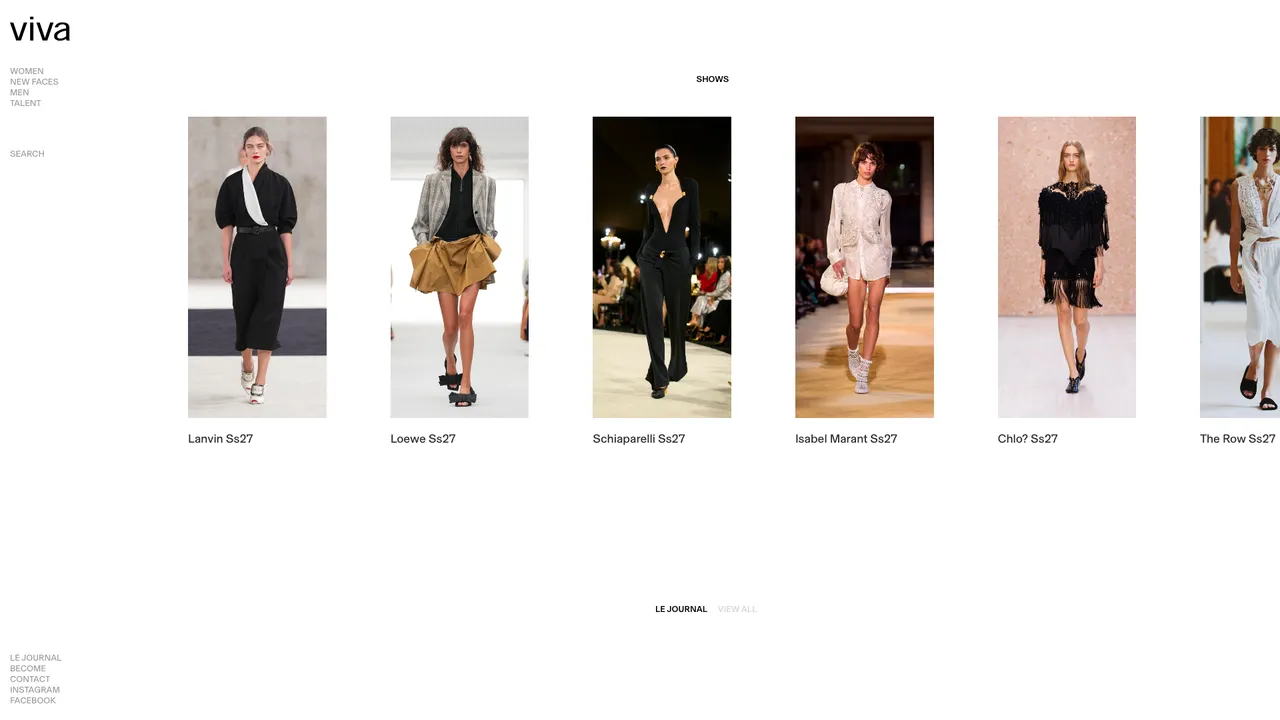
France is one of the major fashion markets and its centre is Paris. Of the 137 agencies in our catalogue, 94 are based in Paris and three more in Boulogne-Billancourt and Saint-Mandé, which border it. Paris is home to offices of international networks and independent fashion agencies that bring in models from around the world each season for shows, campaigns and magazine editorials. You will find them on the page modeling agencies in Paris.
Outside the capital you will find regional agencies. They mostly work in advertising, catalogues, e-commerce and local events, and many have kids' and senior boards. The largest group is in the north, where Lille and the neighbouring towns of Roubaix, Wasquehal and Mouvaux have six agencies between them. Three agencies are in the overseas departments: two on Réunion and one in French Guiana.
| City | Agencies in the catalogue |
|---|---|
| Paris | 94 |
| Lyon | 4 |
| Lille | 3 |
| Bordeaux, Boulogne-Billancourt, Montpellier, Nantes, Nice | 2 each |
| Antibes, Beauvallon, Brest, Cayenne, Cholet, Claira, Clermont-Ferrand, Le Puy-en-Velay, Lherm, Mont-Saint-Aignan, Mouvaux, Roubaix, Saint-Avold, Saint-Denis (Réunion), Saint-Mandé, Saint-Max, Saint-Paul (Réunion), Toulon, Wasquehal, Wolfisheim | 1 each |
Six more agencies have no city assigned in the catalogue; you will find them in the country list. Agencies representing children are grouped under kids' modeling agencies in France.
Licence, guarantee and trade bodies
Article L7123-11 of the Labour Code requires anyone in France who places models for a fee to hold a licence d'agence de mannequins. The licence is issued for an unlimited period by the Prefect of Paris. It is withdrawn if the agency breaks the rules on employing models or its managers no longer meet the good-character requirement. An agency established in another EU or EEA country may work in France temporarily after declaring its activity in advance.
Besides the licence, every agency must have a financial guarantee – a surety from a bank, insurer or mutual guarantee society (L7123-19, L7123-20). If the agency goes bust, the guarantee covers models' wages and social contributions. The law also requires an agency to disclose publicly when its managers, partners or staff work in fields that could create a conflict of interest: photography, advertising agencies, organising fashion shows or running paid courses for models.
There are two professional bodies: SYNAM (Syndicat national des agences de mannequins) and FFAM (Fédération française des agences de mannequins). FFAM admits only agencies holding the state licence. Of the 137 agencies in this catalogue, 68 are on the member lists of one of them (36 SYNAM, 33 FFAM, one on both). Each agency's profile shows whether a licence number and membership are known. Membership is voluntary and the licence is compulsory, so you can ask any agency for its number.
How to check an agency. Ask to see its licence order (arrêté de licence) – a licensed agency has one, and the same document is required for a foreign model's visa application. An invoice 'for registration', 'for your book' or 'for the casting' before your first job means you are not dealing with an agency. More on this in modeling scams.
How to choose an agency in France
The catalogue lists all agencies that represent models: international networks, regional, mother and kids' agencies, and also agencies that run their own school or charge applicants a fee. We do not rate them or vouch for them, and a listing is not a recommendation. Each agency's profile shows what we found, good and bad: fees charged to applicants, schools and courses, the company's status in the register, press reports. So go through these steps before you apply or sign.
- Start from the board you fit. In the catalogue, 68 agencies have a women's board, 57 a men's board, 23 talent, 18 kids, 13 senior, 12 new faces, and 7 each sport, commercial and curve. Many agencies have several boards.
- Read the agency's profile. It shows the city and the boards, whether a licence number and SYNAM or FFAM membership are known, and the main facts we found about the agency.
- Ask for the licence number. The licence is compulsory in France (L7123-11), so an agency working lawfully can tell you its number and show you the licence order. Ask before you sign, especially if the profile has no number.
- Check whether the agency charges, and how much. Fees are common in parts of the market: kids', commercial and people agencies often charge for comp-card photos or an annual file fee, and some sell training or photo shoots. Where we found such a fee, the profile gives the price, so compare a few agencies. Under French law advice about becoming a model is free, and an agency can recover what it spends on your career only through deductions from your pay, at most 20% of each payment.
- Watch for the warning signs. These are pressure to decide or pay on the spot, mass castings in hotels and contracts that renew automatically.
- If the model is a child under 16, also ask for the agrément, the separate approval for working with children.
Employment contract and pay
In France a model is not a freelancer. Articles L7123-3 and L7123-4 of the Labour Code presume that any contract engaging a model for pay is an employment contract, whatever it is called and however the model is paid. You sign a written employment contract with the agency, and for each booking the agency and the client sign a contrat de mise à disposition. The agency must give you a copy before you accept the job (L7123-17), so you can see what the client is paying.
The exception is a self-employed model established in another EU or EEA country who comes to France temporarily to provide services (L7123-4-1). Before you travel, ask the agency on what basis it will pay you.
The minimum share and rates are set by the sector's collective agreement (IDCC 3252, models annex). Minimums for 2025, gross, before holiday pay:
| Work | Per hour | Per day |
|---|---|---|
| Technical fittings at a designer | €81.05 | €405.25 |
| Shoots, shows, advertising (lowest to highest category) | €111.75–218.40 | €558.75–1,092 |
| Magazine editorials | €39.80–101.10 | €199–505.50 |
| Children under 16: shoots, shows, advertising | €76 | – |
| Children under 16: commercials | €94.45 | – |
On top of that, a model must receive at least 33% (editorials) or 36% (all other work) of what the client pays the agency. Every booking also carries holiday pay of at least one tenth of the total, paid at the end of the job (L7123-10).
Image usage is paid separately. When the fee depends on how the recording is sold or used rather than on the hours you worked, it is not treated as salary (L7123-6). That is why your contract should state clearly where, for how long and in which countries the images will be used. More in usage rights and how much do models make.
Mother agency and Paris agency
Most international models come to Paris through their mother agency. It sends your pictures and measurements to Paris agencies and negotiates the terms and length of your stay. The Paris agency then becomes your employer in France: it finds clients, sends you to castings, signs the contracts and pays your salary. The mother agency is usually paid a share of the Paris agency's commission, not an extra fee from you.
While you work in France, French rules apply to you: the minimum rates, the copy of each booking contract and the cap on deductions. So it is worth knowing what both contracts say – the one with your mother agency and the one with the Paris agency – and which of them is responsible for what. What to look for is covered in the modeling contract.
Model apartments, advances and deductions
Paris agencies often offer models arriving for the season a place in a model apartment – shared accommodation where several of the agency's models live. The agency may also prepay flights, test shoots, comp cards or pocket money. All of this is an advance that you repay later from your earnings.
In France the law limits how advances are recovered: costs an agency incurs for your career and promotion can only be recouped through deductions from your pay, and no more than 20% of each payment (L7123-9 and its implementing rules). The law provides no other way for them to be repaid.
Before you travel, get it in writing: the apartment price per night or week, how many people will share it, which advances are already booked to your account and how they will be deducted. Ask every month for a statement showing each booking, the commission and each deduction.
Health: medical certificate and retouched images
Since 2016 you can only work as a model in France with a medical certificate confirming that your overall health, assessed among other things by your body mass index, is compatible with the job (L7123-2-1). Both the agency and the client face up to 6 months in prison and a €75,000 fine for ignoring this (L7123-27).
Article L2133-2 of the Public Health Code requires commercial photographs in which a model's figure has been digitally slimmed or enlarged to carry the words 'Photographie retouchée'.
Minors
A child under 16 may only model in France with official authorisation (L7124-1). For model agencies this takes the form of an approval (agrément) granted for one year by the prefect on the binding opinion of a departmental committee, the commission des enfants du spectacle. The committee includes a juvenile court judge, representatives of education, labour inspection and culture, and a doctor. An agency without the approval may not even advertise modeling work to children (L7124-15).
During the school year a child may work and attend castings only on weekly rest days other than Sunday. In the holidays a child may work no more than half the days of the break, and maximum daily and weekly hours are set by age. The child's health is checked regularly – every three months under age 3, every six months from 3 to 6 and every year after that – at the employer's expense.
Part of the earnings may be left to the parents; the rest, the pécule, is paid into the state-run Caisse des Dépôts et Consignations and held until the child comes of age or is emancipated. The split is set in the approval decision (L7124-9, L7124-10). From 16 no approval is needed, but the general rules protecting young workers apply.
Visas, social contributions and tax
EU, EEA and Swiss citizens
Citizens of Lithuania and other EU countries need no visa and no work permit. A residence card is not compulsory even for stays longer than 3 months; you can request one if you wish.
Other nationalities
If you have a collaboration agreement with a licensed French agency, the agency fills in the form convention de collaboration d'un mannequin étranger. You attach it to your visa application together with your contract and the agency's licence order. For work of up to 3 months you get a short-stay visa (up to 90 days in any 180) and need no work permit. For longer, the agency applies for a work permit and you receive a long-stay visa that serves as a residence permit for up to 12 months. For a minor, the approval is attached instead of the contract. Working after entering on a tourist visa without these documents is not allowed.
Social contributions and tax
Because a model is an employee, the agency registers you with the general social security system and pays contributions to URSSAF, deducting your share from your pay. Model salaries may qualify for a special 10% deduction for professional expenses. If you are insured in France but tax-resident elsewhere, only sickness, maternity, disability and death contributions apply – 12.95% (9.10% paid by the employer, 3.85% by you).
Salaries of French tax non-residents are subject to a withholding tax deducted by the paying employer. For 2025 income, after the standard deduction, it is 0% up to €17,122, 12% from €17,122 to €49,667 and 20% above that. Declare income earned abroad in your home country as well; how models handle tax is explained in our guide to model taxes.
Paris Fashion Week and when to apply
The official Paris Fashion Week calendar is set by the Fédération de la Haute Couture et de la Mode (FHCM). Women's collections are shown in late February to early March and late September to early October, men's in January and June, and haute couture in January and July. Season dates are in our fashion calendar, and other cities' fashion weeks on the page fashion capitals.
Show castings take place before and during fashion week, so models arrive in advance. Talk to agencies in spring about the autumn season and in autumn about the spring season. Between fashion weeks Paris has plenty of commercial, catalogue, e-commerce and advertising shoots, so a longer stay can pay more than shows alone. How to prepare is covered in model casting: how to prepare, and runway work in runway model.
Most French agencies accept applications online: plain photos without make-up and your measurements are enough. If you are from Lithuania, the first step is usually a mother agency – see modeling agencies in Lithuania – and the open call of Supermodels, the agency that owns this site, is described in Supermodels open call.