

In short
- Height rules are looser than on the runway: in commercial work height barely matters, while fashion and "curve" editorial work usually looks from about 5'8"-5'9" (173-175 cm).
- Agencies ask for real measurements (bust, waist, hips), height, dress size and four photos without makeup or filters. None of the agency pages we read lists weight as a requirement.
- There is no upper age limit in commercial work: one London agency signs models of every age, and one US agency specialises in models aged 40 and over.
- What decides a signing: confidence on camera, balanced proportions and whether the agency needs your category that season. A "no" is rarely a verdict on you.
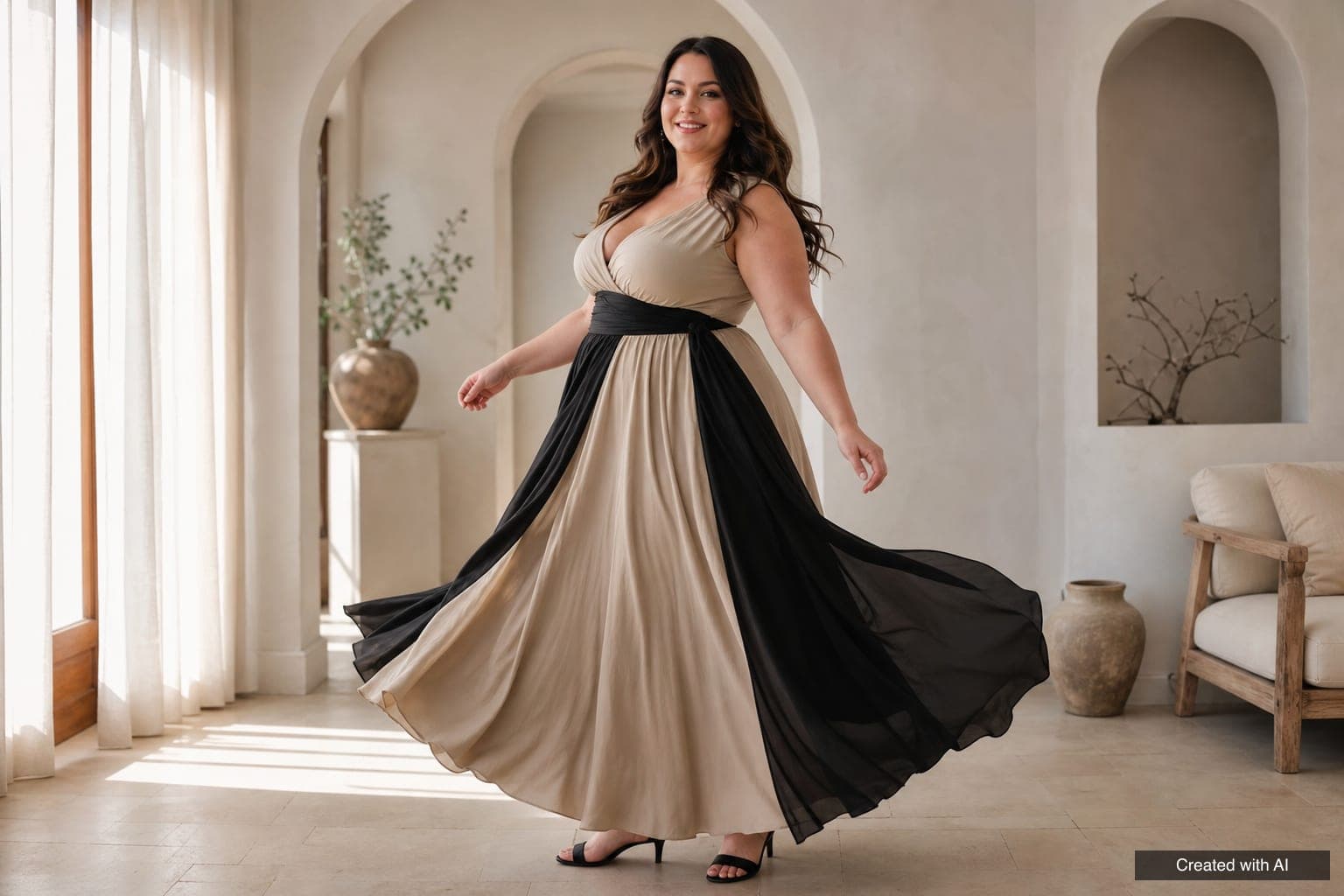
Plus size model requirements look confusing because one website says "5'9" and up", another says "height doesn't matter", and a third gives a few numbers with no explanation. That is because "plus-size model" covers very different jobs, from shooting products for an online shop to an editorial series for a magazine.
Here we have put together what agencies and specialist guides publish, and separated where sources agree from where they do not. This article belongs to our plus-size modeling series; for the size lines themselves, see what is considered plus size.
The requirements at a glance
| What is assessed | Commercial work | Fashion, editorial and runway |
|---|---|---|
| Size | Wide range, from mid-size to very large sizes | Narrower, depends on the agency's board |
| Height | Barely matters; a London agency's board starts at 163 cm | Usually from 173-175 cm |
| Measurements | Proportions must suit the brief | Stricter, especially on the runway and for sample sizes |
| Age | Almost no limit | Depends on the agency and the market |
| Skin and face | Healthy skin, natural look | Expressive face, character |
| Experience | Not needed | Not needed, but helps |
Every figure below comes with its source. If an agency publishes different requirements on its own site, its word counts for more than any general guide.
Size and measurements
Agencies usually ask for bust, waist and hip measurements, dress size, height and shoe size. Online Model Academy says to send bust, waist, hips, dress size and height. The Diversity Agency adds bra size (band and cup) and warns against guessing down a size: bookers measure again when you sign.
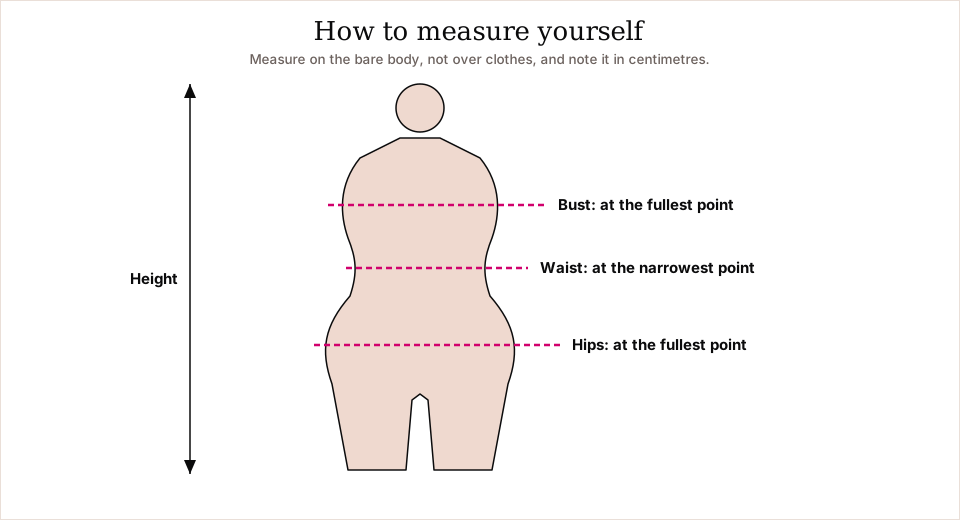
Which sizes a plus-size board covers varies by agency. Online Model Academy says curve boards work roughly from US 8 to 18 (EU 40-50), with the densest client demand at 10-16 (EU 42-48). The Diversity Agency in London signs UK 14 through 30 and above (EU 42-58). The Hamburg agency Curve Models, which says it represents plus-size models exclusively, lists a minimum size of 38 (scale not stated) and a height of 172-182 cm on its application page. So the lower edge of "plus-size" is not the same number everywhere. For conversions, see the size guide.
Is there a "right" waist-to-hip ratio
One guide says plus-size models usually have waists about 10 inches (25 cm) smaller than their hips. That is one guide's rule of thumb, not an agency requirement. Looking at the first twelve profiles on Wilhelmina's New York Curve board, we calculated the hip-minus-waist difference and found it ranges from roughly 9 to 18 inches (23-46 cm). Many figures work. The agency judges how your proportions read on camera.
The Diversity Agency stresses that bookers look for "balanced proportions" in your photos, and calls this technical rather than aesthetic: briefs often come in by proportion as well as by size, and a booker who can describe your shape accurately to a client books you more.
Height
Sources state height differently, but the overall pattern is clear: the more fashion-led the work, the taller the usual range.
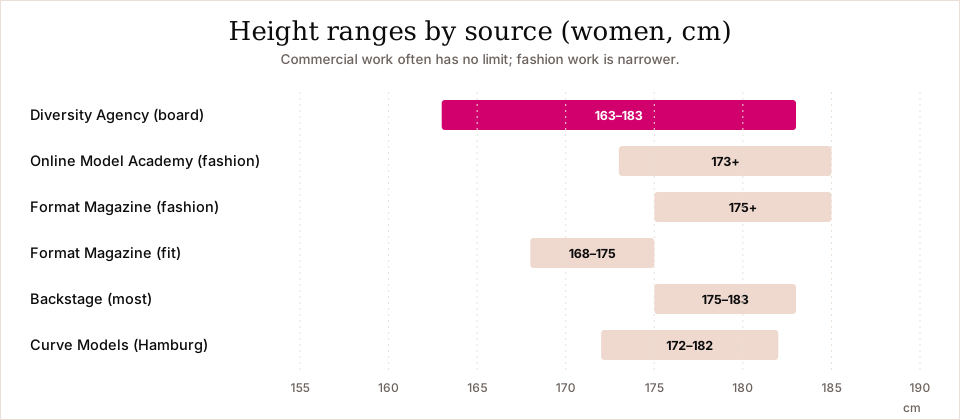
| Source | What it says | In cm |
|---|---|---|
| The Diversity Agency (London) | Board from 5'4" to 6'0"; taller heights suit runway, sportswear and editorial | 163-183 cm |
| Online Model Academy | High-fashion and editorial curve generally 5'8" and above; in commercial work height is largely irrelevant | from 173 cm |
| Format Magazine | Plus-size fashion models generally 5'9" and up; fit models 5'6"-5'9" | from 175 cm; fit 168-175 cm |
| Backstage | Most models between 5'9" and 6'0" | 175-183 cm |
| Curve Models (Hamburg) | 172-182 cm for women | 172-182 cm |
On the part of Wilhelmina's New York Curve board that we reviewed, nine of twelve models are 5'8"-5'11½" (173-181 cm), one is 5'4" and one 5'6". That fits the general picture: more tall models, but shorter ones too.
Shorter women looking for "petite plus-size" work are pointed by these sources towards commercial and fit work rather than the runway. Read more in our fit model guide. Supermodels asks fashion models for at least 170 cm and says height requirements for plus-size models are more flexible.
Age
Age limits are looser in plus-size modeling than in high fashion. The Diversity Agency says it signs every age and runs a classic board for models over 40. Backstage mentions a US agency, IPM Model Management, that represents plus-size models aged 40 and above, and families. Models Direct's application form has separate groups for adults (18+) and teenagers (13-17).
We did not find a separate age limit for plus-size models on the Supermodels page, so it is worth asking directly. Models under 18 work with parental consent; see our modeling contract guide for what to check.
Weight and health
The most common mistake newcomers make is to think about a "model weight". In the agency pages we reviewed (The Diversity Agency, Models Direct, Online Model Academy, Wilhelmina's board profiles, Curve Models), weight is not listed as a requirement: they ask for height, measurements and dress size. The Diversity Agency says it plainly: "Your weight doesn't matter; your dress size does." One US guide, Backstage, gives a weight range, but that is a general guide figure rather than an agency rule, so we do not present it as a norm.
On health, the NHS reminds readers that body mass index (BMI) is only one measure: it cannot tell muscle from fat, and people from Asian, Black African, African-Caribbean or Middle Eastern backgrounds have a higher chance of health problems at a lower BMI. For the bigger picture it suggests looking at waist measurement too. Decisions about weight are best discussed with a doctor, not taken from a modeling guide.
On health and modeling work. Since 2017 France has required models to hold a doctor's certificate of their general health (valid for two years), in which BMI as defined by the World Health Organization is taken into account, and retouched photos in advertising must be labelled. The rules are meant to protect models from dangerous thinness. If thoughts about food or weight are taking over, speak to your doctor or a local eating-disorder service.
What else agencies look for
The Diversity Agency lists three things in order of importance: confidence on camera, balanced proportions in your photos and a category gap the agency needs to fill that quarter. The third is worth thinking about ahead of time: if the board already has two or three models of a similar height, size and type, the diary cannot support a fourth. That is why "try again in six months" is real advice rather than a polite refusal.
Less important than most people think: where you live, whether you have done a test shoot before and how many followers you have. The agency says follower counts carry almost no weight for the commercial curve board. For what to bring to an audition, see our guide to model castings.
Which photos to send
Agency photo rules are close to identical. The Diversity Agency asks for four plain photos: a front headshot, a side profile, a full-length front view and a full-length back view, in fitted clothing (not a baggy hoodie), with no makeup, in daylight, against a plain wall. Supermodels' rules are the same in spirit: daylight, fitted clothes, full length, no filters. Many people skip the back view, but it is the one clients check first for fit work.
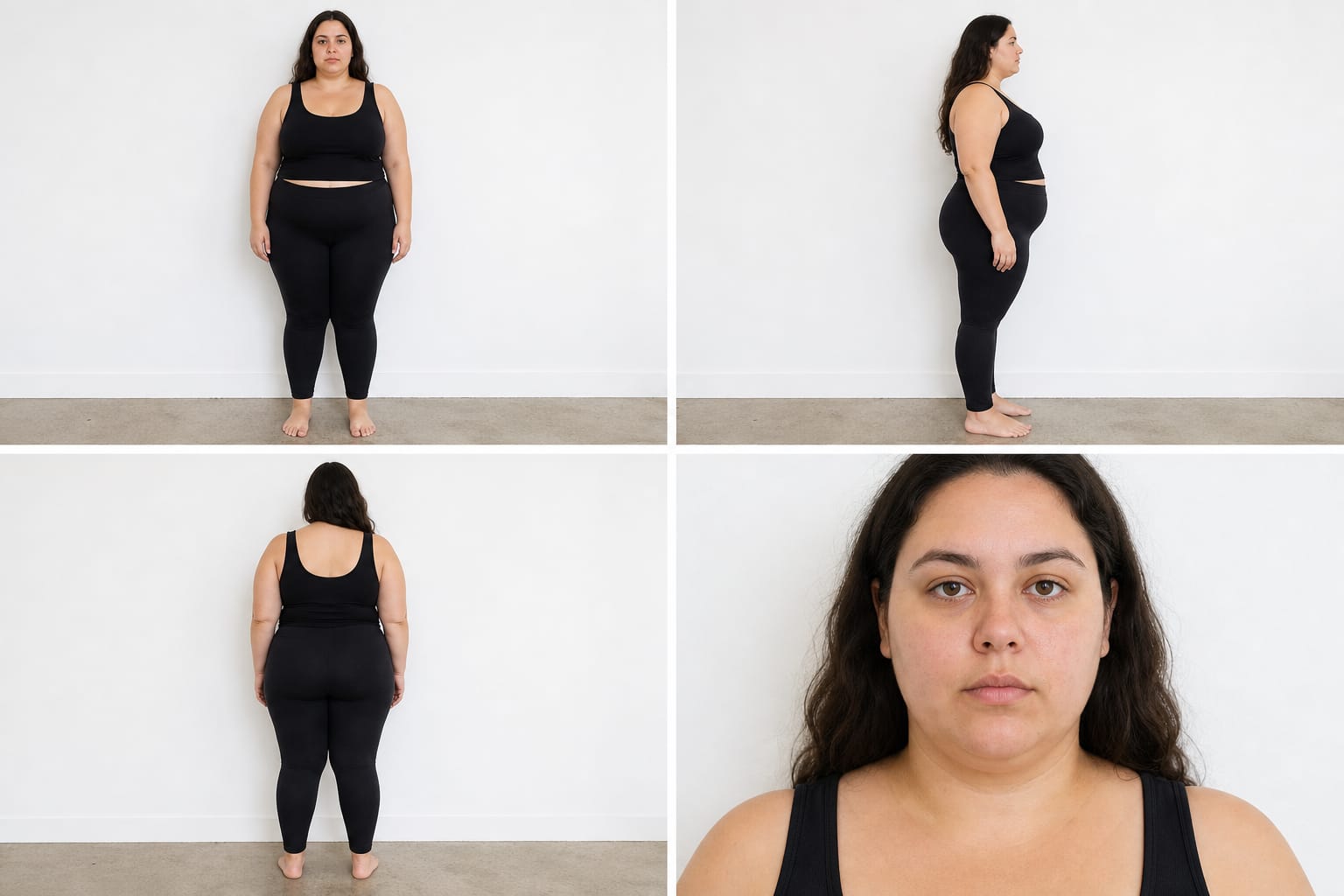
Do: give your current measurements, send natural daylight photos, choose two or three agencies whose boards already include models of your size and write a short note: where you live, your age and what kind of work you want.
Avoid: giving the size you want rather than the one you are, shooting from above or posing to look slimmer, using filters, sending professional glamour shots or applying to every agency at once. Bookers want to see you, not your editing skills.
Common reasons applications are turned down
- Aspirational measurements. The agency will measure you again.
- Photos that hide the body. Baggy clothes, high angles, slimming poses.
- Filters and retouching. Agencies want to see skin texture.
- No back view.
- Category overlap. The board already has someone similar. It is not your fault.
The first four can be fixed and the application resent. The last one is solved by time or by a different agency. If you are unsure which agency to trust, read how to choose a modeling agency: a professional agency does not charge for registration.
Where to apply
Supermodels invites plus-size models to apply, and applying is free; how to do it is explained in Supermodels open call. For the general route into the industry, see how to become a model. The steps for plus-size models are covered in how to become a plus-size model, and agencies are covered in plus-size modeling agencies.
Frequently asked questions
How tall does a plus-size model need to be?
In commercial work height barely matters: a London agency's board includes models from 163 cm. In fashion and editorial work agencies usually look from about 173-175 cm, though sources differ a little.
What measurements do plus-size models need?
There is no single correct number. Agencies ask for bust, waist and hip measurements, dress size and height, and look at how your proportions read on camera. Among the first twelve Wilhelmina profiles we reviewed, the hip-minus-waist difference ranged from roughly 23 to 46 cm.
Is there a weight requirement for plus-size models?
We found none in the agency pages we reviewed: they ask for height, measurements and dress size. One London agency says dress size matters, not weight. Talk to a doctor about anything to do with health.
Can I be a model if I am overweight?
The plus-size market exists so that clothes and products are shown on a range of bodies. Agencies choose by size, proportions, skin, expressiveness and whether the board needs that category. "Overweight" is not a separate requirement.
What is the age range for plus-size models?
There is almost no upper limit in commercial work: one London agency signs all ages and one US agency specialises in models 40 and over. Minors work with parental consent.
Do I need experience or a professional portfolio?
No. Four natural photos and accurate measurements are enough. The agency usually arranges the first test shoot after you sign. More on portfolios in modeling portfolio.
How long before a new model starts working?
The Diversity Agency says first bookings usually come three to six months after signing, with repeat work from six to twelve months. That is one agency's experience, not a general rule.
Sources and recommended reading
- The Diversity Agency (London), "How to Become a Plus-Size / Curve Model in the UK", checked October 2026.
- Online Model Academy, "Plus Size Modeling Agencies: How to Get Signed", checked October 2026.
- Curve Models (Hamburg), application page, checked October 2026.
- Wilhelmina Models, New York Curve board profiles and "Become a Model" page, checked October 2026.
- Models Direct (UK), "Plus Size Models Wanted", checked October 2026.
- Format Magazine, "The Complete Guide To Plus Size Modelling" (updated 2025); Backstage, "Top Plus-Size Modeling Agencies in the U.S." (2023).
- NHS, "Calculate your body mass index (BMI) for adults": nhs.uk.
- Nomos (Paris), "New rules for model's weight and retouched photo in France" (2017), on the law of 26 January 2016 and Decree No. 2017-738 of 4 May 2017.
- Supermodels application requirements, checked October 2026; Jurgita size guide.
Comments (0)
No comments yet. Be the first!
Only logged-in users can comment. Register — and you'll be able to share your thoughts on this article.
Register