

Key points
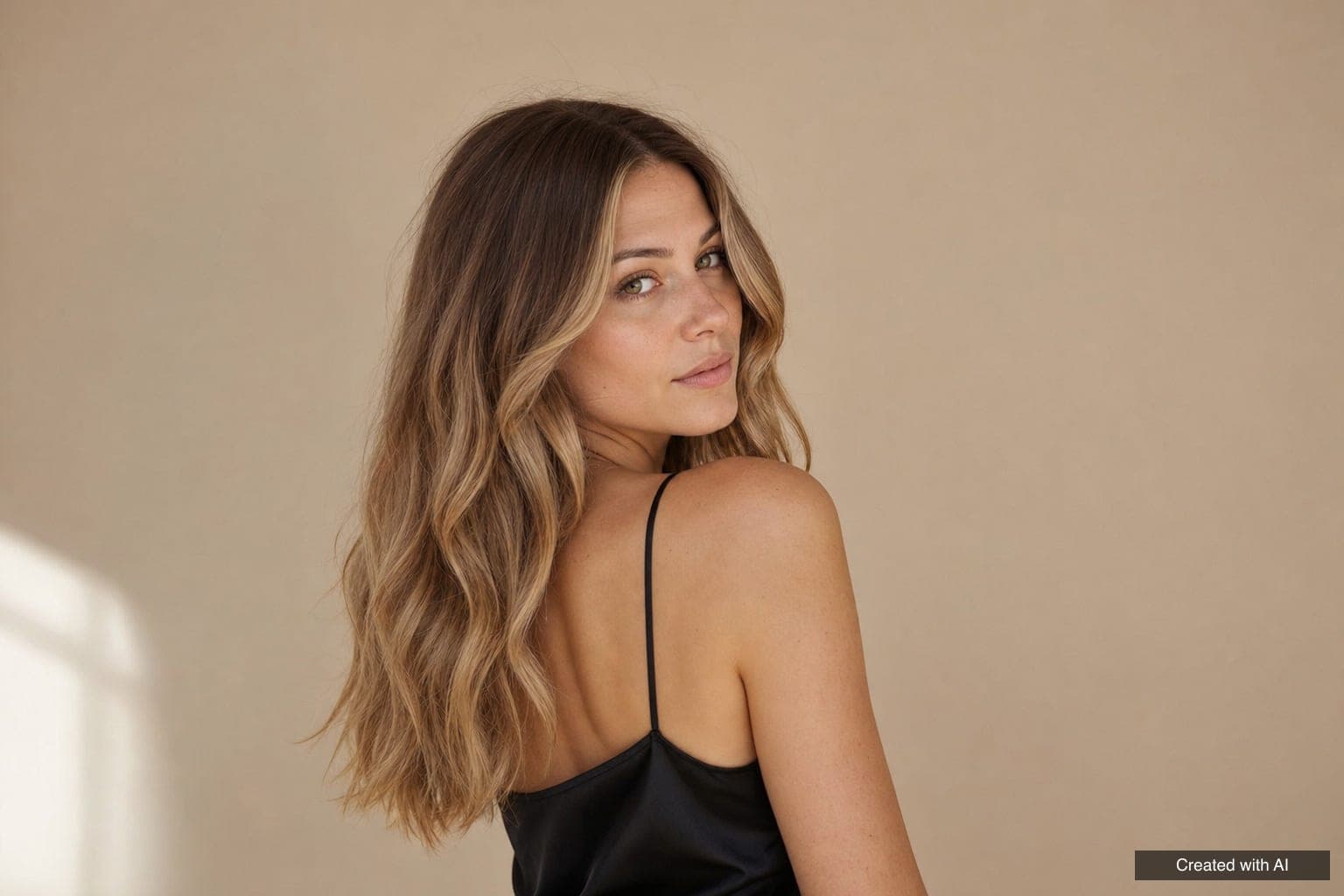
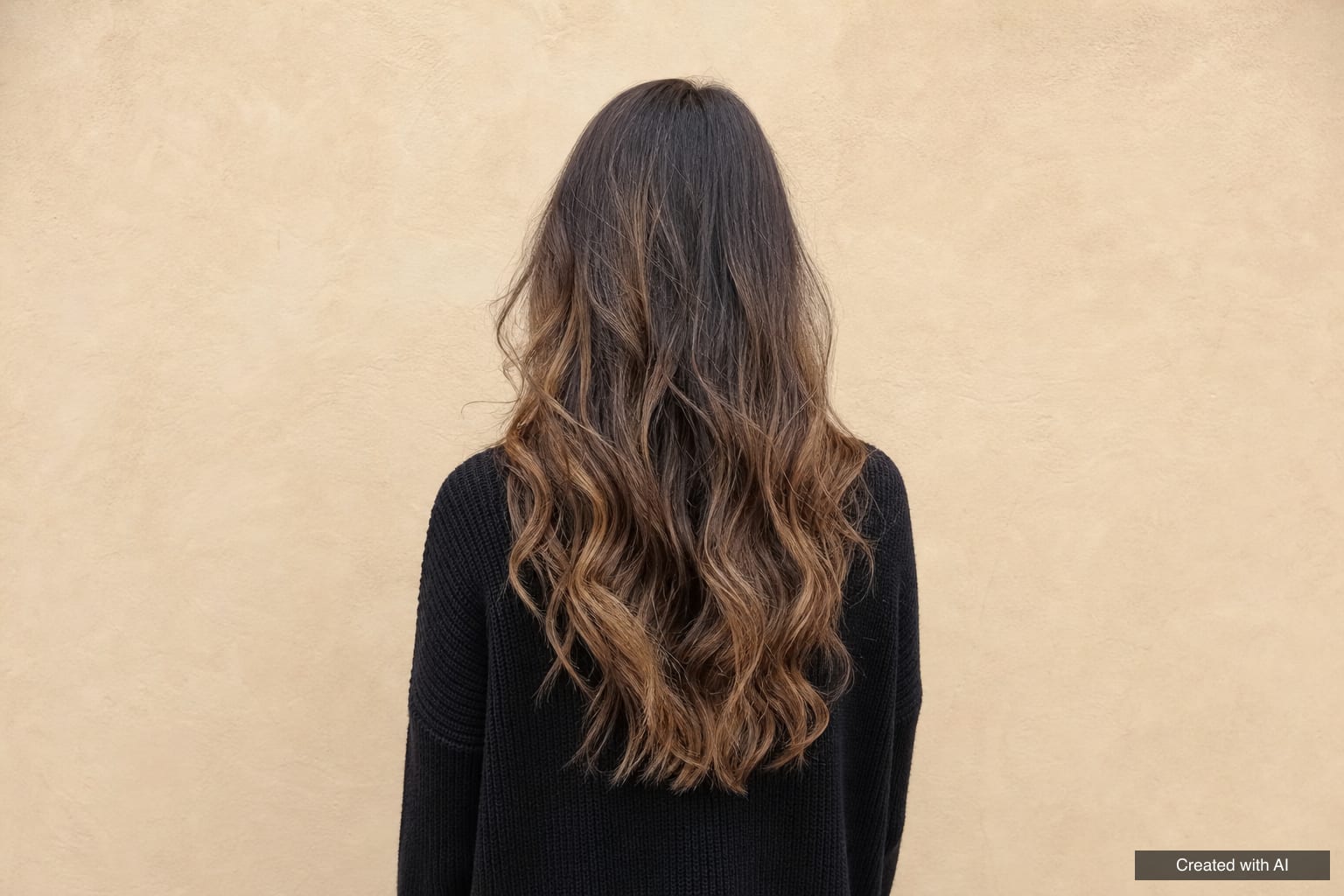
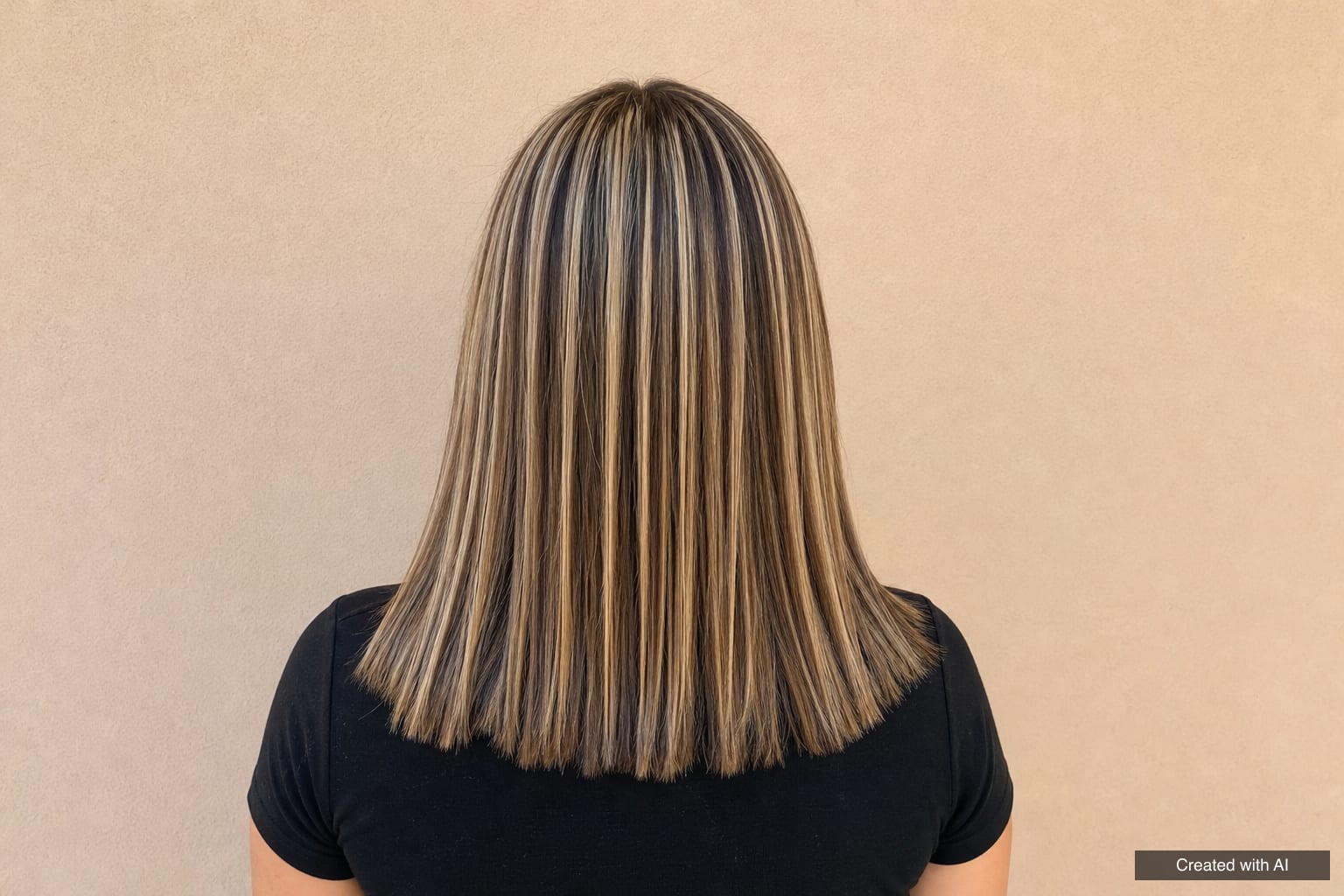
- Balayage is a lightening technique where the colourist paints lightener onto the hair by hand, without foils. The roots stay your own colour and the lighter pieces look as if the sun had faded them.
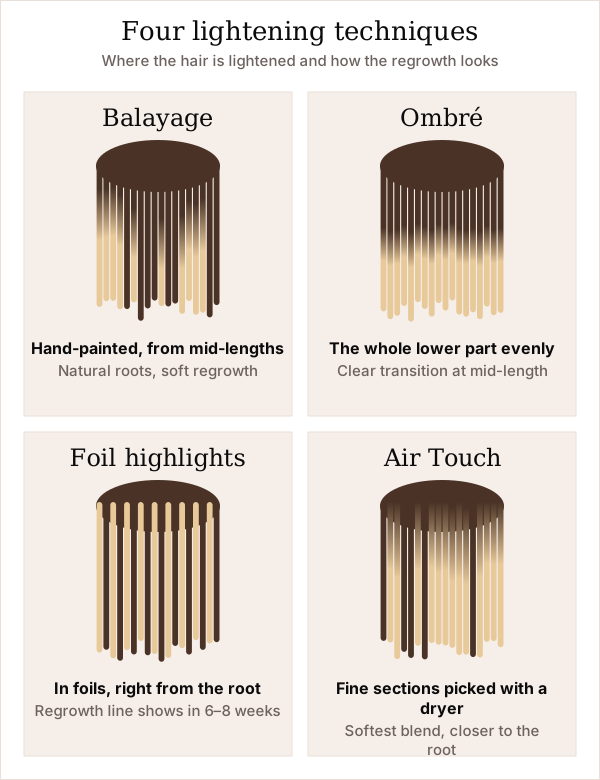
- It differs from ombré because only chosen sections are lightened, not the whole lower half, and from foil highlights because it does not start at the root, so it grows out softly.
- Air Touch is a related technique: a blow dryer separates out the short hairs before lightening, so the blend is even softer, but the appointment is longer and more expensive.
- Toning every 6–10 weeks keeps the shade fresh between visits; the lightening itself only needs repeating every 3–6 months.
Balayage has been one of the most requested colour services in salons for close to a decade. The idea behind it is easy to grasp: the hair should look as if a summer outdoors had lightened it, not a colourist. So the lighter pieces go in unevenly, where light would naturally catch them, and the roots are left alone.
The salon menu around it is confusing, though. Balayage sits next to ombré, foil highlights, babylights, shatush, foilayage and Air Touch, and the names are often used loosely. This guide explains how they differ, who balayage suits, how long the appointment takes, what it costs, how long it lasts, and how to look after lightened hair so it does not turn brassy.
What is balayage
The word comes from the French verb balayer, to sweep. The technique began in Parisian salons in the 1970s, when colourists started applying lightener with broad, sweeping brush strokes instead of wrapping sections in foil. It went global around the 2010s, when natural-looking, low-maintenance colour became the trend.
What defines a balayage:
- Lightener is painted by hand. The colourist decides which sections to lighten and where to start, so no two results are the same.
- The roots are not lightened. The lighter colour starts at the mid-lengths or a little higher and builds towards the ends.
- More brightness at the front. The pieces around the face are often made lighter, since that is where the sun lightens hair most.
- A toner follows. Freshly lightened hair almost always has a yellow or orange cast, which a toner corrects into beige, caramel, honey or a cool pearl shade.
Balayage vs ombré vs highlights vs Air Touch
All four lighten part of the hair. They differ in which strands are lightened, where the light colour starts and how the regrowth looks, and that decides how often you will need to go back to the salon.
| Balayage | Ombré | Foil highlights | Air Touch | |
|---|---|---|---|---|
| How it is done | Hand-painted, no foils | The whole lower part, often with backcombing | Fine strands in foils | Strands picked with a dryer, lightened in foils |
| Where the light colour starts | Mid-lengths, unevenly | Mid-lengths, evenly all round | Right at the root | Closer to the root, very softly |
| Look | Natural, sun-kissed | A clear dark-to-light transition | Even light stripes | A very smooth blend, lots of brightness |
| Regrowth shows after | 3–6 months | 4–6 months | 6–8 weeks | 4–6 months |
| Time in the chair | 3–4.5 hours | 2.5–4 hours | 2–3 hours | 4–6 hours |
Ombré
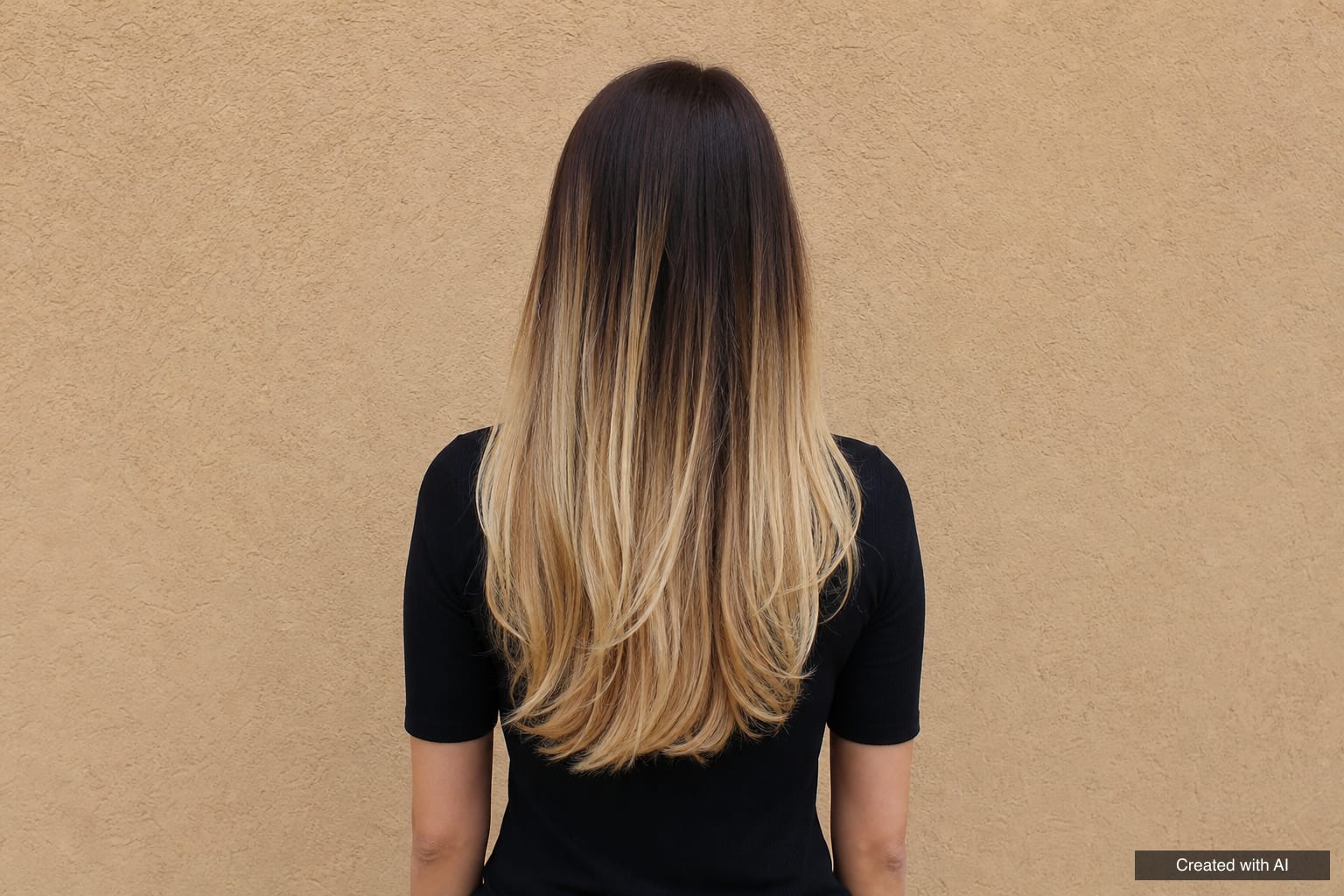
Ombré is one clear transition: the top stays dark and the whole lower part is lightened evenly. It peaked around 2012–2015; today people more often ask for a softer “sombré”, where the line is blurred. Choose ombré if you want visible contrast, balayage if you want it to look natural.
Foil highlights and babylights
Classic highlights are lightened in foils right from the root, so more of the hair looks light and the colour is more even. The trade-off is upkeep: a dark band of regrowth shows within six to eight weeks. Very fine highlights are called babylights, and a brighter panel only around the face is often called a “money piece”.
Shatush and foilayage
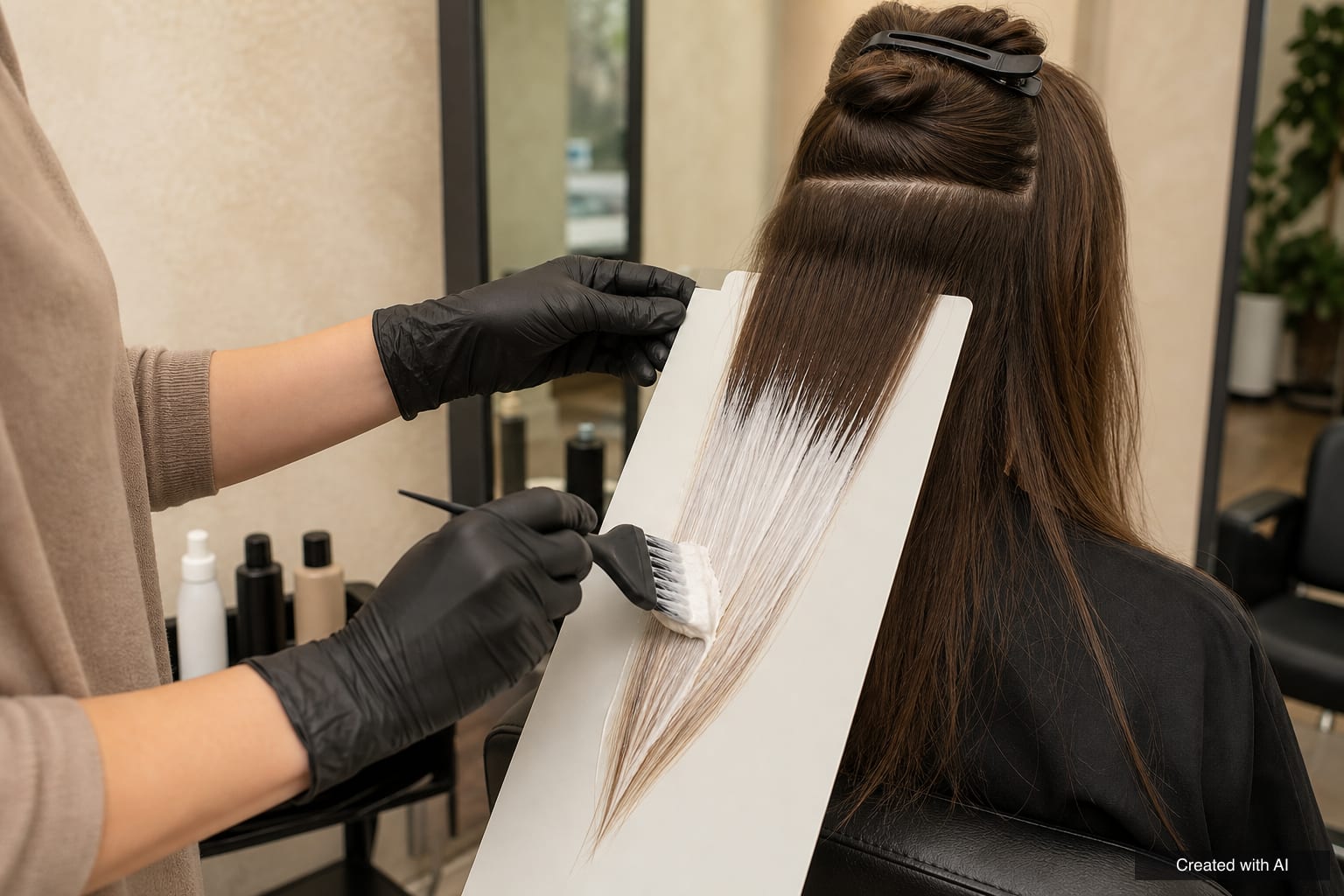
Shatush is the Italian cousin of balayage: the sections are backcombed before lightening, so the lightener only catches the longer hairs and the blend becomes smoky. Foilayage is balayage painted by hand and then wrapped in foil, which holds the heat in and lifts the colour further. That makes it a common choice for dark hair that needs to go noticeably lighter.
What is Air Touch
Air Touch (also written “airtouch”) is a newer technique built around a jet of air. The colourist takes a thin section, holds it out and blows it with a hair dryer: the shorter, finer hairs fly back towards the head and only the long ones stay in the fingers. Those are the ones that get lightened, in foil.
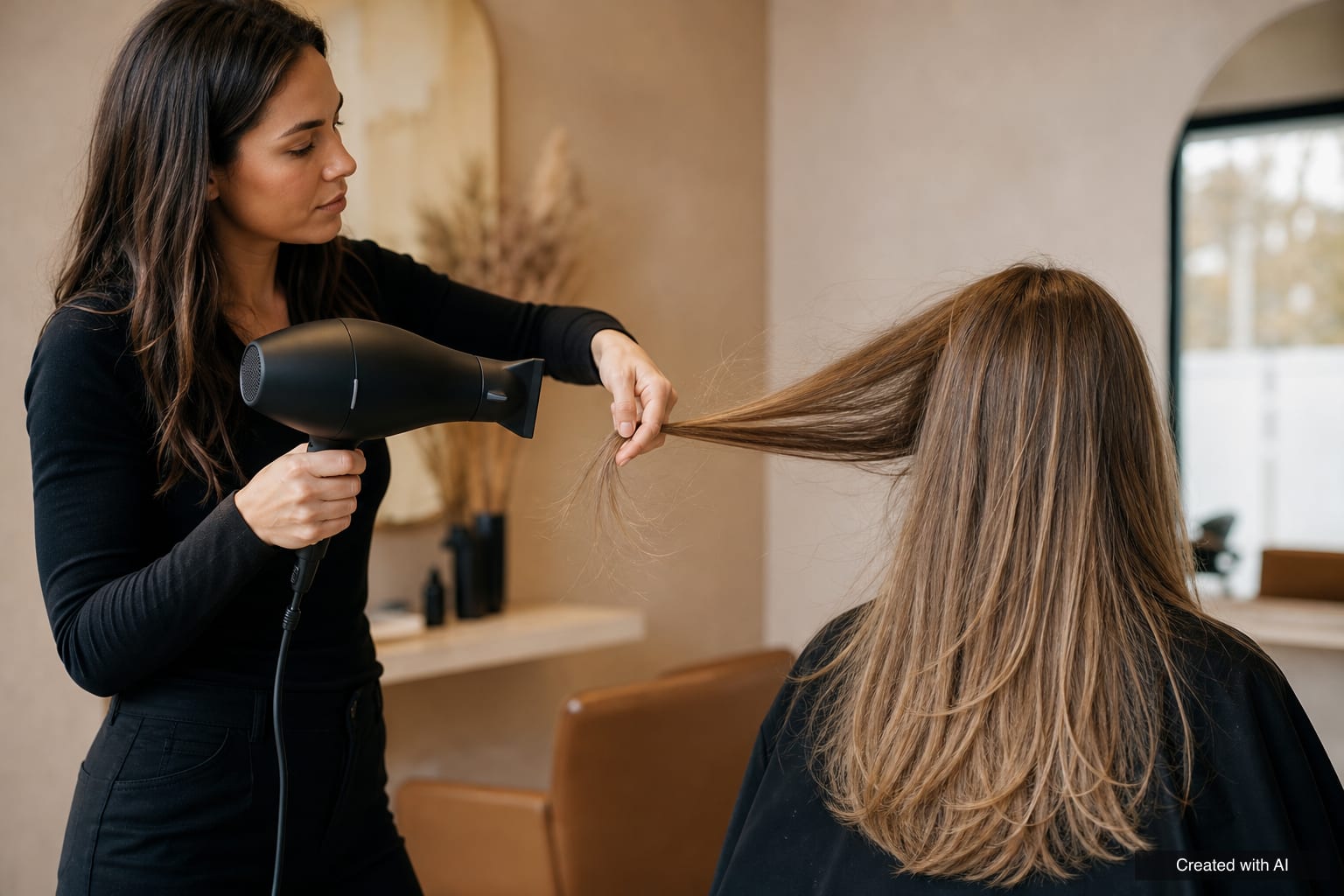
Because the lightening starts closer to the root than in a classic balayage, there is more light colour in the hair, and the transition stays soft as it grows out. Air Touch suits people who want to go noticeably lighter without a hard regrowth line. The downside is time: the sections are very small, so with toning, a cut and a blow-dry the appointment often runs to five hours or more.
Choose balayage if you want a natural sun-kissed effect, keep your own root colour and prefer fewer salon visits.
Choose Air Touch if you want more brightness and a very smooth blend, and five hours in the chair and a higher price do not put you off.
Who balayage suits
Balayage works on almost every hair type, but the result and the process differ.
Dark and brown hair
Balayage is a strong choice for dark hair, because uneven lighter pieces add depth. Dark pigment passes through red and orange stages as it lifts, though, so brunettes are usually offered caramel, honey or chocolate tones rather than icy blonde. Very light ends may take two appointments.
Blonde and light brown hair
On light hair, balayage is done more subtly: it adds contrast and movement, especially when the natural colour is ashy. One appointment is usually enough, with less lightener.
Short hair
Balayage is possible on a bob or a layered cut, but there is little length for a gradient. A few lighter pieces and brighter ends work better here. Our guide to hairstyles for your face shape and the haircuts topic help with choosing the cut to go with it.
Curly and greying hair
Curls show balayage off, since the light pieces pick out each curl. On greying hair, balayage blends the grey strands in among the lighter ones, so the regrowth is less obvious.
When to wait: if your hair was recently dyed dark or with henna, breaks easily, or has had a recent perm. Lightener lifts dark dye unevenly and damaged hair can snap. Tell your colourist your full hair history, even if the dye was a year ago.
How a salon balayage appointment goes
For medium-length hair, a salon balayage usually takes 3–4.5 hours, longer for long or thick hair. Toning, cutting and styling take up a good part of that time, not only the lightening.
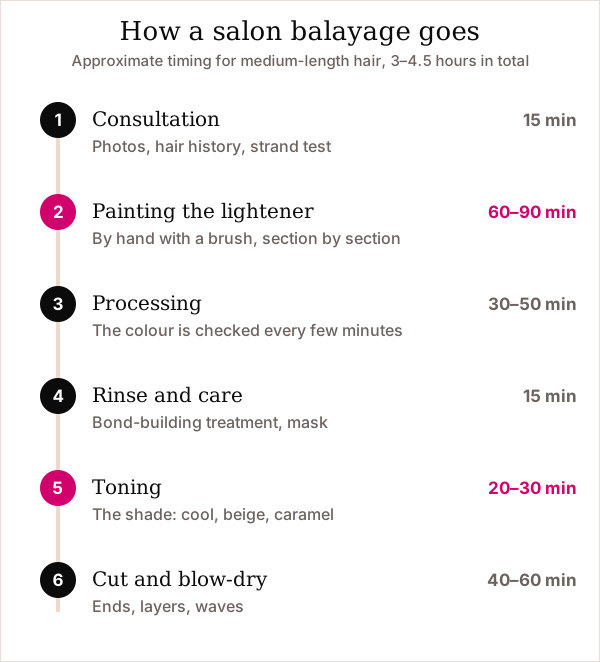
- Consultation. Bring two or three photos of the result you want and one you dislike. The colourist will assess your hair and tell you whether the goal is reachable in one session.
- Painting. The hair is divided into sections and the lightener is painted on in V or W shapes. Some colourists cover the painted sections with film or paper so the lightener does not touch the hair next to them.
- Processing. The hair lifts for 30–50 minutes, and the colour is checked every few minutes.
- Rinse and care. A bond-building treatment is often used to limit the damage from lightening.
- Toning. The toner neutralises yellow and sets the shade you want.
- Cut and blow-dry. Balayage shows best on waves, so the hair is usually finished with a wave.
How much does balayage cost
The price depends on the length and thickness of your hair, how much lightening is needed, and whether the toner, cut and a treatment are included. For reference, these are the usual ranges in Lithuanian salons in autumn 2026; in London, Paris or New York, expect a multiple of these figures.
| Service | Typical price in Lithuania | Time |
|---|---|---|
| Foil highlights | €60–130 | 2–3 hours |
| Ombré | €90–180 | 2.5–4 hours |
| Balayage | €90–200 | 3–4.5 hours |
| Air Touch | €150–300 | 4–6 hours |
| Toner between visits | €40–80 | 1–1.5 hours |
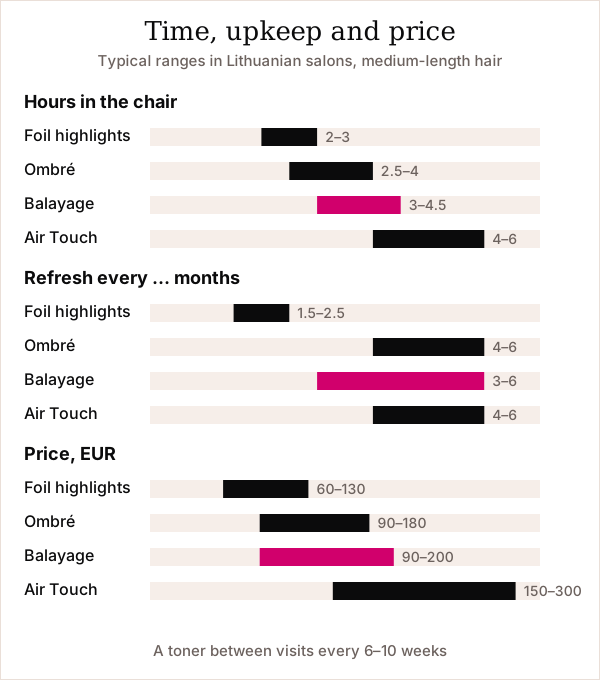
When comparing prices, check what is included. A cheaper offer often means short hair or no toner, and a “from” price almost always applies to the shortest hair. Over a year, balayage can work out cheaper than highlights, because the full lightening is repeated two or three times rather than six to eight.
How long does balayage last
Lightening does not wash out: a lightened strand stays light until it grows out and is cut off. That is why balayage lasts a long time, and the first refresh is usually due after 3–6 months. Some people, especially brunettes with a soft blend, go back only twice a year.
The shade changes faster. Toner fades in 6–10 weeks (sooner if you wash often), and the light pieces start to look yellow or brassy again. So between the big appointments it is normal to book a toner only, which is shorter and cheaper than a full lightening.
| What | How long it lasts | What to do |
|---|---|---|
| Lightening | Until it grows out and is cut | Refresh every 3–6 months |
| Toner | 6–10 weeks | Repeat in the salon or top up with a toning shampoo |
| Cut | 2–3 months | Trim the ends so the light parts do not look dry |
Balayage aftercare: toner, washing, heat and sun
Lightened hair is more porous: it takes up water faster, dries out faster and loses colour more easily. Aftercare decides whether your balayage still looks good two months later.
- Do not wash for the first 48–72 hours, so the toner can settle.
- Use a gentle shampoo for coloured hair without harsh sulfates, and lukewarm rather than hot water.
- A purple or blue shampoo once every week or two neutralises brassiness (purple for blonde tones, blue for brown and caramel). Used too often, it can turn light hair greyish.
- Conditioner or a mask every time. A damaged cuticle needs more conditioning than untreated hair.
- Heat protection. Blow-dry on medium heat and use a heat protectant before straightening or curling.
- Sun and chlorine. Dermatologists note that bleached hair is more vulnerable to UV and chlorine: wear a hat in summer and rinse your hair straight after swimming in a pool.
Lightened hair also frizzes sooner in humid, windy weather. You can check the conditions each day in our hair weather forecast.
Does balayage damage your hair
Any lightening damages hair. Lightener (hydrogen peroxide in an alkaline base) breaks down the melanin pigment and some of the proteins with it, so the hair becomes drier, more porous and more fragile. The more levels you lift, the stronger the developer and the longer the processing time. The American Academy of Dermatology advises staying within three shades of your natural colour where possible.
In that sense, balayage is gentler than lightening the whole head: only part of the hair is treated, and the roots and scalp are left alone. But the ends, which get lightened most, are also the oldest and most worn part of the hair. So the light pieces need more care, and dry ends are worth trimming regularly. If you are worried about breakage or shedding, our guides to growing hair faster and to the causes of hair loss explain what helps and what does not.
Allergy to dye. Toners and oxidative dyes can contain para-phenylenediamine (PPD) and related substances that cause allergic reactions. The NHS advises doing a skin test and waiting 48 hours before colouring, even if you have used the same dye before. If your scalp burns or itches badly during the service, the dye should be rinsed off straight away.
Balayage at home or in a salon
Home balayage kits exist, and a simple version with a few lighter pieces on light hair is doable. Still, it is one of the hardest techniques to do on yourself: you need to see your whole head, spread the pieces unevenly yet in balance, and rinse the lightener off on time.
| At home | In a salon | |
|---|---|---|
| Cost | A kit, roughly €15–40 | €90–200 in Lithuania, more in big Western cities |
| Common mistakes | Orange patches, visible stripes, uneven sides, fried ends | Rarer, but possible if you do not explain what you want |
| Toning | Often skipped, so brassiness stays | Always, matched to the shade you want |
| Best for | Light hair, a few brighter ends | Dark hair, a big change, previously coloured hair |
If you do try it at home, start with a test strand in the underneath layer, stick to the maker's timing, and do not lighten hair that has been dyed dark before. Fixing a failed home balayage in a salon often costs more than going to the salon in the first place.
How to choose your balayage shade and what to avoid
Balayage looks best when the shade works with your skin tone and brow colour.
- Warm skin (golden, peachy): honey, caramel, copper and golden beige.
- Cool skin (pink, bluish): ash, pearl and cool beige.
- Neutral skin: beige, “latte” and soft caramel suit almost everyone.
What to avoid:
- Too big a jump at once. Going from dark brown to icy blonde in one appointment is hard on the hair. Two or three sessions are safer.
- Hiding your hair history. Henna, dark dye, keratin or a perm all change how the hair reacts to lightener.
- Relying on one photo. Social media pictures are often filtered and taken on lighter hair than yours. Ask your colourist how that result would look on your hair.
- Skipping aftercare. Without toner top-ups and masks, the light pieces turn yellow and dry within weeks.
For models: balayage before castings and shoots
Modelling agencies usually want to see your natural colour or something close to it, because clients book a specific look. A soft balayage with your own roots rarely gets in the way, but a big change, such as going from dark brunette to blonde, changes your whole book and your digitals. If you are signed, talk to your agent before changing colour, and avoid new colour right before a casting.
Planning a new look? Balayage works best when the cut supports it. Before booking, look through our guide to hairstyles for every face shape and the haircuts topic, and check the hair weather before a styling day.
FAQ
What is the difference between balayage and ombré?
Ombré lightens the whole lower part of the hair evenly, so the dark-to-light transition is clearly visible. Balayage lightens only chosen sections, unevenly and by hand, so the result looks more natural, as if the sun had lightened it.
What is the difference between balayage and highlights?
Highlights are lightened in foils from the root, in an even pattern, so the regrowth shows within six to eight weeks. Balayage starts lower and is painted freehand, so it grows out softly and needs a full refresh only every three to six months.
What is the difference between balayage and Air Touch?
Neither lightens the roots and both give a soft blend. Air Touch uses a blow dryer to separate out the short hairs before lightening, and the lightening is done in foil and closer to the root, so there is more light colour and an even softer transition. It takes longer and costs more.
How long does balayage last?
The lightening stays until the hair grows out and is cut, so a full balayage is refreshed every 3–6 months. The toner fades sooner, in 6–10 weeks, so it is worth repeating between visits.
Can you do balayage on dark hair?
Yes, it suits dark hair very well. Dark pigment goes through an orange stage as it lifts, so caramel or honey tones are the usual choice, and very light ends may need two appointments.
What does a toner do after balayage?
A toner is a gentle dye that neutralises the yellow or orange cast left by lightening and sets the shade you want, such as beige, pearl or caramel. It fades in 6–10 weeks, so it is repeated between the bigger appointments.
Can I do balayage at home?
On light hair, a simple version with a few brighter pieces is possible. On dark or previously coloured hair a salon is the safer choice: home attempts often end with orange patches, visible stripes and fried ends.
Sources
- American Academy of Dermatology, Coloring and perming tips for healthier-looking hair.
- American Academy of Dermatology, Must-try summer hair care.
- Gavazzoni Dias M. F. R., Hair Cosmetics: An Overview, International Journal of Trichology, 2015.
- NHS, Hair dye reactions.
- US Food and Drug Administration, Hair Dyes.
- Lee Y. et al., Hair Shaft Damage from Heat and Drying Time of Hair Dryer, Annals of Dermatology, 2011.
- Prices: published price lists of Lithuanian salons and booking platforms, checked October 2026.

Comments (0)
No comments yet. Be the first!
Only logged-in users can comment. Register — and you'll be able to share your thoughts on this article.
Register