

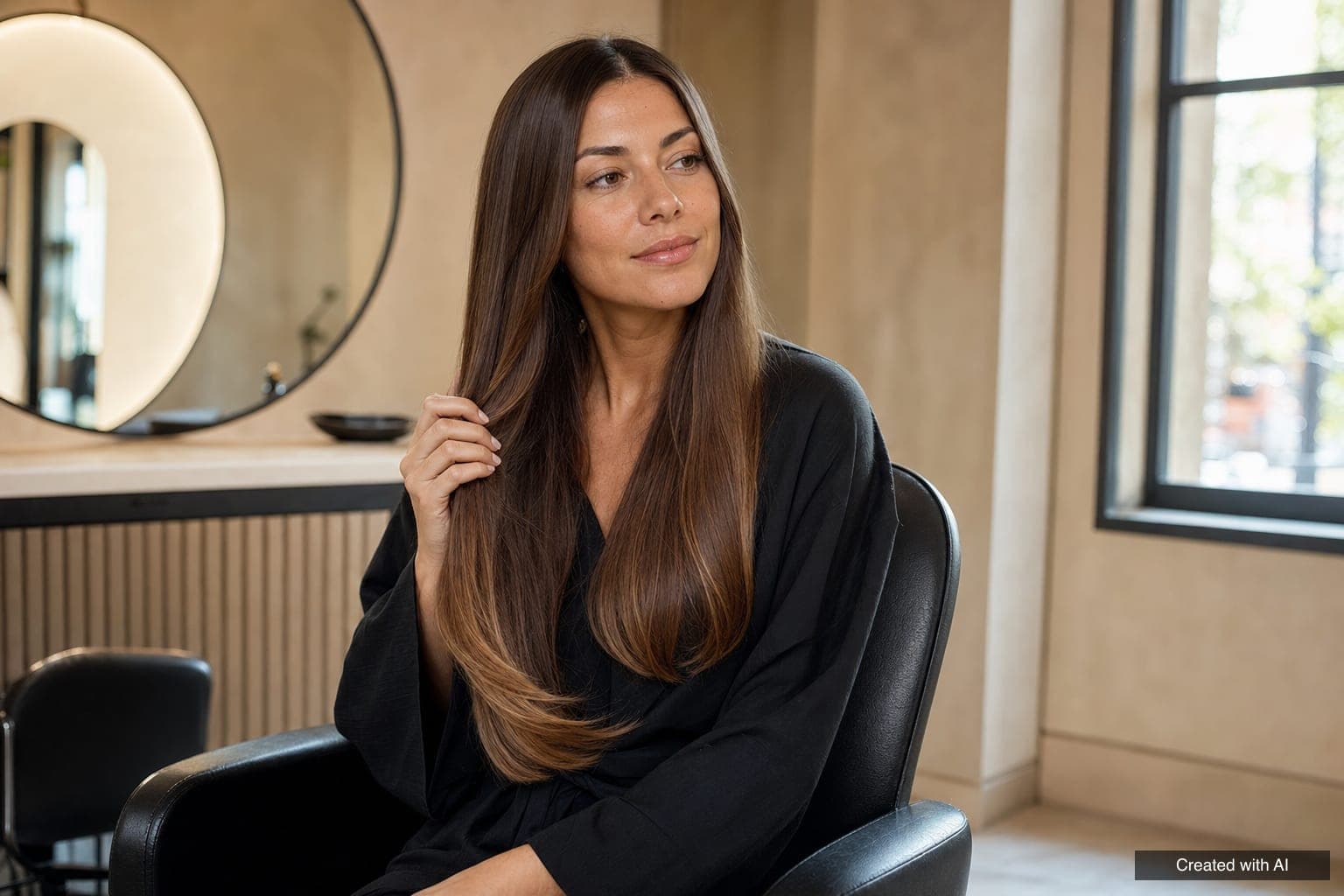
In short
- A keratin hair treatment is a salon service: a smoothing solution is applied to the hair and sealed in with a hot flat iron. Hair frizzes less, dries faster and waves relax.
- Results usually last 2–5 months and wash out gradually. Sulfate-free shampoo and the first-days rules help them last longer.
- The main safety issue is formaldehyde released when some solutions are heated. The EU bans formaldehyde as a cosmetic ingredient, the US has not yet finalised its proposed ban, and some "formaldehyde-free" formulas use glyoxylic acid, which is now under EU review.
- In the US the average appointment costs roughly $80–400 depending on the state; in Lithuania it is about €60–190.
Hair that puffs up after washing, frizzes on humid days and needs a flat iron every morning is the usual reason people ask for a keratin treatment. It can cut your styling time for weeks or months, but it is a cosmetic smoothing service rather than a hair "repair", and it carries risks that salons do not always mention.
Below we explain what happens during the treatment, how long it lasts, how it differs from hair botox and nanoplasty, what US and EU regulators say about formaldehyde, how to look after your hair afterwards and what it costs.
What is a keratin treatment?
Keratin is the protein that makes up most of your hair, nails and the outer layer of skin. Keratin fibres in hair are held together by strong disulfide bonds and weaker hydrogen bonds, and together they decide whether hair is straight, wavy or curly. When the cuticle (the outer layer of overlapping scales) is damaged, hair absorbs moisture unevenly and frizzes.
The word "keratin" is used for two different things:
- A salon keratin treatment (also called Brazilian keratin or keratin straightening). The solution is applied and "locked in" with a flat iron, and the effect lasts for months.
- Products with hydrolysed keratin: shampoos, masks, serums. They do not straighten hair, they coat the surface for a while and make combing easier. More on them under "Keratin at home".
One more thing worth knowing: the smoothing effect usually comes not from keratin itself but from other ingredients and heat. Older formulas rely on formaldehyde or methylene glycol, newer ones on glyoxylic acid and other acids. The European Commission describes glyoxylic acid as a milder alternative to formaldehyde that alters the keratin structure of hair and reduces curl.

Brazilian blowout vs keratin treatment
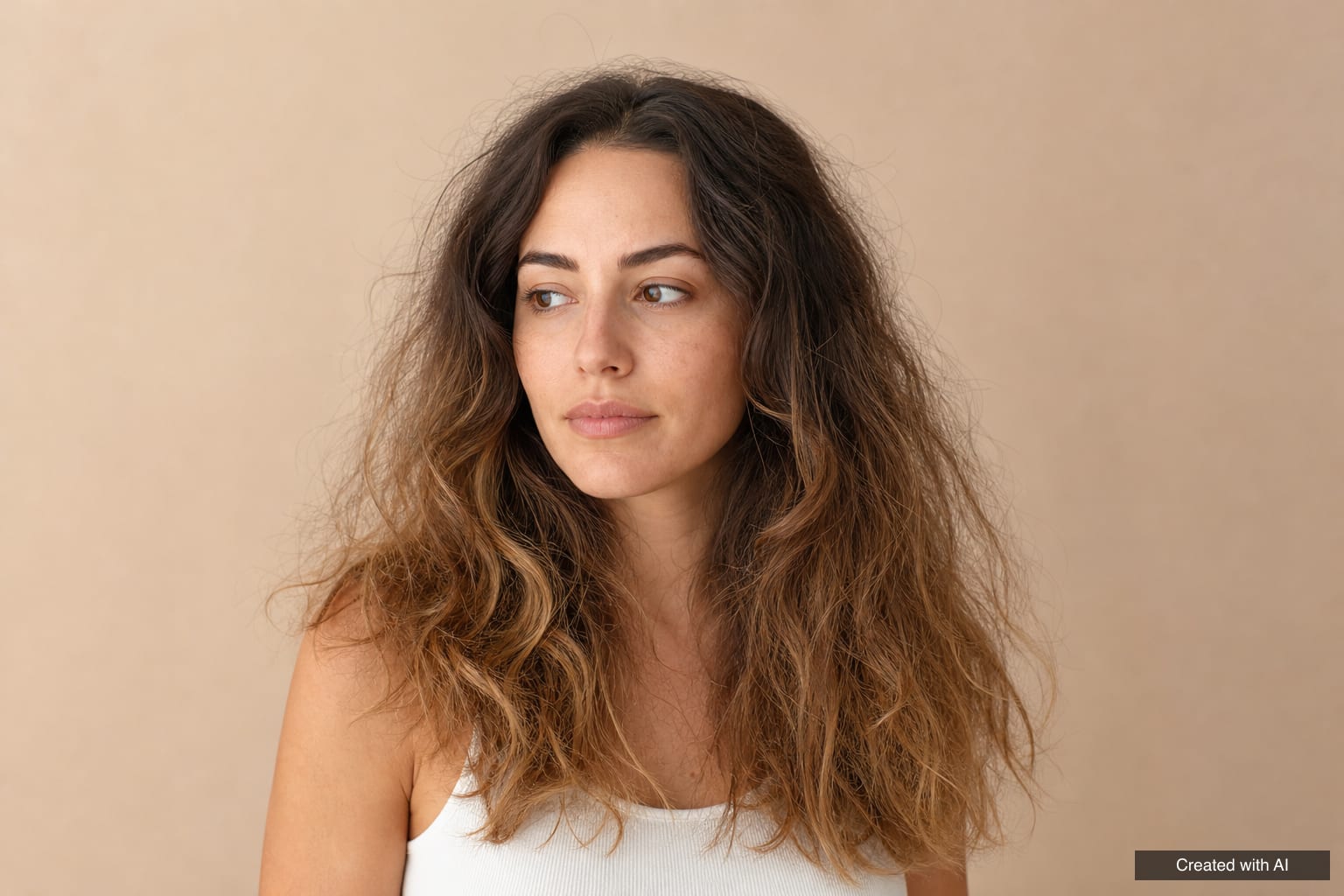
"Brazilian blowout" is searched almost as often as "keratin treatment" in the US, and the two are often used as synonyms. Strictly speaking, Brazilian Blowout is the brand name of one smoothing system that became a generic term for the whole category. The steps are the same: wash, apply, blow-dry, flat-iron. In 2011 the US FDA sent the brand a warning letter over safety and labelling, and US workplace safety tests found formaldehyde in its solution labelled "formaldehyde free". According to the FDA, the company took steps to correct the violations. Whatever the name on the bottle, the questions to ask are the same: what is in it and how is the room ventilated.
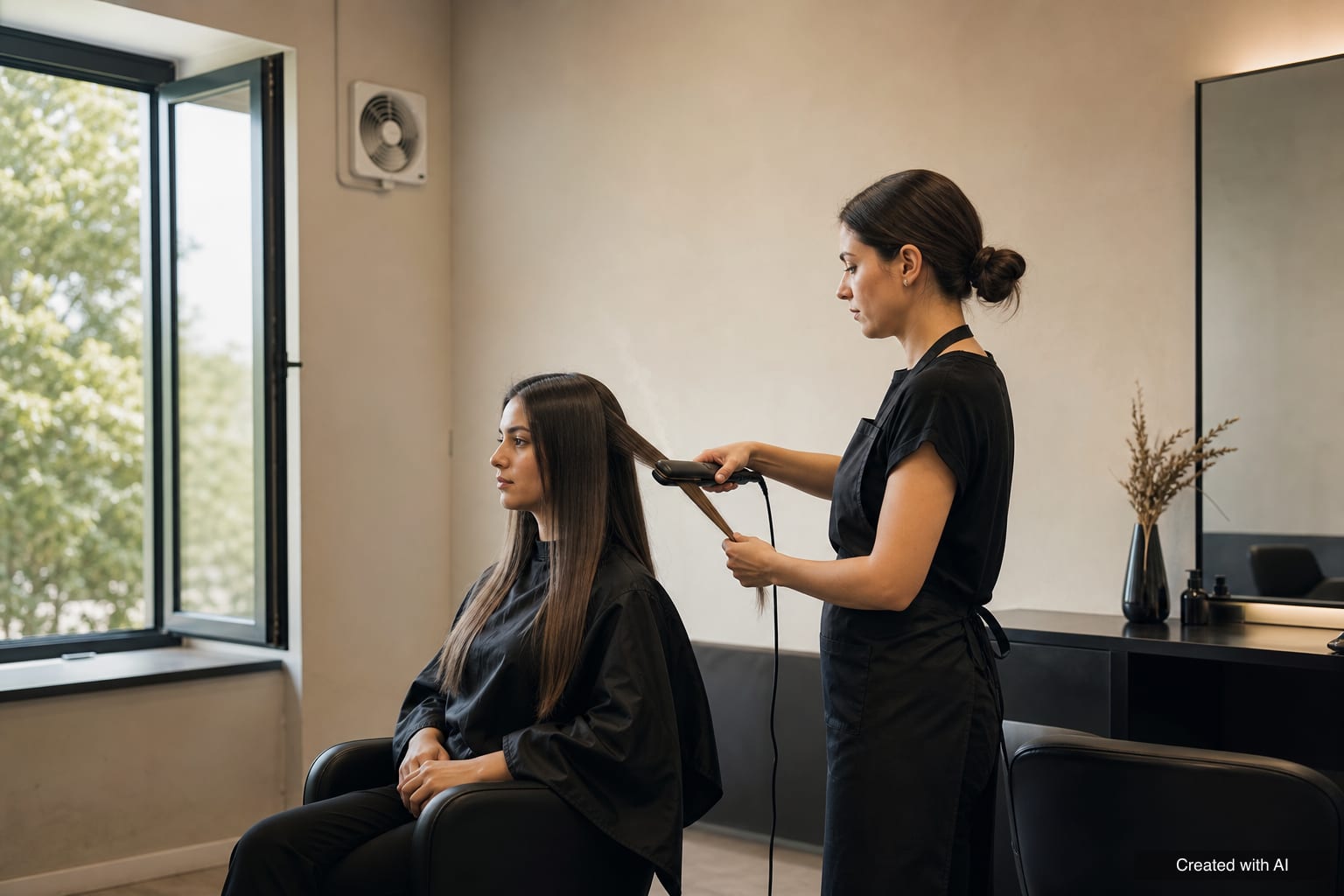
How a keratin treatment is done
The steps are almost always the same; the product, the iron temperature and whether you can wash your hair the same day differ. The whole appointment takes from about an hour for short hair to three hours for long, thick hair.
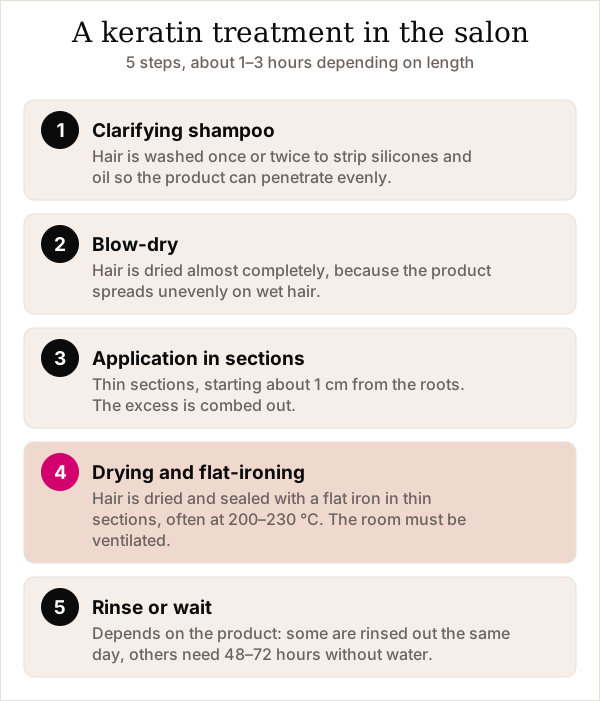
- Clarifying shampoo removes silicones, oil and styling residue so the product absorbs evenly.
- Blow-dry until the hair is almost dry.
- Application. The stylist works in thin sections, keeping slightly away from the roots so the product does not touch the scalp.
- Flat-ironing. Each thin section is passed through the iron several times, often at 200–230 °C (390–450 °F). Fine or bleached hair usually gets a lower temperature.
- Rinse or wait. Some products are rinsed out the same day, others must stay in for 48–72 hours.
Before and after: what to expect
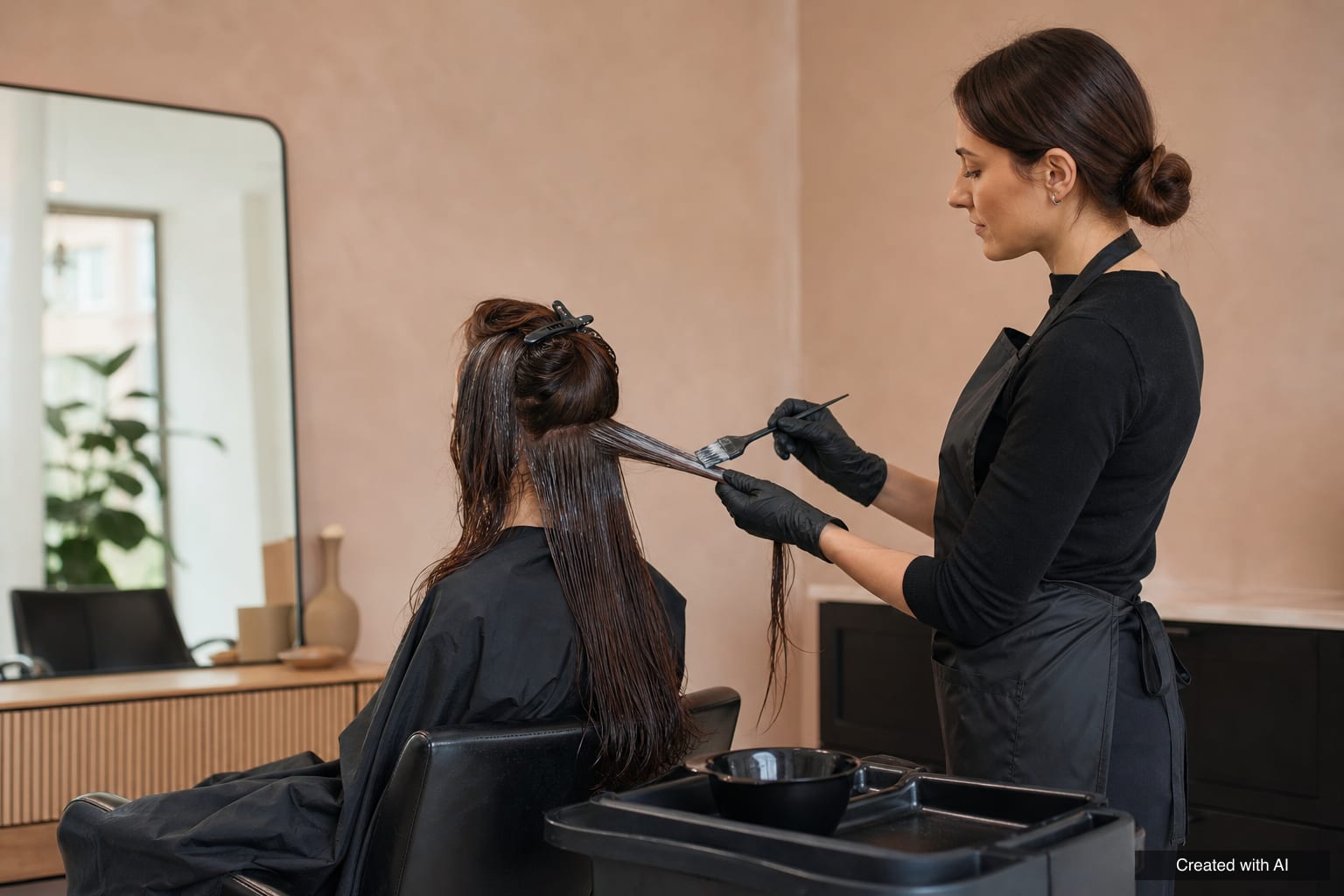
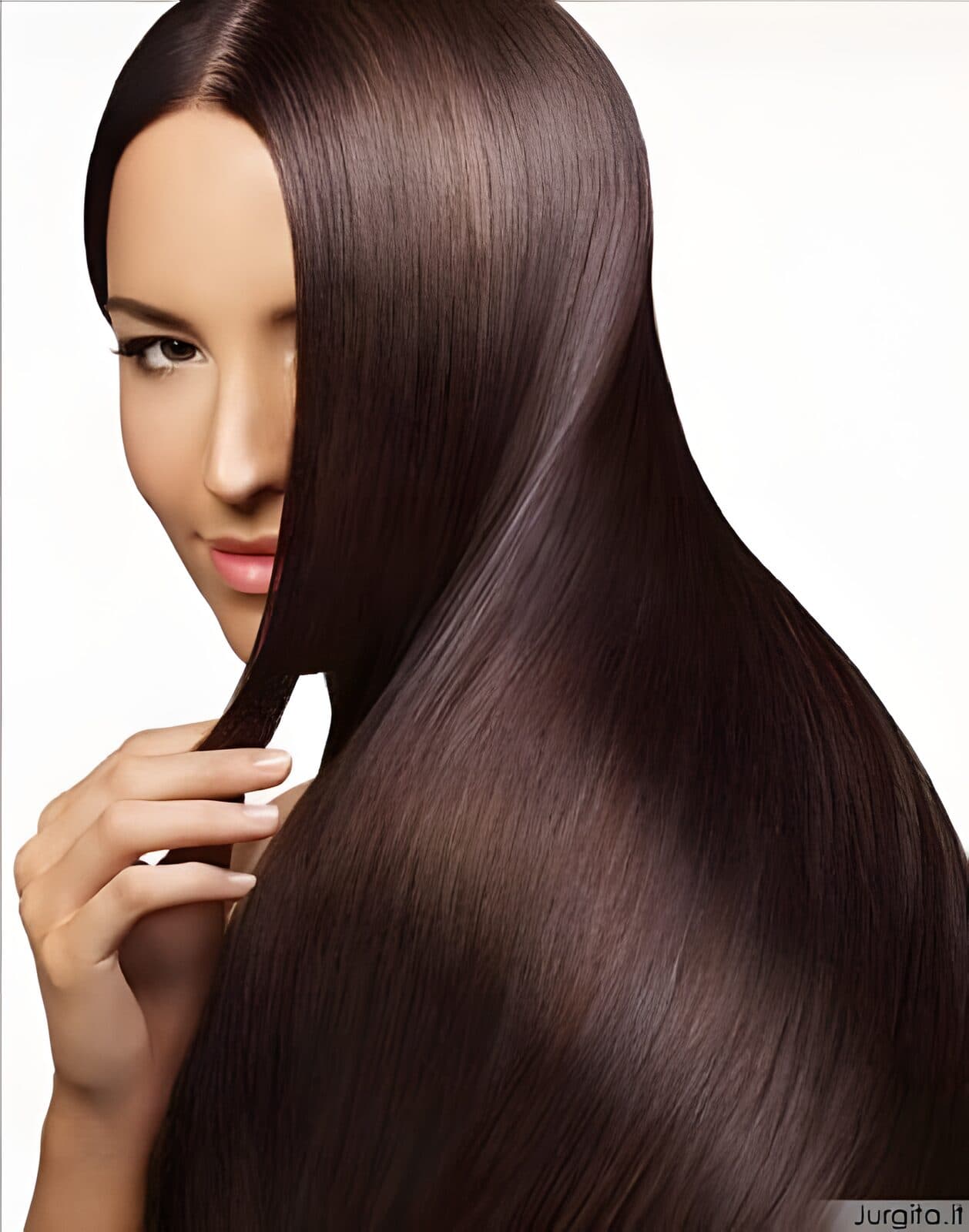
Keratin does not change the hair structure as radically as chemical straightening (rebonding) or a perm. It tames the hair. Typical changes:
- less frizz, especially in humid weather;
- faster blow-drying, often without a flat iron;
- easier combing and a shinier surface;
- wavy hair becomes straighter; tight curls only loosen.
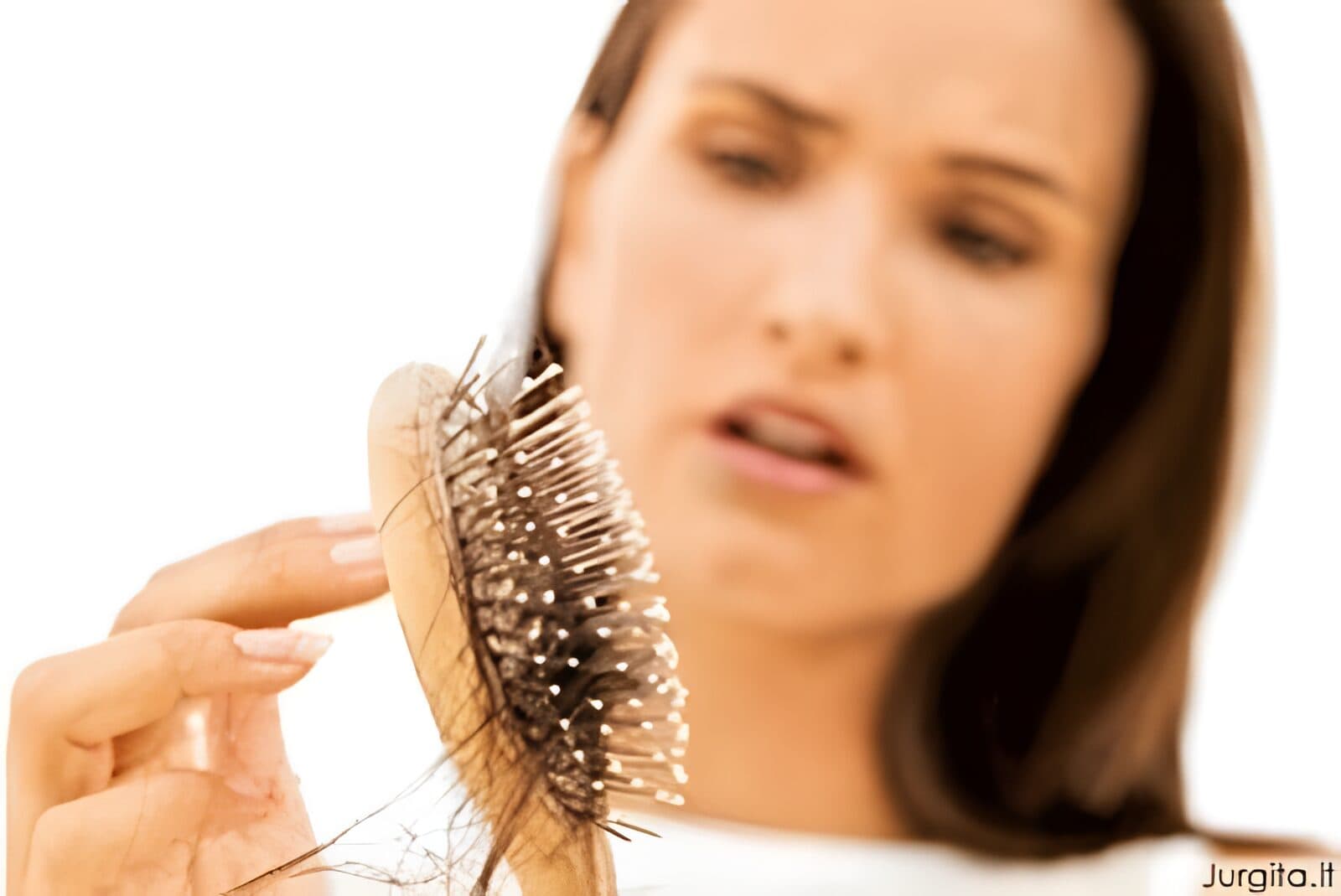
What not to expect: thicker hair, less breakage or faster growth. Split ends are better cut than "sealed". If your hair is shedding or thinning, keratin will not help; see our guide to hair loss causes and treatment.
Keratin treatment on curly hair. Curly and coily hair can be smoothed, but the result is usually looser curls and less frizz rather than poker-straight hair, and the curl pattern grows back with the roots. If you want to keep your curls, ask for a lighter application or a different service.
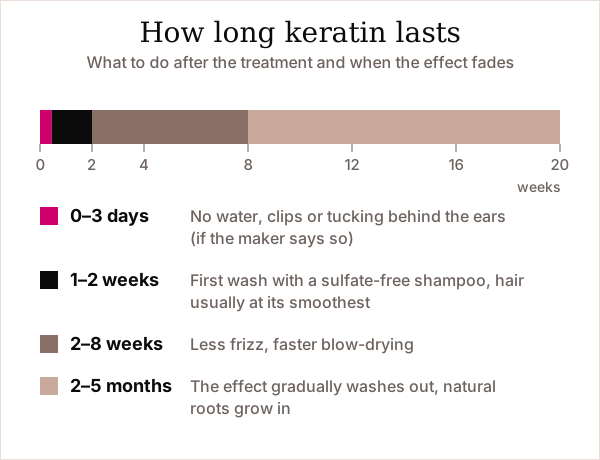
How long does a keratin treatment last?
Usually 2–5 months. The effect does not disappear overnight: it washes out a little with every shampoo, and new growth at the roots has its natural texture. Most people repeat the treatment no sooner than every 3–4 months.
| Shortens the effect | Helps it last longer |
|---|---|
| Shampoos with sulfates (SLS, SLES), clarifying shampoos | A gentle sulfate-free shampoo and conditioner |
| Daily washing in hot water | Washing less often, lukewarm water |
| Chlorinated pool water and salt water | Wetting hair with clean water before swimming, rinsing after |
| Colouring or bleaching right after the treatment | Colouring before, or no sooner than 1–2 weeks after (ask your stylist) |
| Very curly, porous hair | Regular moisturising masks and conditioner |
Is keratin treatment bad for your hair? Formaldehyde and other risks
The answer depends less on the word "keratin" than on what is in the specific product and how it is used.
Formaldehyde and formaldehyde releasers
The US Food and Drug Administration (FDA) says many hair smoothing products contain formaldehyde, also listed as formalin or methylene glycol. When the iron heats the solution, formaldehyde is released into the air as a gas, and in a poorly ventilated salon both the stylist and the client breathe it in. The FDA lists reported reactions including eye irritation, headaches and dizziness, coughing and wheezing, nausea, chest pain, vomiting and rash. The International Agency for Research on Cancer classifies formaldehyde as a human carcinogen.
In 2011 the US Occupational Safety and Health Administration (OSHA) warned salons that formaldehyde had been found in products labelled "formaldehyde free"; a NIOSH test found 11% formaldehyde in one of them. In 2023 the FDA announced a plan to ban formaldehyde and formaldehyde-releasing chemicals in hair straightening and smoothing products, but by early 2026 the rule had still not been issued.
In the European Union formaldehyde has been on the list of prohibited cosmetic substances since 2019 (Regulation (EU) 2019/831). Formaldehyde-releasing preservatives are allowed only within limits, and since the end of July 2024 products placed on the market that release more than 0.001% formaldehyde must carry the warning "releases formaldehyde" (Regulation (EU) 2022/1181). This applies to professional products too, so you can ask to see the label or safety data sheet.
Glyoxylic acid and the kidneys
"Formaldehyde-free" formulas often use glyoxylic acid instead. In 2024 The New England Journal of Medicine described a woman who had three episodes of acute kidney injury after hair straightening and presented evidence pointing to glyoxylic acid. In January 2025 the French agency ANSES reviewed at least 46 such cases and recommended not using these products until an EU-level assessment is done. The European Commission collected data on glyoxylic acid in 2025–2026, and in 2026 the EU Scientific Committee on Consumer Safety (SCCS) began its safety assessment. Until it concludes, the ingredient is not restricted in the EU.
Heat and hair condition
Even the mildest formula is ironed at 200 °C or more. Bleached, fine or already damaged hair can become brittle, and frequent repeat treatments add up. Spacing treatments out and an honest assessment from your stylist matter more than any product claim.
- Which product will you use, and can I see its ingredients or safety data sheet?
- Does it contain formaldehyde, formalin, methylene glycol or glyoxylic acid?
- How is the room ventilated during flat-ironing?
- What iron temperature will you use on my hair?
- When can I wash my hair and which shampoo should I use?
Keratin vs hair botox: the difference
Hair botox is often compared with keratin, but the services differ. "Botox" is a marketing name only: there is no botulinum toxin in these products. They aim to condition and smooth the hair surface rather than straighten it.
| Keratin | Hair botox | Nanoplasty | Chemical straightening (rebonding) | |
|---|---|---|---|---|
| Goal | Smoothness, less frizz, straighter hair | Smoothness, shine, conditioning | Smoothing and straightening without formaldehyde (often acid-based) | Fully straight hair |
| Straightens? | Yes, moderately | Little or not at all | Yes, moderately | Yes, permanently |
| Lasts | 2–5 months | 1–3 months | 2–4 months | Until it grows out |
| Flat iron | Yes | Often | Yes | Yes |
| Best for | Wavy, frizzy hair | Dry, dull hair without much curl | Wavy hair when you want to avoid formaldehyde | When you want straight hair for good |
Durations in the table are the ranges manufacturers and salons most often give. Names like "nanoplasty", "botox" and "keratin" have no legal definition, so products with the same name can be very different. Compare ingredients, not names.
Who keratin suits and who should skip it
- your hair is wavy, thicker and frizzes in humidity;
- you spend a long time blow-drying and flat-ironing every day;
- you want straighter hair, but not permanently;
- your hair is healthy or only slightly damaged.
- you are pregnant or breastfeeding: there is no safety data, so talk to your doctor;
- you have asthma, are sensitive to formaldehyde or had eye or airway irritation after a previous treatment;
- your hair is very fine, freshly bleached or breaking;
- your scalp is irritated or broken;
- you want to keep your curls and volume.
Straighter hair also changes how a cut sits around your face; our guide to hairstyles for your face shape shows which lengths and lines work best, and the haircuts topic collects all our cut guides.
Keratin treatment aftercare
The first days decide how long the result lasts. The rules depend on the product, so if your stylist says otherwise, follow them.
- When to wash. If the product is not rinsed out the same day, keep hair dry for 48–72 hours: no washing, no sweaty workouts, avoid rain and steam.
- For the first days avoid clips, hair ties, tucking hair behind your ears and sunglasses on your head – they can leave kinks.
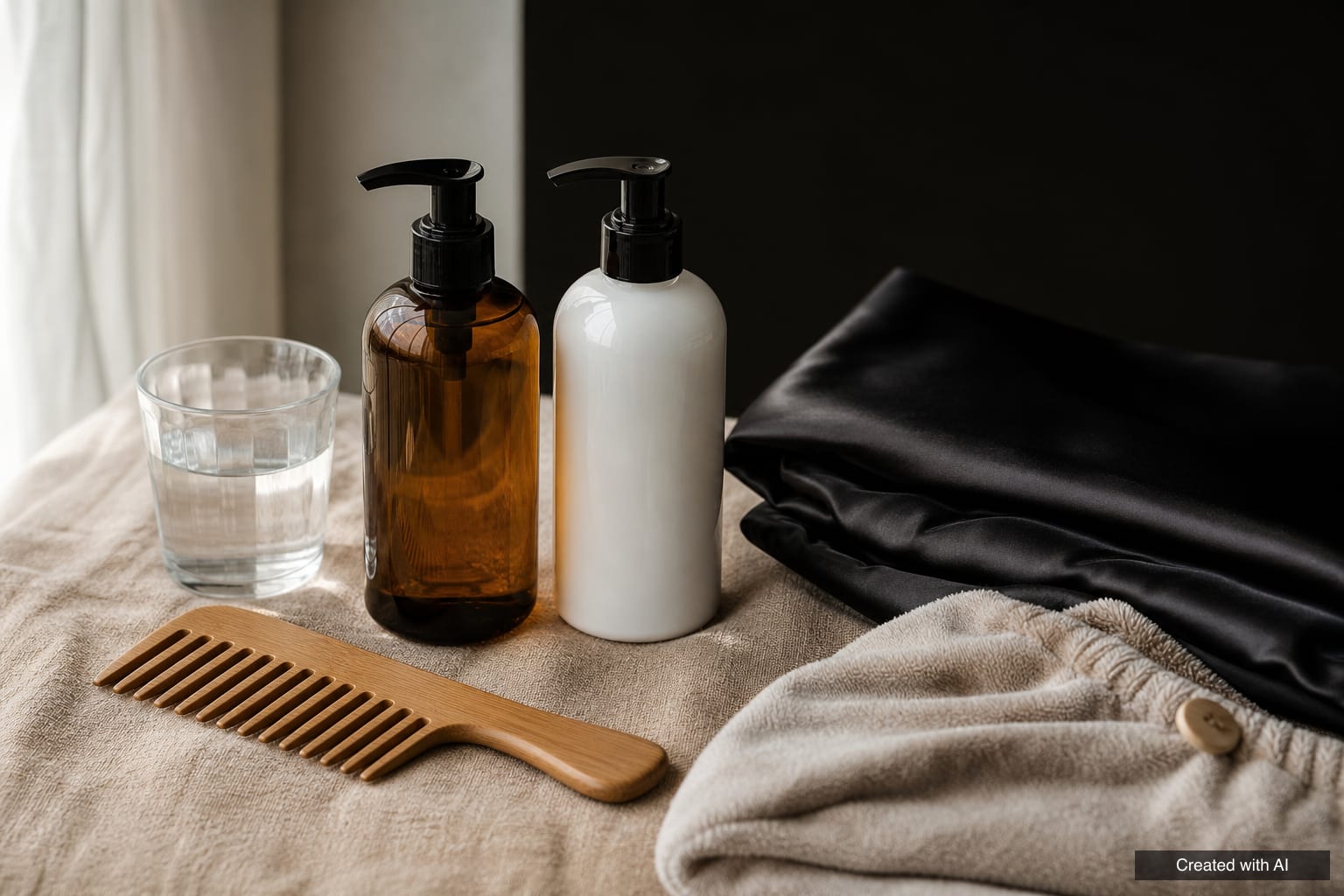
- Sulfate-free shampoo. Choose a shampoo without "Sodium Lauryl Sulfate" or "Sodium Laureth Sulfate". Sulfates cleanse strongly and strip the treatment faster.
- Conditioner and a mask after every wash; detangle with a wide-tooth comb.
- Pool and sea. Wet your hair with clean water before swimming and rinse it afterwards.
- Sleep. A silk or satin pillowcase causes less friction.
Humidity is the real test for any smoothing treatment. Check the hair weather forecast before you head out to see when humidity and wind peak. If your scalp flakes after switching shampoos, our guide to dandruff causes and shampoo explains what to look for on the label.
Keratin at home
Shops are full of shampoos, masks and serums with keratin. Most contain hydrolysed keratin, small protein fragments that temporarily coat the hair surface. Hair combs more easily and looks smoother until the next wash, but these products do not straighten hair the way a salon treatment does.
There are also at-home smoothing kits. They carry the same risks as the salon version, without professional ventilation, temperature control or experience. If you use one, read the ingredients (formaldehyde, methylene glycol, glyoxylic acid), work with the windows open and follow the instructions exactly. For daily care, a gentle shampoo and conditioner do more than the word "keratin" on a bottle.
How much does a keratin treatment cost?
Price depends on hair length and density, the product brand and whether the product is included. In the US, average appointment prices on the booking platform StyleSeat range from about $82 to $400 by state, with most states between $150 and $300; Cleveland Clinic notes it can be upwards of $300 per treatment. Lithuanian salon price lists we checked in October 2026 look like this:
| Hair length | Price in Lithuania | Time |
|---|---|---|
| Short (to the shoulders) | €60–95 | 1–1.5 h |
| Medium | €80–160 | 1.5–2.5 h |
| Long | €95–190 | 2–3 h |
| Very long or thick | from €150, often with a product surcharge | up to 3–4 h |
Some salons charge for the product separately, so confirm the final price before booking, and budget for aftercare: sulfate-free shampoo and conditioner cost extra.
How to choose a salon and what to avoid
- A consultation first. A good stylist looks at your hair, asks about colouring, bleaching and previous treatments, and tells you if keratin is not right for you.
- Ingredient transparency. The stylist should be able to name the product and show you the label.
- Ventilation. The room should be ventilated during flat-ironing, and the stylist should wear gloves.
- Temperature matched to your hair. Fine and bleached hair needs a lower iron setting.
- Clear aftercare instructions: when to wash, which shampoo, when you can colour.
- Very cheap offers that do not name the product.
- Promises that keratin will "heal" or "rebuild" your hair.
- Carrying on if your eyes sting badly or breathing becomes hard during ironing – ask the stylist to stop and air the room.
- Repeating the treatment more often than every 3 months.
- Bleaching or colouring on the same day.
Keep your hair healthy between treatments. Keratin smooths the surface, but strong hair starts at the root. Our guide on how to grow hair faster covers nutrition, scalp care and habits that make the biggest difference, and the hair weather page tells you each morning whether it is a frizz day.
FAQ
How long does a keratin treatment last?
Usually 2–5 months. It depends on the product, your hair type and aftercare: washing less often and with a sulfate-free shampoo makes it last longer.
How long after keratin can I wash my hair?
It depends on the product. Some can be rinsed out the same day, others need 48–72 hours without water. Use a sulfate-free shampoo for the first wash.
Is keratin treatment bad for your hair?
The treatment itself does not ruin hair if the product suits your hair and the iron temperature matches its condition. The risks come from formaldehyde or formaldehyde releasers, glyoxylic acid and heat, especially on fine or bleached hair. Ask what is in the product before you start.
What is the difference between keratin and hair botox?
Keratin smooths and straightens hair, and the effect lasts 2–5 months. Hair botox mainly conditions and adds shine, straightens little and usually lasts less. There is no botulinum toxin in hair botox.
Can I get a keratin treatment while pregnant?
There is no safety data on keratin treatments during pregnancy or breastfeeding, and some solutions release formaldehyde when heated. The usual advice is to postpone it and talk to your doctor.
Which shampoo should I use after a keratin treatment?
A gentle sulfate-free shampoo, without Sodium Lauryl Sulfate or Sodium Laureth Sulfate, plus a conditioner. Avoid clarifying and anti-residue shampoos while you want the treatment to last.
Does keratin work on curly hair?
Yes, but on curly and coily hair it usually loosens curls and reduces frizz rather than making hair completely straight. Your natural pattern returns as the treatment washes out and the roots grow.
Sources
- U.S. Food and Drug Administration, "Hair Smoothing Products That Release Formaldehyde When Heated", updated October 2024.
- Reginfo.gov, FDA proposed rule RIN 0910-AI83, "Use of Formaldehyde and Formaldehyde-Releasing Chemicals as an Ingredient in Hair Smoothing Products or Hair Straightening Products"; CNN, J. Howard, "FDA misses deadline on proposed ban on formaldehyde in hair-straightening products", 5 January 2026.
- OSHA, "Hazard Alert: Hair Smoothing Products That Could Release Formaldehyde" and "Hair Smoothing Products That Could Release Formaldehyde – Background".
- Commission Regulation (EU) 2019/831 (formaldehyde added to Annex II) and Commission Regulation (EU) 2022/1181 ("releases formaldehyde" warning).
- T. Robert et al., "Kidney Injury and Hair-Straightening Products Containing Glyoxylic Acid", The New England Journal of Medicine, 2024, vol. 390, no. 12.
- ANSES, "Opinion on the review of knowledge of the renal toxicity of glyoxylic acid in hair-straightening products", 21 January 2025.
- European Commission, "Call for data on glyoxylic acid used in cosmetic products", 9 April 2025 – 8 April 2026.
- National Cancer Institute, "Formaldehyde and Cancer Risk".
- StyleSeat, "How Much Does a Keratin Treatment Cost?"; Cleveland Clinic, "What You Need to Know About Keratin Treatments".
- Lithuanian prices: public price lists of salons in Kaunas and Vilnius, October 2026. Search volumes: Google Ads data (DataForSEO), October 2026. Illustrations created with AI, diagrams by jurgita.com.

Comments (0)
No comments yet. Be the first!
Only logged-in users can comment. Register — and you'll be able to share your thoughts on this article.
Register