

Key points
- A bob is hair cut to one defined line somewhere between the ears and the collarbones. In Eastern Europe the same cut is often called a "carré" or "kare".
- The main types are the pixie bob, the French bob with bangs, the classic blunt bob, the A-line (stacked or inverted) bob, the asymmetrical bob and the long bob, or lob. Curly bobs are cut dry and given a rounder shape.
- Choose the length for your face and hair: round and square faces look best with a longer bob, fine hair with a blunt line rather than deep layers.
- A short bob needs a trim every 5–8 weeks, a long bob every 8–12. In Lithuanian salons a women's cut with a blow-dry usually costs €25–60.
The bob has come back into fashion every few years for more than a century and has never fully left. The reason is practical: it is one of very few haircuts that works on straight and curly hair alike, suits a woman of twenty and a woman of sixty, and takes minutes to style. It is also a cut where every centimetre shows, so the length and the line you choose decide whether your face looks narrower or wider.
This guide covers what to think through before you sit in the chair: the bob haircut types, which bob suits your face shape, how a bob behaves on thin, thick and curly hair, what works after 40, how to style a bob at home, how often to trim it and what it costs.
What is a bob haircut
A bob is a short to medium-length haircut built on one clear perimeter line. In the classic version all the hair ends at the same level, usually at the jaw or chin, and the cut reads as one solid shape rather than many separate layers. Every other type grows from that base: the line can be longer at the front (A-line), different on each side (asymmetrical), shorter (pixie bob) or longer, down to the collarbones (lob).
 Image consultationA cut for your face, not for a trendIn the consultation we work out the cut, hair colour and everyday make-up that suit your face shape and colours.About the consultationfrom €79
Names vary. "Bob" is the international word, while salons in Lithuania and other former Soviet countries often still list the cut as "kare", from the Russian каре, which itself comes from the French carré, square. They mean the same cut, although "carré" usually describes the straight, sharp chin-length version and "bob" also covers softer, textured and longer cuts.
Where the bob came from
The bob took off around 1915, when the ballroom dancer Irene Castle cut her hair short for convenience. The "Castle bob" became the symbol of 1920s flappers within a few years: beauty salons at first refused to cut women's hair that short, so women went to men's barbershops instead. In 1964 the London hairdresser Vidal Sassoon created the geometric "five-point" bob that the designer Mary Quant made famous. Since then the bob has been the foundation of precision cutting taught in every hairdressing school.
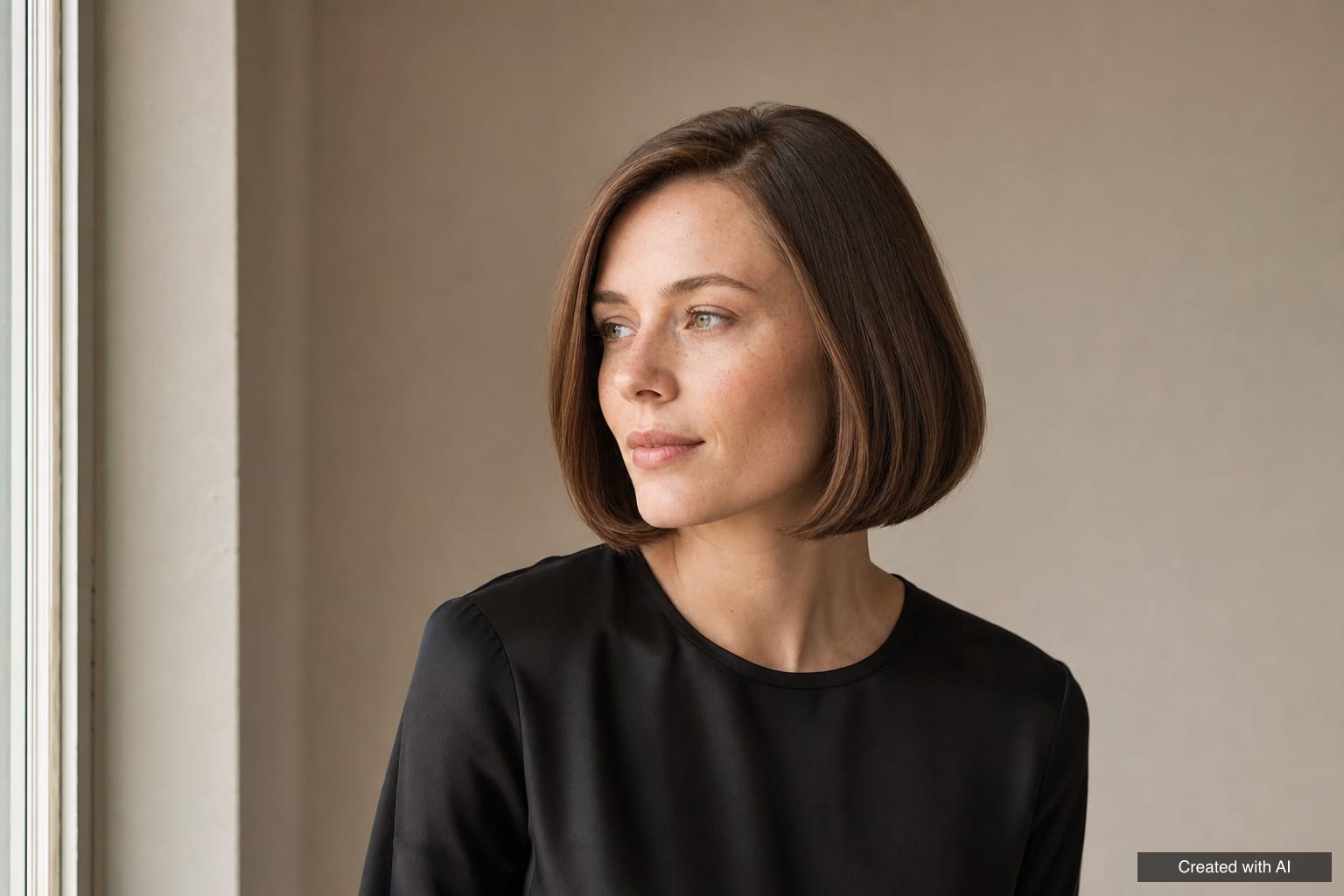
Bob haircut types
Every bob differs in two things: length and the shape of the bottom line. Length decides which part of the face the cut draws attention to, since the eye stops where the hair ends. The shape of the line decides whether the bob looks sharp and graphic or soft and relaxed.
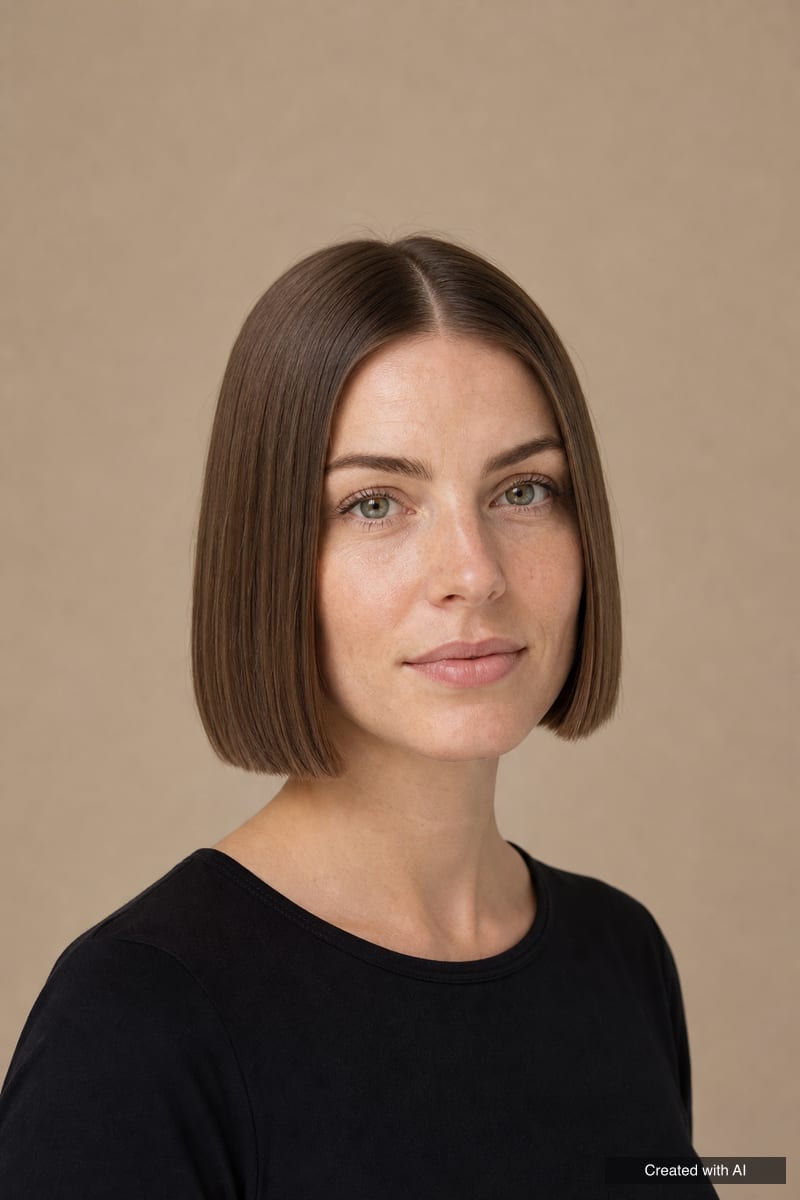
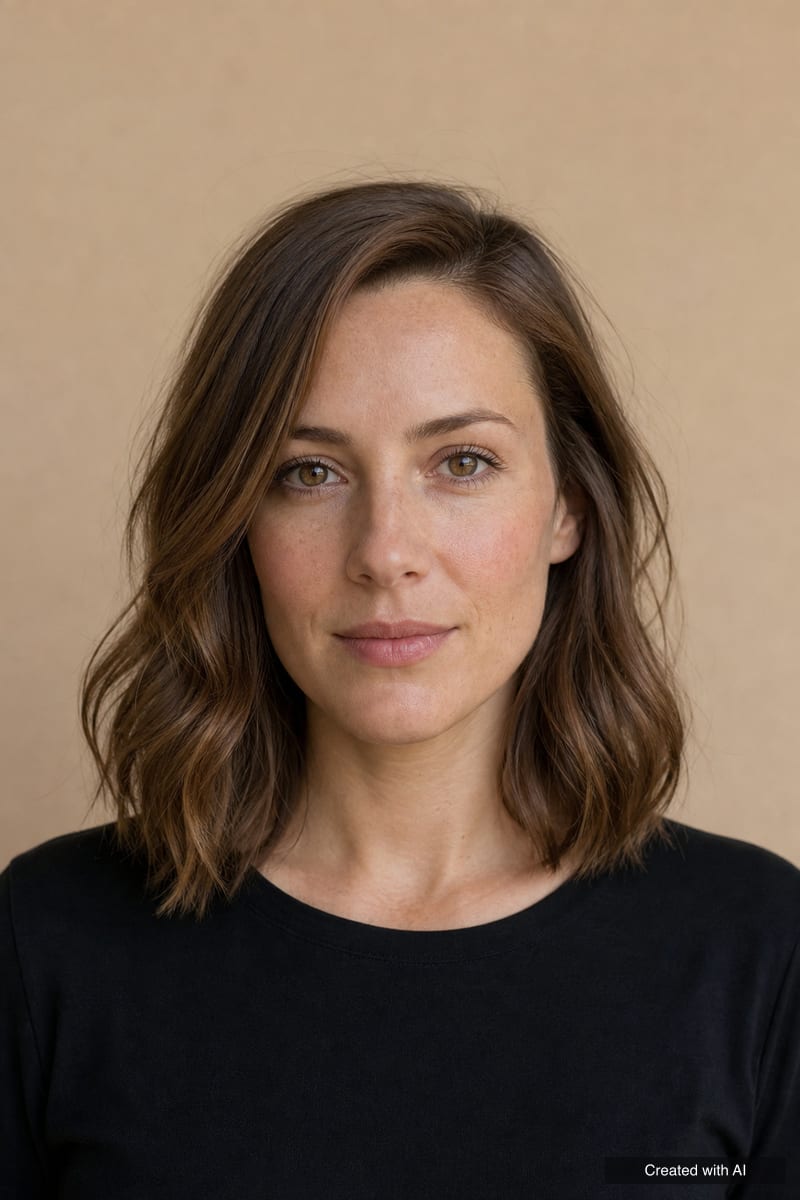
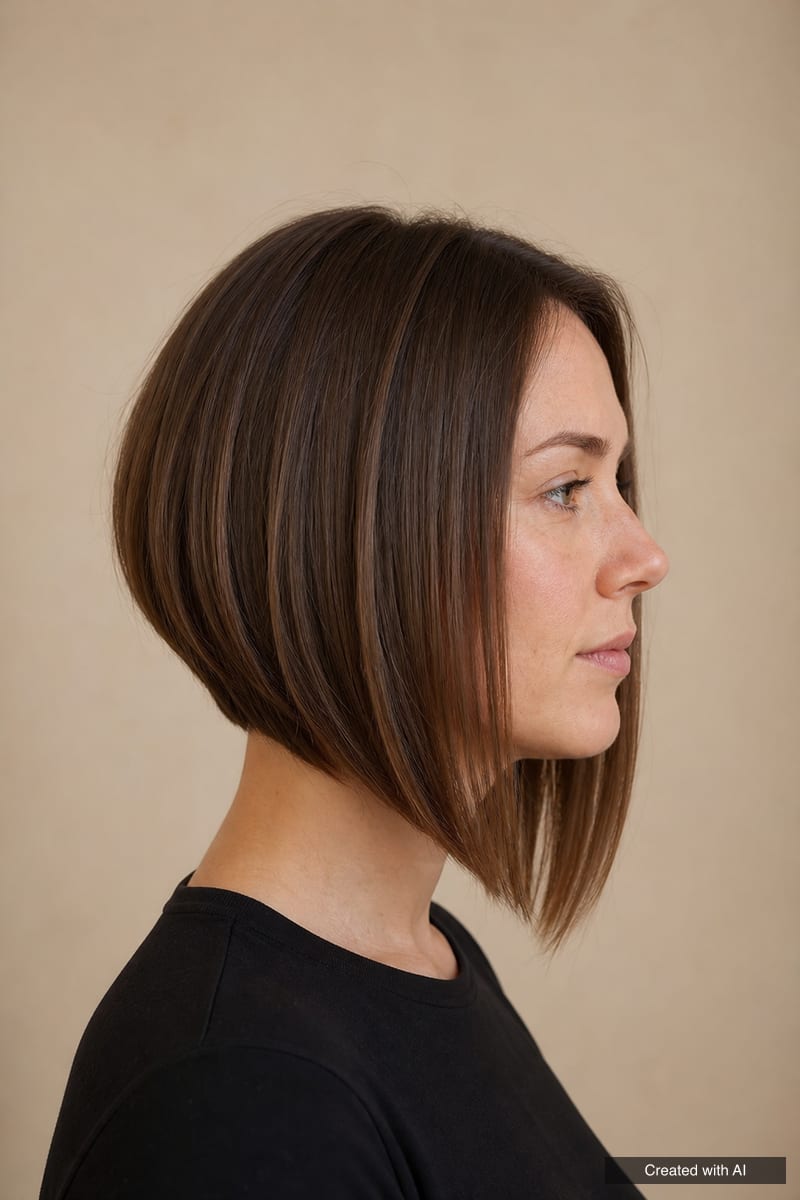

Classic and blunt bob
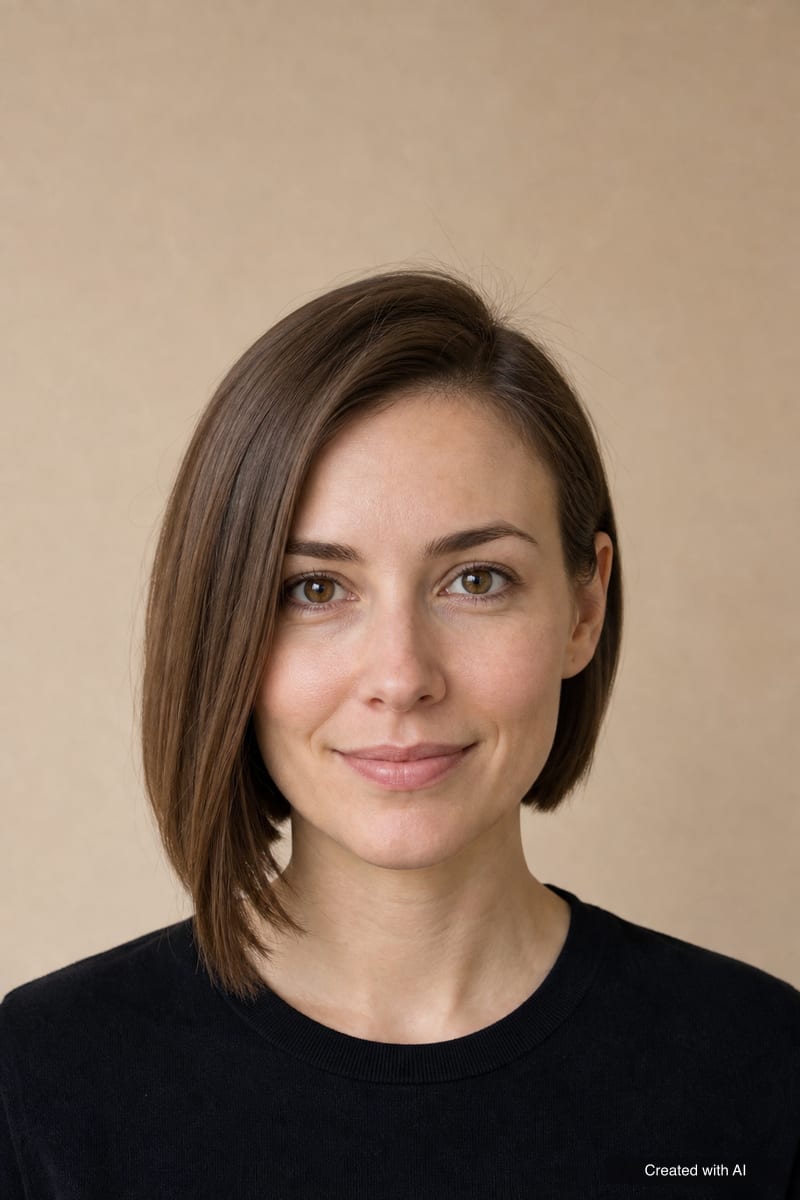
The hair is cut in one straight line, usually between the earlobe and the chin. A blunt bob looks polished and expensive, especially on straight, healthy, shiny hair. It needs precision: even half a centimetre of difference between the sides shows, so stylists usually cut it wet and then refine the line once the hair is dry.
Long bob (lob) and Italian bob
A long bob falls anywhere from below the chin to the collarbones. It is the safest choice if you have always worn long hair and are wary of a dramatic change: you can still tie it back, yet the ends look healthier and thicker. A lob is often cut slightly longer at the front. The "Italian bob" is a fuller, bouncier lob with soft volume and movement.
A-line, stacked and inverted bob
The hair is shorter at the nape and grows longer towards the face, so the line runs diagonally when seen from the side. When the difference is steep and the back is layered, the cut is called a stacked or inverted bob. An A-line visually lengthens the neck and slims the face, which is why it is so often suggested for round faces. It needs more upkeep, as the short nape grows out fast.
Asymmetrical bob
One side is longer than the other, with a deep side part. The asymmetry breaks up strong facial lines, so it suits square faces, and the longer side can soften the half of the face you would rather play down. It is the boldest version: it reads from across a room and needs daily styling.
Bob with bangs and the French bob
A bob works with every kind of fringe: blunt bangs to the brows (the French bob), side-swept bangs or curtain bangs parted in the middle. Blunt bangs shorten the face, so they suit long faces, while side bangs soften a wide forehead. A French bob is usually short, between the cheekbones and the chin, and slightly textured rather than sleek.
Curly and wavy bob
Curly hair shrinks as it dries, sometimes by several centimetres, so a curly bob is best cut dry, curl by curl. A curly bob cut straight across while wet often turns into a triangle: narrow on top and wide at the bottom. A good curly bob has a rounder shape with light internal layers so the volume spreads evenly. Wavy hair suits a long bob or a lob worn with its natural movement.
Layered bob
Layers are not a separate length but a way of cutting any bob. Long, soft layers add movement and take weight out of thick hair; short layers at the crown add lift. Fine hair is the exception: deep layers remove the density it needs, so a blunt line usually works better.
Pixie bob
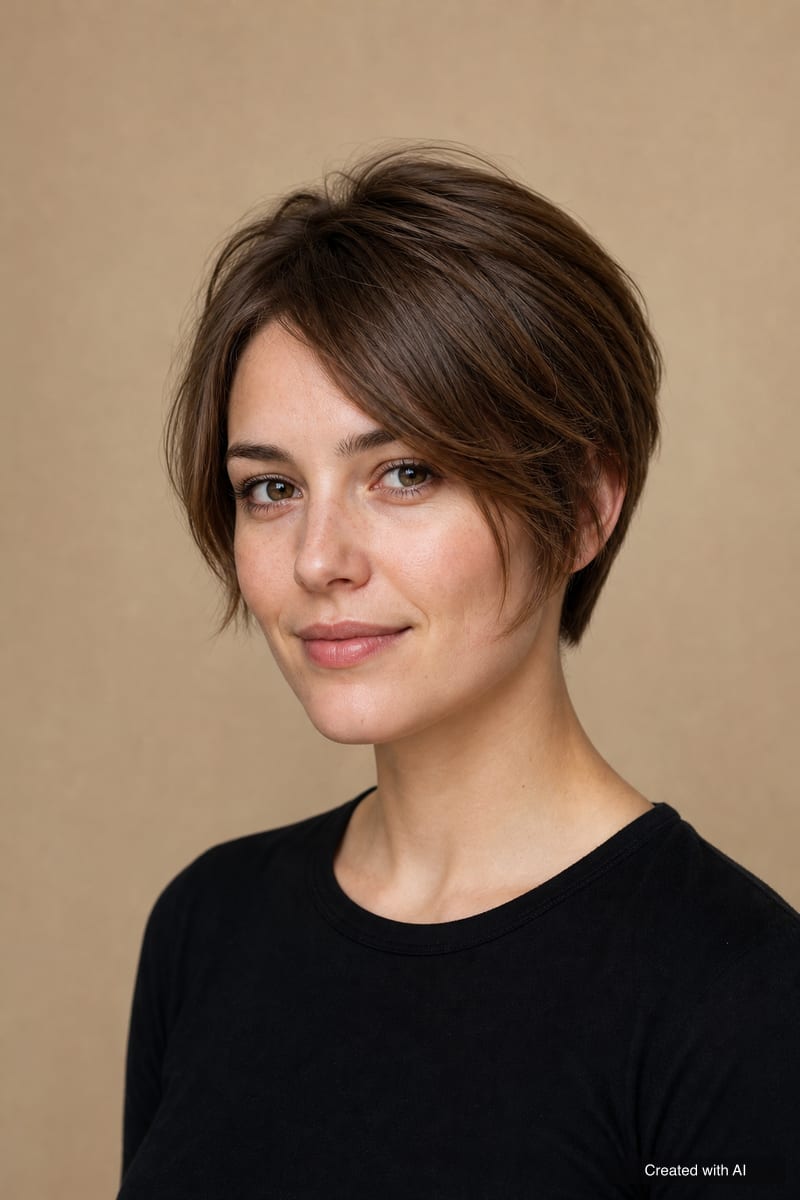
A cross between a pixie and a short bob: the nape is cut short while the top and the pieces around the face stay longer, reaching the cheekbones or ears. It is easy to look after, shows off the neck and the face, and suits oval and heart-shaped faces. It is also a good halfway step for growing out a pixie or trying short hair without going all the way.
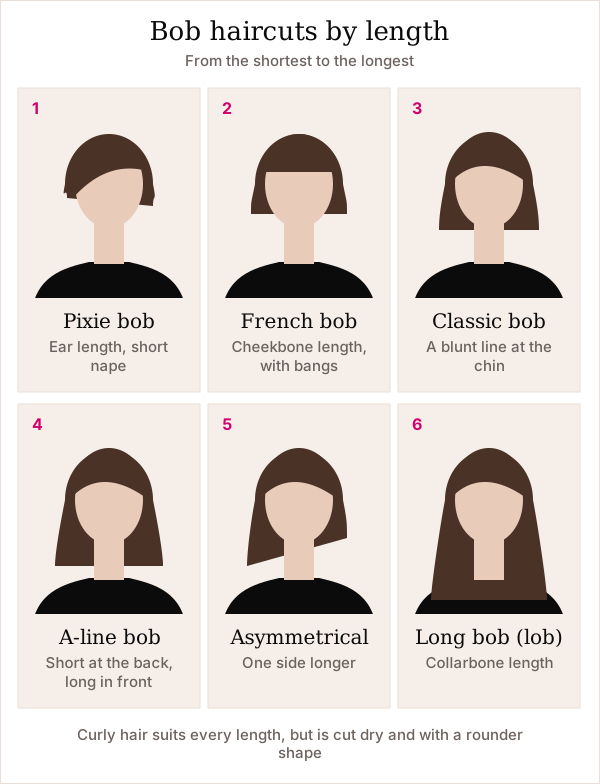
| Type | Length | Suits best | Upkeep |
|---|---|---|---|
| Pixie bob | Ear to cheekbone | Oval and heart faces, fine hair | Trim every 4–6 weeks |
| French bob with bangs | Cheekbone to chin | Long and oval faces | Bangs every 2–4 weeks |
| Classic blunt bob | Chin or jaw | Oval, heart and long faces, straight hair | Trim every 5–8 weeks |
| A-line, stacked, inverted | Short at the back, below the chin in front | Round faces, thick hair | Nape every 5–6 weeks |
| Asymmetrical | One side longer | Square and round faces | Daily styling, trim every 6–8 weeks |
| Long bob (lob) | Collarbones | Almost everyone, especially round and square faces | Trim every 8–12 weeks |
| Curly bob | Chin to shoulders | Wavy and curly hair | Dry cut every 8–12 weeks |
Which bob suits your face shape
The general rule is that the hairline should not echo the widest part of the face. If a bob ends exactly where the face is widest, that spot looks wider still. So a round face gets a bob longer than the chin, a square face gets a softened line or one that falls below the jaw, and a long face benefits from bangs and volume at the sides.
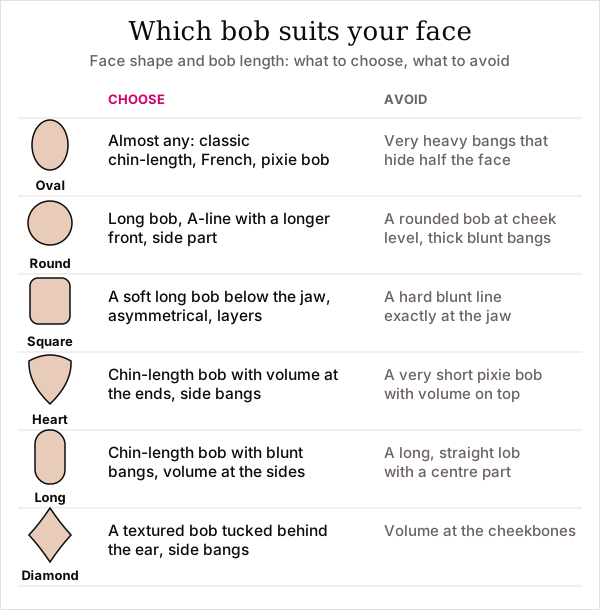
- Oval face. Almost any bob works. A classic chin-length bob shows off balanced proportions, a pixie bob opens up the face.
- Round face. Go for a long bob or an A-line with a longer front, and a side part. Vertical lines around the face lengthen it. Avoid a rounded bob that ends at the cheeks.
- Square face. A soft, lightly layered bob below the jaw or an asymmetrical cut works best. A hard blunt line exactly at the jaw only emphasises it.
- Heart-shaped face. A chin-length bob with volume at the ends balances a wider forehead, and side bangs narrow it further.
- Long face. A chin-length bob with blunt bangs and volume at the sides shortens the face. A long, straight lob with a centre part would stretch it even more.
- Diamond face. A textured chin-length bob tucked behind one ear shows off the cheekbones and adds width at the jaw.
How to work out your face shape and which other hairstyles suit it is covered in our guide to hairstyles for your face shape. All our haircut guides are collected under haircuts.
Bob haircut for thin and fine hair
For fine or thin hair a bob is one of the best options. Shorter hair weighs less, so it lies less flat against the head, and ends cut to one line look thicker than the wispy ends of long fine hair.
- Choose a blunt cut. A straight, solid perimeter creates the look of density. Deep layers and heavy thinning take away what density fine hair has.
- Length from chin to shoulders. A classic bob or a short lob usually works best. A pixie bob suits hair that is fine and also sparse at the crown, because a short shape lifts more easily.
- A side part. Moving the part lifts the hair at the roots and adds volume on top.
- Light products. Volumising mousse at the roots and a light conditioner on the ends only. The American Academy of Dermatology (AAD) advises people with fine or straight hair to apply conditioner to the ends.
If your hair has recently started thinning or shedding more than usual, a haircut will only disguise it. It is worth finding the cause; see our guide to hair loss causes and treatment.
Bob haircut for thick and curly hair
Thick hair
On thick, dense hair a one-length blunt bob often looks too heavy: the hair spreads out at the bottom and the shape turns into a bell or a triangle. So a bob for thick hair is cut with internal layers that you cannot see from the outside but that remove bulk at the bottom. A-line and long bobs work well, as the layered back or the extra length spreads the weight. Ask your stylist to remove weight from the inside rather than thinning the whole length with thinning shears: thinned ends start to frizz within a few weeks.
Curly and wavy hair
A curly bob is best cut by a stylist who works with curls and cuts them dry, in their natural shape. The length is chosen with shrinkage in mind: wet hair at shoulder length can dry to chin length. Wavy hair suits a long bob or a lob, very curly hair a rounded, layered shape. The AAD advises applying conditioner to the full length of curly hair and detangling it with a wide-tooth comb in the shower, before rinsing the conditioner out.

Bob haircuts for women over 40
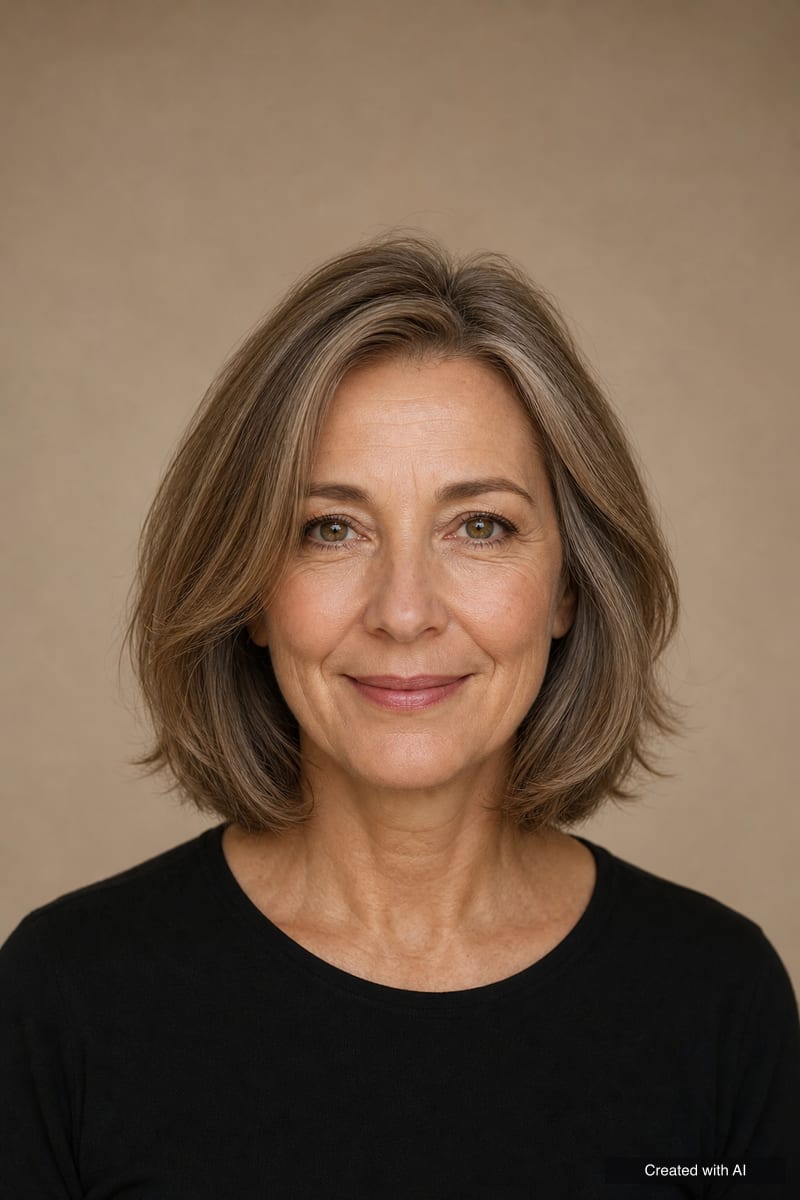
A bob is often suggested to women over 40, and the reason is not that long hair "stops suiting" anyone but that hair itself changes with age. Studies show that the diameter of women's hair increases until about 40 and then decreases; after menopause hair at the front and top of the scalp tends to be finer, less dense and slower growing. Long fine hair then looks sparser, while a shorter cut with a clear shape gives back the look of thickness.
- Soft rather than severe. A very sharp, graphic bob emphasises every line, while light layers and slightly curved ends soften the face.
- Lift at the crown. Slightly shorter layers on top and a side part lift the hair at the roots.
- Chin length or a little below. A bob at or just below the chin frames the jaw and covers the neckline.
- Grey hair. Grey hair is often drier and coarser. A shorter cut is easier to manage, and if you are growing out your natural grey, a bob gets rid of the dyed ends faster.
None of this is an age rule. If your hair is thick and healthy, a sharp classic bob or long hair suits you just as well after 40 as before.
How to style a bob at home
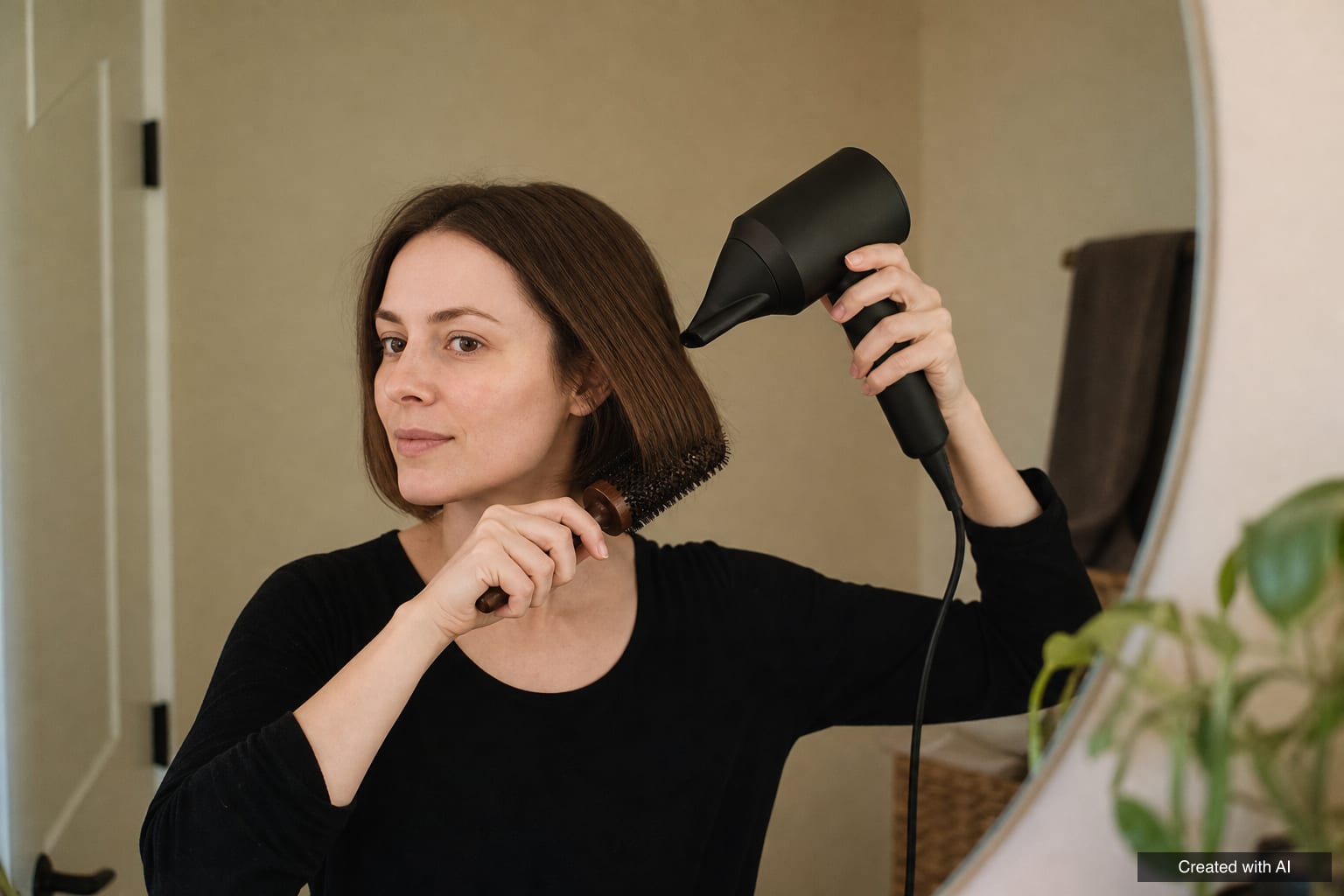
A well-cut bob falls into shape with little effort: a good bob dries into its form even without a long blow-dry. For a salon finish, though, a dryer, a round brush and a few minutes are enough.
- Blot, do not rub. Wrap your hair in a towel or a T-shirt to soak up the water. Rubbing roughens and breaks the hair.
- Let it partly air-dry. The AAD recommends letting hair partially air-dry before styling. It shortens blow-drying and limits heat damage.
- Apply a heat protectant. A light spray for fine hair, a cream or a few drops of oil on the ends for thick hair.
- Dry the roots first. Lift the roots with your fingers and dry them against the direction of your part. That is where volume on top comes from.
- Shape the ends with a round brush. Hold the brush under the hair, pull it slowly down and turn the ends under at the very end. Point the dryer from top to bottom so the cuticle lies flat and the hair shines.
- Straight or wavy. A straight bob needs only the brush. For soft waves use a flat iron: give a section half a twist, glide down and leave the ends straight.
- Finish with texture. A little texturising spray or dry shampoo separates the strands, and a drop of oil on the ends adds shine.
A study by Korean dermatologists found that a hair dryer damages the hair surface more than air-drying, yet when held about 15 cm away and kept moving it caused less damage overall than letting hair dry slowly on its own. The AAD advises using flat irons only on dry hair, on a low or medium setting and no more often than every other day. A bob frizzes faster in humid weather, so the hair weather forecast for your city is worth a look.
No-heat bob. Dry wavy hair with a diffuser or let it dry in a loose twist; let straight hair air-dry and run a brush through it at the end.
Second-day bob. Dry shampoo revives the roots, and flattened ends come back with a minute of flat iron or a damp hand and the dryer.
How often to trim a bob
Hair grows on average about a centimetre a month. On long hair that hardly shows, but on a bob a centimetre already changes the shape: the line no longer starts where it should, the nape grows fuzzy and the bangs fall into your eyes. The shorter and sharper the bob, the more often it needs a trim.
| Type | When to trim | What loses shape first |
|---|---|---|
| Pixie bob | Every 4–6 weeks | The nape and the hair over the ears |
| Classic bob | Every 5–8 weeks | The straight perimeter line |
| A-line and stacked bob | Every 5–6 weeks | The short back |
| Bob with bangs | Bangs every 2–4 weeks, the whole cut every 6–8 | The bangs |
| Long bob (lob) | Every 8–12 weeks | The ends and the front pieces |
| Curly bob | Every 8–12 weeks | The shape: it turns triangular |
If you want to grow a bob out, you do not need to stop cutting altogether: shaping it every 8–10 weeks lets it grow evenly, without an awkward in-between stage. For more on supporting healthy growth, read how to grow hair faster.
How much a bob haircut costs
The price depends less on the name of the cut than on the length and density of your hair, the stylist's experience and what the service includes. A first bob, when a lot of length comes off, usually takes longer than later shape-ups. Typical prices in Lithuanian salons, where Jurgita is based:
| Service | Typical price in Lithuania | Time |
|---|---|---|
| Simple cut without a wash | €15–30 | 30–45 min |
| Women's cut with wash and blow-dry | €25–60 | 45–90 min |
| Cut with a senior stylist | €60–90 | 60–90 min |
| Bang trim | €5–15 | 10–15 min |
| Dry cut for curly hair | €40–90 | 60–120 min |
Prices differ a lot between countries and cities, so wherever you live, the salon's own price list is the most reliable guide.
How to choose a bob and what to avoid
A bob cannot be undone the next day, so it pays to prepare.
- Bring two or three photos. "Bob" means something different to every stylist. Photos that show both the front and the side say more than any description, ideally of hair similar to yours.
- Show the length on your own face. Point to where the hair should end: at the chin, below it or at the collarbones.
- Say how much time you spend on your hair. If you have five minutes in the morning, a sharp asymmetrical bob that needs straightening every day is not the best choice.
- Mention cowlicks and curls. A cowlick at the crown or the hairline can push up a short nape or bangs. A good stylist will spot it, but it does no harm to mention it.
- Go longer the first time. If you are unsure, start with a long bob. You can go shorter a week later, while growing it back takes months.
What to avoid. A very short bob on hair damaged by perming or bleaching: broken ends show more on a short cut. Heavy thinning on fine hair. A straight wet cut on very curly hair. And a bob whose line ends exactly at the widest part of your face.
To browse more cuts that frame the face, see the face shape topic.
FAQ
What is the difference between a bob and a lob?
A lob is a long bob. A bob usually ends between the ears and the chin or jaw, while a lob falls below the chin, down to the collarbones. A lob is the easier change if you are used to long hair, as it can still be tied back.
Does a bob suit a round face?
Yes, as long as it is longer than the chin. A long bob to the collarbones or an A-line with a longer front works best, ideally with a side part. Avoid a rounded bob that ends at the cheeks and thick blunt bangs.
Is a bob good for thin hair?
Yes, it is one of the best cuts for fine or thin hair. A blunt bob at chin or shoulder length looks thicker than long fine hair. Avoid deep layers and heavy thinning, and try a side part with light volumising products.
How often should you trim a bob?
A short or classic bob every 5–8 weeks, a pixie bob or an A-line every 4–6 weeks, a long bob or a curly bob every 8–12 weeks. Bangs need a trim more often, every 2–4 weeks.
What is the difference between a stacked, inverted and A-line bob?
All three are shorter at the back and longer at the front. An A-line has a straight diagonal line, an inverted bob has a steeper angle, and a stacked bob adds short layers at the back of the head for a rounded, lifted shape.
How do I stop the ends of my bob flicking out?
Blow-dry with a round brush held under the hair and turn the ends under at the very end, with the dryer pointing down. If the ends keep flicking out at the shoulders, the bob may be resting on them: take it up to the chin or let it grow into a lob.
Is a bob a good haircut for women over 40 or 50?
Yes. Hair often becomes finer after 40, so a bob with light layers and lift at the crown helps it look thicker. Age is not a rule, though: if your hair is thick and healthy, a classic or long bob suits you just as well.
Sources
- American Academy of Dermatology (AAD), Tips for healthy hair.
- American Academy of Dermatology (AAD), Hair styling without damage.
- Lee Y. et al., Hair Shaft Damage from Heat and Drying Time of Hair Dryer, Annals of Dermatology, 2011.
- Trüeb R. M. et al., A Comment on the Science of Hair Aging, International Journal of Trichology, 2018.
- Villani A. et al., Hair Aging and Hair Disorders in Elderly Patients, International Journal of Trichology, 2022.
- Spivack E., The History of the Flapper, Part 4: Emboldened by the Bob, Smithsonian Magazine, 2013.
- British Vogue, The Iconic Geometric Haircut Mary Quant Championed.
- Prices: published price lists of Lithuanian salons and booking platforms, checked in October 2026.

Comments (0)
No comments yet. Be the first!
Only logged-in users can comment. Register — and you'll be able to share your thoughts on this article.
Register