

In short
- UGC stands for user-generated content: videos, photos and reviews that look like they were made by an ordinary customer rather than an ad agency.
- A UGC creator is paid to make that kind of content for a brand. The brand posts it on its own channels and in ads, so the creator does not need a big audience.
- You can start with a phone, daylight and three to six sample videos. Work comes from creator platforms, direct pitches to brands and agencies.
- The most expensive beginner mistake is handing over a video for ads without a written agreement. Where, how long and how the content is used is agreed in writing and paid for separately.
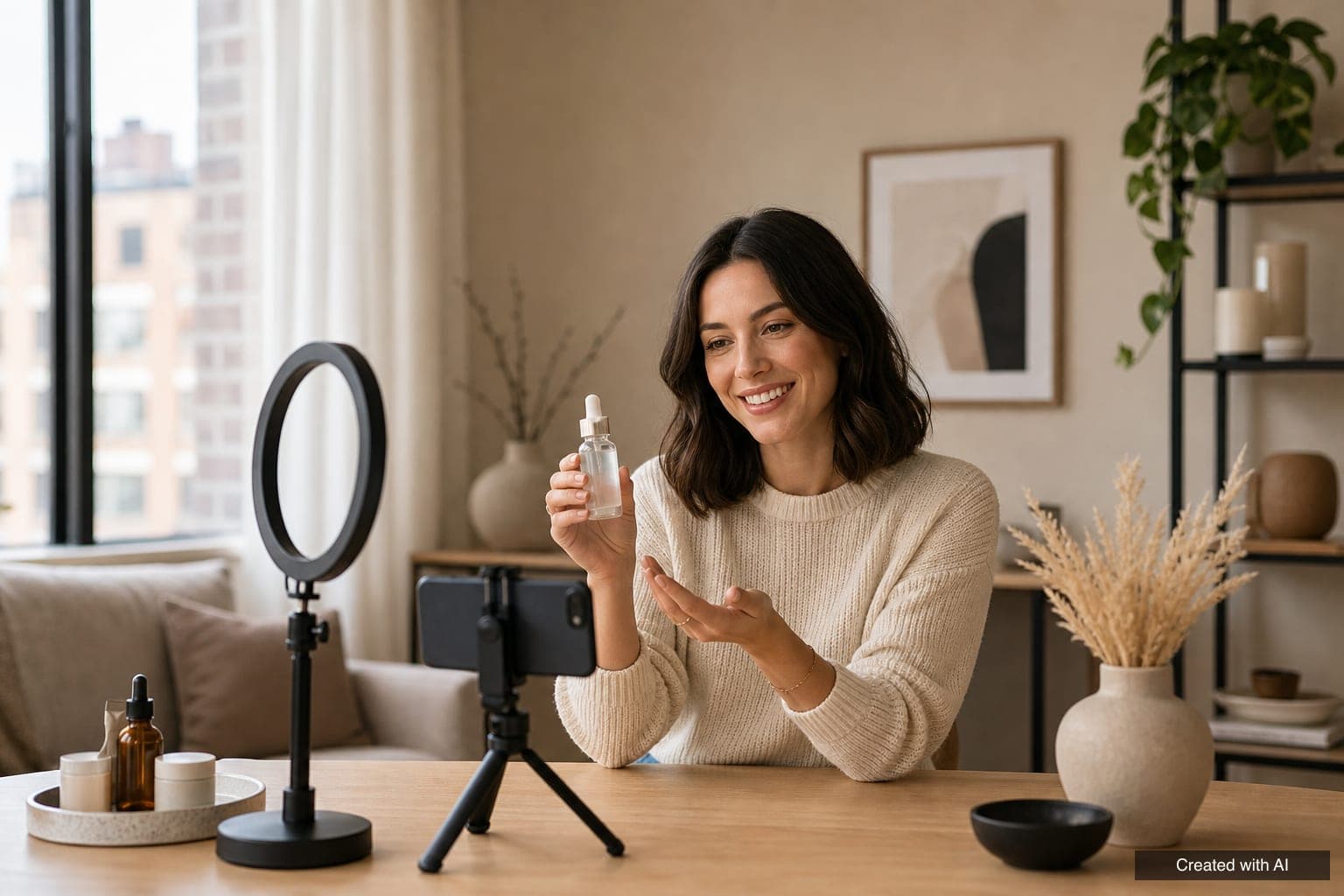
Open any social app and you will see videos of someone in their kitchen trying a new serum, unboxing trainers or explaining why they switched coffee machines. Some are real customer reviews. Many are commissioned: a brand sent the product and a brief to a UGC creator and paid for the video.
This guide explains what UGC is, how a UGC creator differs from an influencer and a model, the kinds of jobs that exist, where to find them, how to build a UGC portfolio and what to agree before you deliver your first video. Pricing gets its own article, UGC rates and usage rights, because that is where new creators lose the most money.
What is UGC
The term is older than TikTok. A 2007 OECD study, "Participative Web and User-Created Content", defined user-created content by three features: it is published online, it reflects some creative effort, and it is made outside professional routines. Back then that meant forum posts, blogs, photos and amateur videos.
In marketing the word has shifted. When a brand says "we need UGC" today, it usually means commissioned content that looks like a customer made it: a vertical video shot on a phone, with a real person on camera, natural speech and no studio polish. It runs in social ads, on product pages, in emails and on marketplace listings.
The person who makes it for a fee is a UGC creator. Collabstr's 2026 report says UGC jobs made up 35% of all collaborations on its platform in 2025, up from 15% a year earlier.
UGC creator vs influencer vs model
All three work with cameras and brands, but they are paid for different things.
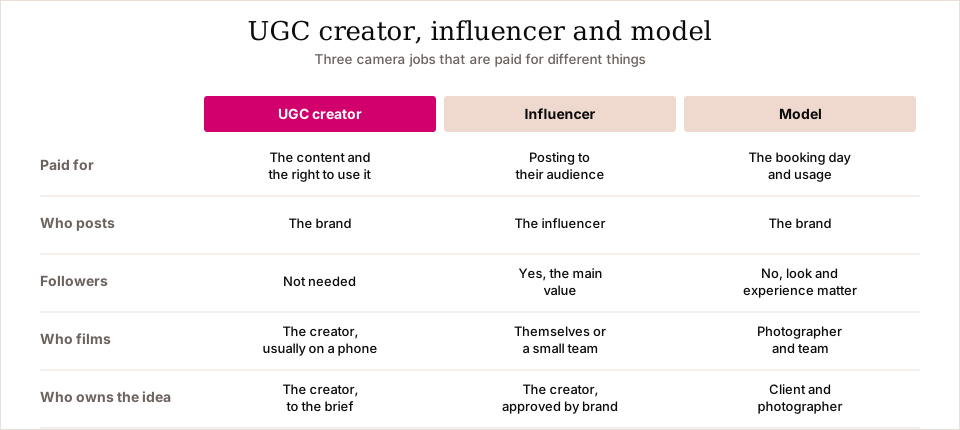
| UGC creator | Influencer | Model | |
|---|---|---|---|
| Paid for | The video or photos and the right to use them | Posting to their own audience and that audience's trust | The booking day and usage rights |
| Who posts | The brand, on its channels and in ads | The influencer | The brand |
| Followers needed | No | Yes, it is the main value | No, look, measurements and experience matter |
| Who films | The creator, usually on a phone | Themselves or a small team | Photographer, videographer, styling team |
| Who owns the idea | The creator, following the brief | The creator, approved by the brand | Client and photographer |
The lines blur. Influencers sell UGC too, and models often shoot UGC between bookings. Our content creator guide shows how the roles fit together, and how to become an influencer covers the audience-led side.
 Model training with SupermodelsTry it in practice with an agency teamIn the model training we work on the walk, posing and working on camera, one to one or in a small group.About the trainingfrom €69
What a UGC creator does: the most common jobs
Jobs vary with what the brand needs the content for. These formats come up again and again:
- Unboxing. Opening the parcel, showing the packaging and a first reaction.
- Talking head testimonial. Speaking straight to camera: the problem, what you tried, what changed. This is the most common ad format.
- How to use. Step by step: applying a cream, lacing a shoe, packing a bag.
- Before and after. Good for clothing, interiors and cleaning products. For cosmetics and health products it is risky, because it can turn into a misleading claim.
- Day in the life, GRWM. The product appears in an everyday routine instead of a sales pitch.
- Photos. Product in hand, on a table, worn. Online stores also need clean shots without text.
- Hooks and variations. The same video with three to five different opening seconds, so the ad team can test which start works.


Most UGC videos run 15 to 60 seconds, vertical (9:16), with or without captions. The brief tells you what to highlight, what not to say, how many versions to deliver and by when.
How to become a UGC creator, step by step
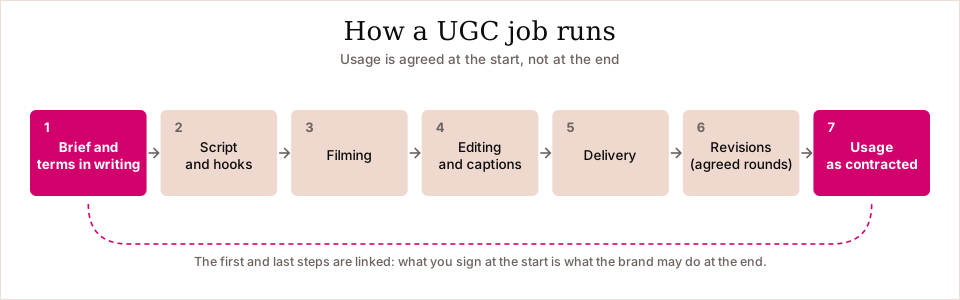
1. Pick a niche
Brands look for someone who looks like their customer. Start with what you use and know: skincare, haircare, fashion, fitness, food, baby products, pets, tech, home. You can widen it later.
2. Kit that is enough
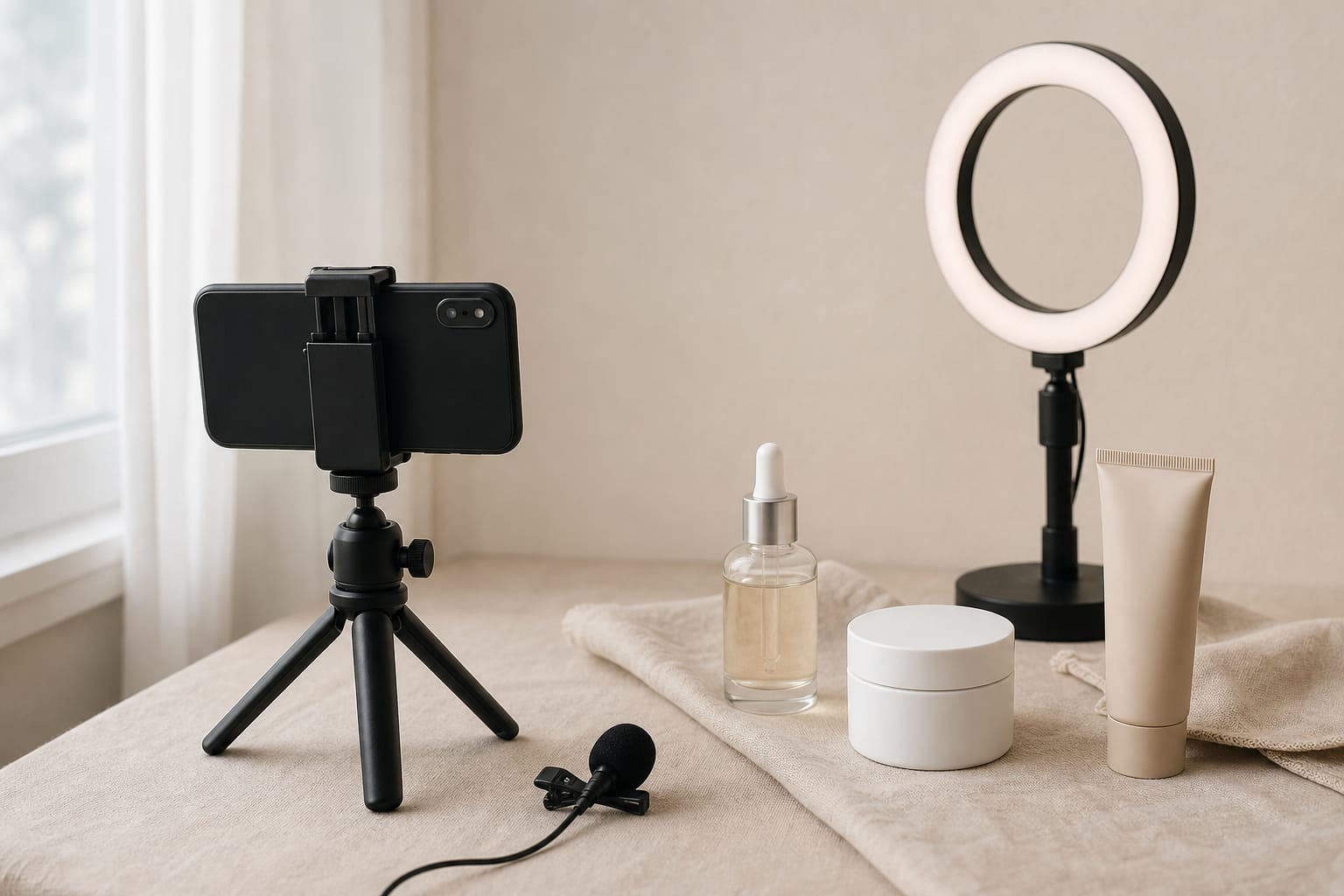
A recent phone with a good camera, window light or an inexpensive lamp, a tripod and a clip-on microphone. Sound matters more than picture: if the speech is hard to hear, the video is unusable. Keep the background tidy and free of other brands. To see when daylight at home is best, try our light for photographers tool.
3. Make three to six sample videos
Nobody books a creator without samples, so shoot them yourself with products you already own. Cover different formats: a testimonial, an unboxing, a how-to and one photo set. Do not label them as sponsored or imply a brand hired you if it did not.
4. Build a portfolio
One page or folder that shows in a minute what you can do. More on that below.
5. Find jobs
Through platforms, direct pitches and people you know. Early on the goal is a few paid jobs and some reviews.
6. Agree terms in writing
Every job needs at least a short written agreement or an email with terms: what you deliver, how many revisions, when you are paid, where and how long the content will be used. In many countries a transfer of copyright has to be in writing; in the US, for example, 17 U.S.C. § 204(a) requires a signed written instrument.
UGC portfolio: what to include and how to present it
A UGC portfolio proves that you follow a brief, speak clearly and look natural on camera. It is there to convince a brand your video will sell, not to show off editing tricks.
- A short intro. Name, city, languages, niche, the age group you represent.
- Three to six best videos. Different formats, strong first three seconds.
- Photo samples. Product in hand, worn, in context.
- Services and scope. For example one 30-second video, three hook variations, raw footage.
- Contact and response time.
A free website builder, a shared folder or a PDF with links all work. If you already model, the rule is the same as for a modeling portfolio: fewer, better pieces, and only ones you have the right to show. Do not post client ads made under contract without permission; some agreements forbid it.
Where to find UGC jobs: platforms and other routes
Platforms and marketplaces
| Platform | How it works | Worth knowing |
|---|---|---|
| Collabstr | Creators list service packages with prices, brands buy them | You set your own price. The platform publishes yearly pricing reports |
| Billo | Brands post briefs, creators accept and film them | Billo says payouts for a 15-second video start at $30 for new creators and $70 for premium creators, paid twice a month via PayPal |
| TikTok One | TikTok's platform for creators and advertisers, which includes the Creator Marketplace | Eligibility depends on country and account. Many jobs involve ads run through creator posts |
| General freelance marketplaces | Broad sites where you can list a UGC service | Heavy competition, reviews matter |
Platforms take a cut or set their own prices, but they bring first jobs and protect payment. Before signing up, read what rights to your content the platform or the brand receives under its terms.
Pitching brands directly
Pick 20 to 30 brands in your niche that already run video ads and send a short email: who you are, one portfolio link, one concrete idea. Small brands often like getting several videos in one go.
Agencies and contacts
Ad and social agencies hire UGC creators for their clients, and some keep creator rosters. How influencer and talent agencies work and what they charge is covered in influencer agencies.
How much UGC creators earn
Pay depends on the market, your experience and how much usage you grant. Collabstr's 2026 report puts the average UGC job on its platform at $197 in 2025 (down from $209), based on more than 472,000 packages and 21,000 collaborations, mostly in the US, UK and Canada. Treat it as a reference point, not a price list.
The key idea: the price of making a video and the price of using it in ads are two different things. We break down the add-ons for usage rights, whitelisting and raw footage in UGC rates and usage rights. For tax basics, see model taxes; the logic is the same for UGC income.
Do UGC creators need to disclose ads
It depends on who posts. If the brand publishes the content on its account or in its ads, it is the brand's advertising and the brand is responsible for it. If you post the same video on your own account because you were paid, sent free product or otherwise rewarded, it has to be clearly disclosed as an ad. In the US the FTC Endorsement Guides (16 CFR Part 255, updated in 2023) set the rules; in the EU the European Commission's Influencer Legal Hub explains the same principle.
Can a modeling agency help a UGC creator
Modeling agencies rarely find UGC work, but modeling and UGC skills support each other. Models know how to work to camera, what a strong frame looks like and how usage-based contracts work. UGC creators know how to come up with and shoot a video themselves. For someone doing both, an agency helps where the risk is highest: judging whether a fee matches the usage, reading the contract, and avoiding exclusivity clauses that block other work.
Supermodels is a modeling agency founded in 2001, a member of the international modeling agency association M.A.M.A., and it signs a contract with every model it represents. It does not run a separate UGC creator management service. If you also want to model and fit the criteria (women 14 to 22, men 16 to 25), you can apply to the Supermodels open call. Working on camera is part of our model training.
What to avoid
- Working without written terms. A short email with terms beats nothing. Without it, nobody knows whether the brand can run your video forever.
- Free "test" videos. Show your portfolio instead. Free test videos often end up in ads.
- Medical or results claims. Do not say a cream cures or a supplement makes you lose weight unless the claim is substantiated and the brand takes responsibility for it.
- Other logos in the frame. A product on the table or a printed T-shirt can ruin the whole video.
- Saying yes to a full buyout for the base fee. Perpetual use in every channel costs far more than one video.
- Minors working without parental consent. The contract and the use of a minor's likeness must be agreed with a parent or guardian.
FAQ
What is UGC?
UGC means user-generated content. In marketing it refers to videos and photos that look like an ordinary customer made them, though they are often commissioned and paid for by a brand.
What is the difference between a UGC creator and an influencer?
A UGC creator is paid for content the brand publishes. An influencer is paid to post to their own audience. A UGC creator does not need followers.
Can I become a UGC creator with no followers?
Yes. Brands care about content quality, delivery and whether you look like their customer. Follower count matters only if the content will also be posted on your account.
How much do UGC creators get paid per video?
As reference points, Collabstr reports an average UGC job of $197 in 2025, and Billo pays new creators from $30 for a 15-second video. Paid ad usage, longer terms and exclusivity are charged on top.
What equipment does a UGC creator need?
A phone with a good camera, daylight or a lamp, a tripod and a clip-on microphone. Free phone apps are enough for editing.
What are the best UGC platforms for beginners?
Marketplaces where brands post briefs or buy packages, such as Billo and Collabstr, plus TikTok One for TikTok work. Compare the fees, the payout method and what rights the platform terms give the brand.
Sources
- OECD, Participative Web and User-Created Content: Web 2.0, Wikis and Social Networking, 2007 (three-part definition of user-created content).
- Collabstr, Annual Influencer Marketing Report 2026 (UGC share 15% to 35%, average UGC job $209 to $197, 472,000+ packages and 21,000 collaborations), checked October 2026.
- Billo, For creators and UGC Content Creator (payouts from $30 and $70 for a 15-second video, paid twice monthly), checked October 2026.
- TikTok, What is TikTok One?, checked October 2026.
- U.S. Code, 17 U.S.C. § 204, Execution of transfers of copyright ownership.
- Federal Trade Commission, 16 CFR Part 255, Guides Concerning the Use of Endorsements and Testimonials in Advertising (revised July 2023).
- European Commission, Influencer Legal Hub.
- Supermodels agency information and open call criteria (supermodels.lt, checked 8 October 2026).





Comments (0)
No comments yet. Be the first!
Only logged-in users can comment. Register — and you'll be able to share your thoughts on this article.
Register