

In short
- "Content creator" is the umbrella term for anyone who makes photos, videos or writing for online platforms on a regular basis. An influencer sells the trust of an audience, a UGC creator sells content a brand posts on its own channels, and an Instagram model sells a look and the ability to pose.
- Money comes from different places: influencers earn from posts, codes and affiliate links, UGC creators from videos plus usage rights, models from shoot days and campaigns.
- Paid or gifted posts must be disclosed. In the US the FTC expects a clear disclosure such as "#ad" or "Sponsored"; in the EU, national consumer authorities apply the same principle, and a 2024 EU sweep found only 20% of influencers did it consistently.
- A modeling career and a social profile support each other, but they are different jobs. If you want to model, start with an agency that never charges a fee, such as the free Supermodels open call.
Ten years ago "content creator" sounded like a job title inside an advertising agency. Today it is a career that teenagers dream about and that mothers, photographers, models and make-up artists all practise. Some film their everyday life on their own channel, some make videos that brands run as ads while having few followers of their own, and some pose for the camera for a living.
This guide puts all of those paths side by side. We explain how an influencer, a UGC creator, an Instagram model, a brand ambassador and a virtual influencer differ, how each one earns, how to start, which rules you have to know and when it makes sense to bring in an agency. Every path has its own detailed guide, linked as you go.
What is a content creator?
A content creator is someone who makes and publishes content on online platforms: Instagram, TikTok, YouTube, a blog or a podcast. Instagram professional accounts even offer a "Digital creator" category. The topic can be fashion, beauty, fitness, travel, food, parenting or a profession. Someone becomes a creator when the content stops being a private diary and is made consistently for an audience or a client.
The market is large. Goldman Sachs Research estimated in 2023 that there were about 50 million creators worldwide and that the creator economy, worth around 250 billion US dollars in 2023, could approach 480 billion by 2027. Influencer Marketing Hub puts influencer marketing alone at about 32.55 billion dollars in 2025, up from 24 billion in 2024. These are estimates rather than audited figures, but the direction is clear: brands move more of their advertising budget to people who talk to a camera.
Five paths: influencer, UGC creator, Instagram model, ambassador and AI influencer
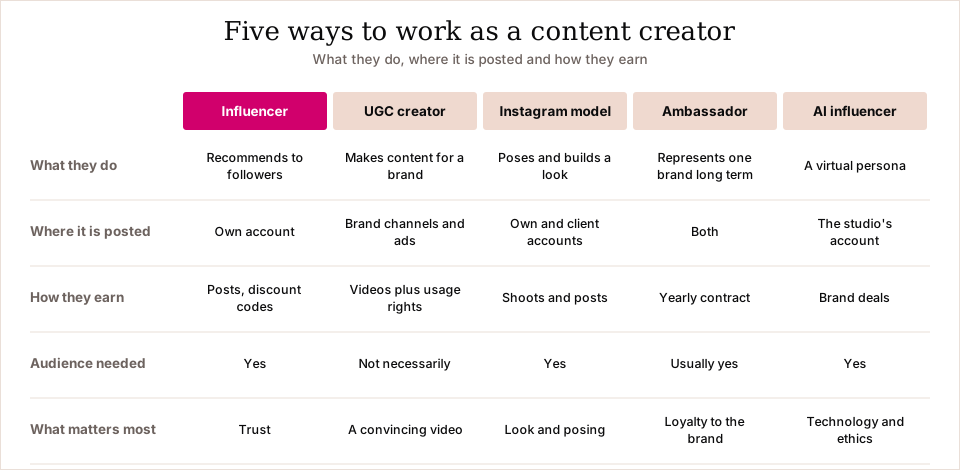
All five work with a camera and social media, yet the core of the job and the source of income differ. The chart shows the main differences; a short note on each follows.
Influencer
An influencer has an audience and shapes its choices: followers act on their recommendations. Brands pay for posts, stories, videos, discount codes and event appearances. The main asset is trust, so an influencer who promotes everything slowly loses value. Our guide on how to become an influencer covers the path, and how much influencers make covers rates.
UGC creator
A UGC (user-generated content) creator makes content that looks like it comes from an ordinary customer but runs on the brand's own account, website or ads. No audience is required: the client buys the video and the right to use it. It is one of the fastest-growing creator jobs because brands need a steady supply of natural-looking video. Start with what a UGC creator does and how to start, then read UGC rates and usage rights.
Instagram model
An Instagram model is someone whose main work on social media is the image: fashion and beauty photos, posing, style. Some also work with agencies as models, others only on their own account. How this differs from agency modeling, and how to turn one into the other, is in our Instagram model guide.
Brand ambassador
An ambassador represents one brand over a longer period: campaigns, events, content, often with a promise not to work with competitors. It can be a celebrity, a micro influencer or a loyal customer. The term is defined in our modeling glossary and explained in depth in brand ambassador: what they do and how to become one.
Virtual or AI influencer
Virtual influencers and AI models are computer-made characters that have followers and sign brand deals. They raise new questions for real models, such as what happens when a brand wants a digital copy of a model. See AI influencers and AI models.
 Model training with SupermodelsTry it in practice with an agency teamIn the model training we work on the walk, posing and working on camera, one to one or in a small group.About the trainingfrom €69
Influencer vs content creator vs model: the difference
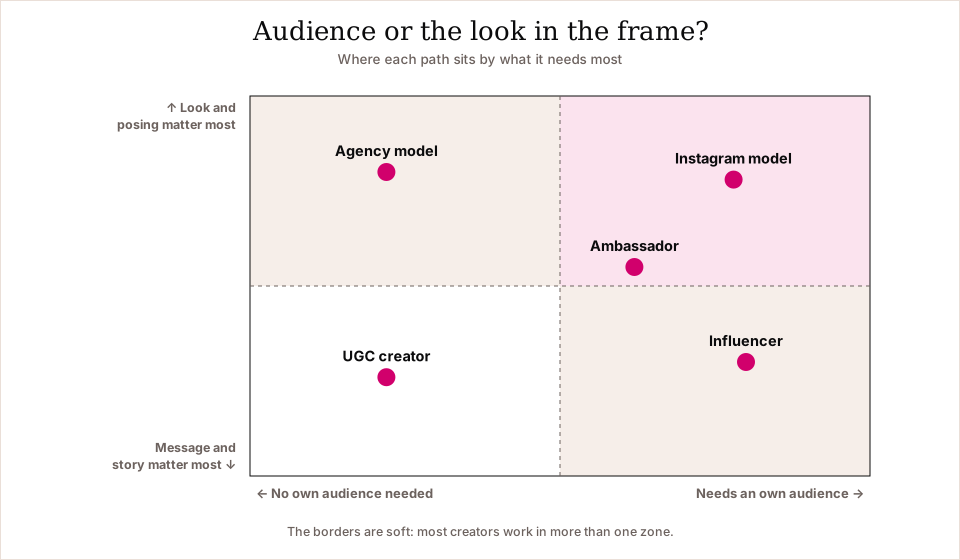
Two questions sort it out. Is the client paying for your audience? Is the client paying for your look and your ability to pose? For an influencer the audience matters most, for a model the look in the frame, for a UGC creator the message and a convincing story, and the Instagram model sits where audience and look meet.
| Question | Influencer | UGC creator | Agency model |
|---|---|---|---|
| What the client pays for | Reach and a recommendation | Content and the right to use it | A working day and use of the images |
| Who has the idea | Usually the creator | The creator, from the client's brief | Client, photographer, stylist |
| Where it runs | The creator's account | Brand channels and paid ads | Campaigns, catalogs, magazines |
| Followers needed | Yes | Not necessarily | No, but they can help |
| Who negotiates | Creator or talent manager | Creator or a UGC platform | The modeling agency |
Many people work in more than one zone. A model with 30,000 followers may get the occasional influencer booking; a UGC creator may grow an audience and become an influencer. What matters is knowing what you are selling at any moment, because price, contract and tax all follow from it.
How to become a content creator: first steps
There is no recipe that fits everyone, but professionals tend to start the same way.
- Pick a niche. Fashion, beauty, fitness, parenting, travel or your profession. A narrower topic finds its people and its brands faster.
- Pick one main platform. TikTok and Instagram Reels for short video, YouTube for longer formats. One platform done well beats four done halfway.
- Post consistently. Several posts a week for several months. Audiences and algorithms reward regularity.
- Build a portfolio. For a UGC creator that means 5 to 10 sample videos; for a model, photos and digitals; for an influencer, statistics and best posts.
- Prepare a one-page pitch. A short bio, audience data, examples and contact details. Influencers call it a media kit.
- Learn the rules. Disclosure, contracts, usage rights and tax, covered below.
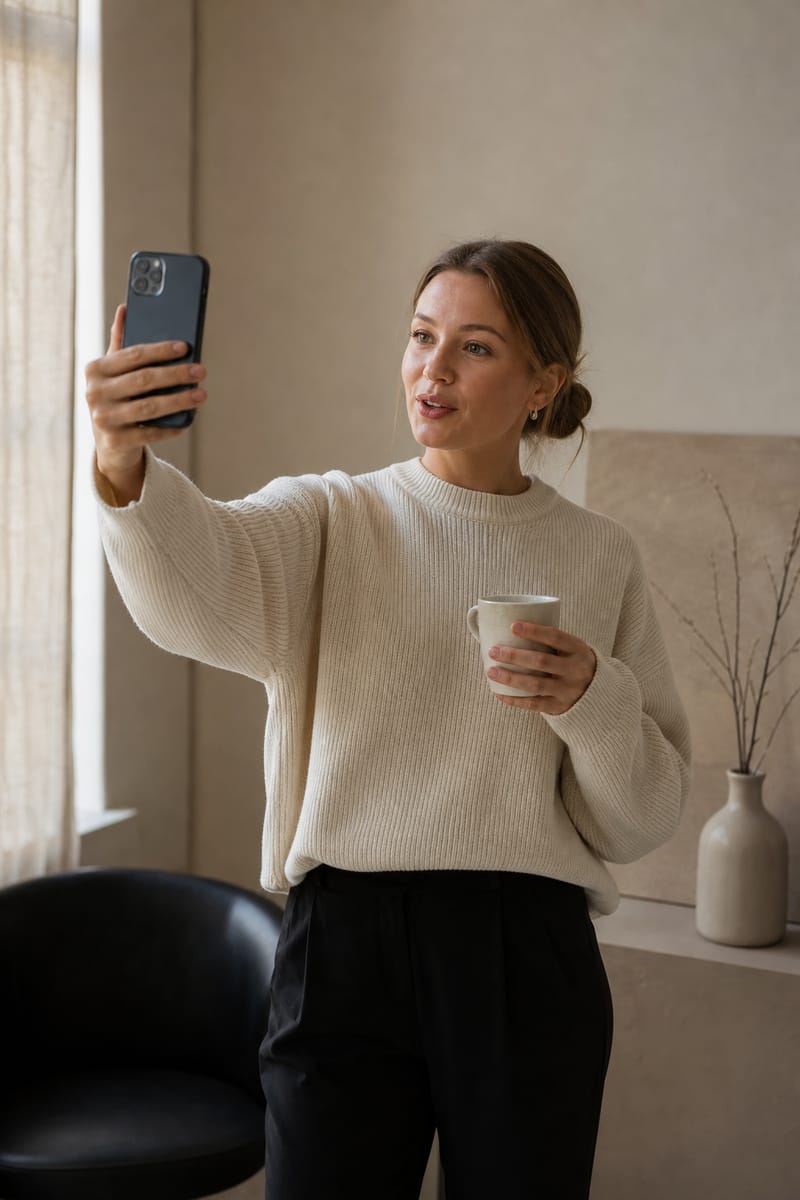
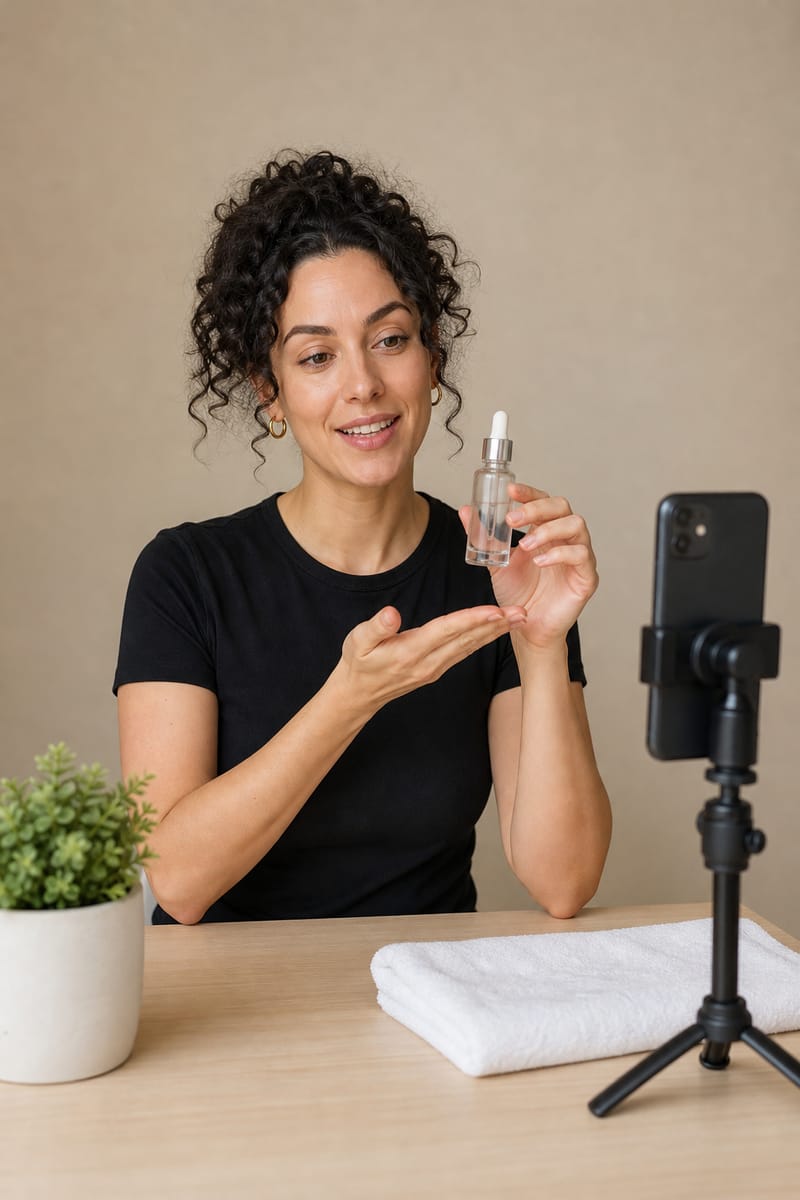
Speaking to a camera, moving in frame and finding your angles can be learned. Much of what models are taught carries straight over to content: posture, poses, expression and working with light. Supermodels runs model training, and the online Supermodels Masterclass (in Lithuanian) covers the agency side of the business.
Modeling and social media: how they support each other
For a model, a social profile has become a second comp card. Clients and casting directors often look at it to see how the model looks day to day, how they move on video and whether they have an audience that could see the campaign. Some clients pay separately for a post on the model's own account, which is extra income.
An audience does not replace the basics. An agency first looks at the face, proportions, skin, movement and how a person looks without filters, so a model's feed works better with fewer filters and more natural frames. Our guide on how to become a model covers the start, and types of modeling covers the kinds of work.
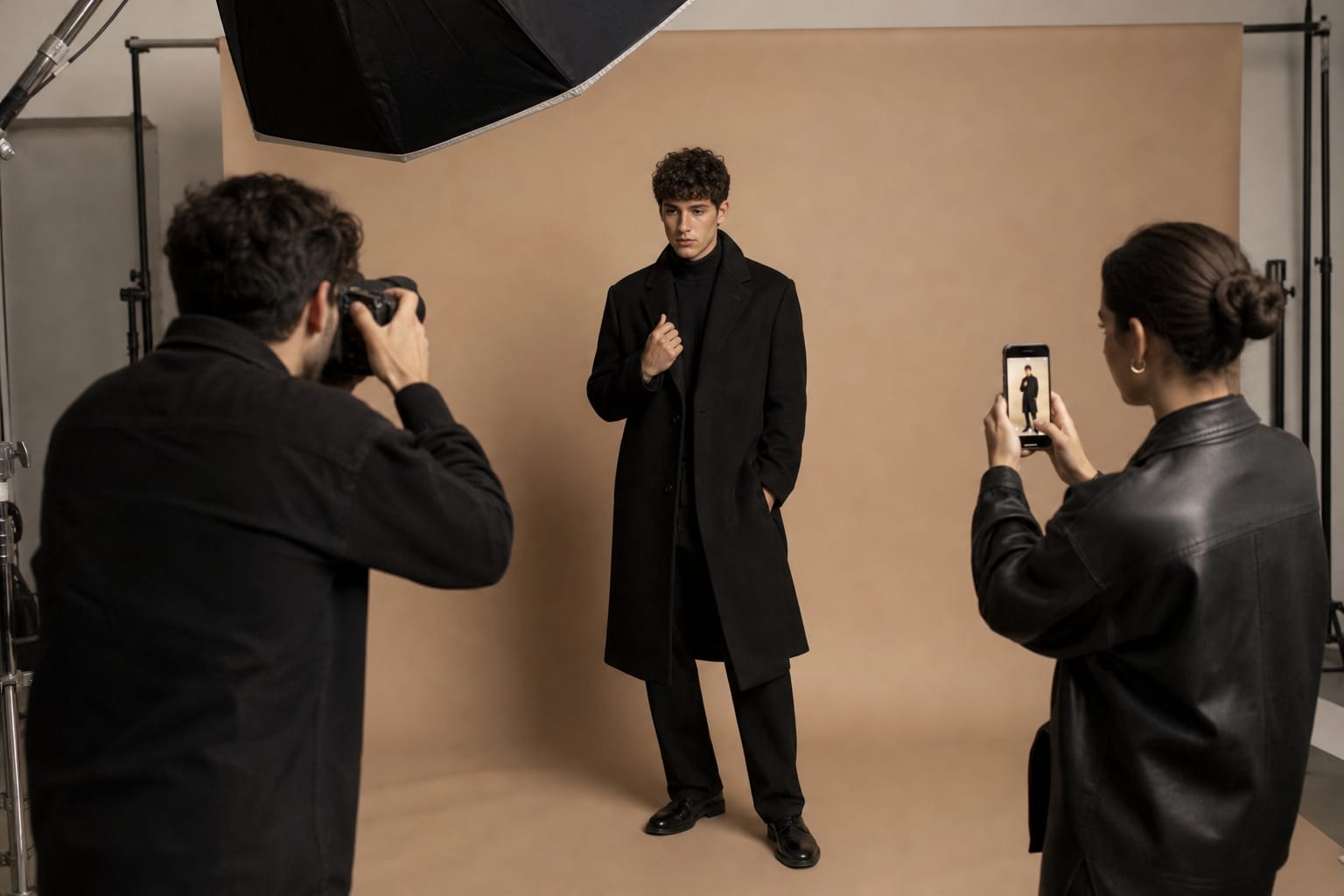
Supermodels is a Vilnius modeling agency founded in 2001 and a member of the international association of model agencies M.A.M.A. It signs a contract with every model it represents and places models abroad with international agencies such as NEXT, Wilhelmina, Elite and Women. Beside its women, men and new faces boards, a special division opened in 2020 represents plus-size and non-standard models and distinctive, charismatic people. Applying through the Supermodels open call is free: girls are accepted from 14 to 22, boys from 16 to 25.
How content creators make money
Creator income rarely comes from a single source. It is usually a mix of these:
| Income stream | What it is | Typical for |
|---|---|---|
| Flat fee per post or video | A set amount for an agreed set of deliverables | Influencers, UGC creators |
| Usage rights | An extra fee when the brand runs the content in ads or for longer | UGC creators, models |
| Day rate | A fee per shoot or filming day | Models |
| Affiliate links and codes | A share of sales made through the creator's link | Influencers |
| Long-term contract | A yearly deal with one brand | Ambassadors |
| Platform income | Ad revenue share, subscriptions, live gifts | Creators with larger audiences |
We give actual numbers in the dedicated guides because they depend heavily on market, audience and rights. Model rate benchmarks are in how much do models make and modeling rates, and usage rights are defined in our glossary.
Disclosure: the rule every creator has to know
In the US, the FTC's Endorsement Guides, revised in 2023, require creators to disclose any material connection to a brand: payment, free products, discounts, family ties or a business relationship. The FTC's plain-language brochure "Disclosures 101 for Social Media Influencers" explains how.
When a post is an ad. When you were paid; when you got the product free, at a discount, or were invited on a trip or to an event; when you are an ambassador or partner; when you run a giveaway or share a discount code; when you promote your own business. Stories and short videos count too.
How to disclose. Use clear words such as "#ad", "Advertisement" or "Sponsored", placed where people see them without clicking "more", and use the platform's paid-partnership tool as well. A brand tag, "thanks", or vague terms such as "#sp", "#spon" or "#collab" are not enough on their own. In Lithuania the consumer authority VVTAT asks for #Reklama and #Remiama/Sponsored for local audiences and #Ad and #Sponsored for English-language posts aimed abroad.
Disclosure is still the exception rather than the rule. In February 2024 the European Commission and consumer authorities from 22 EU countries, Norway and Iceland checked posts by 576 influencers: 97% published commercial content, but only 20% consistently labelled it as advertising. 78% were running a commercial activity, yet only 36% were registered as traders, and 358 influencers were picked out for further investigation.
Contracts, rights and tax
Once content earns money, a handshake is not enough. A contract should state how much content is due and when, who approves it, where and for how long the client can use it, whether you may work with competitors meanwhile, and when and how you are paid. Our modeling contract guide and the glossary entries on buyout and exclusivity go deeper.
Income from content is taxable, even when you are paid in products. How that works for models and creators in Lithuania and abroad is covered in model taxes.
When to work with an agency
There are two kinds of agency and the difference matters. An influencer marketing agency works for the brand: it plans the campaign and picks creators. A talent management agency works for the creator: it negotiates on their behalf, checks contracts and protects their interests. A modeling agency represents a model for shoots, campaigns and shows.
A representative earns their place when bookings come in so fast that negotiation and paperwork take more time than creating, or when the sums are large enough that one bad clause would cost more than the commission. How to tell a good agency from a fake one, and what to check in the contract, is in our influencer agency guide.
Beauty pageants: another route into the spotlight
Plenty of creators and models started in pageants. A pageant gives you a stage, press coverage and followers, but it is not a modeling agency and not a modeling contract. How the two paths differ and which suits whom is in pageant vs modeling.
What to avoid
- Bought followers and engagement. Brands and agencies check the numbers. Fake followers damage your reputation faster than they bring bookings.
- Undisclosed ads. They break the law and cost the trust of your audience.
- Working "for exposure". If a brand runs your content as an ad, it pays for the content and for the usage rights.
- Agencies that ask for money up front. A real agency earns commission on your work, not on your sign-up. See modeling scams.
- Unchecked claims. A 2024 UNESCO survey found that 62% of creators do not systematically verify information before sharing it. In beauty and health, a wrong tip can hurt followers.
- Oversharing. Home address, children's faces, daily routes. Set privacy limits before you need them.
FAQ
What is a content creator?
Someone who makes and publishes photos, videos or writing on online platforms consistently, for an audience or a client. Influencers, UGC creators, Instagram models and brand ambassadors are all forms of content creation work.
What is the difference between an influencer and a content creator?
Every influencer is a content creator, but not every content creator is an influencer. An influencer earns from the trust of an audience, while a UGC creator, for example, makes content for a brand's channels and may have no audience of their own.
What is the difference between UGC and influencer marketing?
In influencer marketing the brand pays for access to the creator's audience and the post runs on the creator's account. With UGC the brand pays for the content itself and the right to use it on its own channels and in ads.
Do you need a lot of followers to earn from content?
Not always. A UGC creator needs no followers because the client buys the content and the rights. An influencer does need an audience, but brands increasingly choose smaller, engaged creators over large, passive followings.
How do I disclose a sponsored post?
Use a clear label such as "#ad" or "Sponsored" at the start of the caption or on the video itself, plus the platform's paid-partnership tool. A brand tag alone is not enough. In Lithuania, VVTAT asks for #Reklama and #Remiama/Sponsored.
Does a model need an Instagram account?
It helps, because clients often check how a model looks and moves day to day. Agencies still judge looks, proportions and how a person looks without filters first, so a large audience is not required.
Sources
- US Federal Trade Commission, Disclosures 101 for Social Media Influencers, and FTC announces updated advertising guides (Endorsement Guides, 16 CFR Part 255, revised June 2023).
- European Commission, Investigation of the Commission and consumer authorities finds that online influencers rarely disclose commercial content, 14 February 2024.
- Lithuanian State Consumer Rights Protection Authority (VVTAT), Guidelines on marking advertising on social media, order No. 1-295 of 10 December 2019 (in Lithuanian).
- Goldman Sachs Research, The creator economy could approach half-a-trillion dollars by 2027, 2023.
- Influencer Marketing Hub, Influencer Marketing Benchmark Report 2025.
- UNESCO, Behind the Screens: Digital content creators, 2024.
- Supermodels agency information and application terms (supermodels.lt, checked October 2026).



Comments (0)
No comments yet. Be the first!
Only logged-in users can comment. Register — and you'll be able to share your thoughts on this article.
Register