


In short
- Most influencers earn little. Goldman Sachs estimates that only about 4% of roughly 50 million creators worldwide make more than $100,000 a year, and in Linktree's survey 46% of full-time creators earned under $1,000 a year.
- Typical rates per post (Influencer Marketing Hub, 2026): Instagram nano $10 to $100, micro $100 to $500, macro $5,000 to $10,000; TikTok nano videos from $50 to $200.
- Followers set the starting point, but usage rights, exclusivity, paid amplification (whitelisting, Spark Ads) and the number of deliverables push the price up. All of them belong in the contract.
- Gifted products count as income in most tax systems. Disclose them as ads and keep records.
"How much do influencers make?" usually follows a feed full of hotels, handbags and free trips. The honest answer is less glamorous: most influencers receive more product than money, and only a minority have a steady income. The creators who earn well are the ones who know their numbers, price every right they hand over and read the contract before posting.
This guide brings together dated public figures, rate ranges by tier and platform, a breakdown of what a fee is made of, how to build a media kit, how to pitch brands, what to check in an influencer contract and how influencer pay compares with modeling.
What influencers earn in practice
Creator income is extremely uneven: a small group earns a lot and the majority earns very little.
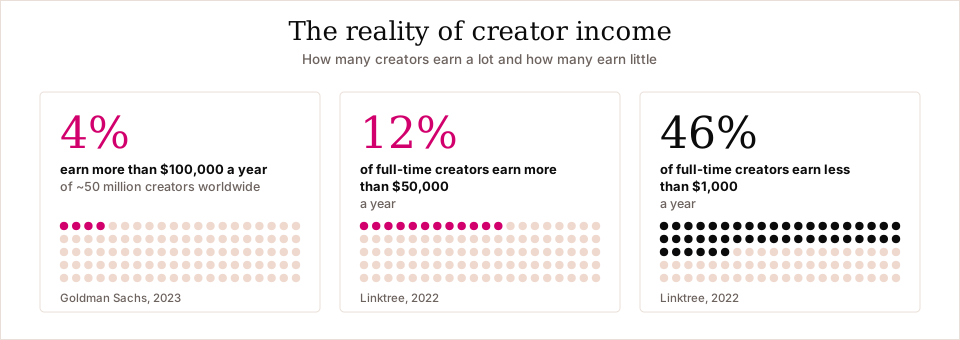
- Goldman Sachs Research (2023) put the creator economy at about $250 billion and projected it could reach about $480 billion by 2027. Of roughly 50 million creators, only about 4% are professionals earning more than $100,000 a year.
- Linktree Creator Report (2022, more than 9,000 creators surveyed): only 12% of full-time creators made more than $50,000 a year, while 46% made less than $1,000. Twelve percent were paid under $100 per brand collaboration.
For most people influencing is a side income built from several streams: sponsored posts, affiliate links, their own products, events and, for models, photo shoots.
Influencer rates by tier and platform
Influencer Marketing Hub updated its rate overview in October 2026. These are US and international benchmarks per post or video:
| Tier (followers) | Instagram post | TikTok video | YouTube sponsored video |
|---|---|---|---|
| Nano (under 10K) | $10 to $100+ | $50 to $200 | $20 to $200+ |
| Micro (10K to 100K) | $100 to $500+ | $200 to $800 | $200 to $1,000+ |
| Macro (100K to 1M) | $5,000 to $10,000+ | $800 to $5,000 | $10,000 to $20,000+ |
| Mega (over 1M) | $10,000+ | $5,000 to $50,000+ | $20,000 to $50,000+ |
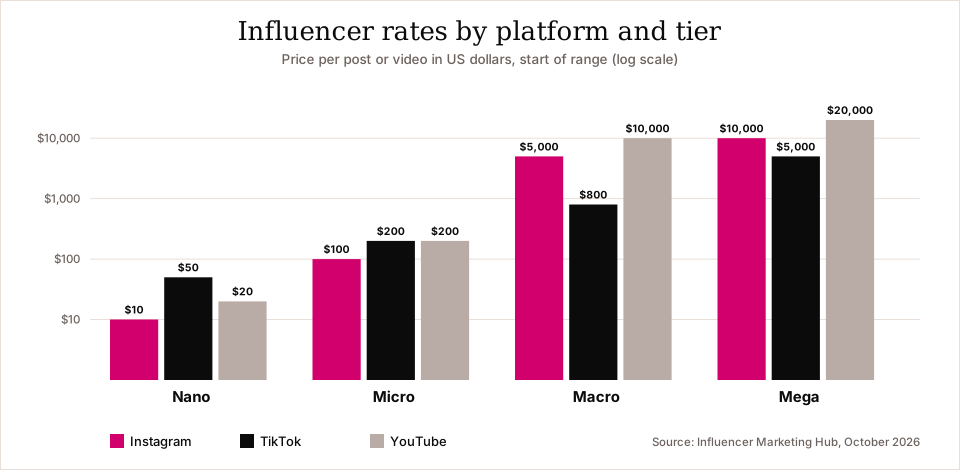
In the same organisation's 2026 survey, marketers most often said they paid nano and micro creators under $500 per campaign and mid-tier creators $2,000 to $10,000. Smaller and local markets pay less, so tie your own price to real reach: how many people see an average post or story and how many react.
How to set your first rate
- Work out average reach per post over the last 30 days from your analytics.
- Count the hours: concept, filming, editing and client feedback.
- Add what costs extra: usage rights, exclusivity, rush delivery, extra revisions.
- Compare with creators at your level. If you have nothing to anchor to, sell packages: one post; one post plus three stories; a monthly partnership.
What an influencer fee is made of
The per-post rate is only the base. A campaign price has several parts, and each should be negotiated on its own.
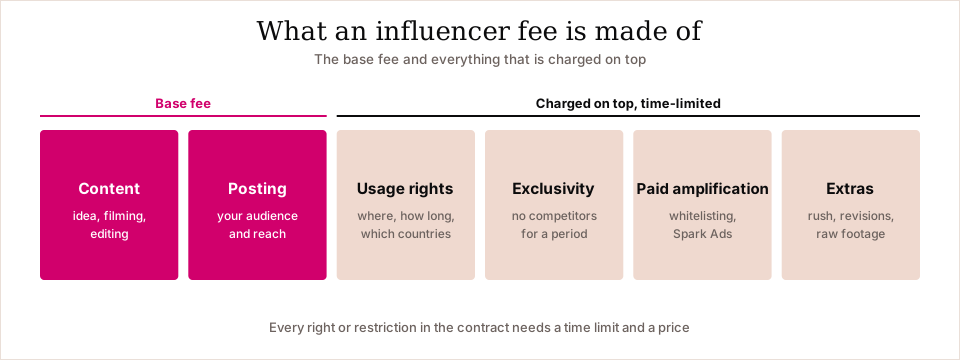
| Part | What it means | Effect on price |
|---|---|---|
| Content | Idea, filming, editing | The base, depends on format and complexity |
| Posting | Publishing on your account to your audience | Depends on reach and engagement |
| Usage rights | The brand reuses your content on its site, in ads or in stores | Rises with duration, channels and countries |
| Exclusivity | You cannot work with competitors for a period | Compensates for lost bookings |
| Paid amplification | The brand runs paid ads through your handle (whitelisting, TikTok Spark Ads, Meta partnership ads) | Separate monthly fee |
| Extras | Rush turnaround, extra revisions, raw footage | Separate fee or percentage |
It is the same logic models use: a day rate plus a separate fee for where and how long the image runs. We explain it in modeling rates, and the term for rights sold outright in buyout. If you sell content without posting it, see UGC rates and usage rights.
Where influencer income comes from
| Source | How it works | Who it suits |
|---|---|---|
| Sponsored posts and campaigns | Paid per post, story set, video or multi-month partnership | Every tier |
| Affiliate links and codes | A percentage of sales through your link or code | Creators whose audience buys |
| Ambassador contracts | A long-term deal with one brand, often exclusive | Micro and up |
| Platform programmes | YouTube ad revenue, subscriptions, live gifts, TikTok Creator Rewards | Depends on platform thresholds |
| UGC | Brands buy videos for their own channels | Even without a big audience |
| Own products and services | Clothing, cosmetics, courses, coaching | Creators with a clear niche |
| Events and shoots | Hosting, appearances, modeling jobs | Known creators and models |
Long-term deals with one brand are covered in brand ambassador; content-only work in UGC creator.
Media kit: what it is and what to put in it
A media kit is a one- or two-page PDF that tells a brand in a minute who you are, who follows you and what you have done. It lets you pitch first and justify your price.

- Short bio: who you are, what you make, your niche.
- Audience: followers per platform, top countries and cities, age and gender split.
- Performance: average reach, views and engagement over the last 30 to 90 days. Analytics screenshots beat rounded numbers.
- Case studies: three to six best posts or campaigns with results.
- Services and packages: what you offer, with prices or "from" prices.
- Contact: email, phone, manager if you have one.
Treat it like a model's comp card: clean photos, true numbers, nothing out of date. See how a model's card works in composite card for models.
How to get brand deals
- Build a list of 20 to 30 brands you already use that fit your audience.
- Tag them organically when you feature them unpaid. It shows you use the product.
- Find the right person: the marketing or social media manager, not a generic inbox.
- Keep the pitch short: who you are, why this brand, one concrete idea, media kit attached. Three paragraphs.
- Follow up once after a week, then move on.
- Send a results report after each campaign. Views and clicks are the best argument for the next booking.
Influencer contract: what to check before signing

- Deliverables: number of posts, stories and videos, dates, platforms.
- Approvals: how many revision rounds and how fast the brand replies.
- Usage rights: where (site, paid ads, retail), for how long, in which countries.
- Exclusivity: which competitors, for how long.
- Payment: amount, deposit, terms (for example net 14 or net 30), invoicing.
- Disclosure: who is responsible and which label will be used.
- Cancellation and takedown: what happens if the campaign is cancelled or a post is removed.
Many clauses mirror a model's agreement, so our guide to the modeling contract is useful reading. Influencer agencies usually review contracts and negotiate fees; how they work and what they charge is in influencer agencies.
Tax and disclosure
Influencer income, including products received in exchange for posts, is taxable in most countries; in the US gifted products received for promotion are generally treated as income, and in Lithuania the tax authority treats them as income in kind and registers regular activity as self-employment. Keep records of every collaboration and its value. Our guide to model taxes covers self-employed creative work in more detail.
Every paid or gifted post must also be disclosed. The FTC's "Disclosures 101" requires a clear label such as "ad" or "sponsored" in the post itself; EU guidance treats PR packages as payment. We summarise the rules in how to become an influencer.
Influencer or model: who earns more
| Model | Influencer | |
|---|---|---|
| Who sets the price | The agency negotiates with the client | Usually the creator |
| What drives it | Job type, hours, usage rights, market | Audience, engagement, rights, exclusivity |
| Stability | Depends on bookings and season | Depends on algorithms and audience |
| Who protects you | Agency contract, commission on work only | Yourself or an influencer agency |
Model rates are covered in how much do models make. The highest earners often combine both: a model with an engaged audience books shoots and sponsored posts. If you want to model, apply through the Supermodels open call; the agency signs a contract with every model and earns commission on work, not sign-up fees.
 Model training with SupermodelsTry it in practice with an agency teamIn the model training we work on the walk, posing and working on camera, one to one or in a small group.About the trainingfrom €69
Mistakes to avoid
- Working only for product. A gift is not a fee, and tax may still be due on it.
- Giving away usage rights. If your face runs in an ad, that is a separate, time-limited, paid licence.
- Accepting exclusivity without compensation. Being blocked from competitors has to be paid for.
- Starting without written terms. Even a short email with the terms beats a verbal promise.
- Inflating your stats. Brands ask for screenshots; dishonesty ends the relationship.
- Forgetting to declare income. Tax authorities in several countries now monitor influencer activity.
Frequently asked questions
How much do influencers make per post?
According to Influencer Marketing Hub's 2026 benchmarks, an Instagram post costs $10 to $100 from a nano creator, $100 to $500 from a micro creator, $5,000 to $10,000 from a macro creator and over $10,000 from a mega creator. Usage rights and exclusivity are extra.
How much do TikTok influencers make?
TikTok videos run from $50 to $200 at nano level, $200 to $800 for micro creators and $800 to $5,000 for macro creators. Creator Rewards payouts add income in eligible countries for accounts with 10,000 followers and 100,000 views in 30 days.
How many followers do you need to make money?
Brands pay nano creators with 1,000 to 10,000 followers, but amounts are small. Steady income usually starts in the micro tier or by combining sponsored posts with affiliate links, UGC and your own products.
What is a media kit?
A short PDF for brands with your bio, audience data, performance numbers, case studies, services and contact details. It helps you pitch and justify your rate.
What is whitelisting?
Whitelisting means a brand runs paid ads through your account handle, so the ad appears to come from you. It is a separate right with its own monthly fee and should be limited in time.
Do I pay tax on free products from brands?
In most countries yes. Products received in exchange for promotion are generally treated as income, and in Lithuania as income in kind. Keep records and check your local rules.
Sources
- Influencer Marketing Hub, Influencer Rates: How Much Do Influencers Really Cost in 2026?, updated 6 October 2026.
- Influencer Marketing Hub, Influencer Marketing Benchmark Report 2026 (campaign cost ranges by tier).
- Goldman Sachs, The creator economy could approach half-a-trillion dollars by 2027, 2023.
- Linktree, 2022 Creator Report (survey of more than 9,000 creators).
- Federal Trade Commission, Disclosures 101 for Social Media Influencers.
- TikTok Support, Creator Rewards Program requirements, checked October 2026.
- Lithuanian State Tax Inspectorate, Tax obligations related to influencer activity (in Lithuanian), checked October 2026.




Comments (0)
No comments yet. Be the first!
Only logged-in users can comment. Register — and you'll be able to share your thoughts on this article.
Register