

In short
- "Instagram model" describes someone who poses and builds an image on social media and earns from brand partnerships. It is not a profession with rules: it can mean an influencer, an agency model or just a good-looking feed.
- Modeling agencies do look at your profile, but they decide on digitals, height, measurements and how you look without filters. Followers are a bonus, not an entry requirement.
- The strongest combination is an agency model with a lively, tidy profile: the agency books shoots and protects contracts, the profile brings extra partnerships.
- "You're so beautiful, become our model" DMs are the most common route for scammers. If they ask for money, intimate photos or a meeting alone, it is not a job.
Two different wishes meet in the search "Instagram model". Some people want to become models and think social media is the fastest way in. Others want to be seen, earn from brand deals and stay independent of any agency. Both paths are real, but they follow different rules, and confusing them costs time and sometimes money.
This guide explains what an Instagram model is and how that differs from an agency model or an influencer, whether modeling agencies check Instagram, how to set up your profile, how Instagram models make money, how to disclose ads and how to recognise messages that only pretend to be modeling work. For the wider map of social media work, see our guide to becoming a content creator.
What is an Instagram model?
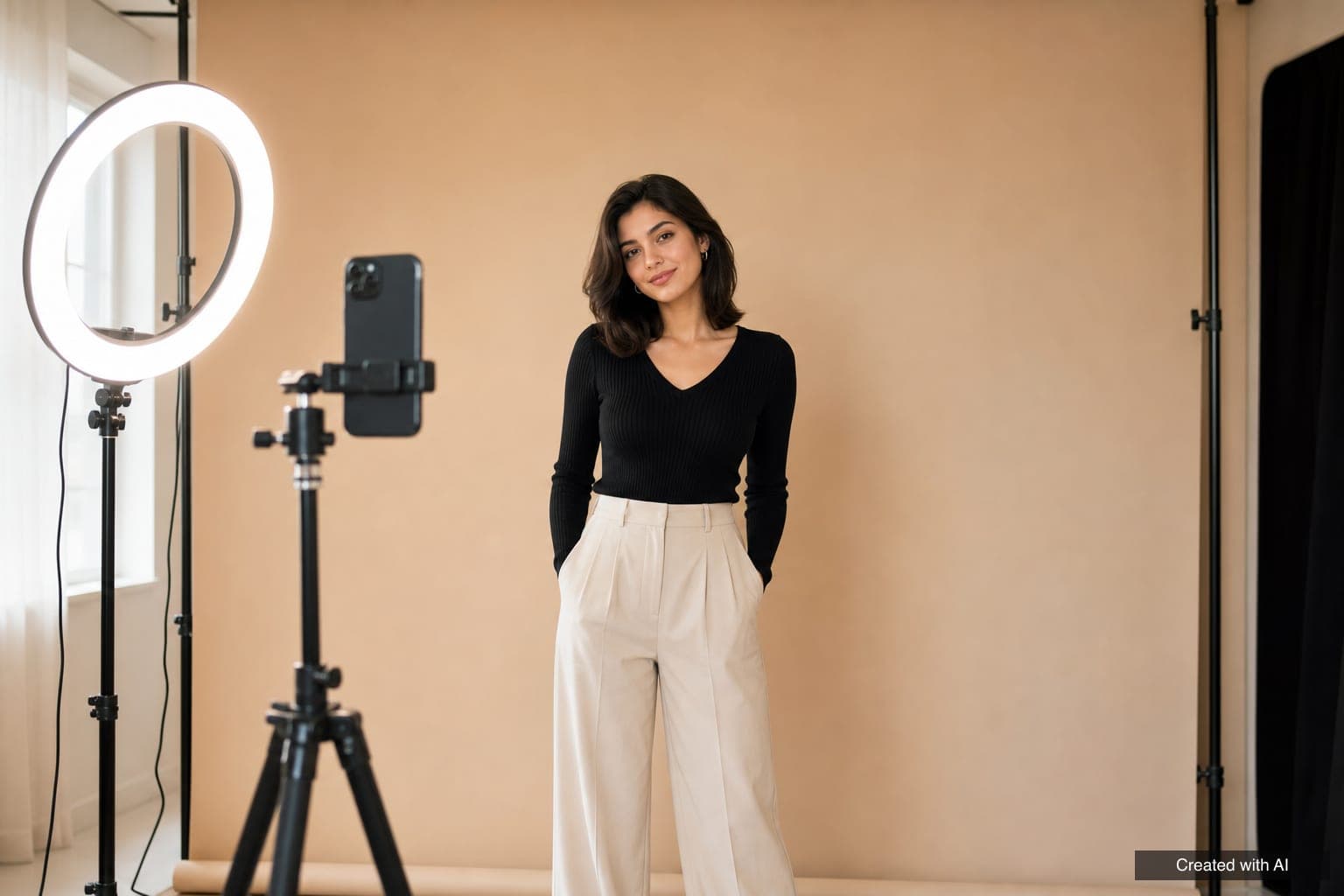
An Instagram model is someone whose main working tool is their own image on social media: photos, short videos and stories. They pose, often shoot or film themselves, and brands pay for posts that show their clothes, cosmetics or services. You will also hear "social media model", "model influencer" and, on TikTok, "TikTok model".
 Model training with SupermodelsTry it in practice with an agency teamIn the model training we work on the walk, posing and working on camera, one to one or in a small group.About the trainingfrom €69
It is not a professional title. In the professional market, modeling work is defined by an agency, a client and a contract: who booked you, how much they pay, where and for how long they use the pictures. An Instagram model can have all of that if they work through an agency, or none of it if partnerships happen in DMs without contracts. So the label tells you little. What matters is how the person works.
We cover the kinds of modeling work, from runway to e-commerce, in types of modeling, and the rules of commercial work in commercial modeling.
Instagram model vs influencer vs agency model
The three terms are often used as synonyms, but they describe different jobs.
- An influencer sells the audience's trust: people buy because they recommend it. Looks help, but they do not need to meet modeling requirements. More in how to become an influencer.
- An Instagram model sells the image: how a garment or product looks on them. The audience helps, but the main value is the pictures.
- An agency model works on client bookings: shoots, campaigns, shows. The agency negotiates the fee and the usage rights.
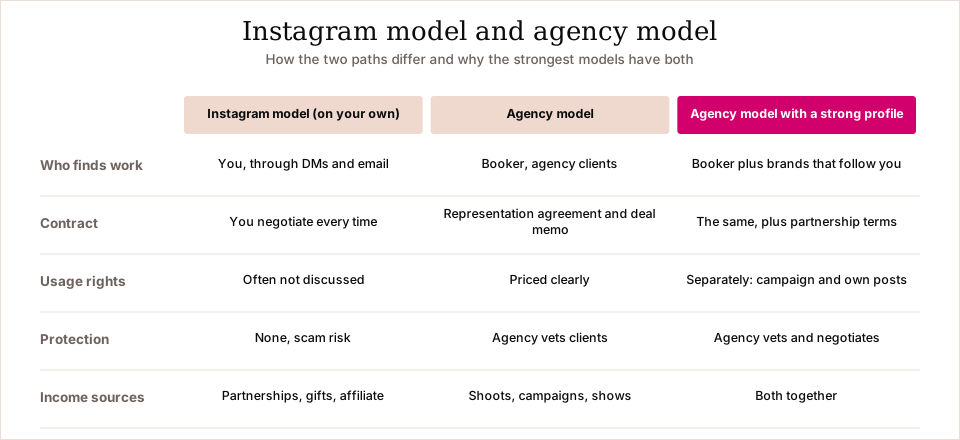
In practice the lines blur. Plenty of agency models have tens of thousands of followers, and some influencers also take modeling jobs. The useful question is not "which path is better" but "do I have what each of them needs".
Do modeling agencies look at Instagram?
Yes, but not in the way many people expect. An agency checks your profile to get a sense of your personality, style and comfort in front of a camera. The decision rests on other things: digitals without make-up or filters, height, measurements, skin, posture and whether your look suits the agency's clients.
Some large agencies also use social media for scouting. New York's IMG Models, for example, runs a separate scouting programme, We Love Your Genes, where people can tag themselves with a hashtag on Instagram or TikTok. Even then, the first sign of interest is followed by the usual steps: real measurements, digitals, a meeting and a contract.
Follower count is a plus, not a condition. An agency does not care whether you have 300 or 30,000 followers if your look does not fit its clients. And the other way round: a model with a small profile but the right look and discipline can work internationally. The Supermodels application form asks for simple photos and data, not follower statistics. How agencies choose models is covered in how to prepare for a model casting.
How to become an Instagram model, step by step
If you want to work as a model and use social media as a window onto yourself, go in this order. It also works if you later want to grow into an influencer.
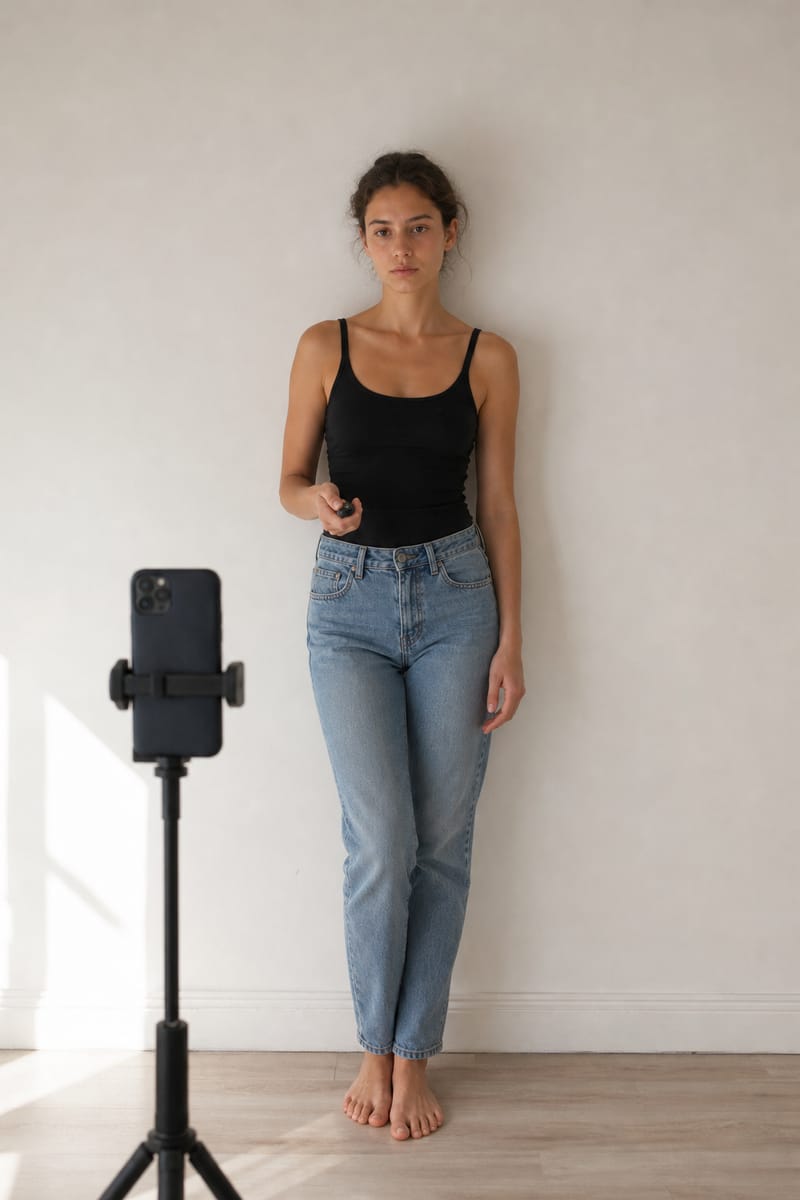
- Start with digitals. Simple daylight photos against a white wall, no make-up or filters: front, side, close-up and full length. You can take them yourself with a phone on a tripod. They show how you look in real life, and they are the first thing an agency asks for.
- Measure yourself accurately. Height, bust, waist, hips, clothing and shoe size. You do not need to post these, but you need to know them exactly.
- Apply to an agency. A legitimate agency signs models for free. You can apply through the Supermodels open call; the agency will judge which market and which jobs suit you.
- Set up your profile. A tidy grid, a clear bio and a booking contact (see the next section).
- Build a real portfolio. Test shoots with photographers and stylists give you the best images for your profile too. How to put a book together is in modeling portfolio.
- Learn to pose and move. Social media is more and more video, so movement matters as much as a pose. Start with model poses.
- Show the work, not just your face. Behind-the-scenes clips, moments from shoots, movement and personality show that you are a working model and not only a pretty picture.
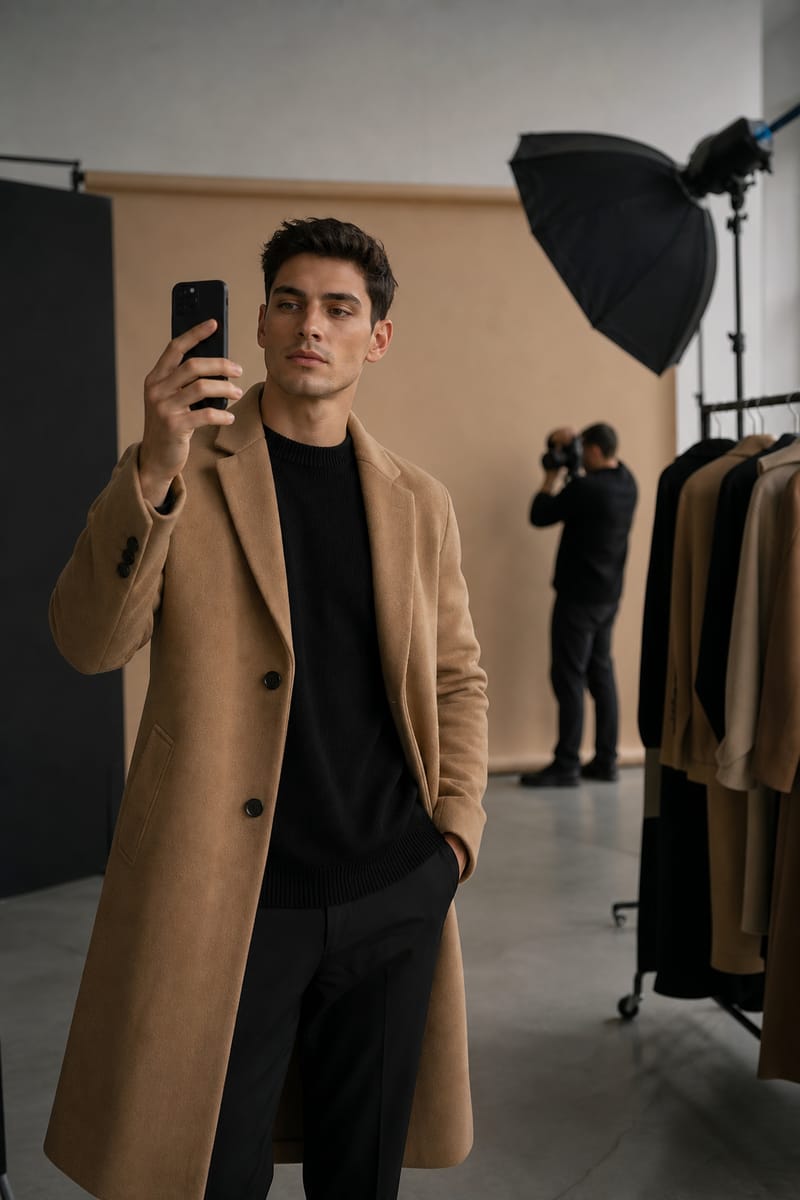
If you want to prepare with a mentor, Supermodels runs model training, and the online Supermodels Masterclass (€77) covers agencies, contracts, castings, digitals and posing.
Your profile as a model: what to post and what to avoid
A model's profile is not a personal diary. It is a business card. Agencies, photographers and brands should understand within seconds what you look like and what you can do.
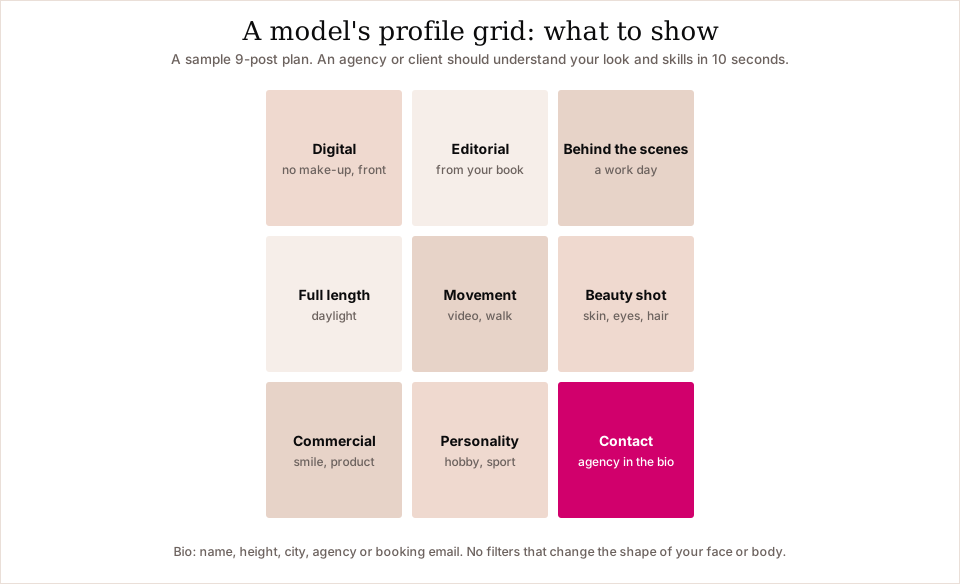
The bio
Name, height, city and how to book you: the agency name or a booking email. If an agency represents you, bookings should go through it. Clients then know where to go, and you never work without a contract.
Which images to choose
- At least one real, unfiltered image. Agencies and clients want to see your real skin and face shape.
- Range. Close-up, full length, beauty shot, movement, a commercial shot with a smile.
- Quality over quantity. Fewer posts, each one clean.
- Consistency. Similar light and colours make a profile recognisable.
What to keep off your feed
- Filters that change the shape of your face or body. When you arrive on set, the client will compare.
- Your exact home location and real-time daily routes.
- Other people's or children's faces without consent.
- Client work before it is published: contracts often forbid it.
TikTok models and short video
TikTok and Instagram Reels changed what brands want to see. More and more often they book not only a still but a short vertical video: how a garment moves, the moment of getting dressed, how the model walks. A "TikTok model" is a model who is comfortable on video, can talk to the camera and has a sense of rhythm.
These skills pay off in agency work too: many e-commerce shoots now end with a few short clips, and agencies ask for a model intro video. If you make videos for brands but do not post them on your own profile, that is UGC work, covered in how to become a UGC creator.
How do Instagram models make money?
There are several income streams, and they are not equally reliable.
| Source | How it works | What to watch |
|---|---|---|
| Shoots and campaigns through an agency | A client books the model, the agency negotiates fee and rights | The most stable source, with a contract and payment through the agency |
| Paid posts on your profile | A brand pays for a post, story or video | Price depends on audience and usage rights; the ad must be disclosed |
| Brand ambassador deals | A long-term partnership with one brand | Often with exclusivity: no work with competitors |
| Affiliate links | A percentage of sales through your link or code | Income varies, needs an engaged audience |
| Gifted products | Product in exchange for a post | Not payment for work, and gifts must be disclosed too |
| Content for brands (UGC) | You make videos the brand posts itself | Paid for content and usage, not followers |
How much that adds up to depends heavily on audience size, country and niche. Rates and benchmarks are in how much do influencers make, and modeling fees in how much do models make and modeling rates. Long-term deals with one brand are covered in how to become a brand ambassador.
Above all, do not forget usage rights. If a brand wants to use your Instagram photo in its own advertising, website or store, that is a separate use and is paid separately. Our glossary entry on the model release explains what such permission means. Income from social media is taxed like any other modeling income; see model taxes.
Disclosing ads: what you must know
Hidden advertising is illegal in the US and across the EU. In the US, the Federal Trade Commission's guide for influencers says you must disclose any financial, employment, personal or family relationship with a brand, and that free or discounted products count. In Lithuania, the consumer protection authority (VVTAT) has published social media ad labelling guidelines since 2019 and stresses that stories and TikTok posts need labels too.
- Paid posts need a clear label at the start, such as "Ad", or the platform's own tool.
- Gifts also need disclosure, for example "Gifted" or a thank-you to the brand for the free product.
- Stories and short videos are labelled the same way. Regulators note that stories are where labels are most often forgotten.
- Products you bought yourself and can prove you paid for do not need a label.
Instagram has a "Paid partnership" tool: when you tag a partner, a label with the brand's name appears above the post. Instagram does not handle payment; you are paid directly by the brand, so the terms belong in a contract.
Safety: scams and DMs
Instagram models are also scammers' favourite target. "We're looking for new faces and you're perfect" may be genuine, but far more often it is the start of paid "courses", paid shoots, fraud or even trafficking. Our glossary entry on modeling scams lists the signs of a fake agency.
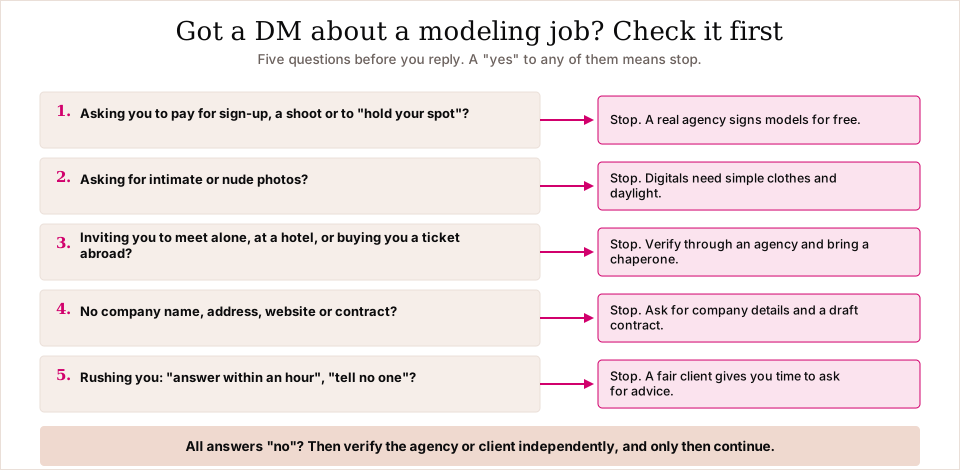
- Real agencies do not charge you for sign-up, a shoot or to "hold your spot". The FTC names this as the main sign of a scam: an agency earns only from what the client pays.
- Real agencies do not ask for intimate photos. Digitals need simple clothes. Swimwear or lingerie shots are only discussed openly in the right context, and never sent by DM to strangers.
- Verify independently. Company name, registration number, address, website, other models you can speak to. Fake accounts often copy the names of real agencies, so contact the agency through its official website.
- Travel abroad is arranged through your mother agency with a contract. A "gift" ticket from a stranger is a warning sign.
- Minors never go to meetings without a parent, and parents sign contracts. Our entry on the chaperone explains when one is needed.
If you have already replied and feel unsafe, stop the conversation, save the messages and talk to someone you trust. If you are threatened or coerced, call the emergency number (112 in the EU, 911 in the US). What a trustworthy agency looks like is covered in how to choose a modeling agency.
How an agency helps an Instagram model
A modeling agency does not buy followers or create content for you, but it does what one person with a phone cannot.
- Clients. The agency has relationships with photographers, brands and agencies abroad. Supermodels (founded in 2001, a member of the M.A.M.A. association) works with NEXT, Wilhelmina, Elite, Women and other international agencies for work abroad.
- Contracts and rights. The agency negotiates the fee, usage term, channels and exclusivity. This matters most when a brand wants both a shoot and posts on your profile.
- Protection. The agency vets clients and bookings. Many scams fall away because nobody deals with you directly.
- Growth. Test shoots with professionals give you the best images for your profile, and working with known clients builds trust with followers too.

Supermodels represents women, men and new faces, and its Personalities division covers non-standard and plus-size models. Women can apply from 14 to 22 and men from 16 to 25. You can apply through the Supermodels open call, free of charge. The modeling contract you sign with the agency also covers how partnerships on your own profile are handled.
What to avoid
- Bought followers and "engagement" services. Brands and agencies spot fake audiences, and platforms restrict such accounts.
- Paid "modeling courses" that promise work. No course guarantees bookings.
- Free work "for exposure". If a brand uses your photos in its ads, it pays for usage too.
- Filters that change your face or body. The difference shows the moment you arrive on set.
- Partnerships without a contract. Who, how much, where and for how long must be in writing.
- Forgetting the ad label. An undisclosed ad can cost you trust and a fine.
FAQ
What is an Instagram model?
Someone whose main working tool is their image on social media. They pose, make photos and videos and earn from brand partnerships. If an agency represents them, they also work on client shoots.
Do modeling agencies look at Instagram?
Yes, but they decide on digitals, height, measurements and how you look without filters. Followers are a bonus, not an entry requirement.
How many followers do you need to be an Instagram model?
There is no set number. Agencies care more about your look and discipline, and brands about audience quality: whether followers are real and interested in your subject.
How do Instagram models make money?
From shoots and campaigns through an agency, paid posts, brand ambassador deals, affiliate links and making content for brands. Gifted products are not payment for work.
Do I have to disclose a gifted product?
Yes. The FTC in the US and VVTAT in Lithuania both say free products count. You only skip the label when you bought the product yourself and can prove it.
How can I tell a fake modeling offer?
They ask you to pay for sign-up or a shoot, ask for intimate photos, invite you to meet alone or rush you. Verify the company independently and contact the agency through its official website.
Sources
- U.S. Federal Trade Commission, Disclosures 101 for Social Media Influencers (what relationships must be disclosed, free products included).
- U.S. Federal Trade Commission, Modeling Scams (legitimate agencies do not charge up front or require their own photographers).
- Lithuanian State Consumer Rights Protection Authority (VVTAT), reminder on how influencers must label ads, updated 22 May 2024 (2019 guidelines, gifts and stories).
- Instagram Help Center, About branded content on Instagram ("Paid partnership with" label, payment outside the platform), checked October 2026.
- i-D, How to get scouted by IMG (on Instagram and TikTok) (IMG's We Love Your Genes scouting programme).
- Supermodels agency information and divisions, supermodels.lt, checked 8 October 2026.


Comments (0)
No comments yet. Be the first!
Only logged-in users can comment. Register — and you'll be able to share your thoughts on this article.
Register