

In short
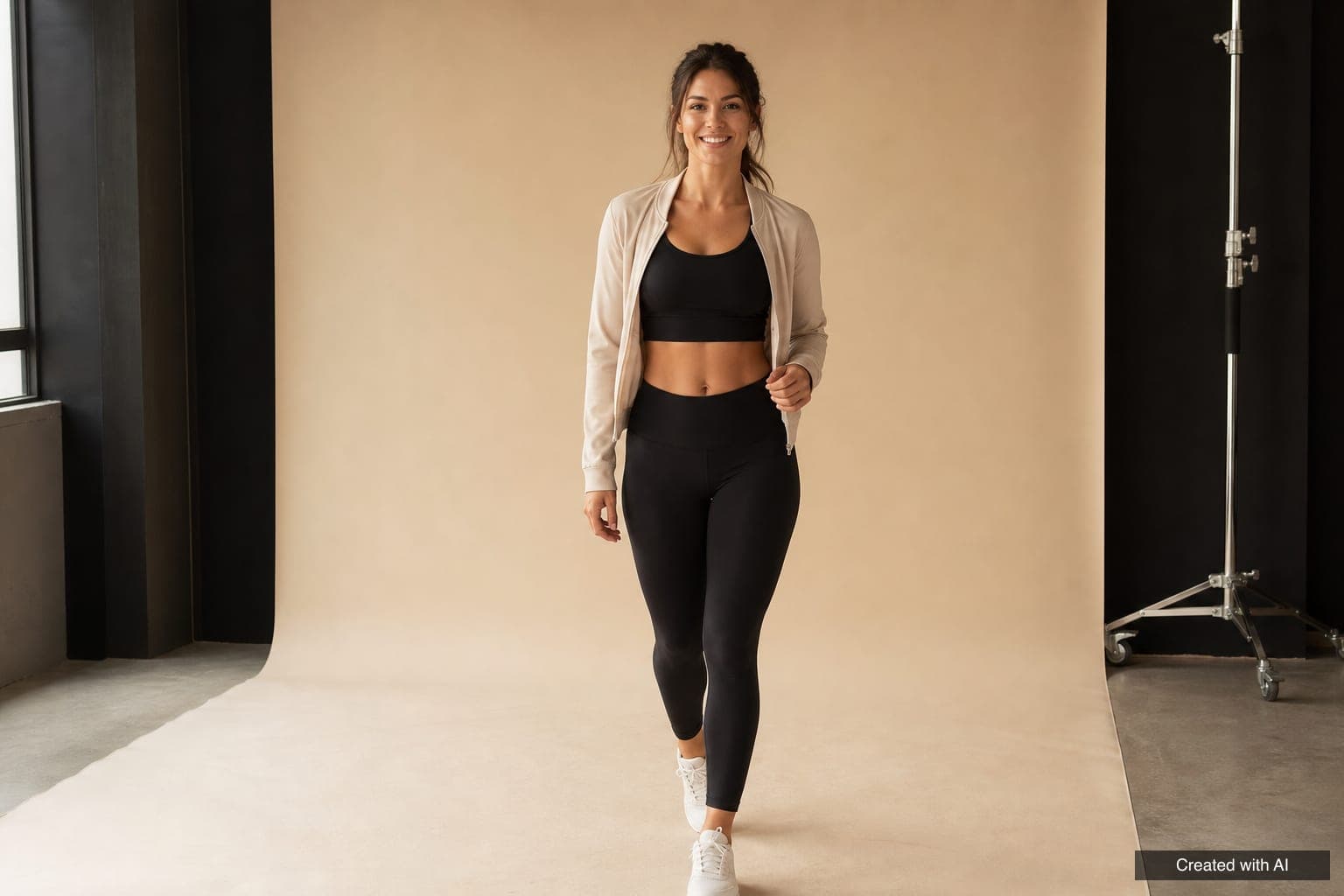
- A fitness model advertises activewear, gyms, supplements, workout apps and healthy living. The job is to show a product and a movement on camera, not to win a contest.
- You need an athletic, healthy body you can keep all year, good exercise technique and the ability to move in front of a camera. There is no strict height rule like on the runway.
- Crash diets, cutting water before a shoot and "shape for one day" belong to physique competitions. A fitness model does not need them, and they harm your health.
- Most steady work is in the big sportswear markets: London, Germany, Los Angeles, New York, Miami and Sydney, booked through agencies. In small markets the work is occasional.
Say "fitness model" and most people picture gym selfies or a competition stage full of tanned athletes. In the industry it means something more specific: activewear catalogues, gym and app campaigns, supplement packaging, workout videos. The client needs someone whose body makes it believable that the product is made for sport, and who moves on camera as well as they train.
This guide explains how a fitness model differs from a physique competitor and from a fit model, who hires and what they look for, how to become a fitness model step by step, what the work pays and where the jobs are. We also talk about health, because the fitness world makes it easy to slide into extremes that modeling work does not require.
What is a fitness model
A fitness model is a model who works on jobs connected with sport, movement and healthy living. There is a short definition in our modeling glossary. The key point is that it is part of commercial modeling: the goal is to sell a product or a service, so the client looks at the face, the smile and how natural you seem as much as at the body.
 Model training with SupermodelsTry it in practice with an agency teamIn the model training we work on the walk, posing and working on camera, one to one or in a small group.About the trainingfrom €69
Fitness models are shot in studios, gyms, on the street and outdoors. Often you do not just pose but perform: a squat, a running stride, a yoga pose, a jump. That makes technique part of the job. If an exercise is done wrong, the frame is useless. Trainers and sports brands spot poor form immediately, and so do customers.
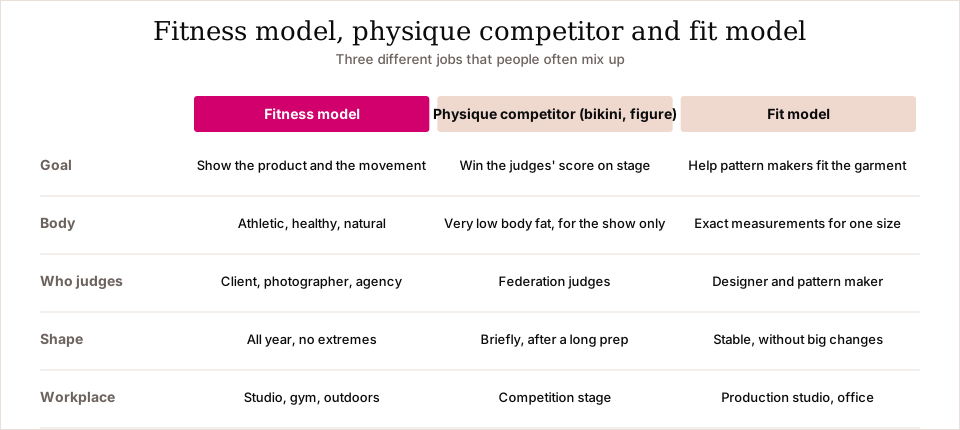
The term is easy to confuse with two others, so it helps to separate them before talking about work.
Fitness model vs physique competitor vs fit model
The three names sound similar but describe different jobs with different requirements.
Physique competitor (bikini, wellness, figure, fitness)
Bodybuilding and fitness federations run several women's divisions: bikini, wellness, figure and fitness. In bikini, judges look at muscle shape, symmetry, a very lean midsection and stage posing. Competitors prepare for months, and on the day they look in a way that is neither possible nor healthy to hold every day.
Competition experience can help, because competitors know how to pose and control their bodies. But activewear clients usually want a healthy, athletic person who will look the same next week, not stage condition.
Fit model
A fit model is not a photographic model at all. Fit models try on garments during production so designers and pattern makers can correct the cut, and what matters is exact measurements for one size. We explain that job in fit model: what a fitting is. Sportswear companies employ fit models too, so the two jobs sometimes meet in the same building.
Who hires fitness models
Several kinds of clients book fitness models, and each looks for a slightly different person.
| Client | What they shoot | What they look for |
|---|---|---|
| Activewear brands | Catalogues, e-commerce, campaigns, video | Proportions that fit the sample size, natural movement, clear skin |
| Online retailers | Many garments a day on a plain background | Speed, consistent shape, repeatable poses |
| Gyms and studios | Ads, social media, websites | Someone who trains convincingly and looks approachable |
| Supplement and sports nutrition brands | Packaging, ads, in-store displays | A more muscular build, without stage extremes |
| Workout apps and TV | Exercise videos | Correct technique, stamina for a full shoot day, often a trainer's qualification |
| Health, insurance and banking ads | Lifestyle frames: running, cycling, yoga | Natural looks, a real smile, a range of ages |
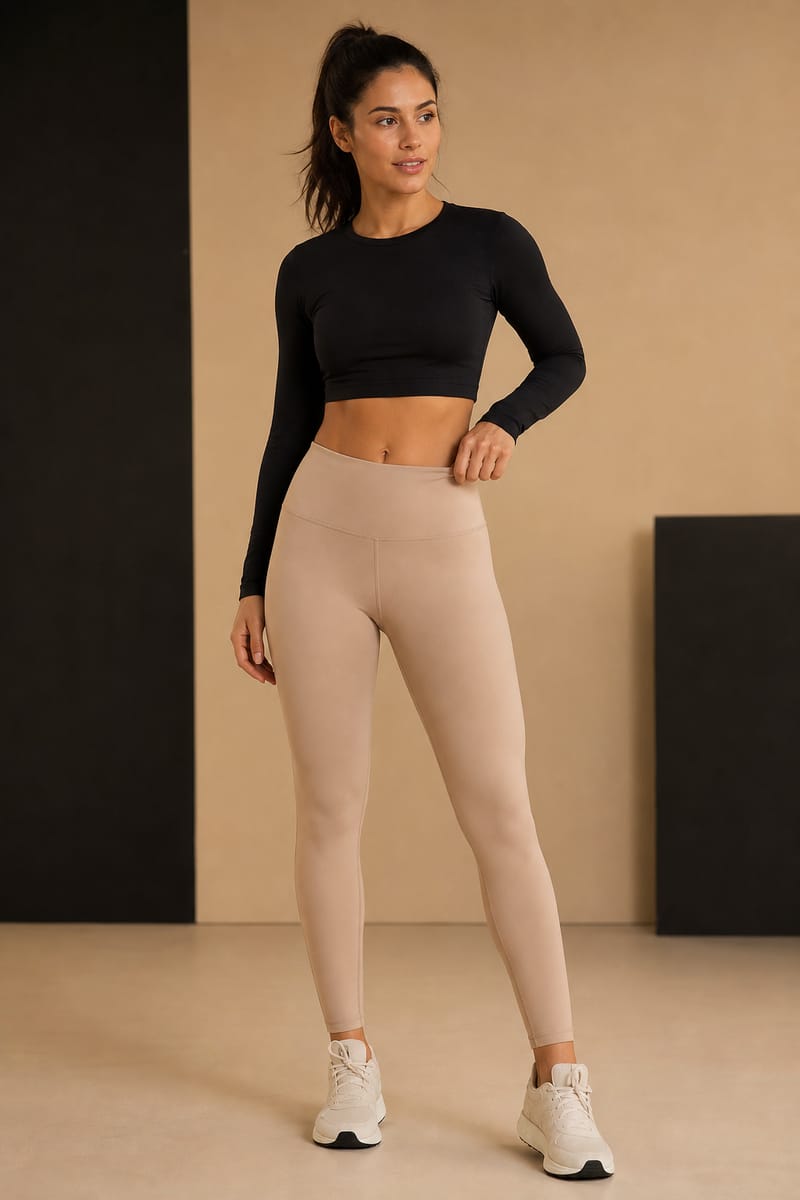
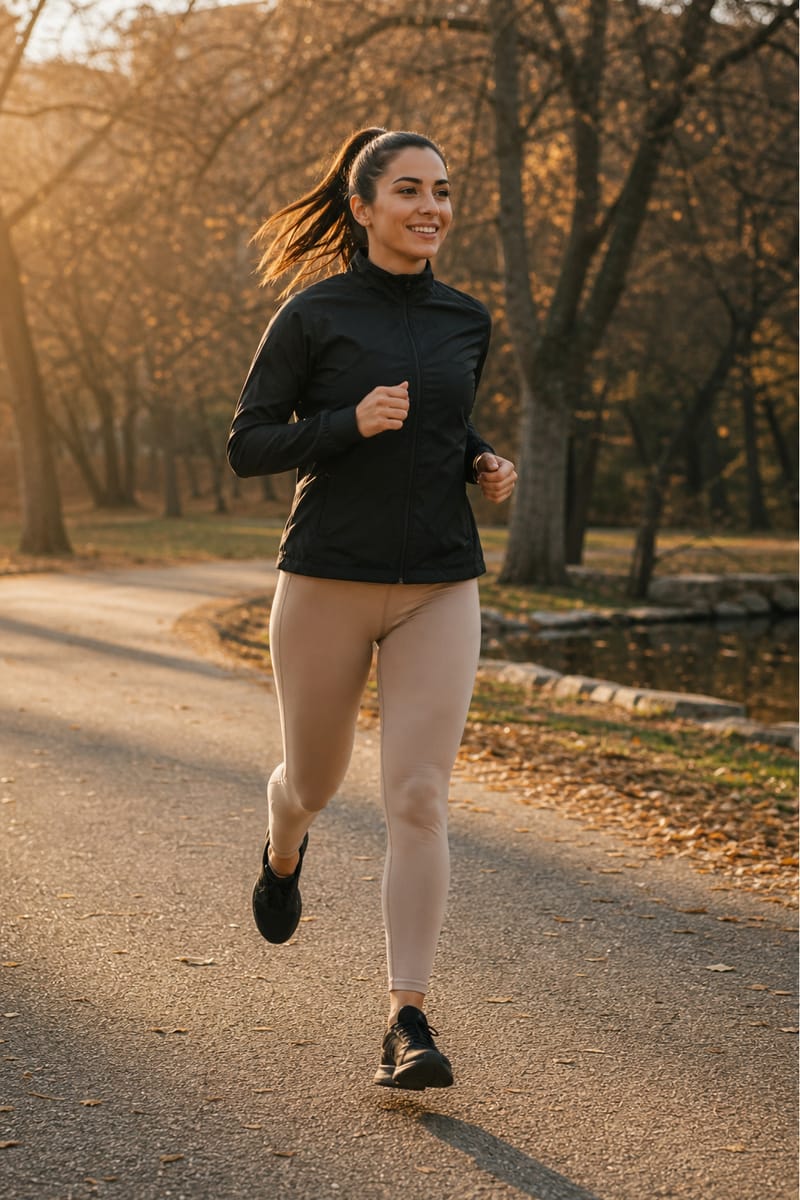
Most of the work is commercial: activewear catalogues and online stores. It is less glamorous than a big campaign, but it is what pays steadily. We compare commercial and editorial work in commercial modeling and map every kind of modeling job in types of modeling.
Fitness model requirements
Fitness modeling has no single standard like the runway, where agencies want tall models with set measurements. A few things matter almost every time.
Body: athletic, not extreme
Clients want a visibly trained body: strong shoulders and legs, upright posture, healthy skin. Muscle definition should be something you can hold all year, because shoots happen any week and a booking often arrives two or three days ahead. For activewear catalogues the sample size, usually S or M, has to fit. Our size guide converts sizes between countries.
Height and age
There are no hard limits. Activewear catalogues often prefer 168–178 cm (about 5'6"–5'10") for women and 180–190 cm (about 5'11"–6'3") for men, because samples are cut for that height. Gym, supplement and app campaigns care less about height. Age is flexible as well: fitness advertising uses people in their thirties and older, because health and sport products are sold to everyone.
Technique, movement and face
- Correct exercise technique. The movement has to look right in the frame, or the client will not use it.
- Moving for the camera. You need to repeat the same movement dozens of times, stop at the right point and keep your face relaxed.
- Stamina. A shoot day runs 8 to 10 hours with many repetitions.
- Skin, hair and nails. Activewear shows a lot of skin, so skin care matters. Tattoos are not a problem, but tell your agency about them.
- Reliability. Clients need you on time, looking like your pictures, and in the same shape on the shoot day as at the casting.
How to become a fitness model, step by step
The path is close to any model's, with athletic preparation added on top. We cover the general first steps in how to become a model.
- Take digitals. Simple pictures with no make-up and no filters: front, profile, a headshot and full length. For fitness, add a frame in fitted activewear that shows your build without posing. Our glossary entry on model digitals shows what they look like.
- Measure accurately. Height, bust or chest, waist, hips, clothing and shoe size. Agencies check, so the numbers have to be true.
- Build a starter portfolio. Six to ten strong frames are enough: studio, gym, outdoors, a portrait and some movement. See what a test shoot involves in model test shoot and how to put the pictures together in modeling portfolio.
- Choose an agency or freelance. An agency negotiates rates and usage, vets clients and sends you to castings. Freelancing means finding jobs and checking contracts yourself.
- Apply. A professional agency never charges to register. In Lithuania and the Baltics you can apply through the Supermodels open call: it is free, and the agency decides which markets and jobs suit you.
- Use social media as an extra portfolio. Sports brands like models who create their own training content. But a follower count does not replace digitals and an agency: clients still want to see you without filters.
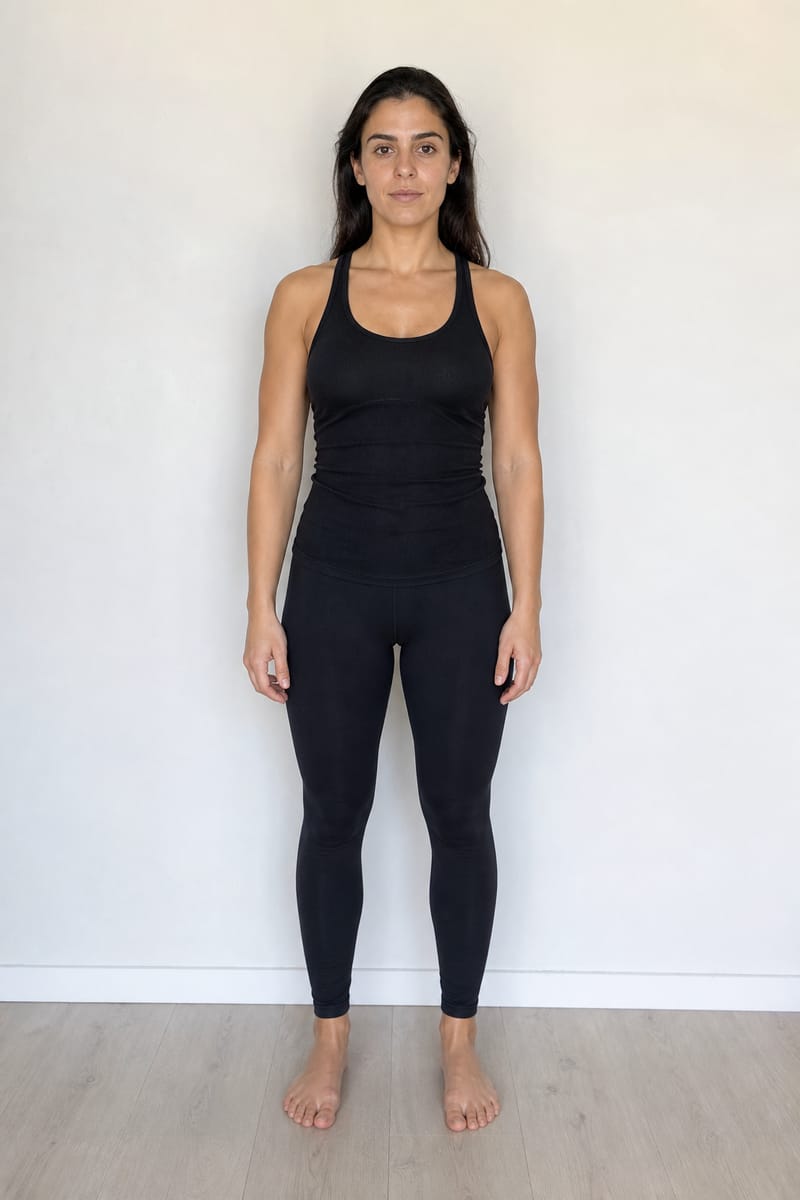
Posing basics that also work in a sports shoot are in our model poses guide. If you want to prepare with a mentor, Supermodels runs model training, and the online Supermodels Masterclass (77 €, in Lithuanian) covers agencies, contracts, castings and digitals in module one and a healthy view of the body in module four.
Training and nutrition: shape for the whole year
A fitness model's shape is a working tool, so it has to be maintained, not "reached" for one shoot. The World Health Organization recommends that adults do 150–300 minutes of moderate or 75–150 minutes of vigorous activity a week, plus muscle-strengthening work for all major muscle groups on at least two days. Models usually train more, but the principle is the same: consistency, variety and rest.
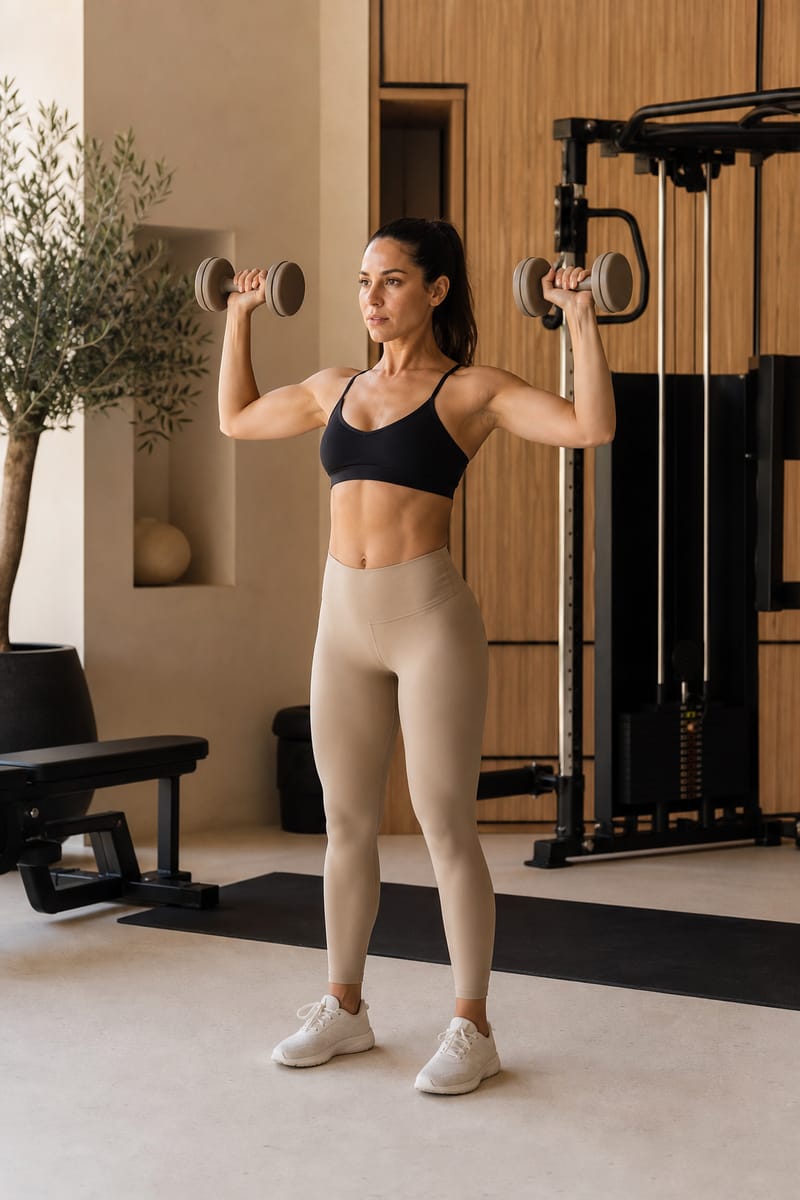
- Strength and mobility. Strength work builds the muscle, and stretching and mobility let you hit a full range of movement without strain showing on your face.
- Endurance. Running, cycling or swimming keeps your energy up through a long shoot day.
- Eating without extremes. Enough protein, vegetables, carbohydrates for training and water. Leave meal plans to a registered dietitian or a doctor, not to social media.
- Sleep and recovery. A tired face and puffy eyes show on camera more than a couple of kilos.
What not to do before a shoot. Competition culture has its "peak week": water and salt manipulation, carb restriction and "drying out". Research on physique athletes shows them dehydrated during contest preparation, and a 2020 study placed 37% of female physique athletes at risk of an eating disorder. A fitness model needs none of this: clients book a healthy person, not one day's condition. If thoughts about food and your body start to worry you, talk to a doctor or an eating disorder charity in your country (in the UK, Beat: 0808 801 0677).
How much do fitness models make
Fitness models are paid like other commercial models: by the hour or by the day, with a usage fee added for advertising. Our wider overview is how much do models make, and the structure of fees is explained in modeling rates.
| Market and job | Guide figure | Source |
|---|---|---|
| Lithuania, short shoot | €40–65 an hour for a beginner, €65–90 experienced | Lithuanian agency guide rates |
| Lithuania, full day | €260–350 for a beginner, €430 and up experienced | Lithuanian agency guide rates |
| London, e-commerce | £150–400 a day | London agency rates, 2026 |
| London, commercial advertising | £400–1,500 a day | London agency rates, 2026 |
| US, activewear shoots in casting calls | $200–1,000 a day, more for major campaigns | Project Casting listings |
In big campaigns the most important part is usage rights: how long, in which countries and in which channels the client uses the pictures. When the client wants them without limits, a buyout is paid. The agency then deducts its commission, usually around 20%, and any costs it advanced for you.
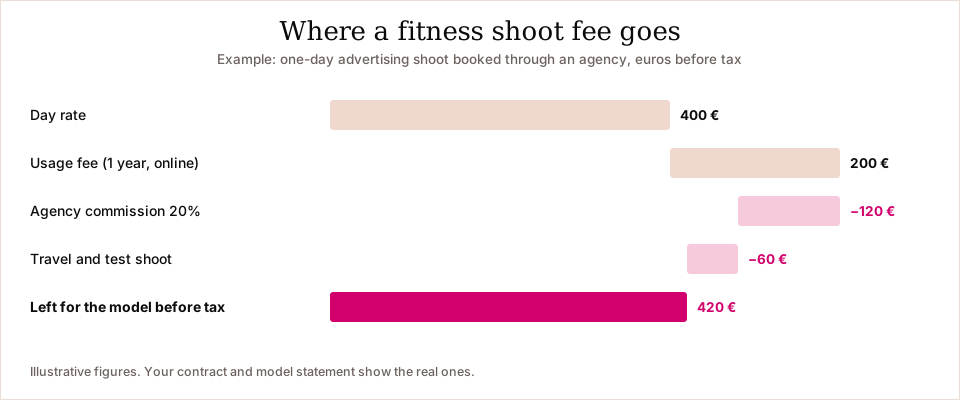
Tax depends on where you live and where you work. Our guide to model taxes explains what is withheld abroad, and before you sign anything check the points in modeling contract.
Where the work is
To be straightforward: in a small market like Lithuania, fitness modeling as a main income barely exists. Local gyms and brands often shoot their own trainers, staff or social media creators, and jobs are one-offs: a gym ad, a local activewear store, a supplement label.
So most fitness models in small markets combine it with something else: personal trainers, physiotherapists, dancers, athletes or commercial models who also take non-sport jobs. That is a healthy setup. Income does not hang on one client, and a sports background makes you more valuable on set.
Steady work is where the big activewear brands and online retailers are: London, Germany (Hamburg, Munich, Berlin), Los Angeles, New York, Miami and Sydney. Agencies there run dedicated sport or athletic boards, and you usually get there through a mother agency that places you with partners abroad. See how to choose a modeling agency and browse agencies by country in our agency directory.
A fitness photoshoot: how to prepare and pose
A sports shoot differs from a normal one: the frame has to show movement while the face stays relaxed. A few tips photographers repeat most:
- Slow the movement down. Do the exercise slower than in training and pause at the best point: the bottom of a squat, the top of a jump, the middle of a stride.
- Breathing and face. In training we clench the jaw; on camera it has to be loose. Breathe out through the movement and watch for grimaces.
- Lines. Pointed foot, lifted chest, long neck. Lines matter in a sports frame as much as in fashion.
- The garment comes first. In a catalogue the client sells the clothes, so seams, the logo and the cut must show. Ask the stylist what needs to be seen.
- Warm up. Muscles look better after a light warm-up, and an injury on set means a lost job.
- What to bring. Nude and black underwear without seams, trainers, water, a snack, hair ties and body lotion.
Male fitness models
Demand for male fitness models is smaller but steady: activewear, supplements, watches and fragrance. Men are more often given a height requirement (usually 180–190 cm, about 5'11"–6'3") because samples are cut for it, and muscle mass is judged more carefully than in competition: very broad shoulders do not fit a sample T-shirt. More on the men's path in male models.
What to avoid
- Paid "fitness model courses" that promise work. No course guarantees bookings. A professional agency registers you for free.
- Crash diets and water cutting. They harm your health and the job does not need them.
- Free work "for exposure". If a brand uses your pictures in advertising, it pays, including for usage.
- Filtered pictures. Agencies and clients want to see real skin and shape. Heavy retouching makes them distrust the rest.
- Contracts without terms. Where the pictures run, for how long, whether you can work for competitors: all of it in writing.
- Muscle for its own sake. Competition shape and modeling are different goals. If you want both, plan them separately.
FAQ
What is a fitness model?
A model who advertises activewear, gyms, supplements, workout apps and healthy living. They work with the camera all year, rather than preparing for one day on stage like physique competitors.
How do I become a fitness model with no experience?
Take simple digitals in fitted activewear, measure yourself accurately, build six to ten strong portfolio frames and apply to a professional agency, which registers you for free. Keep training consistently so your shape stays the same between casting and shoot.
Do I need to compete to become a fitness model?
No. Competing can help you pose, but clients mostly look for a healthy, athletic body you can keep all year, not stage condition.
What height do fitness models need to be?
There is no strict rule. Activewear catalogues often prefer 168–178 cm for women and 180–190 cm for men. Gym, supplement and app campaigns care less about height.
How much do fitness models make?
In London e-commerce days pay £150–400 and commercial advertising £400–1,500. US casting calls for activewear list about $200–1,000 a day. Usage fees are added for advertising, and the agency deducts its commission.
Do I need a big social media following?
No. Followers help with brand collaborations, but agencies and clients look first at your digitals, measurements, technique and reliability.
Sources
- World Health Organization, WHO guidelines on physical activity and sedentary behaviour, 2020 (150–300 minutes of moderate activity and two strength days a week).
- Whitehead J. et al., Disordered eating behaviours in female physique athletes, European Journal of Sport Science, 2020 (37% at risk, pre-competition weight control methods).
- Newmire D. E., Webb H. E., The role of age in the physiological adaptations and psychological responses in bikini-physique competitor contest preparation: a case series, Journal of the International Society of Sports Nutrition, 2021 (dehydration during contest prep, bikini judging criteria).
- The Diversity Agency (London), How Much Do UK Models Earn in 2026? Real Day Rates, June 2026 (e-commerce and commercial day rates).
- Project Casting, fitness and activewear casting calls with listed rates ($200–1,000 a day), checked October 2026.
- Lithuanian agency guide rates and Jurgita's How much do models make, 2026.
- Supermodels application terms (supermodels.lt, checked October 2026) and Jurgita's modeling glossary.

Comments (0)
No comments yet. Be the first!
Only logged-in users can comment. Register — and you'll be able to share your thoughts on this article.
Register