

In short
- A commercial model helps sell a product or service: in advertising, catalogues, online stores, on packaging, at events and on social media. It is the largest part of the modeling market, in Lithuania and abroad.
- The requirements are looser than in fashion: there is no strict height limit and people of every age work. What counts most is a natural manner, a good smile, the ability to act out a situation and to work fast.
- Pay has two parts: a day or hourly rate and a separate fee for using the pictures. In advertising, the usage fee is often several times the day rate.
- You can start with no experience: simple photos, accurate measurements and an application to a professional agency. You should never pay to register.
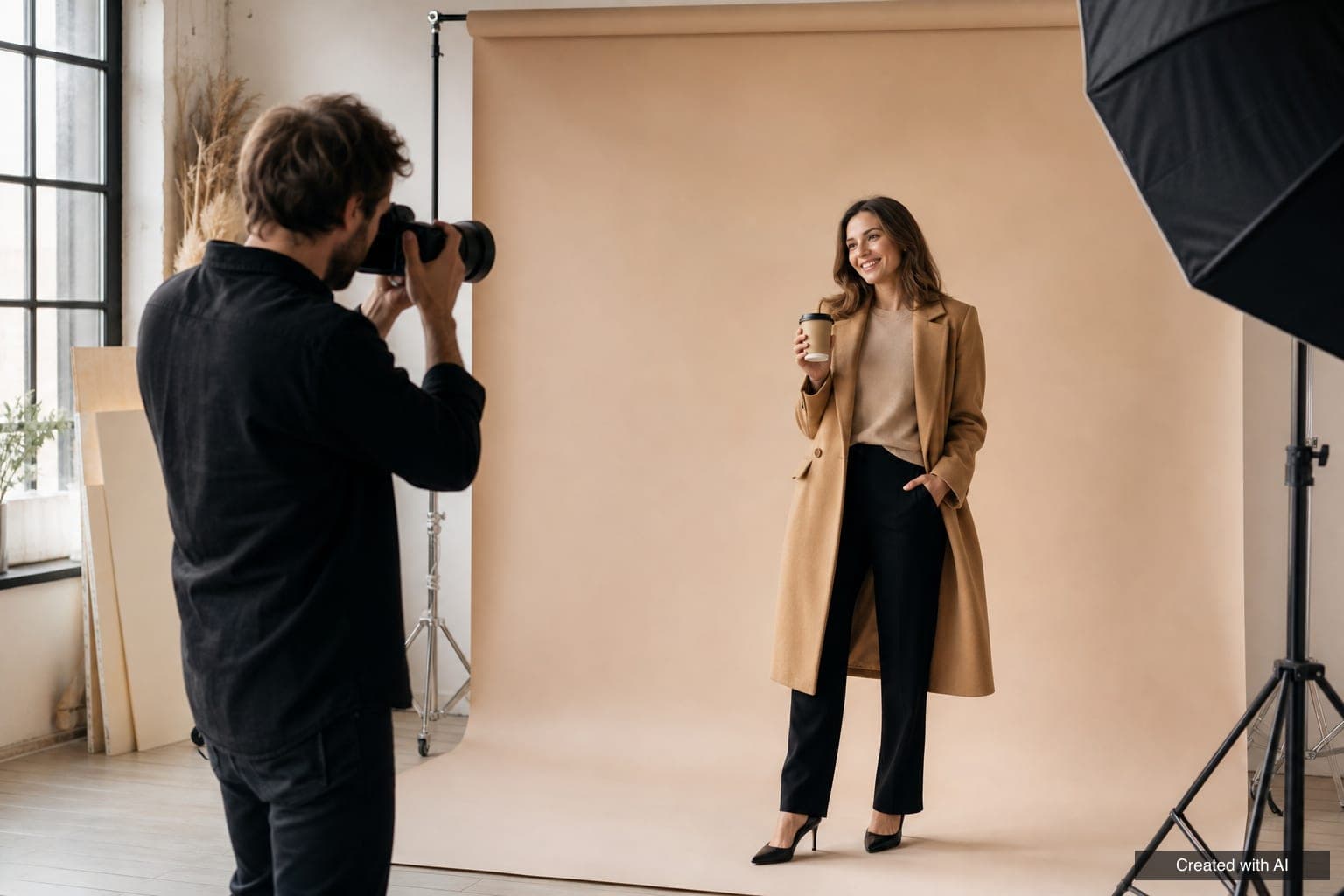
Say "model" and most people picture a Paris runway or a magazine cover. Most modeling work looks nothing like that. It is a bank advert at a bus stop, product shots in an online store, a face on a skincare box, a catalogue page, a stand at a trade fair. All of this is commercial modeling, and the person doing it is a commercial model.
This guide covers how commercial modeling differs from fashion work, the main types of commercial jobs, what clients look for, how castings and bookings run, how pay is put together and how to get started. It draws on the experience of the Supermodels agency working with clients in Lithuania and abroad. For the full map of modeling work, see our guide to the types of modeling.
What is a commercial model
A commercial model advertises products and services to a broad audience. The aim of the job is simple: the viewer should believe the person in the picture and want what they are showing. So clients are not looking for an unusual face. They want someone appealing and believable whom the buyer can relate to. There is a short definition in our modeling glossary as well.
 Model training with SupermodelsTry it in practice with an agency teamIn the model training we work on the walk, posing and working on camera, one to one or in a small group.About the trainingfrom €69
The US Bureau of Labor Statistics (BLS) describes a model's duties mostly in commercial terms: showing clothing and merchandise in print and online advertising, promoting products in TV commercials, representing companies at conventions, trade shows and events, and answering customers' questions about products. The runway is one line among many. That matches the reality of the trade: commercial work makes up most of the bookings, it runs all year, and it is what pays the bills for most models.
Fashion usually splits modeling into three directions: commercial work, editorial work (fashion stories in magazines) and the runway. One model can work in all three, but each has its own logic.
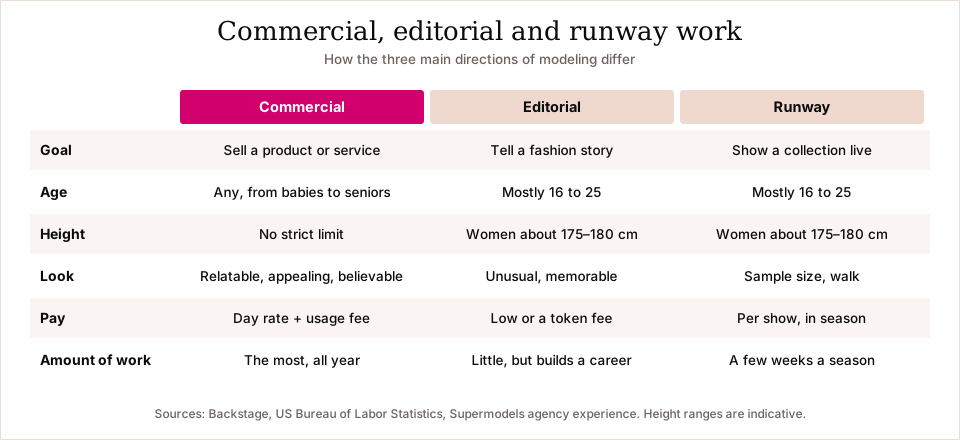
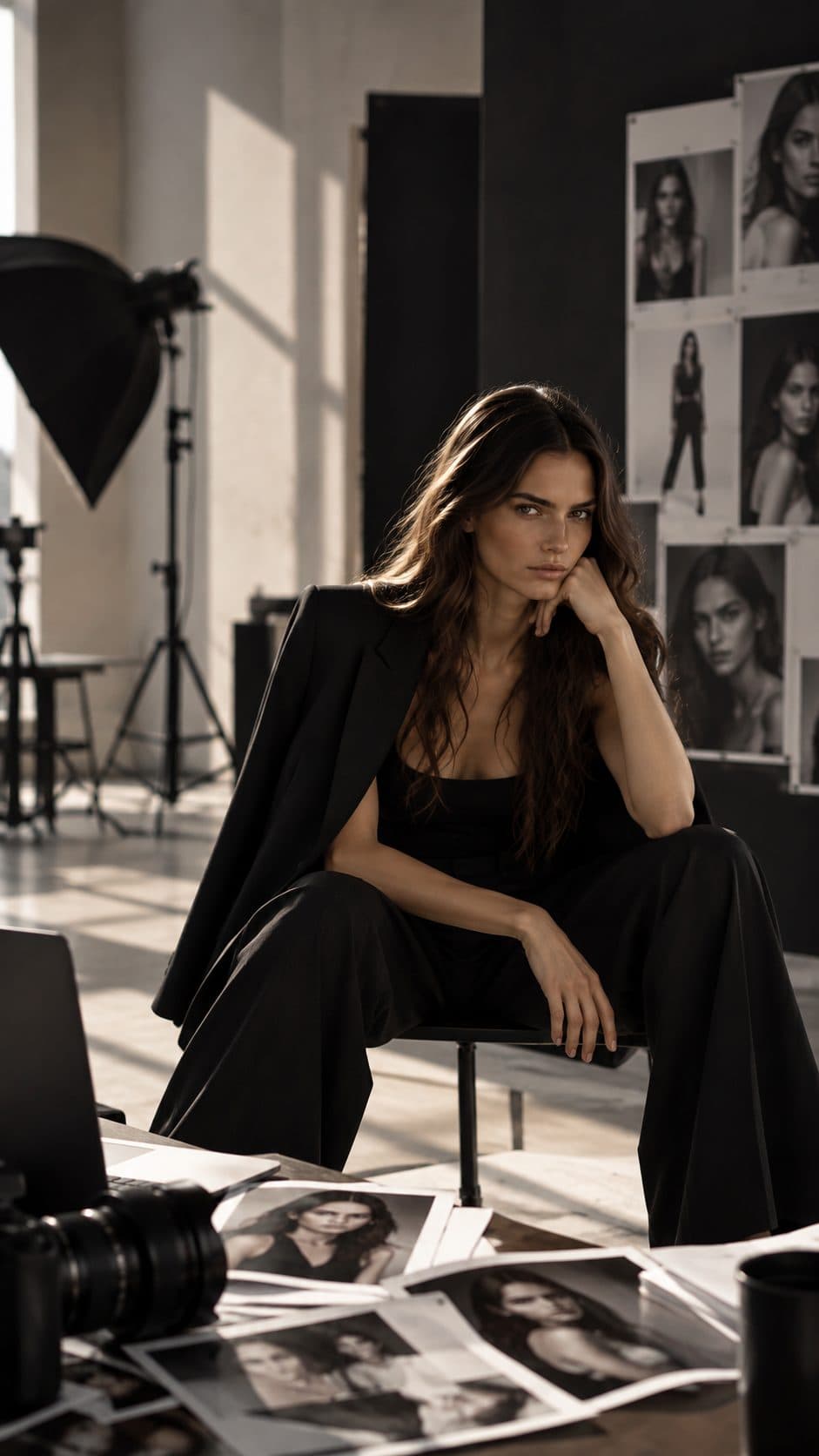
An editorial model builds an image and a name, so the look can be unusual, even divisive. A runway model has to fit the collection's sample size and walk well; see our guide to the runway model. A commercial model has to sell, which is why confidence, warmth and the ability to live inside a frame matter most.
Types of commercial modeling
Commercial work covers a wide range of jobs. Agencies often run it as a separate board, and clients look for different people for different briefs. These are the main types that models in Lithuania and abroad come across.
Print and advertising model
A print or advertising model is photographed or filmed for a specific campaign: billboards, magazine ads, online banners, TV, packaging. Campaigns often tell a small story: a family at breakfast, friends in a café, someone with a new phone. The model is both actor and salesperson.
When a brand signs a longer deal and the model's face becomes a fixed part of the brand, people call it "the face of" the brand. Such contracts almost always include exclusivity: for a set period, the model cannot advertise competitors, and the client pays extra for that. A similar role on social media is the brand ambassador.

Catalog model
A catalogue shoot covers a whole season's range: clothing, shoes, accessories, home textiles. The product has to read clearly: how the fabric falls, where the sleeve ends, what the back looks like. Poses are calm and clear and the frames look alike, so the catalogue feels consistent. Our glossary has a short entry on catalog modeling.
Printed catalogues are fewer than they were, but the same range is still shot for lookbooks, online stores and wholesale presentations. The work repeats: a client who likes a model tends to book them every season.
E-commerce model
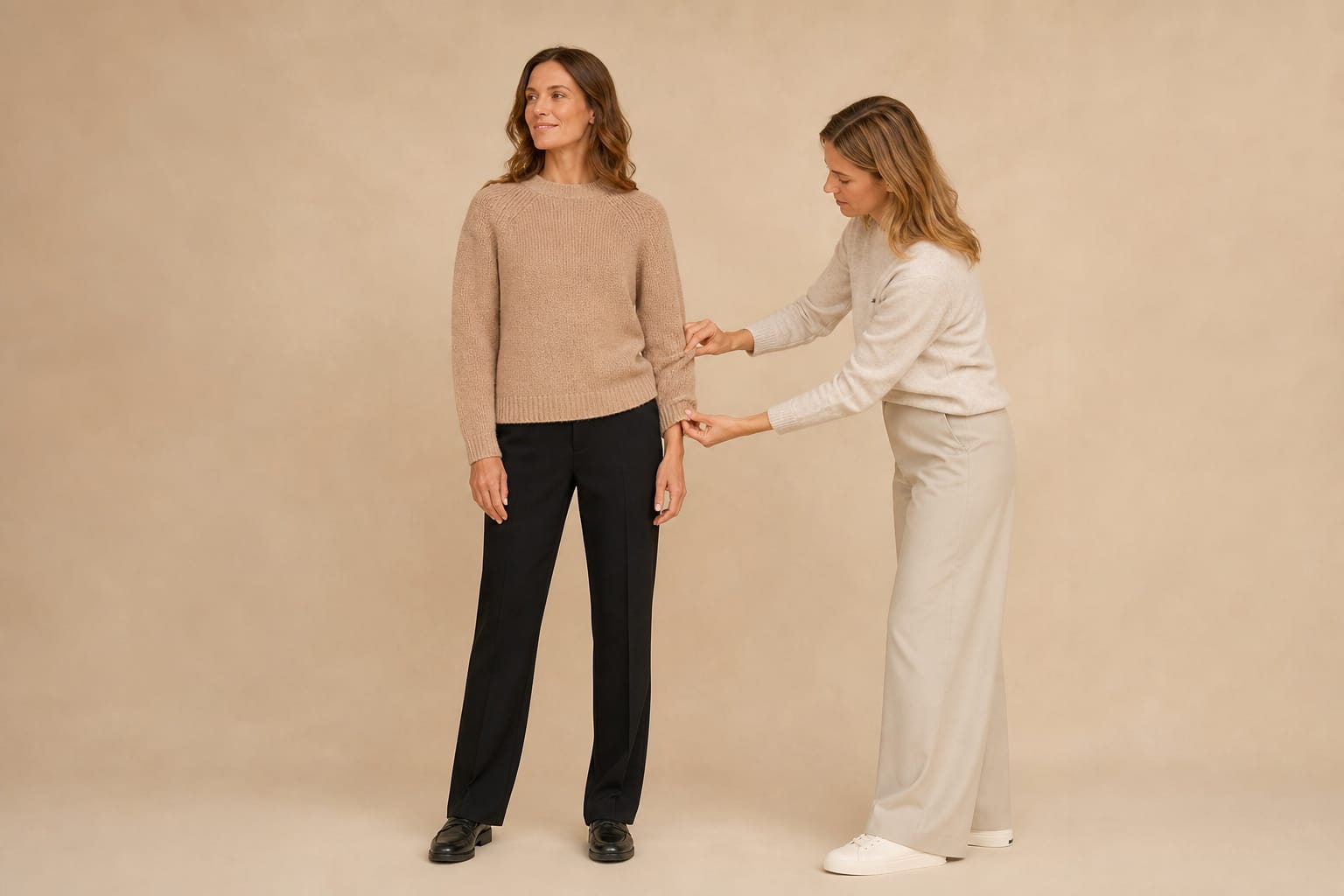
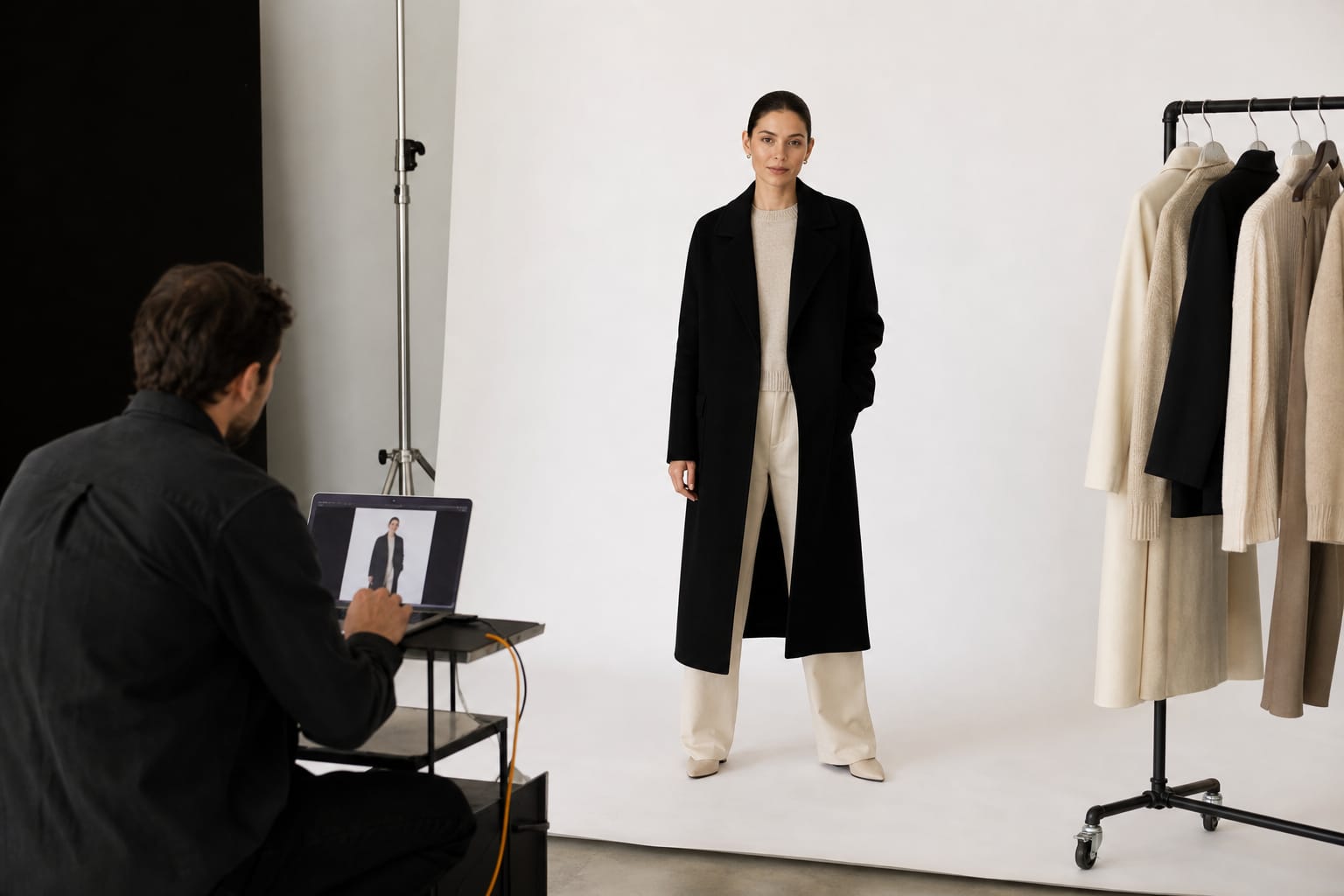
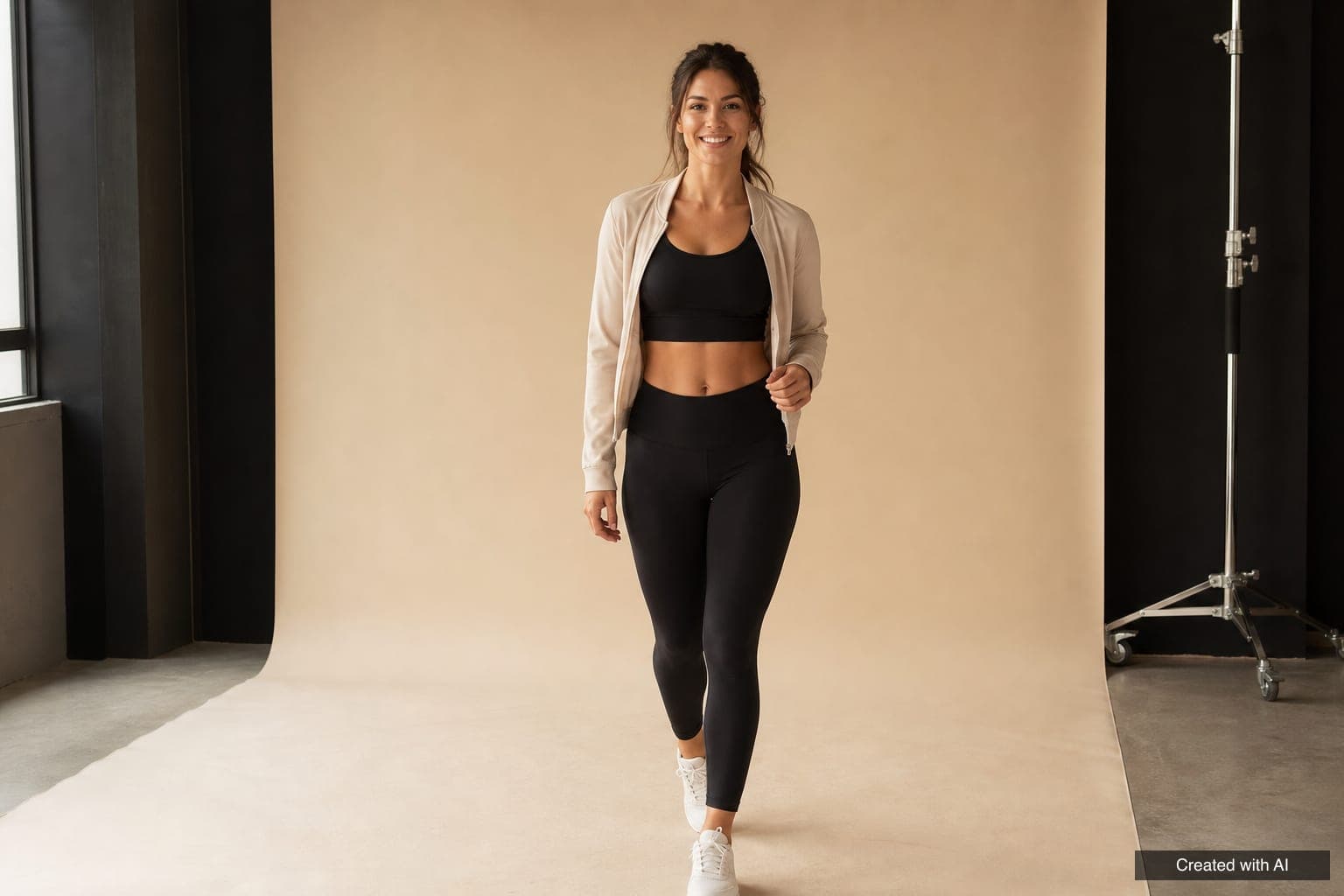
E-commerce shoots are now the most common job for fashion models. A model changes into dozens of garments a day, and each one is shot from the same angles: front, side, back, detail. The extreme case is the models who shoot for China's Taobao marketplace: China Daily reported that they present up to 150 outfits a day, with about a minute for each change.
The pace in Lithuania is calmer, but the principle is the same: change fast, hold the same expression, repeat poses precisely. Some brands shoot part of the range on a mannequin that is later removed in editing (the "ghost mannequin" method), or build images from model photos with AI. That makes it more important for a live model to show what a mannequin cannot: movement, how the garment sits on a body, a mood. The glossary entry on e-commerce modeling has more.
Lifestyle and stock model
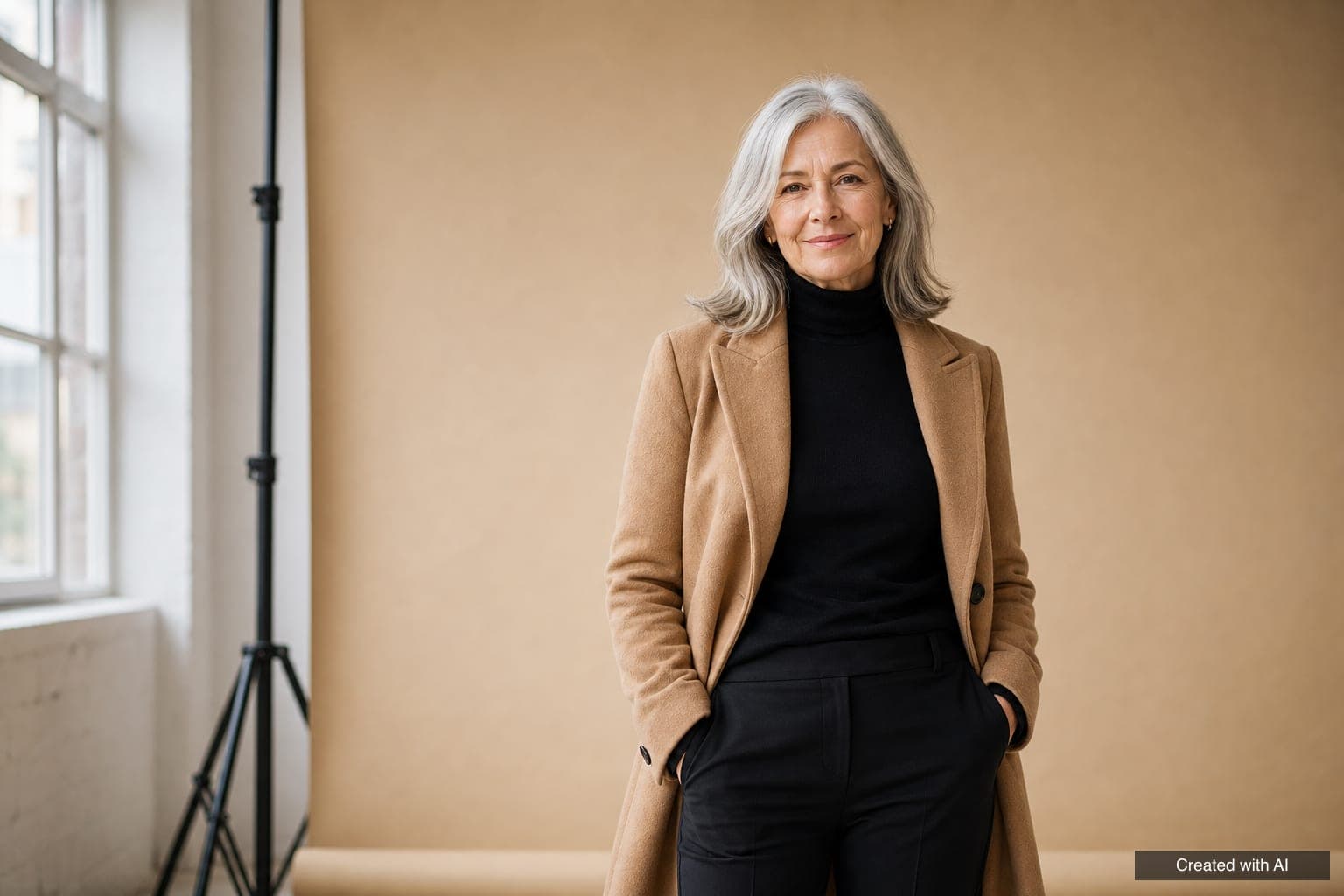
Lifestyle pictures show a situation rather than a product: a couple out running, a family in a park, colleagues in an office. Banks, insurers, telecoms and health companies commission them, and stock agencies sell them to many clients. This work needs people of every age, look and build, so it is common for older models and for beginners.
Stock pictures can be used in many ways and for a long time. Before you sign a model release, read which subjects the pictures cannot be used for (illness or politics, for example) and check that this is written down.
Beauty and hair model
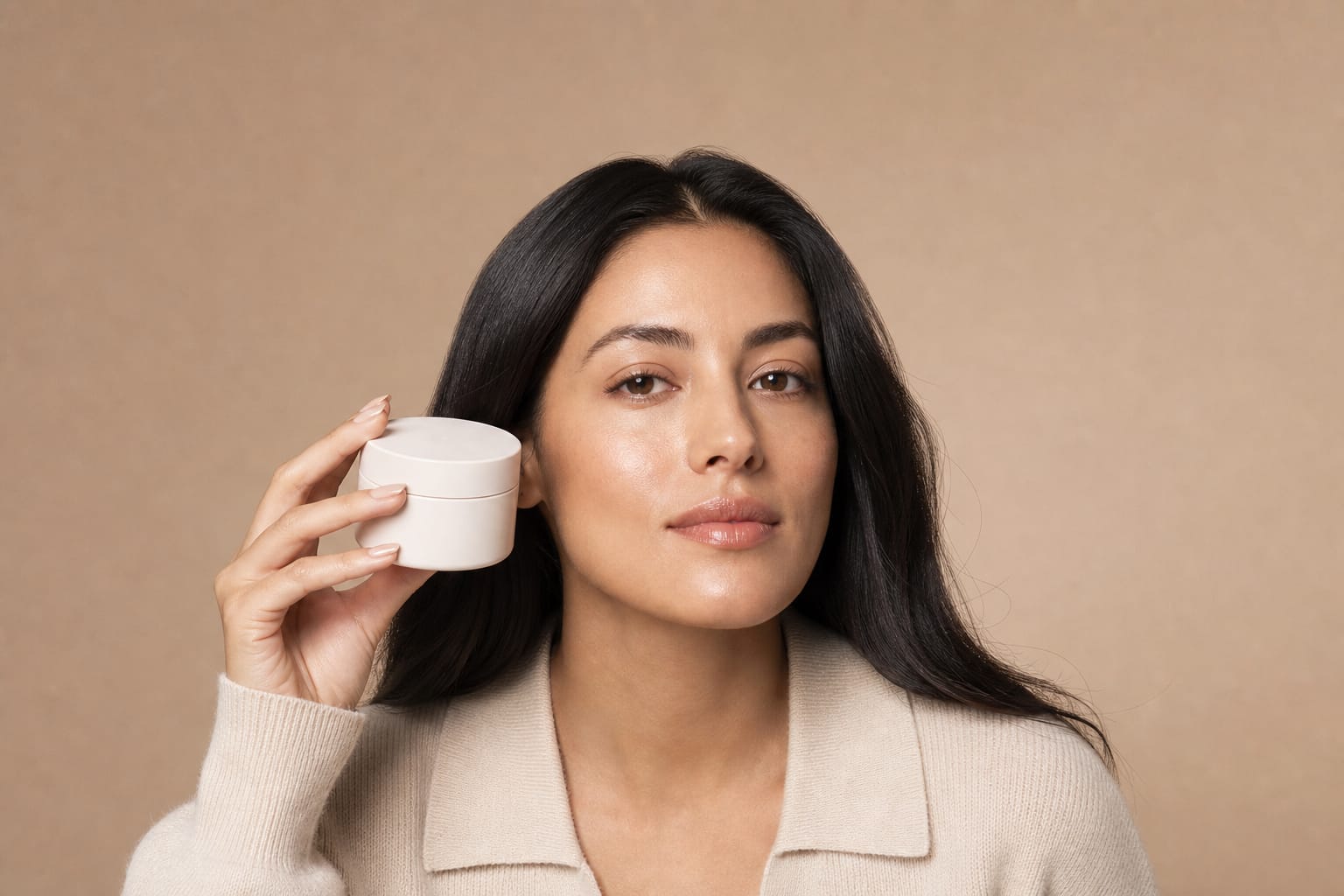
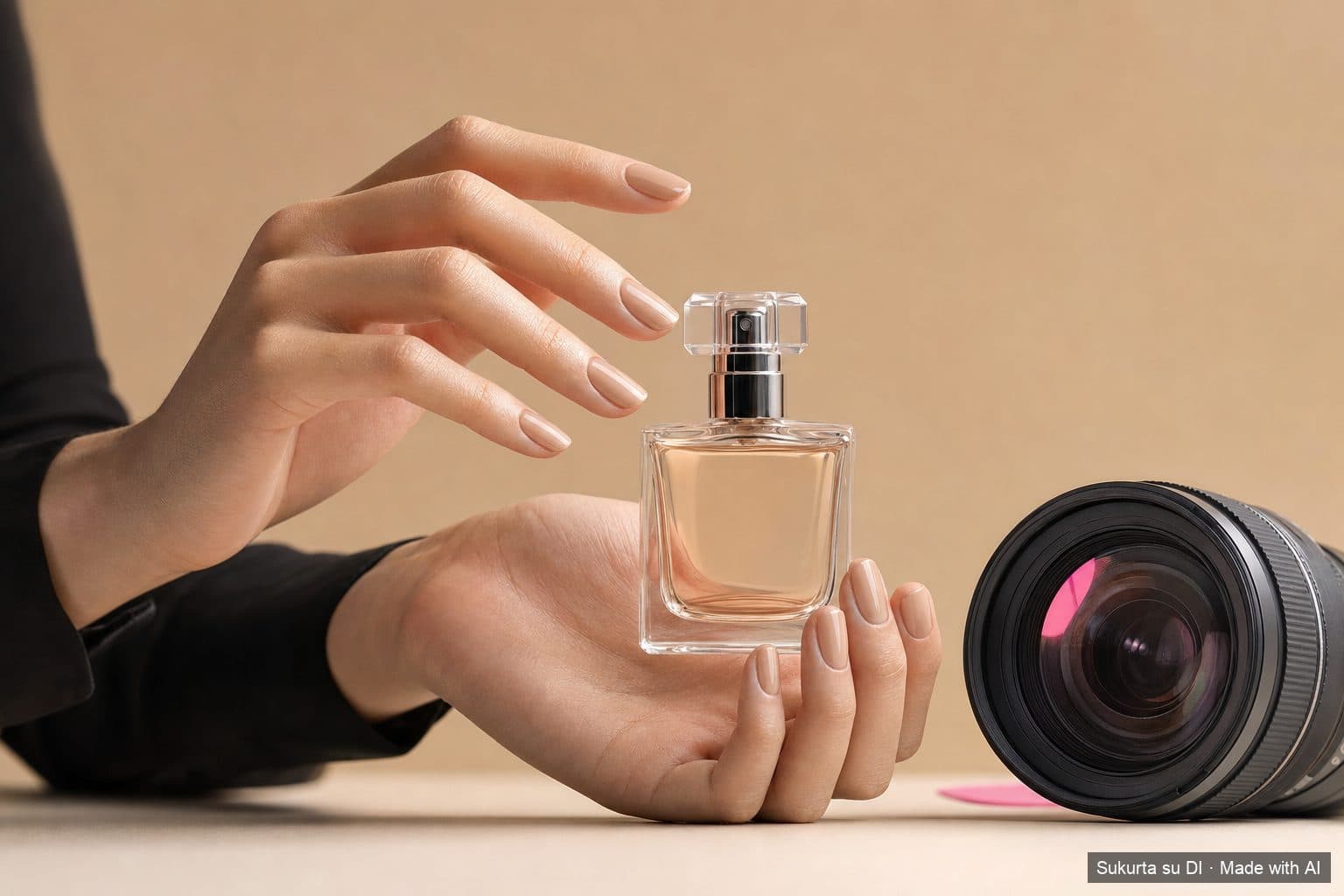
A beauty model advertises cosmetics, skincare, fragrance, glasses or jewellery. The shots are close-ups, so clear skin, good teeth, expressive eyes and healthy hair matter. Sometimes a client needs a single body part, such as hands for nail polish or rings. We cover that separately in our guide to hand models.
A hair model works with haircare brands and hairdressers. Salons and academies look for hair models for training, shows and competitions, and the model lets the stylist cut or colour their hair to a plan. Often the payment is the service itself and the pictures rather than money. Before agreeing, find out exactly what the cut or colour will be, because it will affect other bookings.
Promotional model and event host
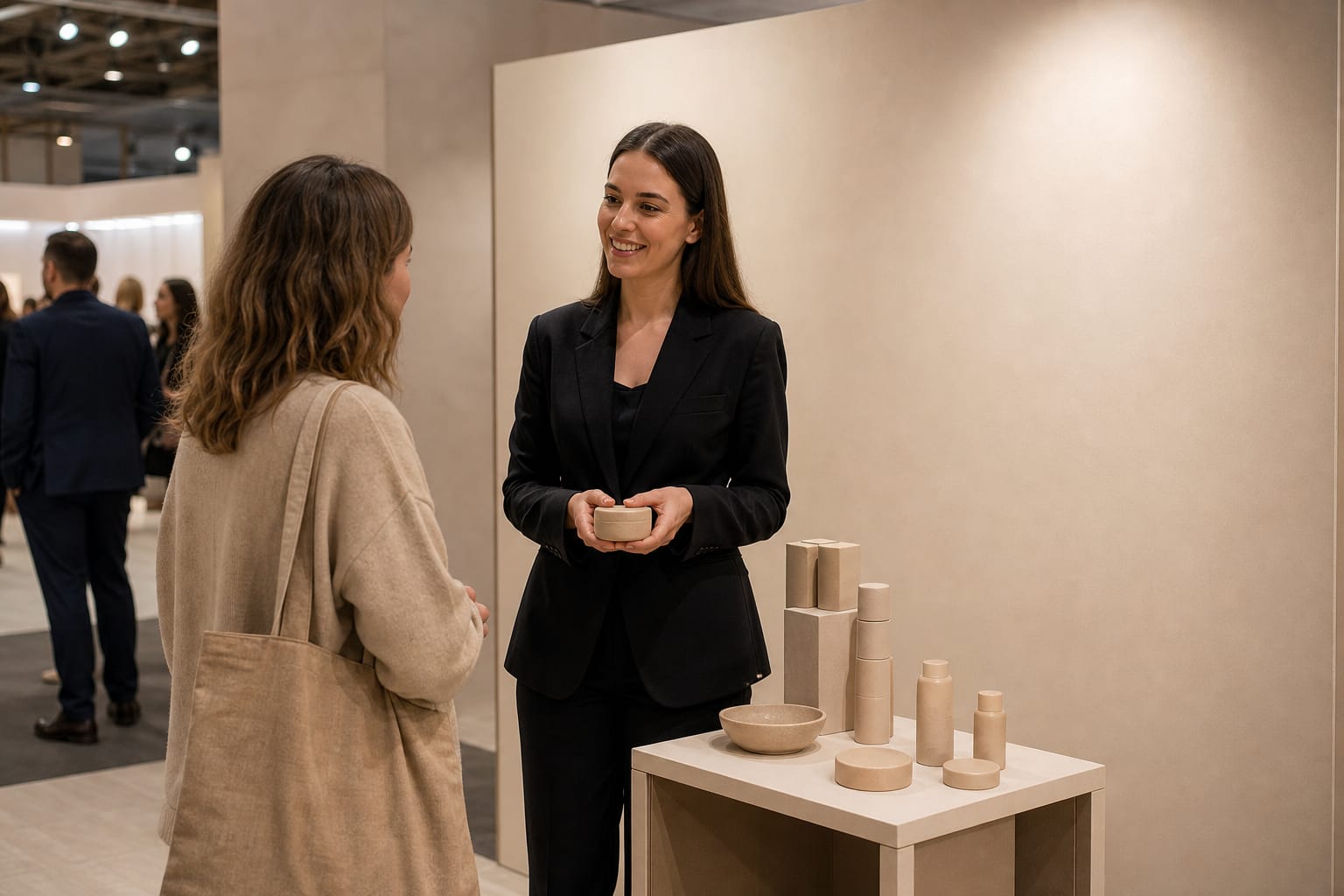
A promotional model works live: at trade shows, shopping centres, sports and music events and product launches. They present the product, hand out samples, talk to visitors and answer questions. The BLS describes this part of the job in the same way: representing companies at trade shows and events and answering customers' questions.
An event host or hostess welcomes and registers guests, shows them around and helps the organisers at conferences, award ceremonies and business events. Presentation, languages and people skills matter more than proportions. Promo work is paid by the hour, often in the evenings and at weekends, which makes it popular with students. See the glossary entry on the promotional model.
Showroom model
A showroom model works in a brand's showroom, where store buyers and wholesalers place orders for coming seasons. Through the day the model puts on garment after garment and shows them to buyers up close. The work is close to fittings, which we describe in our guide to the fit model. In Lithuania showroom work is rare; in Paris, Milan and New York it comes around every fashion week. The term is also in the glossary.
Commercial modeling requirements
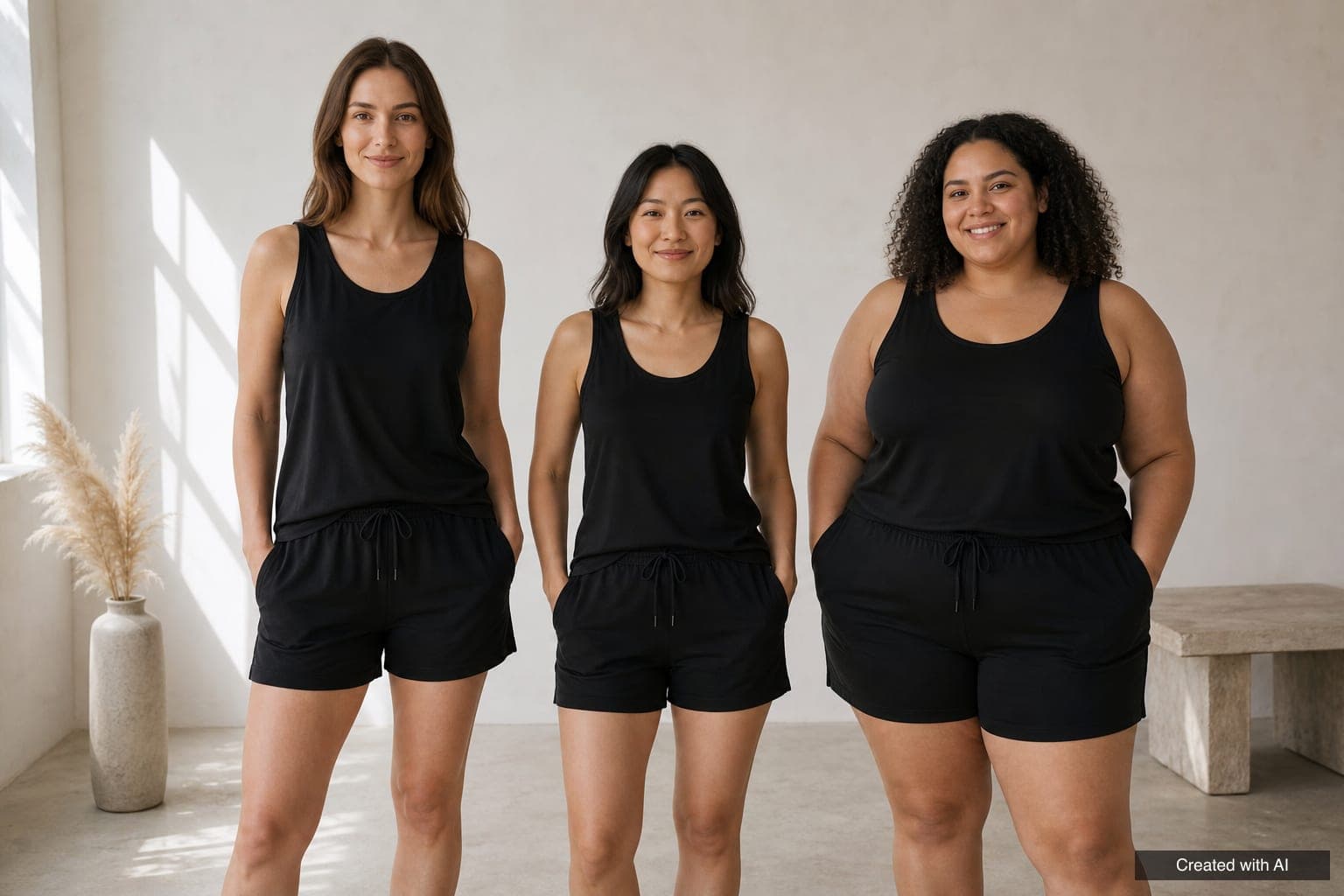
Commercial modeling is the most open part of the industry. Backstage notes that commercial work has no strict height, weight or age limits: models range from babies in nappy adverts to seniors promoting retirement plans. The client needs someone who fits their audience, not a runway model.
| What is judged | What clients expect | Good to know |
|---|---|---|
| Age | Any, depending on the audience | Family, health and finance adverts often look for people aged 30 to 60. Under-18s need a parent's consent. |
| Height | No strict limit | Height matters more in clothing catalogues and online stores, because samples are made in one size. |
| Look | Natural, appealing, believable | Smile, teeth, skin and hair. Large tattoos or an unusual hairstyle can limit bookings. |
| Skills | Acting, speed, working to camera | On a commercial shoot you may have to speak, move and repeat the same action many times. |
| Reliability | Punctuality, mood, preparation | Commercial clients come back to models who are easy to work with. |
Looks still matter, but in commercial work they are judged by whether they suit a particular product. The same woman can be wrong for a fashion magazine and ideal for a household brand or a bank. We cover the general requirements in how to become a model, and other types in our guides to the fitness model, plus size modeling and male models.
Skills a commercial model needs
Commercial work looks easy from the outside, but clients judge specific skills. Most of them can be learned.
- A natural smile and range of emotion. An advert needs dozens of smiles: light, wide, surprised, thoughtful. They have to look real on the tenth take.
- Acting without words. You show the situation: a good sip of coffee, relief, delight. It is close to an actor's work, so commercial shoots often cast actors as well.
- Handling the product. Holding a phone, a cup or a jar so that the label shows and the hands look relaxed.
- Speed and repeatable poses. E-commerce and catalogue work needs the same pose repeated exactly with every garment. Our guide to model poses covers the basics.
- People skills. Promo work and events mean talking to strangers, often in more than one language.
TV commercials have principal roles and extras (background people). Extra work pays less, but it is a good first taste of a film set. Principal roles often go to people who can act, so models and actors compete for them at the same castings.
Where to learn
The Supermodels model training in Vilnius and Kaunas covers poses, emotion on camera and working with a product. The online Supermodels Masterclass (77 €, in Lithuanian) explains agencies, contracts, castings and digitals in its first module, and the guides for participants teach posing techniques.
How castings and bookings work
Most commercial jobs come through an agency. The client or an ad agency sends a request: the kind of person they need, the shoot date, where the pictures will run and the budget. The agency suggests a few models and sends their cards and pictures.
- Submission. The client looks at the models' composite cards and books. Some jobs are booked from pictures alone.
- Casting. More often there is a casting: the model is photographed or filmed and sometimes asked to act a short scene. Our guide to model castings covers how to prepare and what to wear.
- Option. The client puts a provisional hold on the model for the date. This is an option: until it is confirmed, any other work on that date has to be cleared with the agency.
- Confirmation. The client confirms the booking, and the agency agrees the fee, the usage and the working hours.
- The shoot. The model gets a call sheet with the call time, address and what to bring. There is often a fitting beforehand.
- Payment. The client pays the agency and the agency pays the model after taking its commission. Our guide to how models get paid shows how this appears on a statement.
Freelance models may also get direct requests, especially through social media. In that case you negotiate every term yourself and must get it in writing. Our guide to the modeling contract lists what to check.
Commercial model pay
A commercial fee has two parts: payment for the working time and payment for using the pictures or footage. The second part is what makes commercial work the best paid kind of modeling.
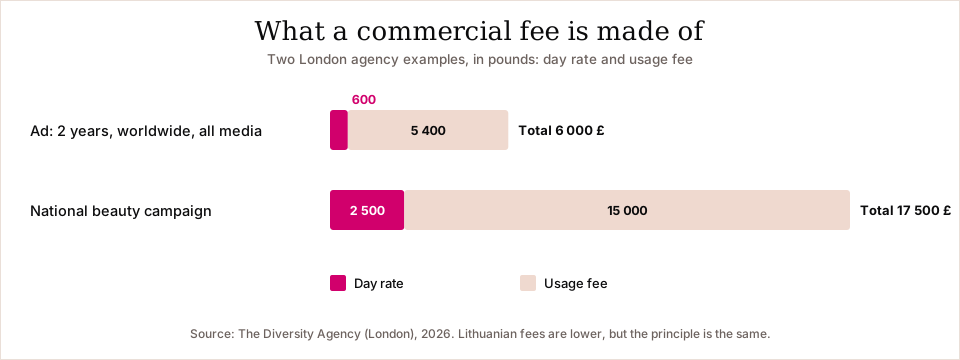
In Lithuania, published guide rates are 40–90 € an hour, 175–260 € for half a day and 260–430 € or more for a full day. That is the time fee. If the pictures run in advertising, on billboards or on TV, a usage fee is added and agreed job by job. According to a London agency, an e-commerce day pays 150–400 £, commercial advertising 400–1 500 £ a day, and beauty and luxury campaigns 500–3 000 £ or more.
The BLS reports a median hourly wage of 23.30 $ for models in May 2025; the lowest 10 % earned less than 16.44 $ and the highest 10 % more than 63.21 $. Many models work part time, and the amount of work is unpredictable.
Three things set the price of usage: territory (one country or the world), media (a website or TV and outdoor) and term (a few months or several years). Unlimited use is called a buyout; the glossary entry on usage rights explains more. Full rate tables are in our guide to modeling rates, and what is left after commission and tax is in how much models make and model taxes.
"The pictures will be used everywhere"
Do not agree to unlimited use for a day rate. If the client wants TV, outdoor or several countries, that is a separate fee. If the agreed term has ended and the advert is still up, that is grounds for further payment.
Commercial work in Lithuania and abroad
Almost all modeling work in Lithuania is commercial. There are no major fashion weeks or big fashion houses here, so models work for local clothing brands' online stores and lookbooks, beauty salons, cosmetics and food brands, banks, telecoms, property developers, events and trade fairs. A lot of work is made for social media, where pictures and short videos are replaced often.
| Work | In Lithuania | In the major markets |
|---|---|---|
| E-commerce and lookbooks | The most common clothing job | Daily work in London, Hamburg, Milan, New York |
| Advertising campaigns | Local brands, banks, telecoms | International brands, larger usage fees |
| Catalogues | Fewer, often merged with e-commerce | Large retailers, regular clients |
| Beauty advertising | Salons, local cosmetics | International beauty brands |
| Promo and event hosts | Trade fairs, conferences, shopping centres | Large expos and sports events |
| Showroom | Rare | During fashion weeks and sales seasons |
| Parts models | Occasional jobs | Specialist agencies and boards |
Abroad, commercial work pays several times more, but competition is tougher. E-commerce studios in Germany and clients in London and Scandinavia often book Baltic models through their mother agency. For working in Asia, see our guide to modeling in China.
How to become a commercial model: 6 steps
- Work out where you fit. Look at adverts where you can see yourself: family, sport, beauty, fashion, business. It helps the agency understand your type.
- Take simple photos. Face from the front, profile and full length, with no filters and little make-up, smiling and serious. These are called digitals.
- Measure yourself. Height, bust, waist and hips, clothing and shoe size. Commercial clients need samples to fit without a tailor.
- Apply to a professional agency. You can apply to Supermodels online for free; the Supermodels open call page explains how it works and what happens next.
- Build a portfolio. The agency will help set up test shoots. See our guides to the modeling portfolio and the model test shoot.
- Keep learning and stay reachable. Commercial bookings often need confirming within hours. Posing, emotion on camera and fast replies to your agent decide whether you get booked again.
Is commercial work right for you
Many beginners want to be fashion models when their look and personality suit commercial work better. That is not a lesser path: commercial careers often last longer, because clients need people of every age.
Commercial work suits you if
You smile and talk easily, feel at home on camera, fall outside fashion height limits or are over 25, want to work in Lithuania alongside studies or another job, and can get to a shoot at short notice.
Consider fashion work if
You are 16 to 23, meet runway height and measurements, have an unusual and memorable look, and are ready for longer stays with agencies abroad. See our guide to the runway model.
Many models do both: more fashion when young, more commercial work later. Your agency helps decide which clients to target. The overview of every type, with links, is in types of modeling.
What to avoid
- Paying to register. A professional agency earns commission, not fees from models. Learn to spot modeling scams and read how to choose a modeling agency.
- Working "for exposure". If the pictures will help someone sell a product or service, it is commercial work and must be paid. TFP (time for prints) is fine for a portfolio, not for advertising.
- Vague usage terms. Before the job, know the fee, the hours, the media, the territory and the term. A spoken "we'll sort it out" usually ends in a dispute.
- Unpaid exclusivity. If the client stops you working for competitors, they pay for it.
- Digital replicas without consent. Some clients want to build a digital replica of a model from pictures. That needs separate written consent stating the scope, purpose, fee and duration.
- Minors working without parents. Under 18, parents sign the contract and working hours are limited.
Frequently asked questions
What is a commercial model?
A model who advertises products and services to a broad audience: in adverts, catalogues, online stores, on packaging and at events. Clients care most that the person is believable and suits their audience.
What is the difference between commercial and fashion modeling?
Fashion models work on runways and in magazine fashion stories, where height, age and measurement limits are strict. Commercial models sell a product, so they can be any age or height, and what matters most is a natural manner and emotion.
Can you be a commercial model if you are short?
Yes. Commercial work has no strict height limit. Height matters more in clothing catalogues, but for advertising, beauty and lifestyle work it often does not. See our guide to petite modeling.
How much do commercial models make?
In Lithuania, guide rates are 40–90 € an hour and 260–430 € or more for a full day. In London a commercial advertising day pays 400–1 500 £. In advertising a usage fee is added, set by media, territory and term, and it often exceeds the day rate several times.
What is a promotional model?
A model who presents a product live at trade shows, shopping centres and events, talking to visitors and answering questions. Event hosts welcome and guide guests at conferences. Both are paid by the hour, and people skills matter most.
Do you have to pay an agency to get commercial work?
No. A professional agency earns commission on jobs you do. Being asked to pay for registration or compulsory courses before any work is a serious warning sign. Training is a separate service you choose for yourself.
Sources
- US Bureau of Labor Statistics, Occupational Outlook Handbook: Models (duties, median and decile hourly wages for May 2025, working conditions), updated August 2026.
- Backstage, Requirements to Becoming a Model (commercial and fashion modeling requirements).
- The Diversity Agency (London), How Much Do UK Models Earn in 2026? Real Day Rates, 2026 (day rates by type of work and usage examples).
- Refinery29, Chinese Models Have Posing Down To A Science, 2017, citing China Daily, 4 November 2014, on Taobao models.
- New York State Senate, Fashion Workers Act (S9832): consent for digital replicas.
- Experience of the Supermodels agency arranging commercial work with clients in Lithuania and abroad; Jurgita modeling glossary and modeling rates guide, checked October 2026.

Comments (0)
No comments yet. Be the first!
Only logged-in users can comment. Register — and you'll be able to share your thoughts on this article.
Register