

In short
- A photo model works in front of the camera: e-commerce, catalogues, beauty and advertising campaigns, magazines. A runway model presents collections live at fashion shows. Many models do both.
- Height requirements for photo work are more flexible than for the runway. Fashion e-commerce and catalogues still need you to fit the sample size, while beauty and advertising care more about face, skin and look.
- You don't need a professional shoot to start. An agency needs simple digitals, accurate measurements and a meeting. It helps you build a portfolio through test shoots.
- You never pay for sign-up, a "place at the agency" or a mandatory photographer. A real agency earns commission on the work it books for you.
People often use "photo model" as a catch-all word for any model. In the industry it means a specific job: posing for pictures that end up in an online store, a catalogue, on a cosmetics box, a billboard or a magazine page. It is the largest share of modeling work, in Lithuania and in the big markets alike.
This guide explains how a photo model differs from runway and commercial models, what requirements to expect, which kinds of shoots exist, what test shoots, portfolios and digitals are, how the work is paid and how to get started without falling for a scam. It draws on the experience of the Supermodels agency in Lithuania. For the whole map of modeling work, see our guide to types of modeling.
What is a photo model
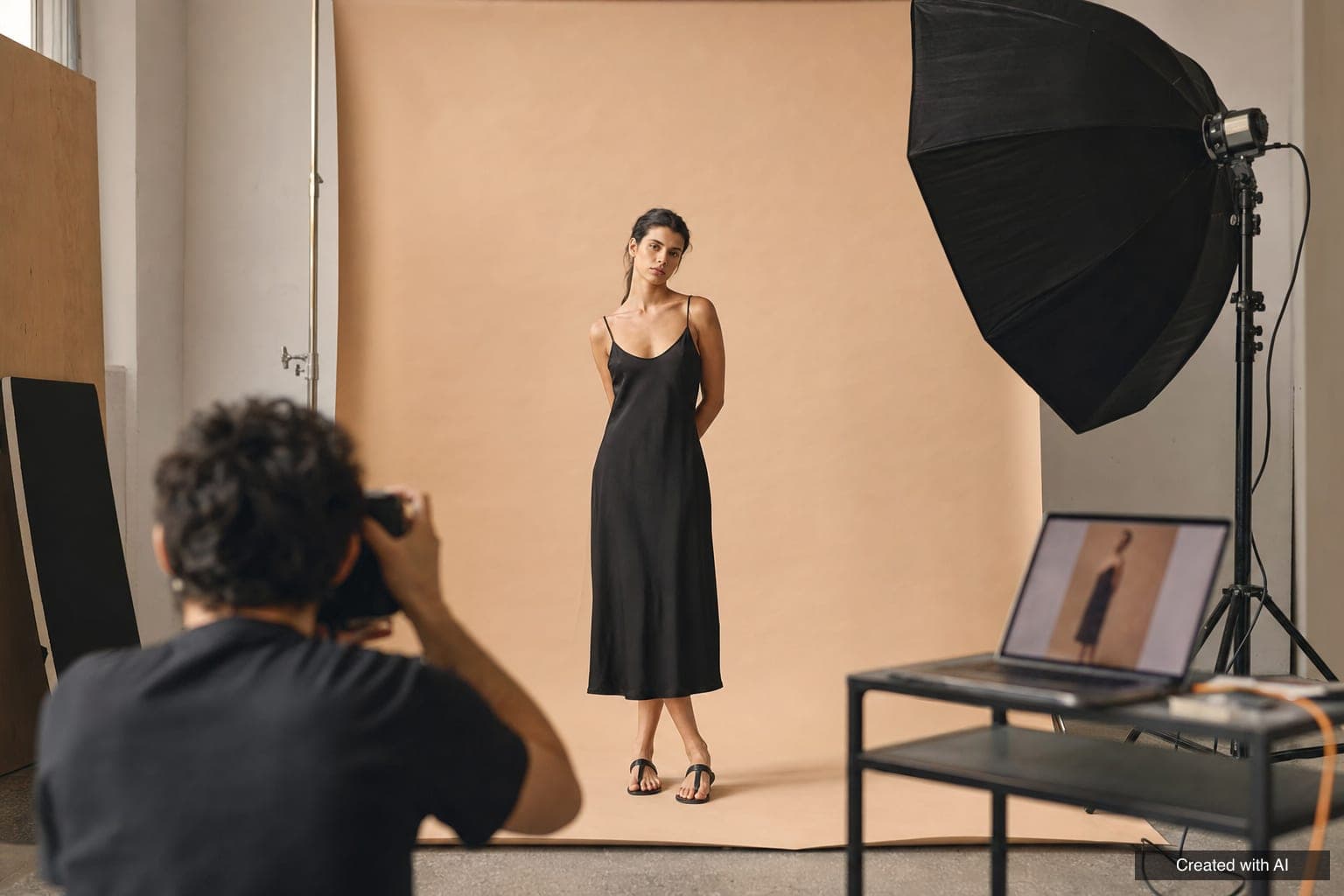
A photo model poses for a photographer so that a picture shows a product, an idea or a mood. The closest industry terms are print model (print and online advertising) and photographic model. The result of the work is always images: a series of frames from which the client picks a few or a few dozen.
 Model training with SupermodelsTry it in practice with an agency teamIn the model training we work on the walk, posing and working on camera, one to one or in a small group.About the trainingfrom €69
The US Bureau of Labor Statistics (BLS) describes the job in exactly these terms: posing for photos and film, showing clothing and products in print and online advertising, working with photographers, stylists and make-up artists, and changing poses and expressions on direction. That is the everyday work of a photo model. The runway is only one item on the list.
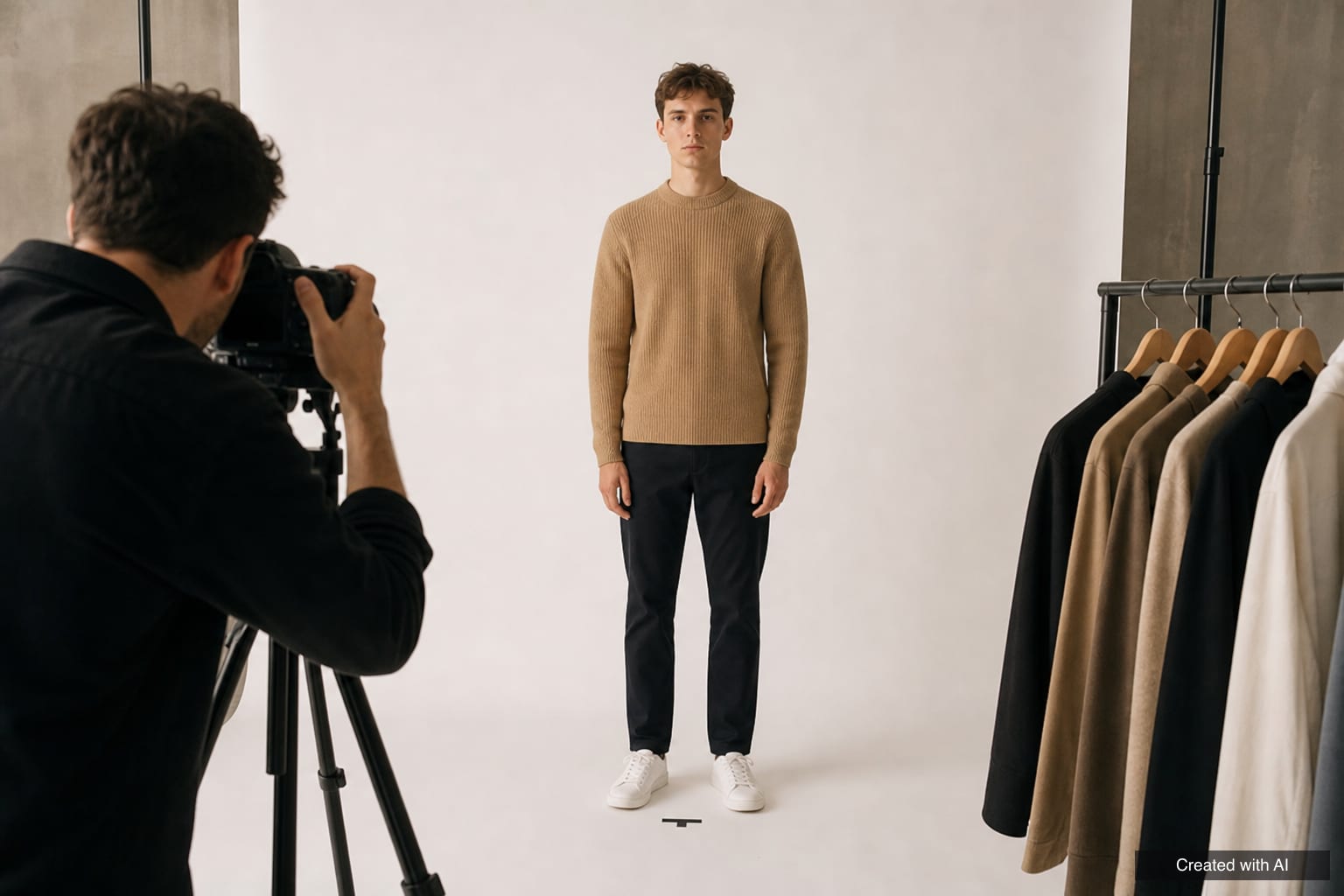
It also helps to know what photo modeling is not. Professional work is not a "personal photo session" the model pays for, and it is not posing for a photographer who promises to make you famous. A photo model works for a client, and the client pays for the work. The exception is test shoots, covered below.
Photo model vs runway model vs commercial model
These terms get mixed up because one person can do all three. The difference lies in the work itself: where the image is shown and what the model is expected to deliver.
| Photo model | Runway model | Commercial model | |
|---|---|---|---|
| Where | Studios and locations | Fashion shows, fittings | Advertising, events, filming |
| Result | Pictures | A live presentation of a collection | Pictures, video, live work |
| Height | Depends on the job | Strict requirements | No strict limit |
| What matters most | Photogenic look, poses, expression | Proportions, walk | Natural manner, emotion |
| Amount of work | Plenty, all year | Concentrated around fashion weeks | The largest share of the market |
A runway model has to fit the collection's sample size and know how to walk; see our guide to the runway model. A commercial model sells a product or service and can be any age; see commercial modeling. A photo model sits between the two: in fashion photography the requirements are close to the runway, in advertising and beauty photography they are close to commercial work.
Supermodels makes the same point in its own article on photo models and runway models: photography is more forgiving than the catwalk, so shorter people or people with a different build can work in front of the camera.
Photo model requirements: height, age and looks
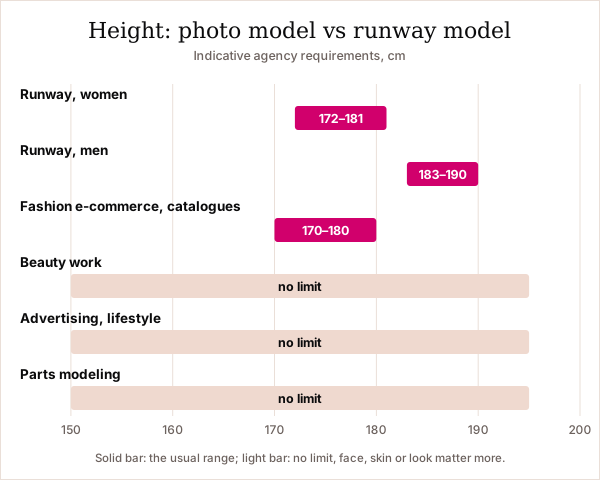
There is no single height limit for photo models. It depends on what is being shot. When clothes are photographed, height matters because brands make samples in one size and want them to fit without alterations. When the subject is a face, hands or a situation, height hardly matters.
| What is assessed | Fashion photography | Advertising and beauty photography |
|---|---|---|
| Height | Usually 170–180 cm for women, 183–190 cm for men | No strict limit |
| Measurements | Must fit the sample size | Must suit the product and audience |
| Age | Most start at 15–20 | Any, from children to seniors |
| Skin, hair, teeth | Important | Crucial for beauty work |
| Look | Memorable, sometimes unusual | Natural, attractive, believable |
Height is not the only criterion. An agency looks at how a person reads in a photo, whether the face holds a close-up, whether the skin is clear and the body proportionate. Shorter people often find beauty, hand and commercial work; see petite modeling and hand models. For a general overview, read how to become a model.
Supermodels has no separate photo model division: the agency looks for models who can work in fashion photography and on the runway in Lithuania and abroad. The current age and height ranges for its open call are in the Supermodels open call.
Photography or runway: choosing a direction
Photo work suits you if
You feel at ease on camera, pick up direction quickly, don't mind repeating the same pose dozens of times, have flexible daytime hours, and are not the tallest but your face, skin or hair stand out.
Consider the runway if
You are 15–22, meet fashion height and measurements, move well and are ready to travel to agencies abroad. See runway model and how to walk like a model.
Most models do both: more fashion and runway when young, more commercial photography later. The full overview is in types of modeling.
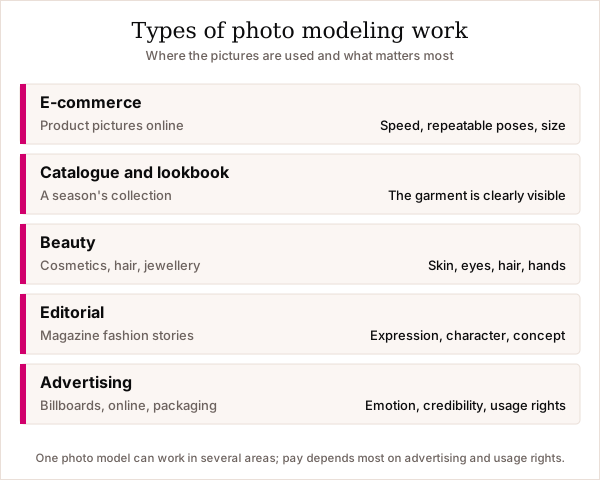
Types of photo modeling work
Photo modeling jobs differ by where the pictures will be used. That decides who the client is looking for, how long the shoot runs and what it pays.
E-commerce shoots
E-commerce is the most common photo modeling job. Over a day the model changes into dozens of outfits, and each one is shot from the same angles: front, side, back, detail. Poses have to be repeated precisely so every product page looks consistent. Speed, patience and fitting the clothes without pins are what count. See the glossary entry on e-commerce modeling.
Catalogue and lookbook
A catalogue shoot covers a season's collection: clothing, shoes, accessories. A lookbook is a shorter, moodier presentation for buyers and press. In both, the garment has to be clearly visible and the poses calm. Brands often rebook a model they like every season. More in the glossary: catalog modeling and lookbook.
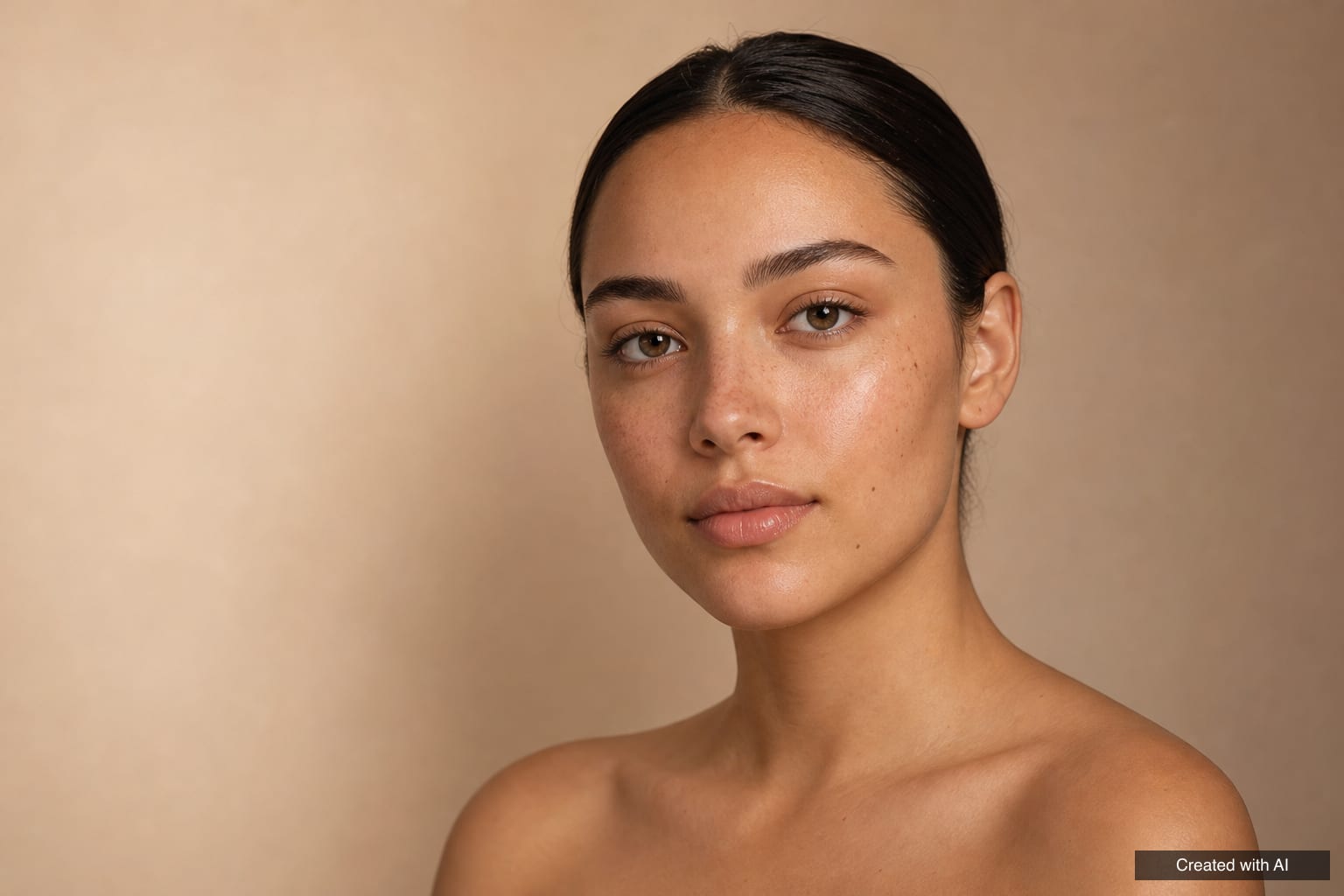
Beauty shoots
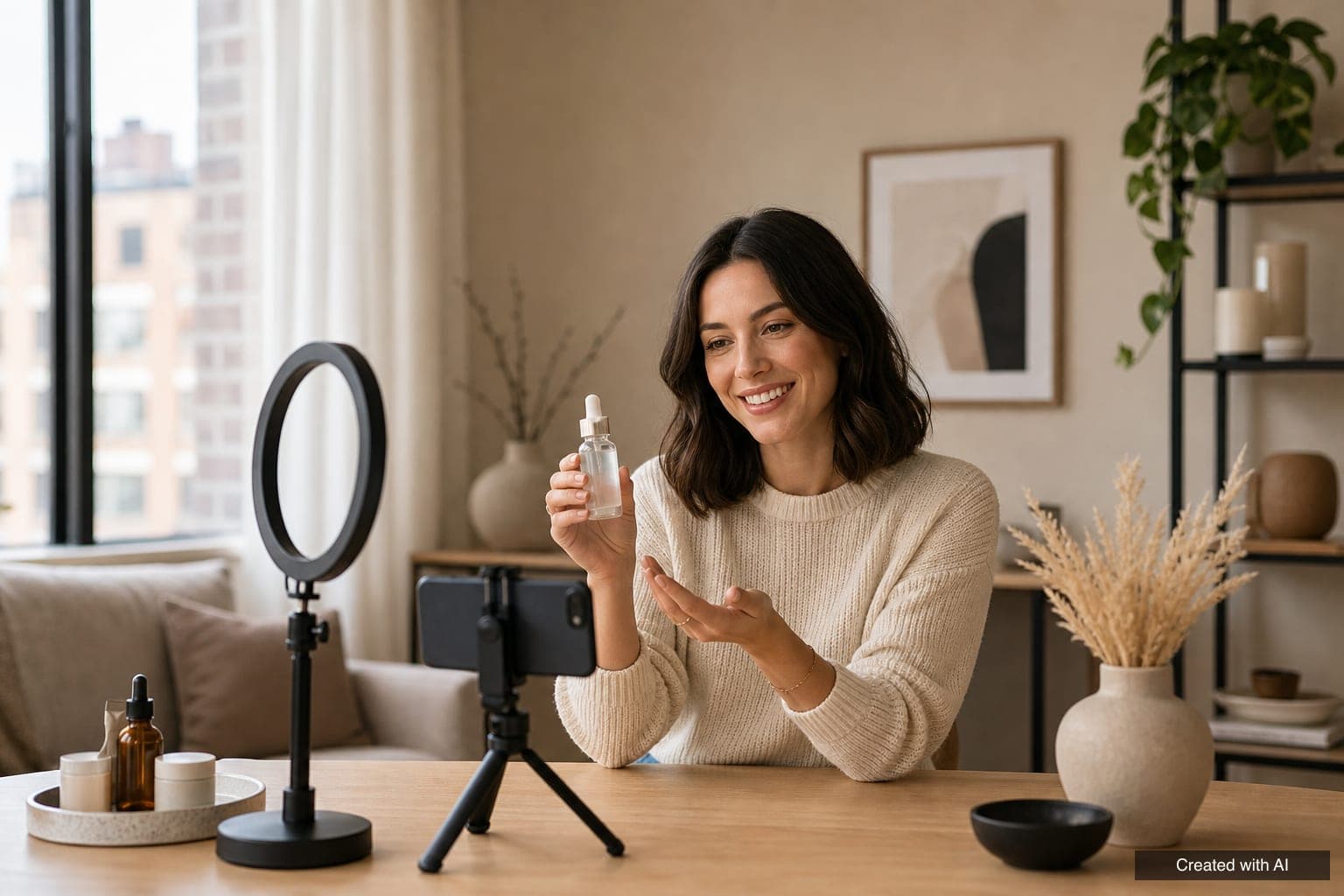
Beauty photography is shot close: face, skin, hair, hands. It sells cosmetics, skincare, hair colour, jewellery and eyewear. Height hardly matters here, but skin, brows, teeth and hair need to be in good condition, because retouching cannot fix everything. The glossary explains the beauty shot.
Editorial shoots
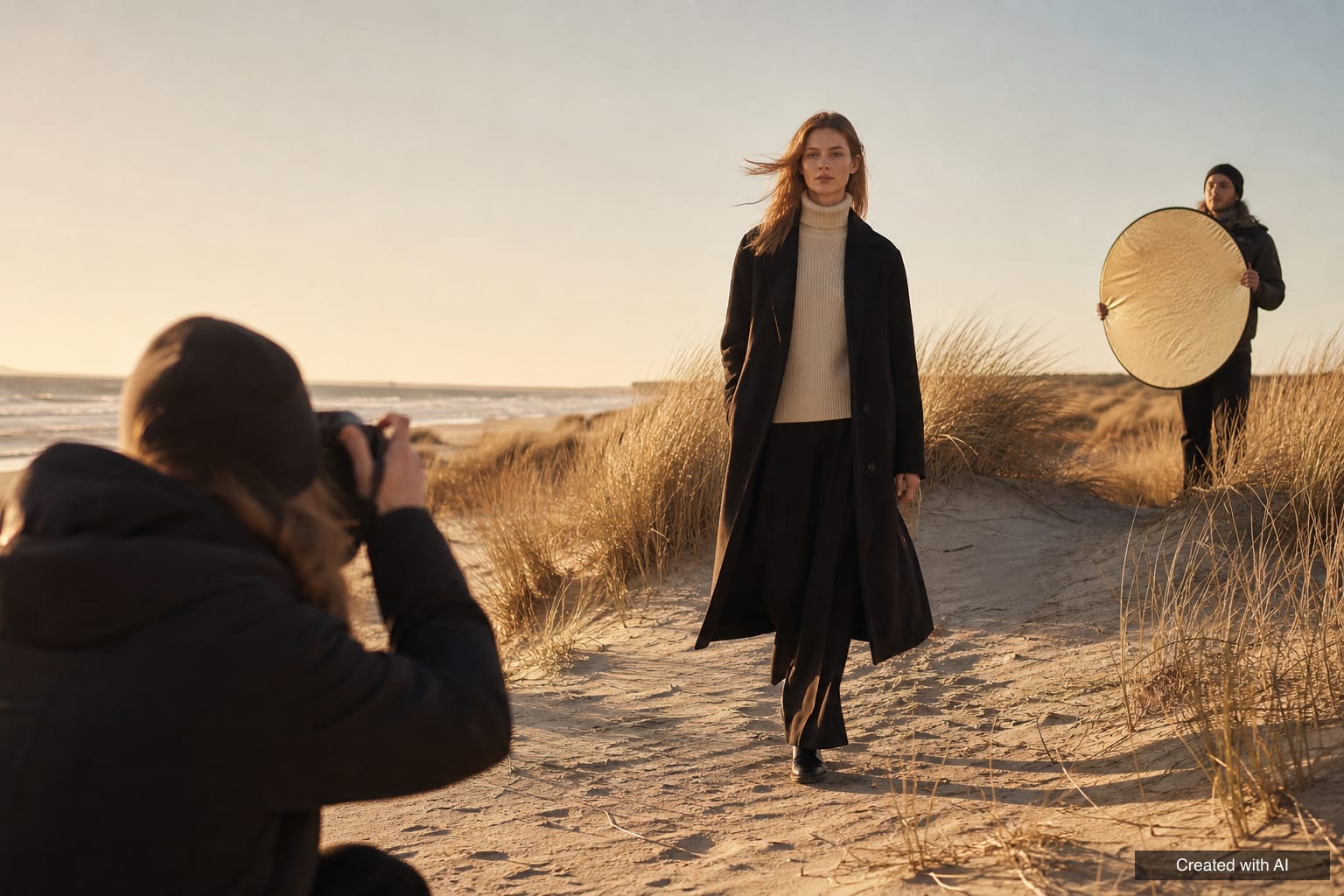
An editorial shoot is made for a magazine fashion story. The photographer, stylist and editor have a concept, and the model brings it to life: unusual poses, strong expression and dramatic locations are welcome. Editorial work pays little or nothing, but it matters for a career: tearsheets go into the portfolio and help land better-paid clients. More in the glossary: editorial modeling.
Advertising shoots
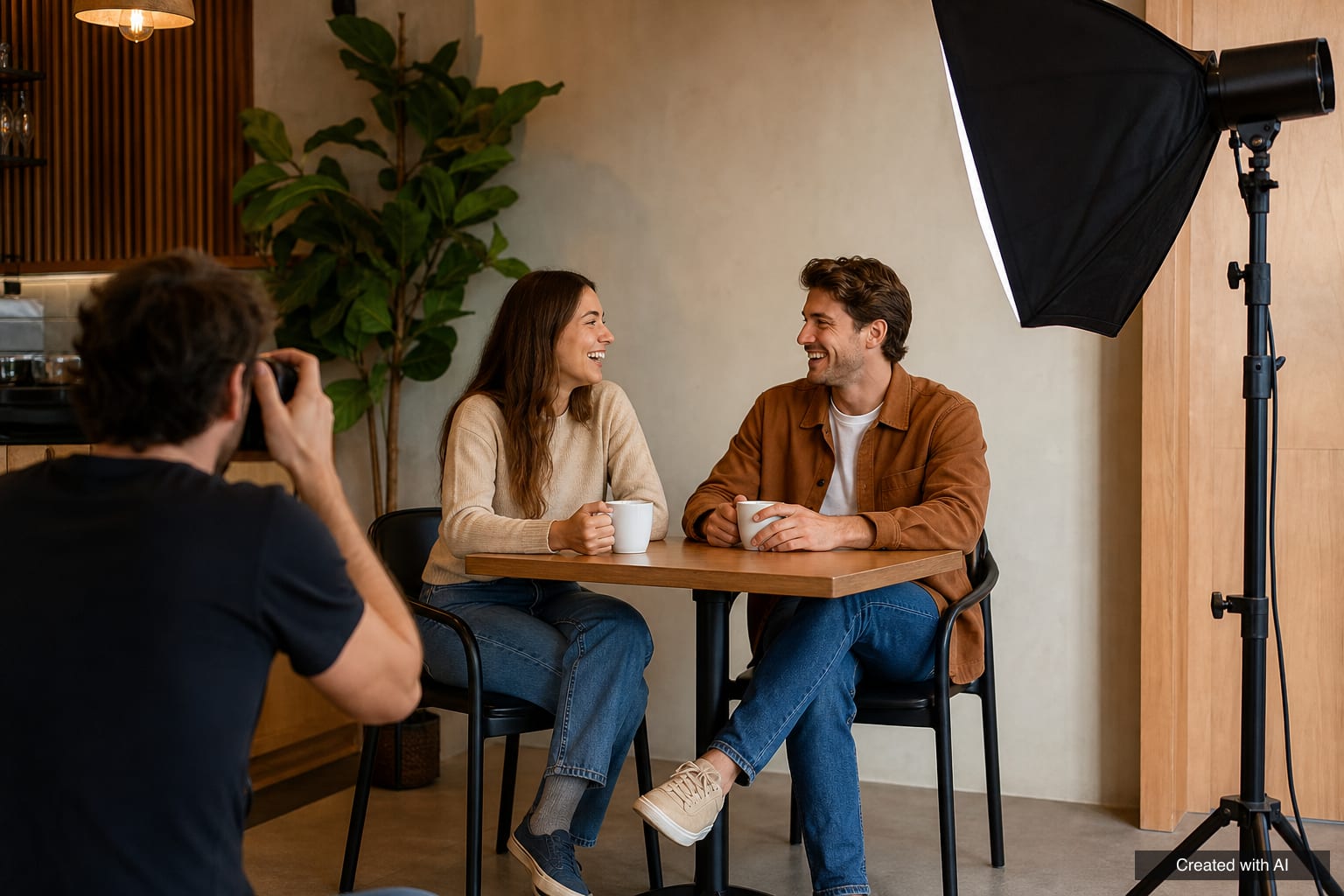
An advertising shoot is made for a campaign: billboards, online ads, packaging, shop windows. The model often acts out a situation buyers can see themselves in. This is the best-paid photo work, because a usage fee is added on top of the day rate. Read more in commercial modeling.
Beyond these five, photo models also take narrower work: hands and other parts, fitness and sportswear brands, plus-size lines. See fitness model and plus-size modeling.
Skills a photo model needs
A good picture looks effortless, but photo modeling rewards specific skills. Most of them can be learned.
- Posing. Knowing how body angle, hands and weight shift change the silhouette, and how to move into a new pose every few seconds without leaving the frame. See our guide to model poses and the glossary entry on posing.
- Expression. Not one smile but dozens: calm, warm, serious, surprised. The eyes have to stay alive even when the mouth is still, the so-called smize.
- Working with light. Sensing where the light falls and not turning out of it. Photographers often ask for the chin to move by a few millimetres.
- Patience and pace. An e-commerce day can run eight hours with dozens of changes. The energy has to be the same in the last frame as in the first.
- Teamwork. A photo model works with a photographer, stylist, make-up artist and the client. Punctuality and a good attitude decide whether you get booked again.
What a photo model's working day looks like
Before the job the agency sends a call sheet: the address, call time, who is on the team, what to bring (for example nude underwear and black and white shoes) and whether to arrive with or without make-up.
- Arrival and preparation. Hair and make-up take one to two hours while the stylist prepares the clothes.
- Test frames. The photographer checks the light, the client watches the screen and says what they want.
- Shooting. Outfits or set-ups change according to a list. On an e-commerce day that can mean 30–60 looks.
- Wrap and paperwork. Some clients ask you to sign a voucher or a model release. Read it before you sign.
Where to learn
Supermodels model training covers posing, expression on camera and on-set etiquette. The online course Supermodels Masterclass (€77) explains agencies, contracts, castings and how to take digitals at home. Training is a choice, never a condition for being represented.
Test shoots, portfolio and digitals
A new photo model needs three things: digitals, test shoots and a portfolio. They are often confused, which is how people end up spending money they don't need to.
| What it is | When you need it | Cost | |
|---|---|---|---|
| Digitals (polaroids) | Simple pictures with no make-up or retouching: face, profile, full length | For your agency application and every new season | €0, a phone is enough |
| Test shoot | A shoot where the model learns to work on camera and gets portfolio pictures | Once an agency sees potential | From €0 (TFP) to roughly €150–350 with a team in Lithuania |
| Portfolio (book) | The best tests and jobs | When you start going to castings | Built from tests and jobs |
| Comp card | One card with 4–6 pictures and measurements | For castings and clients | Often paid by the agency and deducted later |
Digitals come first. An agency wants to see how you look without styling, so they are taken in daylight against a plain wall, with no make-up, in fitted dark clothes, hair tied back. The glossary explains model digitals.
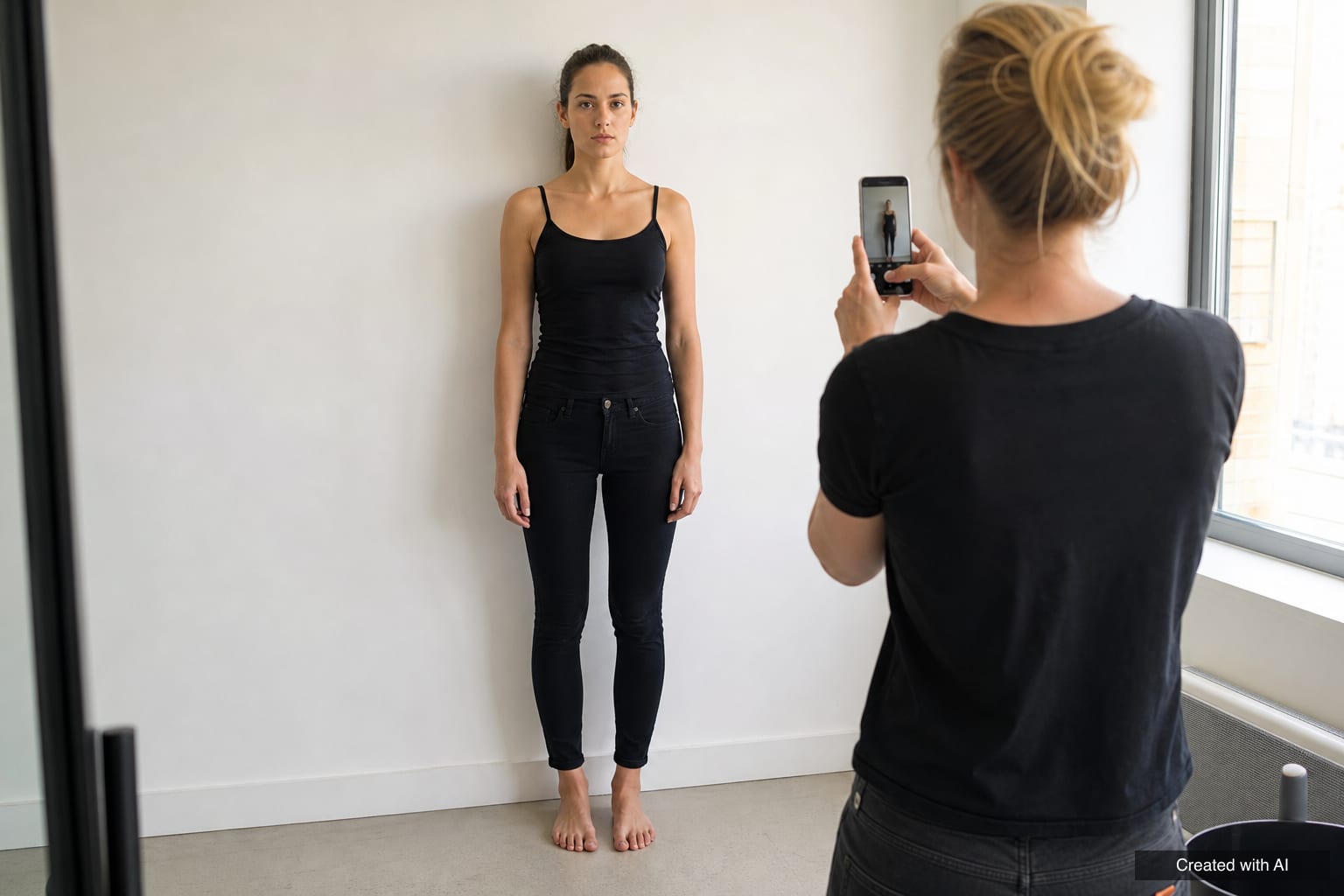
A test shoot is the first real shoot. The agency usually arranges it with a photographer who works with new faces. Sometimes both sides work for the pictures, known as TFP. The glossary explains the test shoot, and our guide to the model test shoot compares costs.
The portfolio, or book, grows step by step: a few tests first, then real jobs and tearsheets. Which pictures belong in it is covered in modeling portfolio. For castings the agency prepares a comp card with your best pictures and measurements.
You don't need a professional shoot before an agency
A common mistake is spending a few hundred euros on a "portfolio shoot" before contacting an agency. Agencies don't want those pictures: make-up, retouching and styling hide what they need to see. The US Federal Trade Commission (FTC) also notes that legitimate agents generally ask for casual snapshots, not professional photos.
How to become a photo model: 6 steps
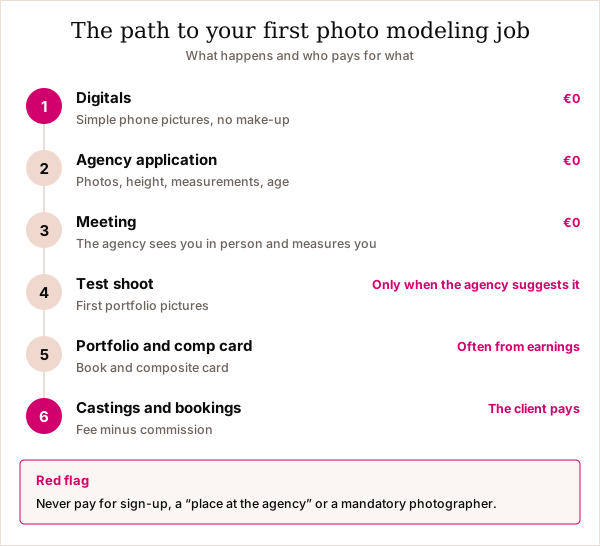
- Take digitals. Face from the front, profile, full length from the front and side, smiling and serious. No filters, no make-up, against a plain wall.
- Measure yourself accurately. Height without shoes, bust, waist and hips, clothing and shoe size.
- Apply to a professional agency. At Supermodels the application and selection are free. You can apply online, and on open days you can walk into the agency without an appointment: they measure you, take a few digitals and tell you whether you suit modeling work. The details are in the Supermodels open call.
- Meet the agency in person. A professional agency does not choose models from photos alone; it wants to see how you move, talk and look without filters. Minors come with a parent.
- Tests and portfolio. If the agency sees potential, it suggests a test shoot and helps you build a portfolio and comp card.
- Castings and first bookings. The agency sends your card to clients and puts you up for castings. See how to prepare for a model casting.
Before signing with an agency, know which terms and commission rates are normal and which clauses are dangerous. Our guide to the modeling contract covers it in detail.
Want to try?
Supermodels is looking for new faces in Vilnius and Kaunas. Applying is free and you don't need professional pictures: digitals and measurements are enough. Requirements and what happens after you apply are explained in the Supermodels open call.
Photo model agencies: telling a real one from a fake
For someone looking for photo modeling work, the biggest risk is not a bad client but a fake agency. Such companies make money from models rather than from bookings: they sell photo shoots, courses or "catalogue membership". The FTC lists clear signs of a modeling scam, and they hold in any country.
| A real agency | Warning sign |
|---|---|
| Earns commission when the client pays for your work | Asks you to pay for sign-up or to "secure your spot" |
| Asks for simple pictures | Makes a shoot with its own photographer a condition of getting work |
| Tells you work is irregular | Guarantees jobs and big earnings |
| Gives you time to read the contract | Pushes you to sign the same day |
| Can show real models and clients | Boasts of success no one has heard of |
| Offers training as an option | Promises work only after paid classes |
The FTC advises never to pay an agency up front, to get every spoken promise in writing and to search the company's name together with "scam", "review" or "complaint". How to assess an agency is covered in how to choose a modeling agency, and the glossary explains modeling scams. For agencies in Lithuania and neighbouring countries, see our agency directory.
Social media is a separate risk. A message from an unknown account promising "€500 an hour for photo models" usually ends with a request for a "deposit" or for intimate pictures. Go to a shoot with a stranger only with a chaperone, and know the address, the time and where the pictures will be used in advance.
How much photo models earn
A photo model is usually paid a fee per job rather than a salary. The fee covers working time and, when pictures are used in advertising, a separate usage fee.
| Job in Lithuania | Indicative fee | Notes |
|---|---|---|
| Short shoot (1–3 hours) | €40–90 per hour | E-commerce, local brands, social media |
| Half day (4–5 hours) | €175–260 | Depends on experience and number of images |
| Full day (6–8 hours) | €260–430 and more | Advertising adds a usage fee |
| Editorial shoot | Often unpaid or a token fee | The value is the tearsheet |
| Test shoot | Unpaid | Practice and portfolio pictures |
These figures come from rates published by a Lithuanian agency. Agency commission and tax come off the fee. According to the BLS, the median hourly wage for models in the US was $23.30 in May 2025, work is irregular and many work part-time. How much is left over a year in Lithuania and abroad is worked out in how much do models make, and the full rate tables are in modeling rates.
The biggest money comes not from the number of shoot days but from the right to use the pictures: the longer, wider and in more channels an ad runs, the higher the fee. Before accepting a job, know what usage rights and a model release mean.
What new photo models should avoid
- Paying for sign-up or a "catalogue listing". A real agency earns commission.
- A mandatory shoot with "their" photographer. The FTC names this as a sign of a scam.
- Working "for exposure" on advertising. If the pictures help sell a product, you should be paid. TFP is for portfolios, not ads.
- Vague usage terms. Before the job, know the fee, the period, the countries and the channels.
- Digital replicas without consent. If a client wants to build a digital replica or an AI model from your pictures, that needs separate written consent and payment.
- Shooting alone with strangers. Especially for minors: under 18 the contract is signed by a parent, and it is best to bring a chaperone.
Frequently asked questions
What is a photo model?
A photo model poses for pictures that present clothing, cosmetics, products or ideas: for e-commerce, catalogues, advertising, beauty campaigns and magazines. The result of the work is pictures, not a live show on the runway.
What is the difference between a photo model and a runway model?
A runway model presents collections at fashion shows, faces stricter height and measurement requirements and needs to know how to walk. A photo model works in front of the camera, so the requirements depend on the job: close to runway standards in fashion photography, much more flexible in beauty and advertising.
How tall do you need to be to be a photo model?
There is no single limit. Fashion e-commerce and catalogues usually want 170–180 cm for women and 183–190 cm for men, because samples are made in one size. In beauty, advertising and parts photography, height hardly matters.
How do you become a photo model with no experience?
Take digitals with no make-up, measure yourself accurately and apply to a professional agency. If the agency sees potential, it will invite you to meet and help you build a portfolio through test shoots. You don't need a professional shoot before applying.
Do you have to pay a photo model agency?
No. A real agency earns commission on your work. Being asked to pay for sign-up, a "place at the agency" or a mandatory shoot with its photographer is a sign of a scam. Training can be a separate service, but never a condition for getting work.
How much does a photo model earn?
In Lithuania, indicative rates are €40–90 per hour, €175–260 for half a day and €260–430 or more for a full day, with a usage fee on top for advertising. Commission and tax come off the fee, and work is irregular. In the US the median hourly wage for models was $23.30 in May 2025.
What is a test shoot?
A shoot where a new model learns to work on camera and gets pictures for a portfolio. The agency usually arranges it; sometimes it is done for the pictures (TFP), sometimes the model pays the photographer. It is not a commercial job, so it is unpaid.
Sources
- US Bureau of Labor Statistics (BLS), Occupational Outlook Handbook: Models (duties, median hourly wage in May 2025, nature of the work).
- US Federal Trade Commission (FTC), Modeling Scams (signs of a scam and how to avoid one; updated December 2025).
- Supermodels agency, Photo models and runway models: the key differences (in Lithuanian) and open call terms.
- Jurgita guides: how much do models make (rates published by a Lithuanian agency), model test shoot, modeling terms; checked October 2026.

Comments (0)
No comments yet. Be the first!
Only logged-in users can comment. Register — and you'll be able to share your thoughts on this article.
Register