

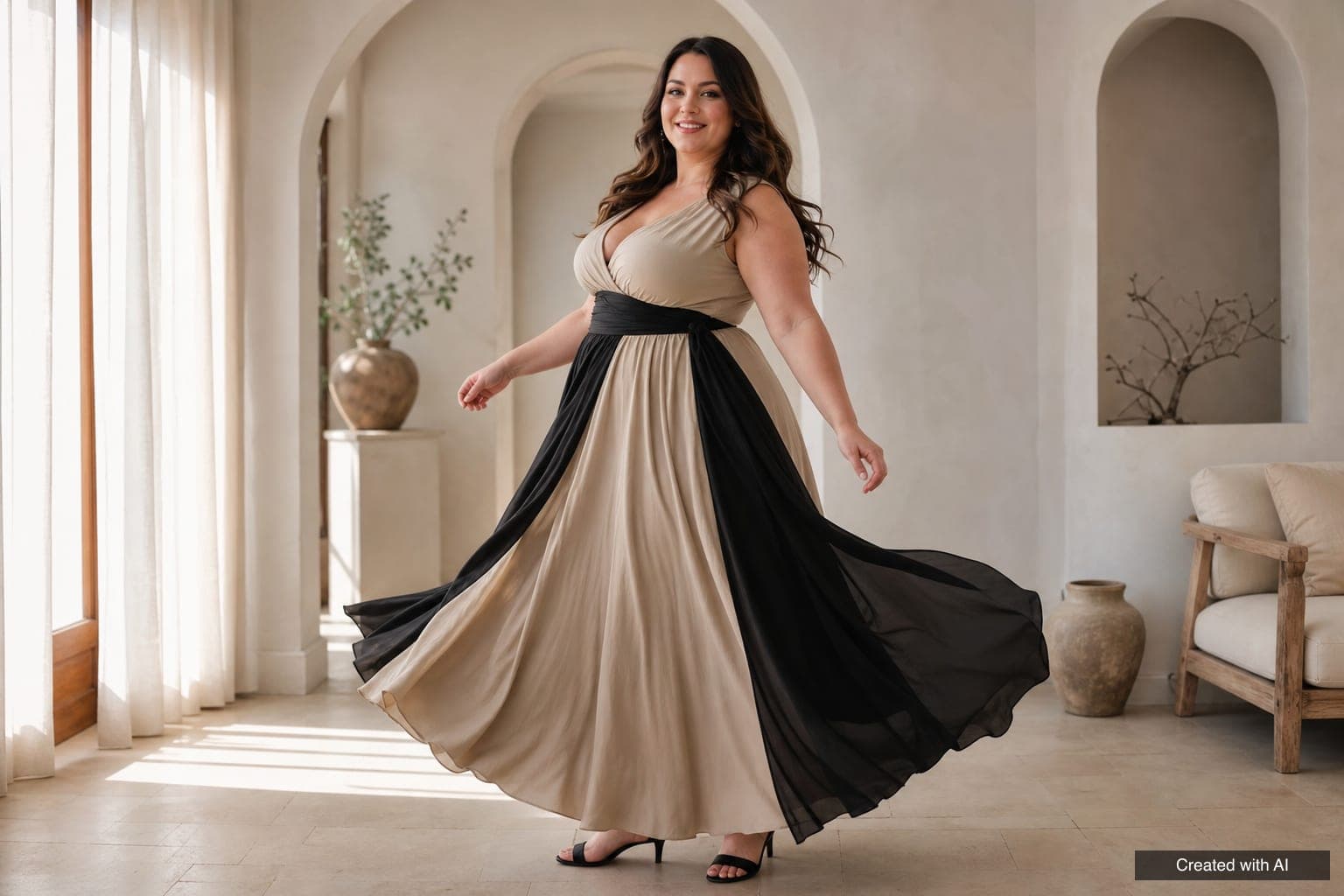
In short
- Measure first, read the label second. Sizing varies between brands: in a Vogue Business survey 91% of shoppers said their size changes depending on the brand.
- Choose the silhouette by what you want to show and by the occasion. Five shapes work most often: retro cuts, an empire waist, a wrap dress, an off-the-shoulder neckline and a print you like.
- Fabric matters more than cut. Fluid fabrics (viscose, crepe, jersey) are comfortable, while very light ones can be sheer and need a lining.
- Shop online by garment measurements and return terms, not by guessing your size.
Fashion wakes up again every autumn, and for many women the season brings as much frustration as delight: the bodies on the runway rarely look like the people buying clothes. Magazines and designers talk about size zero, while the label in your own wardrobe often carries a bigger number. Is a bigger size a verdict? No. In plus size fashion, once you know how to read sizes and how to pick the cut, fabric and length for the occasion, a dress will look and feel good.
This guide explains what size labels mean, how to measure, which silhouettes and fabrics tend to work, how to choose a dress for work, a wedding or an evening out, and how to shop online. Why the choice in larger sizes is still narrower than it should be is covered in our piece on body diversity in fashion and modeling, and the wider picture is in the plus-size modeling guide.
How to read size labels
The European standard EN 13402 proposes labeling clothes by body measurements in centimetres rather than by a number or letter. It is voluntary and applied unevenly from country to country, so in a shop you will usually see a European number (44, 46), letters (XL, 2XL) or a UK or US number. All of them describe only an approximate range.
Below is our women's clothing size chart. Brand charts can differ by up to half a size.
| EU | UK | US | Letter | Bust, cm | Waist, cm | Hips, cm |
|---|---|---|---|---|---|---|
| 42 | 14 | 10 | L | 96 | 80 | 104 |
| 44 | 16 | 12 | XL | 100 | 84 | 108 |
| 46 | 18 | 14 | XL | 104 | 88 | 112 |
| 48 | 20 | 16 | XXL | 110 | 94 | 118 |
| 50 | 22 | 18 | XXL | 116 | 100 | 124 |
| 52 | 24 | 20 | 3XL | 122 | 106 | 130 |
Where "plus-size" begins
There is no single line. In its runway reports Vogue Business counts plus-size as US 14 and above (UK 18+ in the chart above), while in the US standards the letter W (14W to 40W) marks a separate plus figure type with its own body measurement tables. In shops the line varies, and the same publication notes that US 14 or 16 in retail is often the top of standard sizing rather than a true extended range. So check the product's measurement chart, not the name of the department. More on where the line falls is in What is considered plus size.
Why the label is not always accurate
Size changes for several reasons. Many mass-market brands have enlarged their measurements under the same number over time (vanity sizing), while higher-priced makers have done this less, so a large from a luxury brand can fit like a smaller size elsewhere. There is also no universal mandatory standard, and every maker cuts its own patterns. Always check the chart on the brand's own page, and see popular makers in our brand size charts.
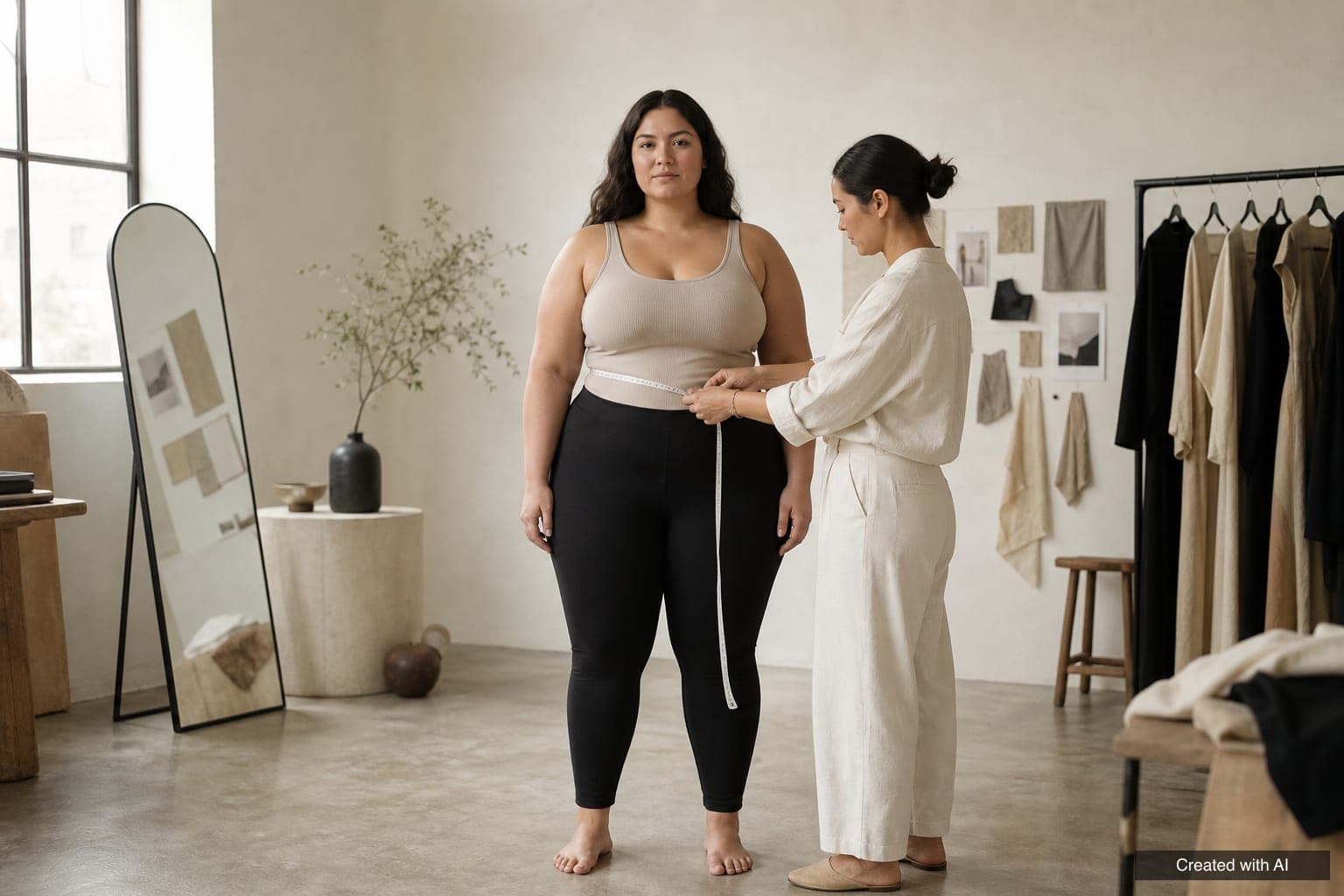
How to measure before you buy
Measure over thin clothing, without pulling the tape tight.
- Bust: around the fullest part.
- Waist: around the narrowest part, above the navel.
- Hips: around the fullest part of the seat.
- Length: from the shoulder to where you want the hem (knee, calf or ankle).
If your three measurements point to different sizes, choose the larger one. A tailor can take a garment in more easily than let it out. It also helps to measure a favourite dress that fits you well and use it as a reference when shopping online. For bra sizing see our bra size guide: the right bra changes the line of a dress more than the cut does.
Silhouettes: what they do and when they suit
There is no single "right" silhouette. Different shapes emphasize different areas, and you choose what to show. All the names, with descriptions, are in the dress types guide.
| Silhouette | What it does | When it suits |
|---|---|---|
| A-line | Narrower at the top, widening down; it skims the waist and hips. | Work, everyday wear, wedding guest. |
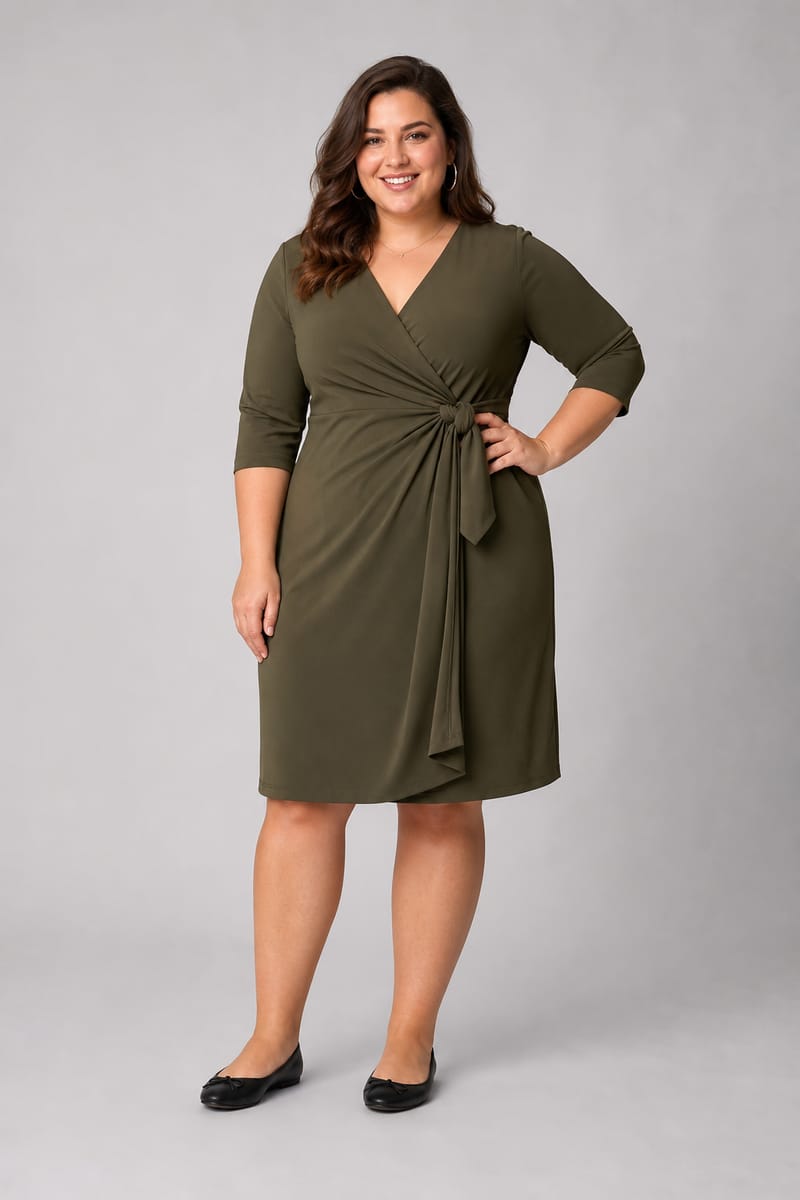
| Wrap | Ties at the side, defines the waist and adjusts to your shape. | Almost any occasion, especially when you want flexible fit. |
| Empire waist | Seam under the bust, the skirt falls loose from there. | Summer, celebrations, relaxed dressing. |
| Sheath | Straight and precisely cut, no flare. | Office, interviews, more formal settings. |
| Shirt dress | Buttons down the front, with or without a belt. | Everyday, summer, travel. |
| Fit-and-flare | Fitted bodice and full skirt from the waist. | Parties, celebrations, retro looks. |
| Bodycon | Stretches closely around the figure. | Evenings, when you want a strong line; a stretch fabric matters. |
Five dresses that work most often
These five ideas come from the guide we first published on this topic, here expanded. They are a good starting point if you do not yet know where to begin.
1. A retro cut
Fashion's 1950s trends are back and they suit women with fuller figures. In that decade curves were the ideal, so clothes were cut to emphasize the bust and hips: a fitted top, a narrow waist and a full skirt.
2. An empire waist
These dresses highlight the bust while a light, fluid fabric skims over the waist and hips. They are comfortable, which is why they are common in summer and party wardrobes. In the guide: empire waist dress.
3. A wrap dress
Wrapped around you, the fabric hugs the body without clinging, and the tie defines the waist. Because you can adjust the fit, it works when your shape changes over the years. In the guide: wrap dress.
4. An off-the-shoulder neckline
Show the part of yourself you like best. Shoulders and back are often just that, and an off-the-shoulder neckline is a simple way to do it. In the guide: off-the-shoulder dress.
5. Prints and colours
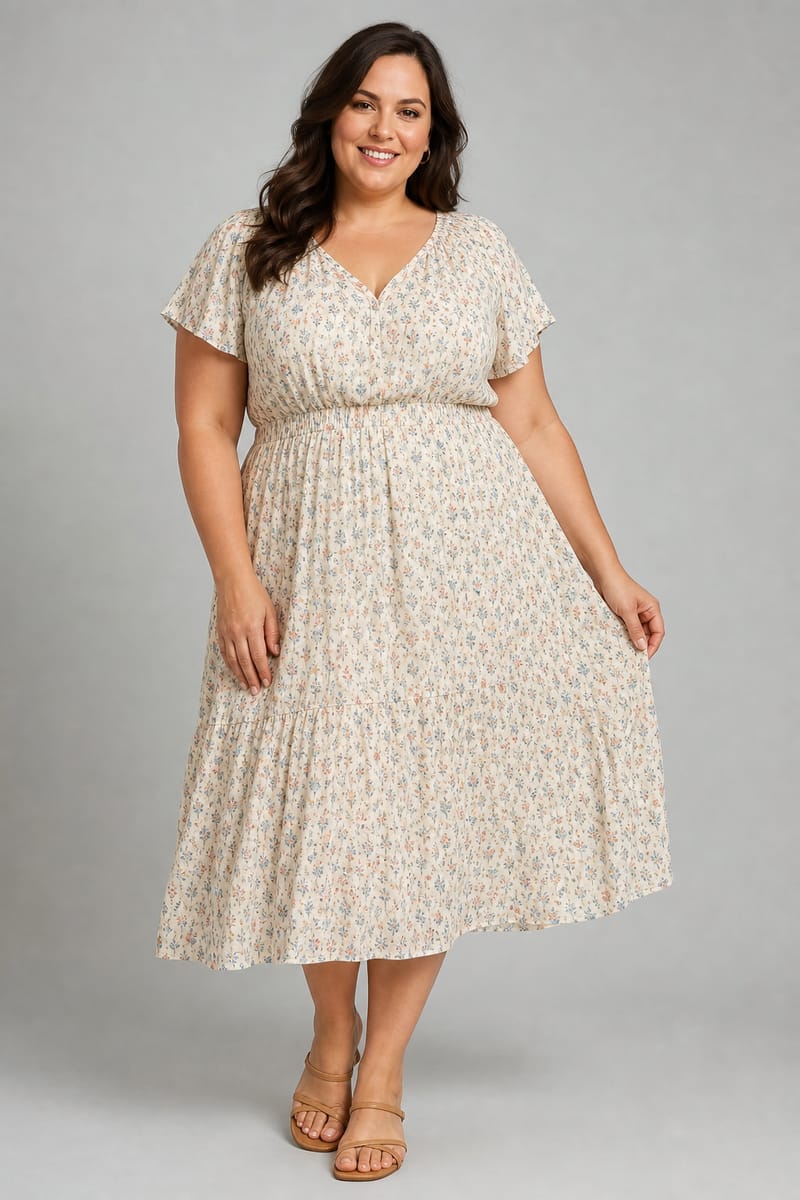
Pretty prints and a flowing silk or silk-like fabric suit every body, and they help you feel good as well as look good. Our earlier advice was to avoid very small prints because they can make a figure look bigger. There is no single rule here: look at yourself in the mirror from a couple of steps away and choose what you like. A dark solid often looks calm, but a large bold print can look just as good.
Fabrics: what is comfortable and what is not
What separates two dresses of the same cut is usually the fabric. In the Vogue Business survey 41% of shoppers said they would pay more for fabrics that do not turn see-through when stretched, and 81% would pay more for a garment designed to fit more comfortably. For detail on each fabric see the fabric guide.
| Fabric | Qualities | Watch for |
|---|---|---|
| Jersey | Soft, stretchy, does not crease. | Cotton jersey can shrink; edges curl. |
| Viscose | Soft, drapes well, breathes. | Creases and shrinks; wash cool (does viscose shrink). |
| Crepe | Matte, grainy, drapes well and shows few creases. | Can shrink in the wash. |
| Cotton | Breathes, pleasant on skin. | Creases, shrinks in heat. |
| Linen | Breathes very well, cool. | Creases heavily; suits relaxed cuts. |
| Satin | Glossy, luxurious. | Shows every crease, snags easily. |
| Chiffon | Light and floaty. | Sheer, needs a lining; delicate. |
| Elastane | Adds stretch: 2% to 3% gives comfort without bagging. | Heat and chlorine break it down. |
| Polyester | Barely creases, dries fast. | Breathes poorly; blends are better next to skin in summer. |
When you shop online, read the composition on the label: two satins, one silk and one polyester, look similar but feel different.
A dress for the occasion
| Occasion | What to choose | More |
|---|---|---|
| Work and interviews | Sheath or A-line in crepe or dense jersey, knee length or longer, a more covered neckline. | What to wear to a job interview |
| Weddings | Midi or cocktail dress in pastel or rich colours; long for an evening wedding if the invitation says black tie. White, ivory and cream belong to the bride. | What to wear to a wedding |
| Cocktail and parties | Knee-length or midi cocktail dress, fit-and-flare or wrap. | Cocktail dress, cocktail attire |
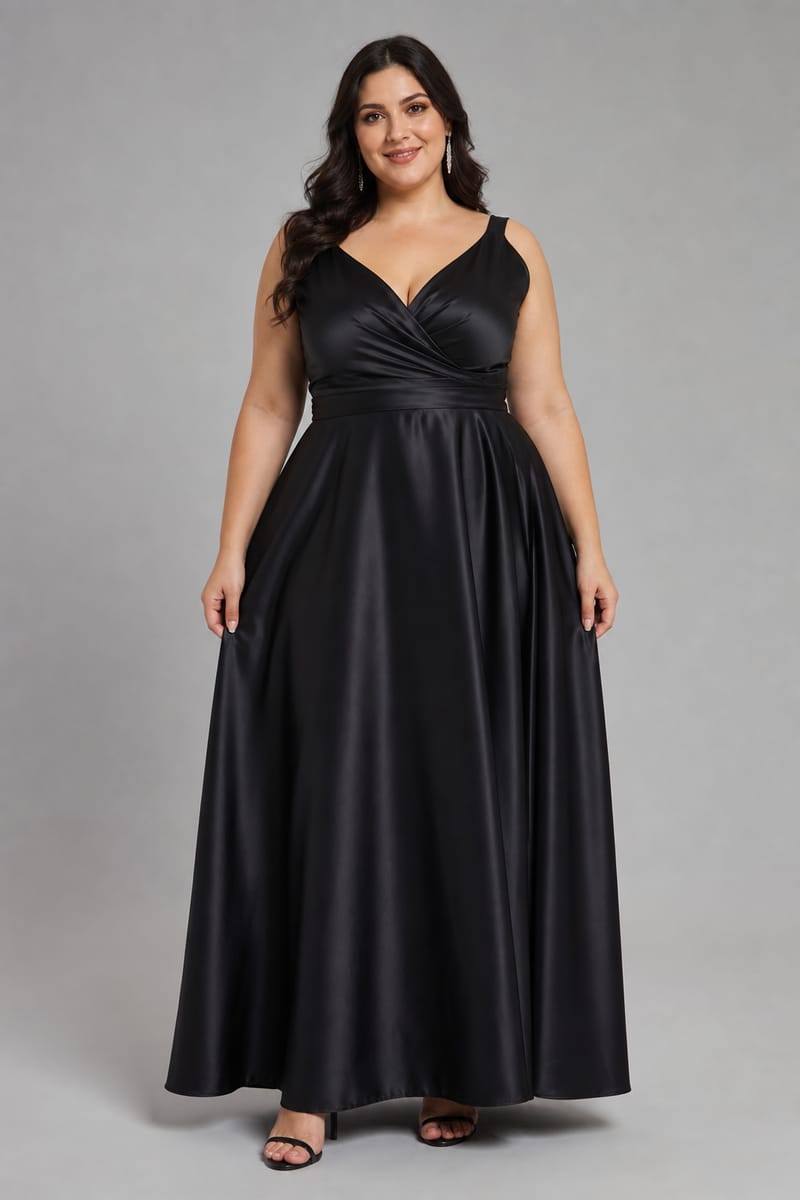
| Evening, black tie | A long dress in a heavier fabric, a defined waist or one unbroken line. | Evening gown, black tie |
| Theatre and dinner | A little black dress or a knit dress with elegant accessories. | Little black dress |
| Everyday and summer | A shirt dress, midi or maxi in linen, cotton or viscose. | Maxi, midi |
In summer pick breathable fabrics, in winter heavier ones such as crepe or velvet. For a late evening, comfortable shoes and a warm layer are a necessity, not a luxury.
Length, neckline and sleeves
Length
Midi (from the knee to mid-calf) is often the most comfortable choice because it suits both the office and a celebration. Maxi works with flats or heels. If a dress needs shortening, a tailor can do it quickly and cheaply. See the midi and maxi dress descriptions.
Neckline
The neckline changes the impression of the whole silhouette and decides which bra you need. See every option in the neckline guide, and choose the one you feel comfortable in.
Sleeves
Three-quarter or long sleeves suit cool weather and more formal dress, while off-the-shoulder and wide sleeves allow freedom of movement. Before buying, check that the sleeve does not bind at the upper arm, a common complaint. Options are in the sleeve guide.
How to shop online without getting it wrong
Online is where sizing causes most trouble. In the Vogue Business survey 38% of respondents said they often return clothes that do not fit, and inconsistent sizing deterred 46% of plus-size, 34% of mid-size and 25% of straight-size shoppers. Practical steps:
- Compare your measurements with the maker's chart, not with the number on the label.
- Look for garment measurements (bust, waist and length in centimetres), not just the size.
- See what height and size the model is wearing, if it is stated.
- Read the reviews on fit: true to size, small or large.
- Check the returns terms and the time limit before you pay.
- If you are between two sizes, choose the one that fits the widest point.
What to do and what to avoid
- Measure before you buy and compare with the maker's chart.
- Choose a fabric that drapes well or stretches.
- Check that the dress is not see-through when stretched.
- Wear a properly fitted bra and a slip where needed.
- Have the hem and straps adjusted by a tailor.
- Buying the size you wish to fit instead of the one your measurements show.
- Relying on a number or a letter on the label alone.
- Very thin, sheer fabrics without a lining.
- Choosing a cut you dislike just because of a "rule".
- Leaving the fit check until the day of the event.
Alterations and care
Even a dress in the right size often needs a small adjustment: the length, the straps or the waist. It is simple for a tailor and makes a big difference. Check the care label before washing: viscose washes at up to 30 °C and dries hanging, while linen and cotton crease, which is part of their character. If you are unsure which cut or colour suits your proportions, an image consultation can help. If modeling interests you, read about famous plus-size models and model requirements.
Frequently asked questions
What size counts as a plus-size dress?
There is no single line. In its runway reports Vogue Business counts plus-size as US 14 and above, which is UK 18 and EU 46 or more in our chart. In shops the line varies, so check the product's measurement chart.
Which dress style suits me if I want to define my waist?
A wrap dress, a tie-waist dress or a fit-and-flare. For a looser line choose an A-line or an empire waist with the seam under the bust. What matters most is that the fabric does not cling as it falls.
What fabric should I choose for summer?
Linen, cotton, viscose or a light jersey. Linen and cotton crease but breathe well. Viscose drapes nicely but can shrink. Polyester breathes poorly, so blends with natural fibre are better next to the skin in summer.
What should I wear to a wedding?
A midi or cocktail dress in pastel or rich colours, and for an evening wedding a long dress if the invitation says black tie. White, ivory and cream belong to the bride. More is in our wedding guest guide.
Why does the same size differ between shops?
There is no universal mandatory standard: Europe has the voluntary EN 13402, the US has ASTM tables, and every brand uses its own patterns. In the Vogue Business survey 91% of shoppers said their size changes depending on the brand. Compare your measurements with the specific brand's chart.
Should I buy a dress one size bigger?
If your measurements point to different sizes, choose the larger one and have it taken in: a tailor can take a dress in more easily than let it out. A dress that is too big in the shoulders or sleeves can look untidy, though, so a bigger size alone is not always the answer.
Sources and recommended reading
- Sizing is stopping consumers from shopping, Vogue Business, 13 October 2025 (survey of almost 700 consumers).
- The Vogue Business Fall/Winter 2026 Size Inclusivity Report, 23 March 2026 (plus-size as US 14+, retail size ranges).
- EN 13402 / ISO 8559: EN ISO 8559-2:2025 Size designation of clothes; overview: Joint European standard for size labelling of clothes.
- ASTM International, Subcommittee D13.55: D6960/D6960M-16(2023), Standard Tables for Body Measurements for Plus Women's Figure Type, Size Range 14W-40W.
- Jurgita's women's clothing size chart, fabric guide, dress types guide and wedding guest guide, checked October 2026.

Comments (0)
No comments yet. Be the first!
Only logged-in users can comment. Register — and you'll be able to share your thoughts on this article.
Register