

In short
- A plus size model is a model who works with larger-size clothing and in wider advertising. In English-language markets the line is most often drawn at US size 12, but agencies and brands draw it in different places.
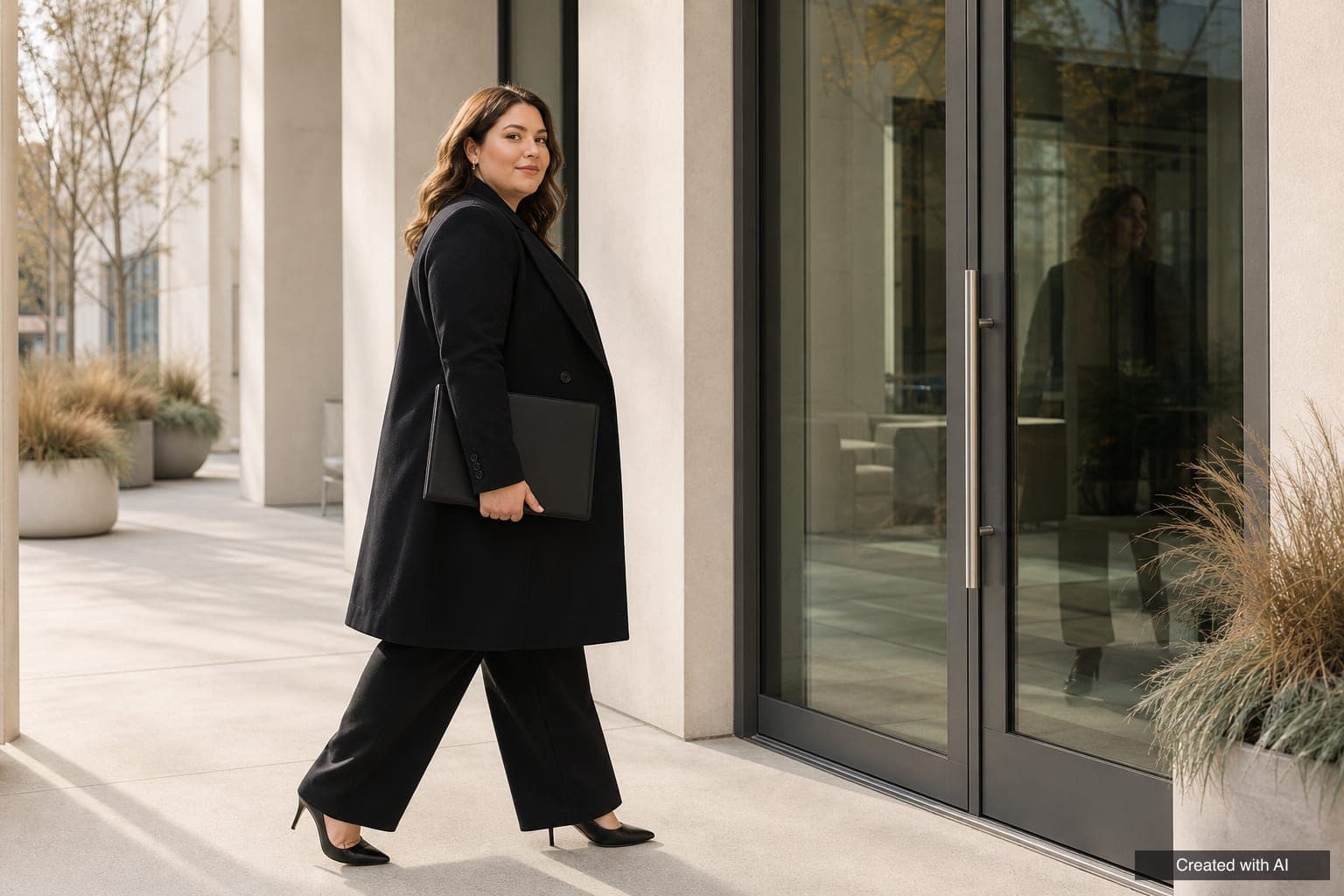
- It is not an easier branch of modeling. It takes the same skills: clean photos, posing practice and a working relationship with an agency. There is work in catalogues, lingerie, swimwear, advertising and, increasingly, on runways.
- You can start with no experience and at no cost: three simple photos and accurate measurements are enough. An agency that asks you to pay to register is not a professional one.
- You do not need to change your weight to fit this niche, and you should not. Agencies look for people who naturally match what their clients need.
Twenty years ago the very phrase "plus size" in fashion sounded like an exception. Today it is a distinct, well-developed corner of the modeling trade, with its own agency divisions, clients and household names. Many people who would be a good fit still do not know the career exists, or assume it means getting down to sample size first. It does not.
This is the main plus size modeling guide on Jurgita. It answers the big questions briefly: what it is, whether it is your path, how to start, what people earn, where to look for an agency, how to pose and who has already made a mark. Every topic has its own detailed article, linked in the section where it comes up.
What is a plus size model
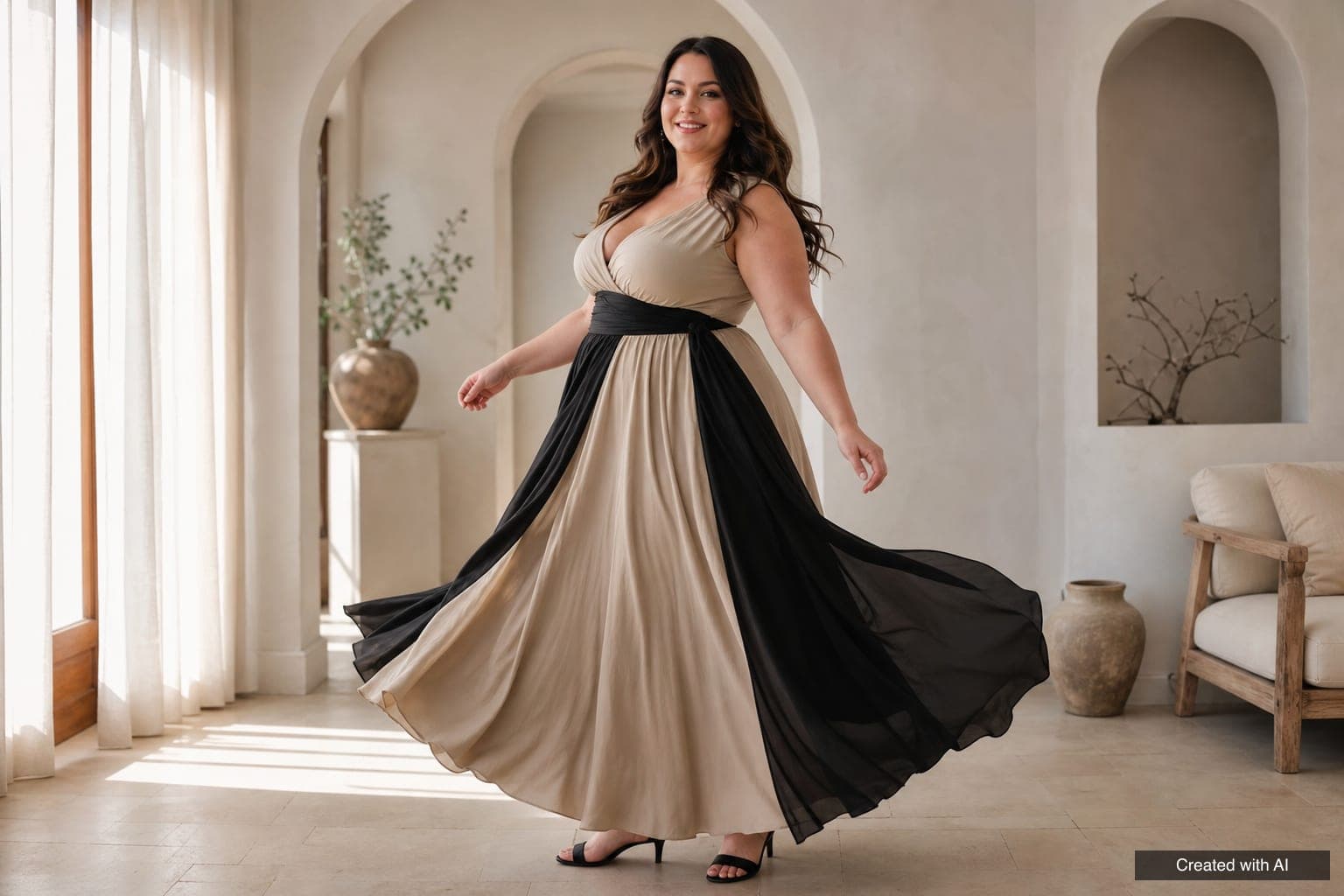
The encyclopedia definition is a person who wears US size 12 or larger and works mainly in presenting larger-size clothing. These models also work in the wider market: stock photography and advertising for cosmetics, household products, sunglasses, footwear and watches. So a plus size model does not only wear "plus size" collections, especially in editorial shoots for mainstream magazines.
 Model training with SupermodelsTry it in practice with an agency teamIn the model training we work on the walk, posing and working on camera, one to one or in a small group.About the trainingfrom €69
The same idea goes by many names: plus size model, curve model, curvy model, full-figured model. In recent years the industry has been moving away from the word "plus" towards "curve" divisions, or just "model". We explain the term briefly in the modeling glossary.
It is a working category, not a judgement. Agencies sort models by which sample sizes and which look their clients need, not by whose body is "better".
What size counts as plus size
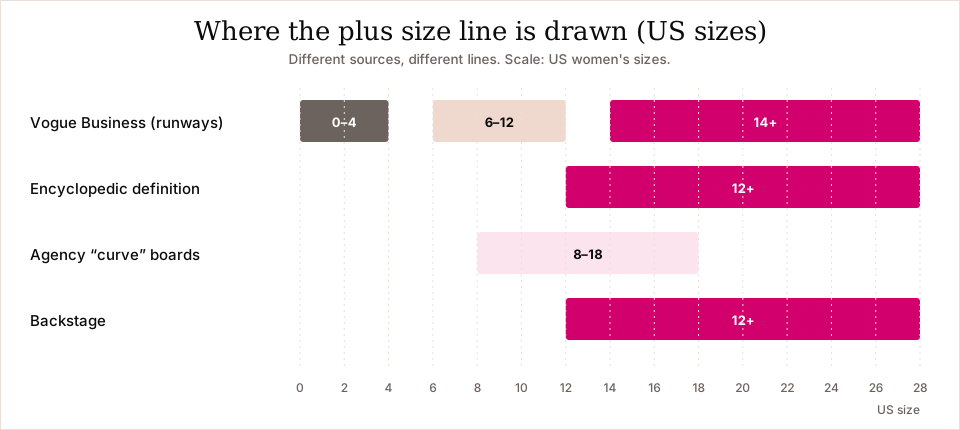
There is no single worldwide standard. Retailer size charts, agency divisions and countries draw the line differently, so one size can be "plus" in one place and not in another. Below is a rough summary; the full explanation, including mid-size models, is in what is considered plus size.
| Where | How the line is usually drawn | Worth knowing |
|---|---|---|
| US modeling market | From US size 12 | The most quoted definition. Agencies often run a separate "curve" or "plus" division. |
| Agency "curve" divisions | Varies: some agencies represent models from roughly size 8 to 18 and do not label them plus size | What clients are casting matters more than the label. |
| Europe | US 12 is often listed as EU 44, but charts differ | Check the specific brand's chart and measure yourself before comparing. |
| Retailers | Each has its own "extended sizes" range | "Plus" in a shop often just means a range beyond the standard run. |
You can compare your own measurements in the size guide.
A short history: from catalogues to cover stars
Larger sizes have been photographed for a long time. In the early 1920s the US retailer Lane Bryant was already selling clothing "for the stout woman", and by the mid-1950s its catalogues used photographs instead of illustrations. Before agencies existed, models worked directly with retailers, designers and magazines.
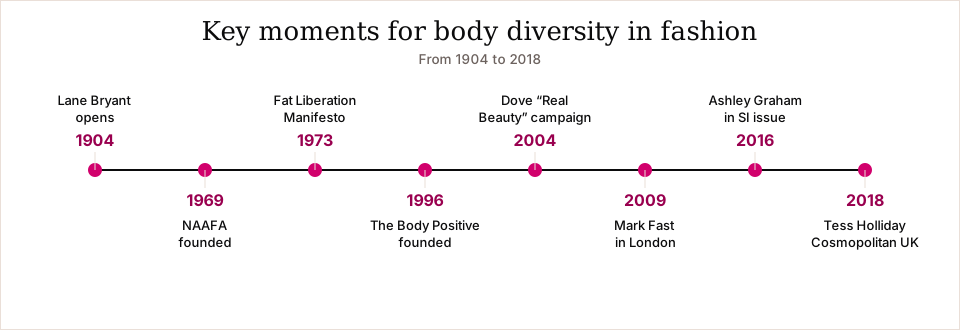
The first specialist agencies appeared in the 1970s: Mary Duffy founded Big Beauties Little Women in 1977, and in 1978 Ford Models began representing plus size models. Specialist magazines followed, and from the 1990s agencies built "curve" divisions and widened the work beyond plus size retail. In Britain the first plus size agency was founded in 1985.
The turning point came in the 2010s. In 2011 Vogue Italia put three plus size models on its June cover. In 2016 Ashley Graham, then a US size 14, became the first plus size model on the cover of the Sports Illustrated Swimsuit issue. In 2018 Tess Holliday was on the cover of Cosmopolitan UK's October issue. We cover these and other names in famous plus size models, and the wider context in body diversity in fashion and modeling.
Progress has not been a straight line. According to a New York Times article cited by the encyclopedia, plus size representation on runways grew after 2020, then very thin models returned in early 2023. A fair summary today is not "solved" but "a live subject that keeps moving".
From the archive: V Magazine's "The Size Issue"
Jurgita covered this subject in its first years. The piece stays as a historical snapshot of how the fashion press talked about it.
The American V Magazine dedicated an entire January issue to women of different builds and called it "The Size Issue". Two shoots drew a lot of attention. The first, "One Size Fits All", was photographed by Terry Richardson: two models of different build, Jacquelyn Jablonski and Crystal Renn, posed in matching poses in clothes by well-known designers. The second, "Curves Ahead", was shot by Sølve Sundsbø with Candice Huffine, Marquita Pring, Michelle Olson, Tara Lynn and Kasia P.
By backing curvier models on runways and magazine covers, the editors wanted to show that a woman of any size can look beautiful. A critical remark was made at the time that still holds: in trying to show that beauty can be different, fashion often reaches for the extremes, either strikingly thin "size zero" models or very full-figured "goddesses". And where are the girls with an ordinary build? Partly for that reason the industry now talks more about "mid size" models, whom we cover in the sizes article.
Is it your path: what agencies look at
In the plus size market, as in any other, proportions are not everything. Agencies look at skin, an expressive face, confidence in front of a camera, teamwork and reliability. The market also has its own detail: sample clothes and photo shoots are cut to particular sample sizes, so a model's measurements need to be stable for the clothes to fit all season.
What helps
Posing practice, an expressive face, reliability and punctuality, a good rapport with a team, stable measurements and simple, honest photos without filters.
What to keep in mind
There is less work than in the general fashion market, and some clients cast for one very specific size. It is sensible to have other sources of income and not to build your whole life on a single season.
Exact requirements for height, measurements and age differ by country and agency. We list them in plus size model requirements. For the wider question of whether anyone can model, see how to become a model.
About bodies and weight
No agency, photo or contract is worth your health. We do not suggest gaining or losing weight to land in a particular category, and we do not promise that any size guarantees work. If you feel pressure to change your body or eating habits, talk to a doctor. In Lithuania the free emotional support line is 116 123, and 112 is the emergency number.
A path plan: from idea to first job
You do not need money or a professional shoot to begin. This is the usual order of things, with a link to a detailed article at each step.
| Step | What to do | Read more |
|---|---|---|
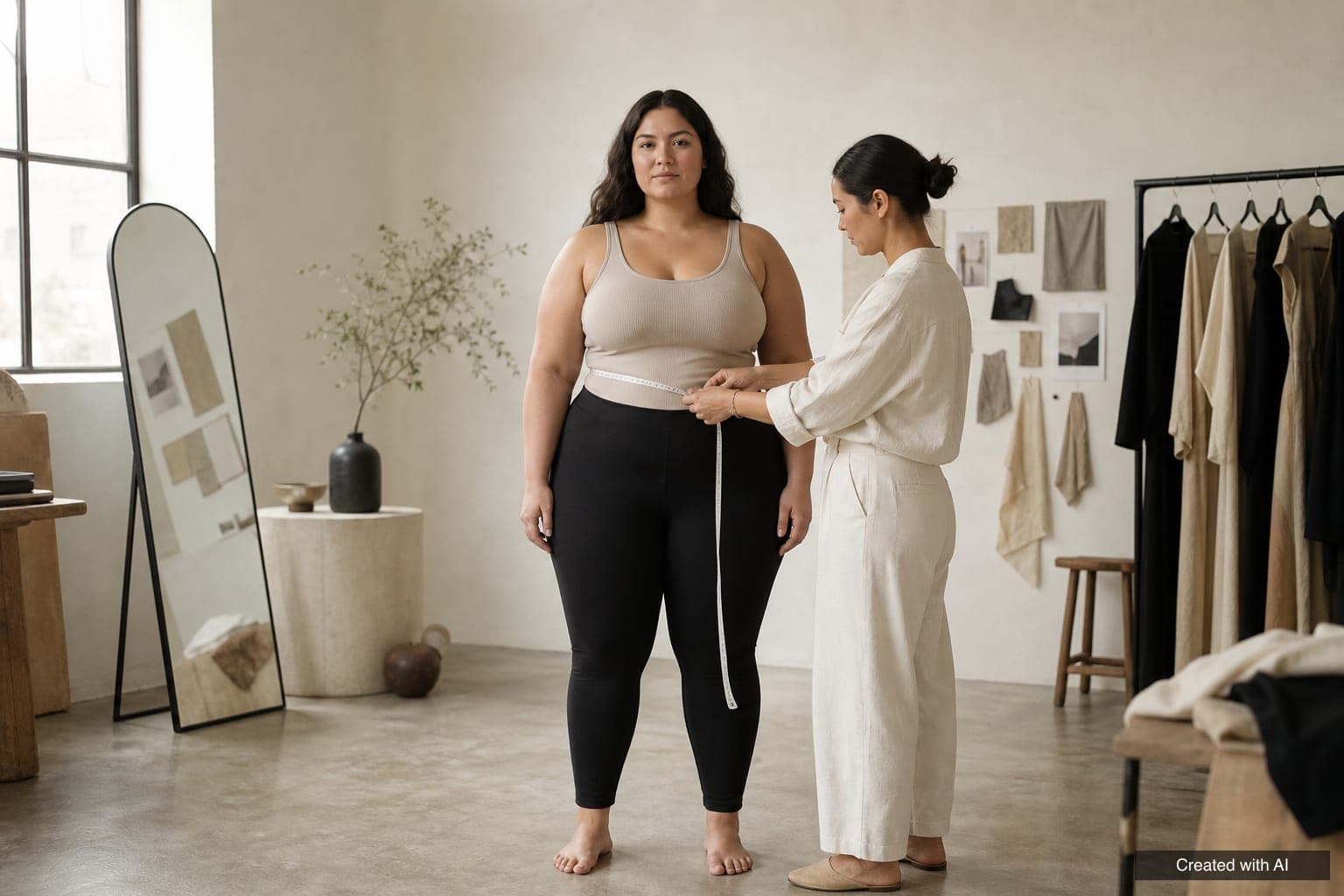
| 1. Measure and learn the requirements | Write down your height and your bust, waist and hip measurements. Compare them with agency requirements. | Requirements |
| 2. Learn how people start | What to do without experience, what age you can start, what to expect after 30 or 40. | How to become a plus size model |
| 3. Take simple photos | Face, profile and full length in daylight, without filters or heavy make-up. | Portfolio, test shoot |
| 4. Find an agency | Look for professional agencies that do not charge a registration fee, and read the contract. | Plus size agencies, choosing an agency, contracts |
| 5. Prepare for castings | Practise poses, your walk and how to behave at a casting. | Castings, poses |
| 6. Agree the pay | Learn how fees are set and what taxes mean for you. | Jobs and pay, rates |
| 7. First job | Often catalogues, online shops, fittings and commercial advertising. | Fit modeling |
Where to find an agency and how to spot a reliable one
A reliable modeling agency earns from a model's work, not from a registration fee. If you are asked to pay for a first meeting, a "portfolio" or "representation", look for another agency. Read the contract closely too: its length, the commission, exclusivity and who pays for travel and test shoots.
Many agencies around the world have a "curve" or "plus" division, and there are specialist plus size agencies as well. How to find them, how to tell honest ones from scams and which warning signs to watch for are covered in plus size modeling agencies. You can also browse the agency directory.
Supermodels invites plus size applicants
The Lithuanian agency Supermodels invites aspiring plus size models to apply. Women aged 14 to 22 and at least 170 cm (5'7") are invited to register, and height requirements are more flexible for plus size candidates. The form asks for three photos (face, profile and full length), each up to 4 MB; if the form will not send, you can email your details and photos to info@supermodels.lt. Applying is free. The agency announces open calls every year, and you can apply between them too. More in Supermodels open call.
What kinds of work plus size models do
The types of work are broadly the same as for other models; the client list is different. The table below gives the main options. The details and pay are in plus size modeling jobs and pay, and for the general picture see how much models make.
| Type of work | What it is | Who it suits |
|---|---|---|
| Catalogue and e-commerce | Shooting clothes for online shops and printed catalogues | Beginners: plenty of work and a clear brief |
| Lingerie and swimwear | Campaigns and catalogues that need ease with your body in front of the camera | Those comfortable working in minimal clothing |
| Fit modeling | Trying on and checking garments before production | Needs stable measurements, patience and attention to detail, see fit model |
| Editorial and campaigns | Magazine shoots and brand advertising | Experienced models with a strong portfolio |
| Runway | Fashion shows: rarer in plus size, but increasingly common | Those who care about their walk, see how to walk like a model |
| Commercial and stock | Cosmetics, household products, services, real-life scenes | All age groups, a more everyday look |
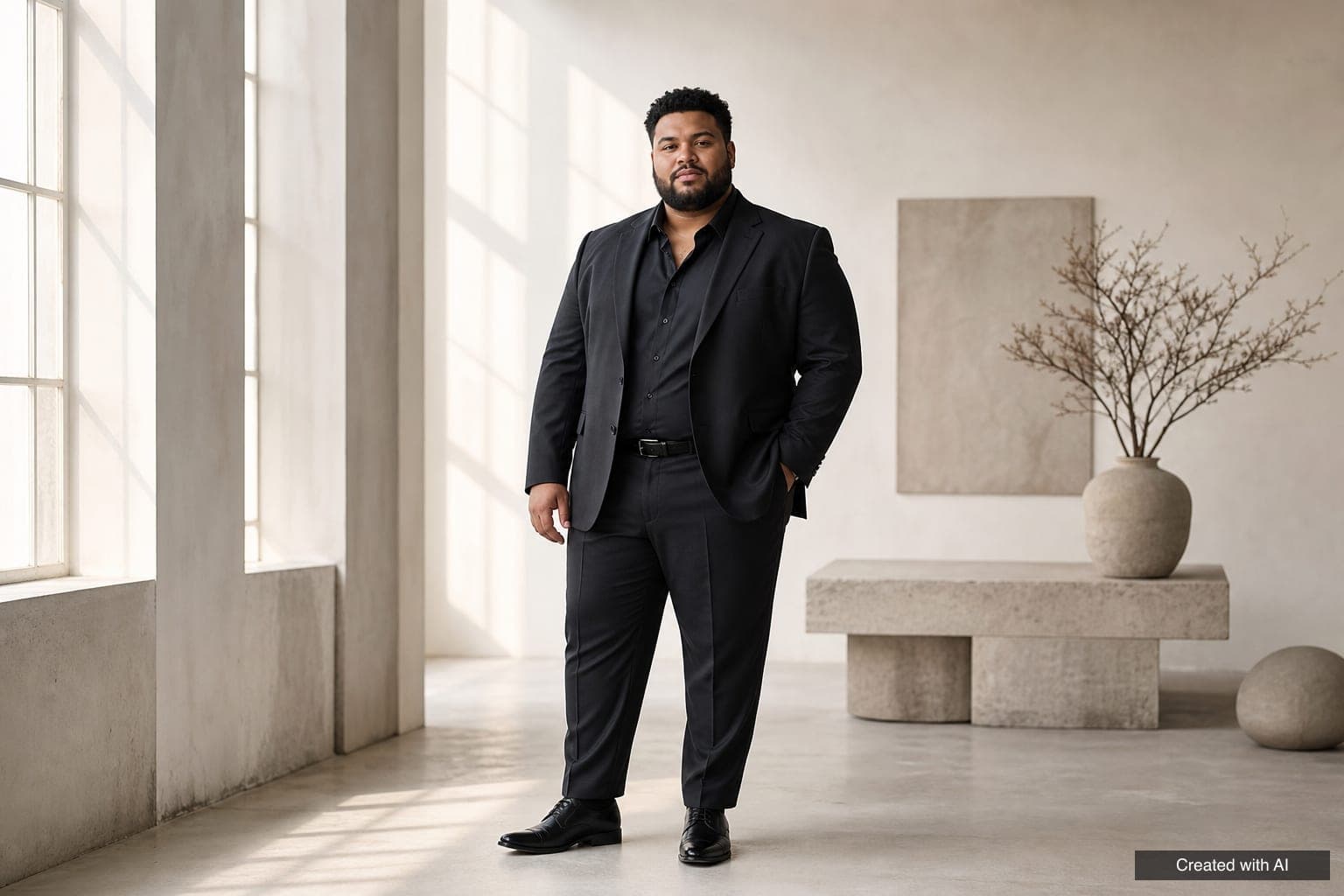
The men's plus size market is smaller but it exists: see plus size male models, and for the general men's modeling guide male models.
How to pose: what makes a good photo
Posing is a skill, not something you are born with. In plus size shoots, as in all others, what counts is posture, calm breathing, a clear angle and a consciously controlled face. It helps to know how angle and framing change the body's line, what to emphasize in which frame, and how to pose while moving, not only standing still.
- Start by relaxing: tension in the shoulders or neck shows in the frame.
- Learn a few base poses and the transitions between them so the photographer can work smoothly.
- Review your own photos critically but kindly, and look for the poses that feel most natural.
- Think about the garment: loose or fitted clothing changes how you need to pose.
Pose examples and a step-by-step explanation are in plus size photoshoot poses. For a more general posing guide, see model poses.
Who has already made a mark, and what changed
A few people became symbols of this field. In 2016 Ashley Graham became the first plus size model on the Sports Illustrated Swimsuit cover and has since appeared on covers of Vogue, Harper's Bazaar and other magazines. Tess Holliday appeared on the Cosmopolitan UK cover in 2018. Crystal Renn, Candice Huffine, Robyn Lawley, Tara Lynn and others also built names. Their stories are very different, so copying anyone else's path is not possible.
What changed after those covers is still debated: some brands began to show a wider range of figures, while part of the industry went back to narrow standards. A list of people with the key facts is in famous plus size models.
Why it is a live debate
Plus size modeling raises questions with no single answer. The main ones:
- The term. In 2015 the Australian model Stefania Ferrario and presenter Ajay Rochester started the #droptheplus campaign, urging the industry to drop "plus size" for models above a US size 4. Reactions were mixed but mostly positive.
- Size range. For a long time many "plus size" models wore US sizes 6 to 12, so they did not always reflect the real range of customers. In recent years larger models have appeared, especially on social media.
- Health. Critics argue that plus size models set a poor example for weight management; supporters answer that representation is not a recommendation. We do not give health advice; we only note that every body and every need is different.
- Representation. Critics point out that models of certain skin tones and ethnic backgrounds are still fewer.
The wider discussion is in body diversity in fashion and modeling.
Plus size fashion: not only for models
If modeling is only curiosity, the topic is still useful: it is also about how to dress when standard sizes do not fit. A practical guide to choosing a dress is in plus size dresses: how to choose. Silhouettes, fabrics and necklines are explained in our clothing guide.
If you want to learn to pose, walk or check how you look on camera, Jurgita offers model training. And if what matters more is your everyday image, you can ask about an image consultation. Neither is required to start a career; both are optional extras.
Article map: where to read next
All the plus size modeling articles in one place, so you can find what you are looking for.
| Question | Read |
|---|---|
| What size counts as plus size? | What is considered plus size |
| What are the requirements? | Plus size model requirements |
| How do I start? | How to become a plus size model |
| Where do I find an agency? | Plus size modeling agencies |
| What are the jobs and pay? | Plus size modeling jobs and pay |
| How do I pose? | Plus size photoshoot poses |
| Who has made a mark? | Famous plus size models |
| What about men? | Plus size male models |
| What is changing in fashion? | Body diversity in fashion and modeling |
| What should I wear? | Plus size dresses: how to choose |
Frequently asked questions
What is a plus size model?
A model who works with larger-size clothing and in wider advertising. In English-language markets the line is most often drawn at US size 12, but agencies and brands draw it differently.
Do I need to gain or lose weight to become a plus size model?
No. Agencies look for people who naturally match what their clients need. Changing your weight to land in a size is not worth your health. If in doubt, talk to a doctor.
Do I need experience?
No. Professional agencies take on beginners. Three simple photos and accurate measurements are enough to start.
Does Supermodels invite plus size models?
Yes. Supermodels invites aspiring plus size models to apply, and height requirements are more flexible for them. Applying is free, and the agency announces open calls every year.
How much does it cost to register with an agency?
At a professional agency, applying, open calls and meetings are free. If you are asked to pay for registration or representation, look for another agency.
Can you start plus size modeling after 30 or 40?
The commercial market is more flexible about age than fashion runways, because advertising needs people of all ages. We go into this in the article on how to become a plus size model.
How much do plus size models earn?
It depends on the market, the number of jobs and demand for the particular model, so there is no single figure. How fees are set and what different jobs pay is covered in a separate article.
Is the term "plus size" offensive?
Opinions differ. Some models and agencies prefer "curve" or just "model", while others accept "plus" as a working category. The aim is the same: to be treated as a model, not as a size.
Sources
- Wikipedia: Plus-size model (definition from US size 12, agency division history, Lane Bryant, Vogue Italia June 2011 cover, Tess Holliday on Cosmopolitan UK in 2018, the #droptheplus campaign, and the cited New York Times 2023 and Fashionista 2022 articles).
- Sports Illustrated Swimsuit: "Ashley Graham's 2016 SI Swimsuit Issue Cover Was a Major Step for Body Diversity", 16 January 2026.
- Cosmopolitan UK: Tess Holliday cover interview, October 2018 issue.
- Supermodels application form and requirements (supermodels.lt, checked October 2026) and the Jurgita page Supermodels open call.
- Jurgita archive: "Plius dydis madoje", on V Magazine's "The Size Issue".
- Jurgita modeling glossary and agency directory, checked October 2026.
Comments (0)
No comments yet. Be the first!
Only logged-in users can comment. Register — and you'll be able to share your thoughts on this article.
Register