

In short
- An AI influencer (virtual influencer) is an invented character with a profile, followers and brand deals, run by a team of creators. An AI model is a synthetic person used in fashion images and ads.
- This is no longer an experiment: Mango made an AI campaign for its teen line in 2024, H&M announced digital twins of 30 models in 2025, and a Guess ad with an AI model ran in Vogue's August 2025 issue.
- A digital twin is a copy of a real model's likeness. It needs separate written consent, pay for use and clear limits in the contract. In New York that has been the law since June 2025.
- Since 2 August 2026, Article 50 of the EU AI Act requires disclosure when realistic images are generated or manipulated by AI. Instagram and TikTok have their own labels.
Ten years ago virtual models were an artist's game. Today brands build entire campaigns with AI, retailers test "digital twins" and some AI influencers earn more than most human creators. For models this raises two questions: will AI take the work, and how do you protect your face once it can be copied?
This guide explains what an AI influencer, an AI model and a digital twin are, which fashion cases are confirmed, why brands do it, what it means for real models, what to check in a contract and which labels the law and the platforms require. For the wider map of social media work, see our guide to becoming a content creator.
What is an AI influencer, and what is an AI model?
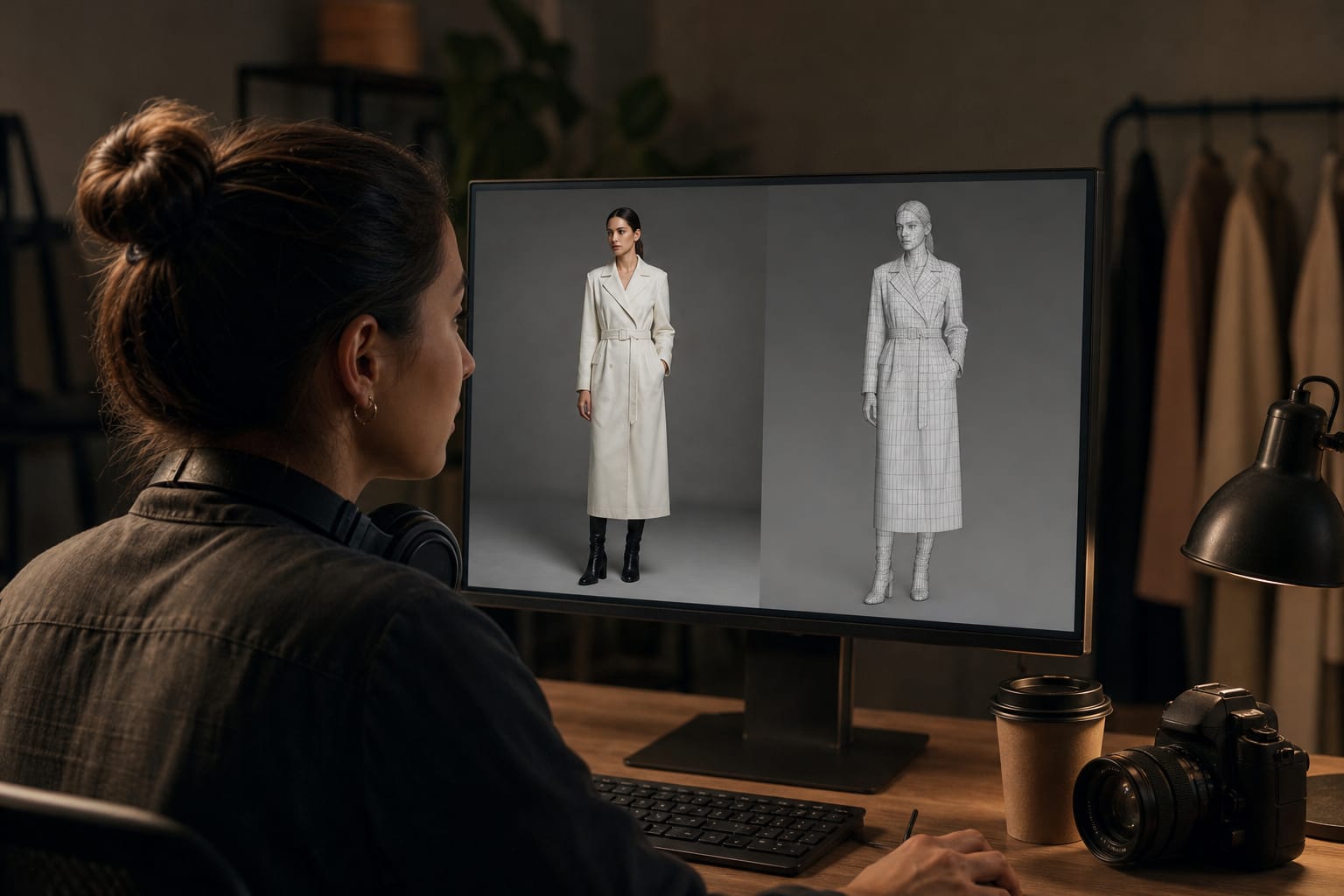
An AI influencer, also called a virtual influencer, is a computer-generated character who behaves like a person on social media: a name, an age, hobbies, travel photos, brand partnerships. The person does not exist. A team of designers, 3D artists and writers plans and produces the posts, increasingly with generative AI.
 Model training with SupermodelsTry it in practice with an agency teamIn the model training we work on the walk, posing and working on camera, one to one or in a small group.About the trainingfrom €69
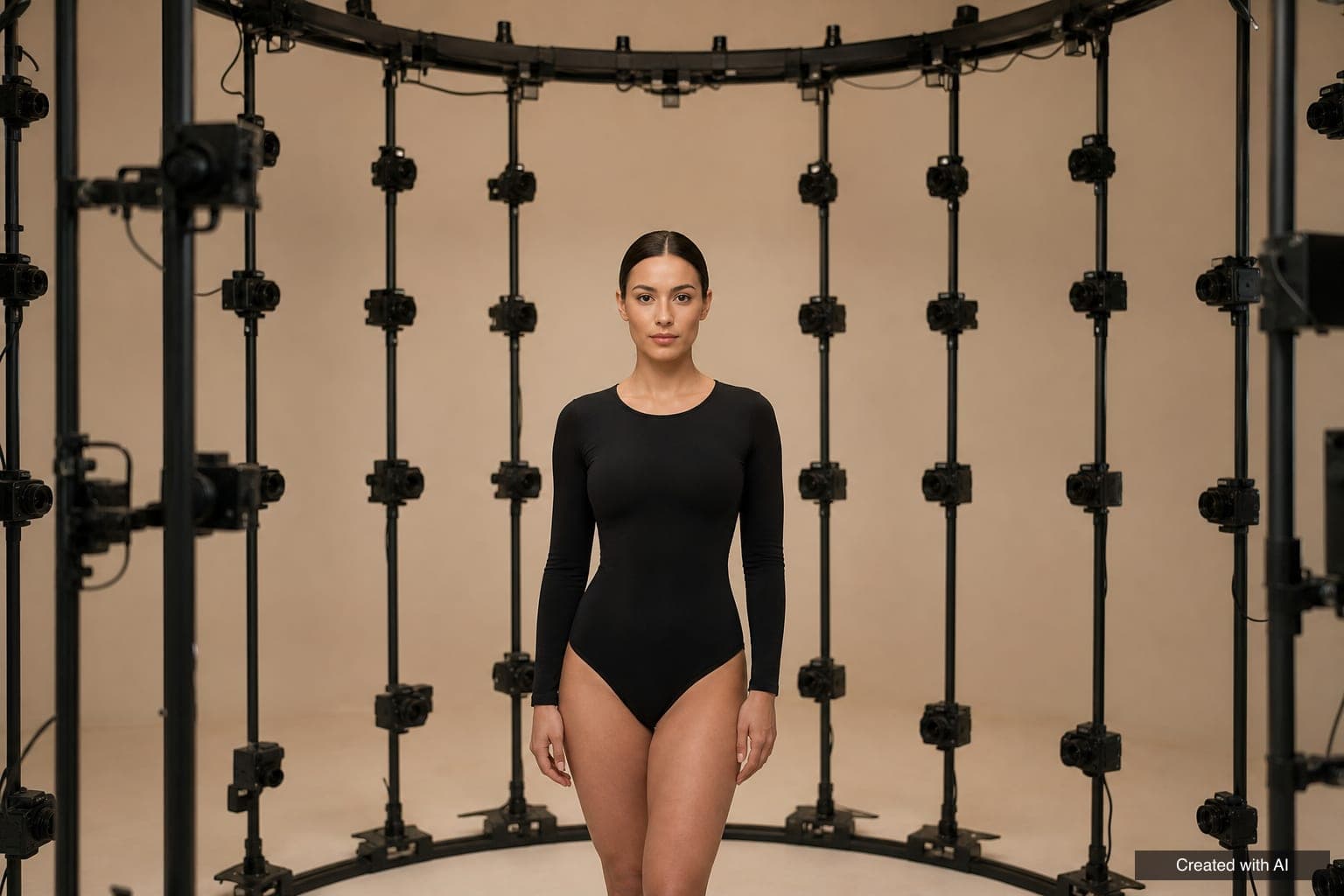
An AI model is a synthetic person in a fashion image or ad. It needs no profile or followers: the brand uses an AI-generated face and body instead of a model. Sometimes the clothes are shot on a real person and the face and body are then replaced by AI.
A digital twin is a copy of a real model's appearance, built from photos or a 3D scan. It produces new images without a shoot. Our glossary entry on the digital replica explains the term in detail.
From retouching to a virtual model: four levels
Not every use of AI in a picture makes it an "AI model". It helps to separate four levels, because they decide what consent, pay and labelling you need.
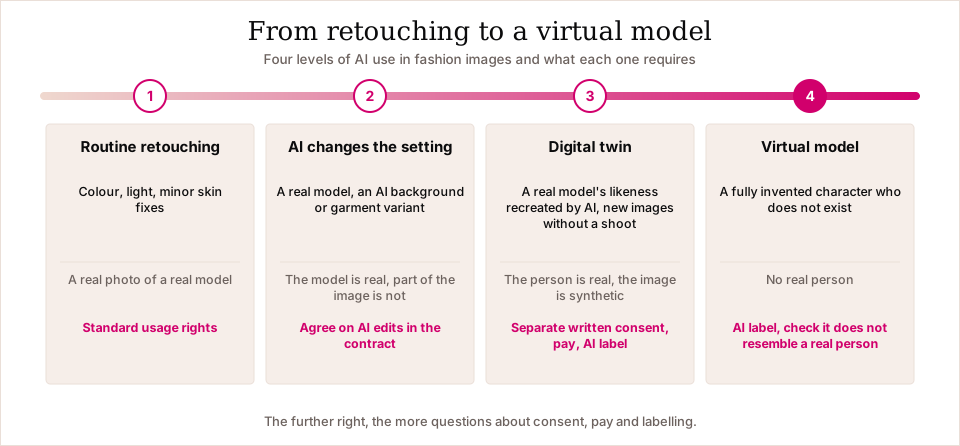
- Routine retouching. Colour correction, light, minor skin fixes. This is not a digital replica: even New York's law carves these edits out.
- AI changes the setting. The model is real, but the background, light or a garment variant is AI-made. It is worth agreeing in the contract which edits the client may make.
- Digital twin. A real person's likeness is recreated by AI and used in new images. It needs separate written consent and pay for use.
- Virtual model. A fully invented character. No real person is involved, but the content must be labelled and the character must not resemble a real individual.
The best-known cases so far
There are plenty of rumours about AI in fashion, so we have kept to confirmed events from brand announcements and reliable media.
The first virtual influencers
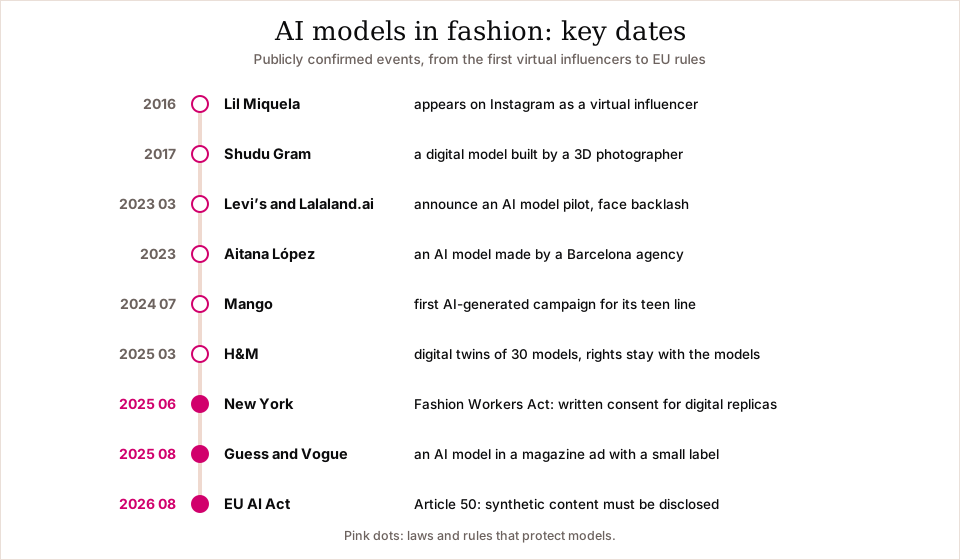
Lil Miquela appeared on Instagram in 2016 and became the first widely known virtual influencer in the West. In April 2017 British photographer Cameron-James Wilson introduced Shudu Gram, a digital model built in 3D software. Both sparked debate: about transparency, and about who has the right to create and profit from a virtual person's identity.
Aitana López: an AI model that earns
The Barcelona agency The Clueless and its founder Rubén Cruz created Aitana López, a pink-haired fitness and lifestyle model. Her creators told Euronews she earns up to €10,000 a month, usually around €3,000, and a little over €1,000 per sponsored post. Those are the creators' own figures, not audited income. The agency said it built the character so it would not depend on the moods and delays of human influencers.
Brands: Levi's, Mango, H&M, Guess
- Levi's announced a pilot with Lalaland.ai AI models for e-commerce on 22 March 2023. After criticism, the company added a note to the announcement clarifying that it was a test, not a replacement of people.
- Mango launched its first fully AI-generated campaign in July 2024, for the Sunset Dream collection of its teen line, and used AI models again in later teen campaigns that autumn.
- H&M announced in March 2025 that, together with models and their agencies, it would create digital twins of 30 models for marketing, social media and e-commerce. The company said the models would keep the rights to their twins.
- Guess ran an ad in the August 2025 issue of Vogue with an AI model made by the London agency Seraphinne Vallora. The AI disclosure sat in small print in a corner, and the ad started a debate about transparency and beauty standards.
Why brands use AI models
The reasons are mostly practical: speed, cost and control. AI can show the same garment in dozens of settings within hours, with no location trips and no juggling of model, photographer and stylist calendars. A virtual character never falls ill, never runs late and never turns a job down, and always looks the same.
The price is reputation. The Levi's, Mango and Guess cases show that shoppers react strongly when AI replaces people, especially when it is used to "create diversity" or to draw an unreachable beauty ideal. Experts quoted by the BBC warned that such images can reinforce unrealistic body standards and that the label was too small. So many brands use AI carefully: as an addition, not a replacement.
What it means for real models
The risk is highest where work is fast and repetitive: white-background e-commerce shoots and catalogue jobs. AI can already replace some of those images. We cover that work in commercial modeling.
New opportunities are appearing too:
- Licensing your digital twin. A model who agrees to a twin can be paid each time it is used, as in the H&M case.
- Work AI cannot do. Runway, live events, filming with movement and emotion, ambassador roles where a real personality matters. More in runway model.
- The value of being real. As AI imagery multiplies, brands that depend on trust value real people with real stories more.
Above all, a model should never agree to a digital copy without knowing what they are signing. This is where an agency earns its commission.
Digital twins: how to protect your likeness
Most legal systems protect a person's image in some way: in the US through state rights of publicity, in Lithuania through Article 2.22 of the Civil Code, which says a person's image may be reproduced, shown or sold only with their consent. But consent to "use the photos" and consent to "build an AI copy and generate new images" are different things. The second must be agreed separately.
In New York, the Fashion Workers Act has applied since 19 June 2025: a client must obtain a model's clear written consent before creating or using their digital replica, covering the scope of use and pay, and a model management company's power of attorney can no longer cover digital replicas. It is a good benchmark wherever you work.
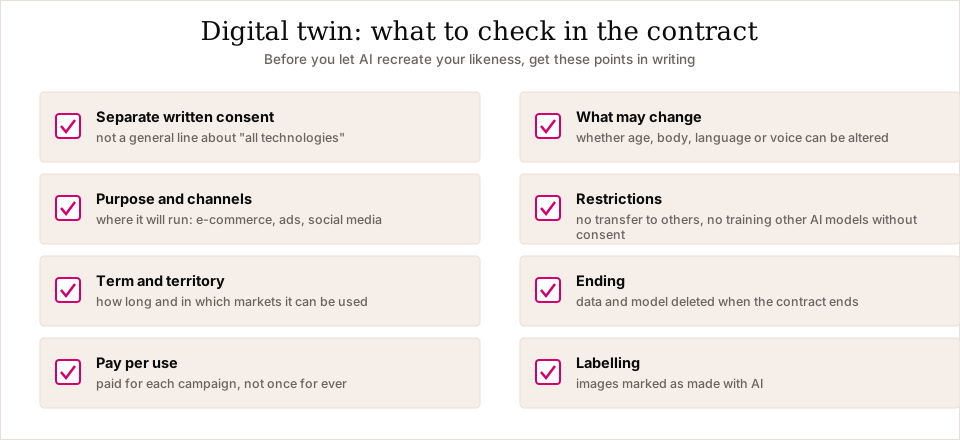
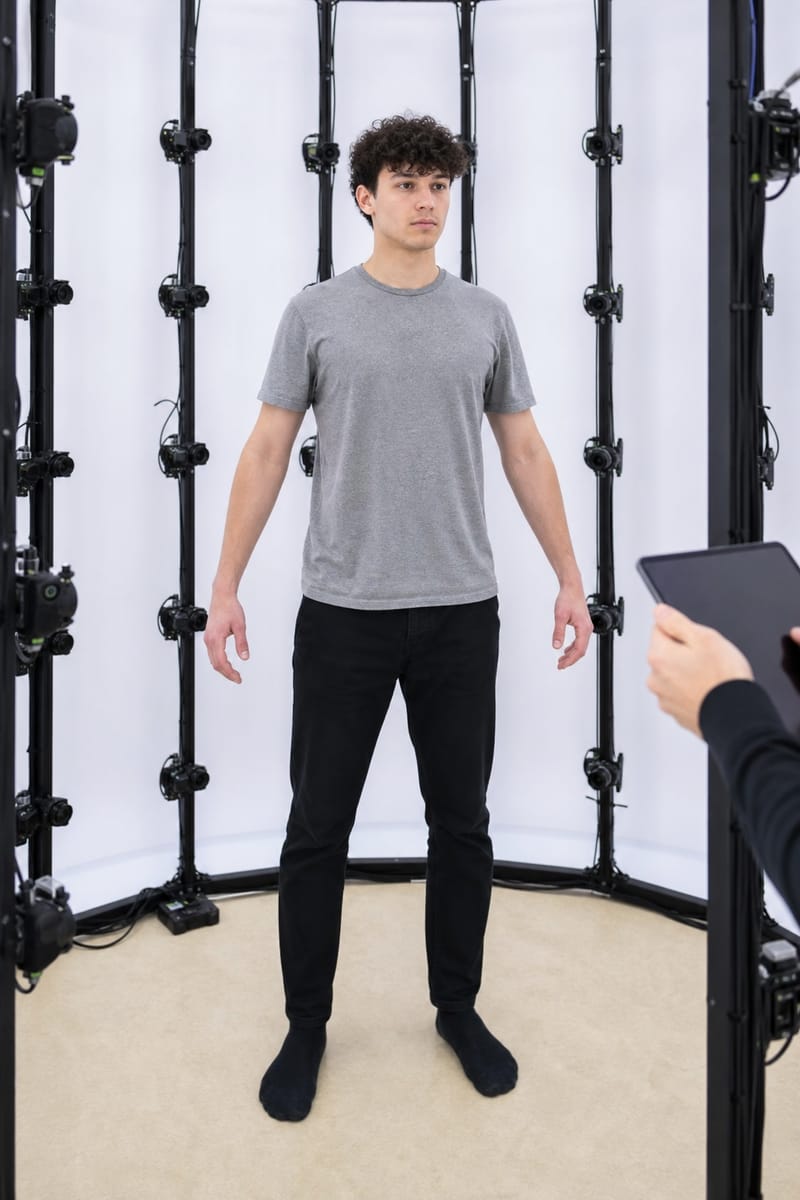

When a client asks to use your image, that is a usage rights question, and unlimited use is called a buyout. For a digital twin an unlimited buyout is especially risky, because the copy can be used for years. General contract terms are covered in modeling contract.
Does AI content have to be labelled?
Yes, and the requirements are growing.
- EU AI Act. Article 50 has applied since 2 August 2026. Anyone who uses AI to create realistic images, audio or video that look like real people or events (deep fakes) must disclose that the content was generated or manipulated by AI. For artistic and creative work the label may be more discreet, but it is still required. The European Commission adopted guidelines on these duties in July 2026. The Act applies to content used in the EU, whoever produces it.
- Instagram and Facebook. Since 2024 Meta adds an "AI info" label when it detects AI signals or when the creator discloses AI use.
- TikTok. Its rules require creators to label all AI-generated content containing realistic images, audio or video.
- Ad disclosure. If an AI influencer's post is an ad, it must be labelled as an ad, just like a human creator's. How to do that is in our guide to the Instagram model.
Is it worth creating your own AI influencer?
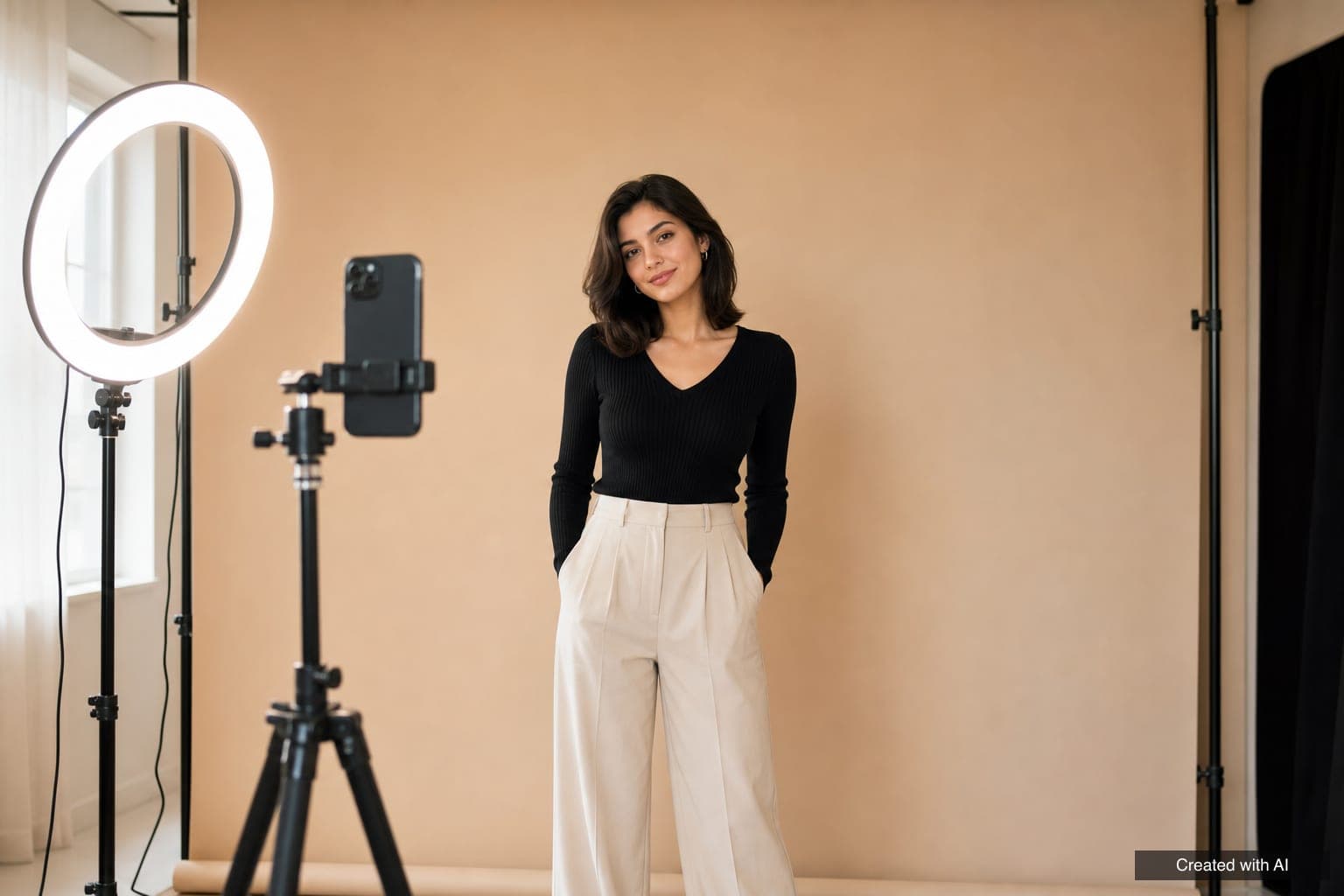
Some creators see an AI character as a business. Three things are worth knowing first. One: the character must not resemble a real person, and its content must be labelled. Two: audiences follow a story and consistency, so this is team work, not one generated picture. Three: trust is fragile, and when followers learn they were misled, brands pull out.
If your goal is a modeling career, an AI character will not replace it. Agencies look for real people: digitals, measurements, personality. You can apply through the Supermodels open call, free of charge. How modeling work fits with social media is in our guide to the Instagram model, and creators who make content for brands are covered in how to become a UGC creator.
How an agency protects a model in the AI era
- It reads the small print. An agency spots phrases about "all technologies now known or later developed" that in fact amount to consent to an AI copy.
- It negotiates separate pay. A digital twin is priced on its own, per use or per period.
- It limits the scope. Term, territory, channels, and a ban on passing the copy to others or using it to train other AI models.
- It monitors use. If the copy is used outside the contract, the agency has grounds to demand it stops and is paid for.
Supermodels signs a contract with every model and works with international agencies, so questions like these are handled through the agency rather than by the model alone. What a trustworthy agency looks like is covered in how to choose a modeling agency.
What to avoid
- Consent to an AI copy bundled into general terms. It should be separate, not hidden in a usage clause.
- A one-off fee for unlimited use of your copy. Your face could keep working without you for years.
- Free "AI photoshoot" apps that ask for many photos of you. Check who gets the rights to what you upload.
- Unlabelled AI content. It breaks platform rules and EU requirements.
- Using other people's faces in AI without consent. It is both a legal and an ethical problem.
FAQ
What is an AI influencer?
A computer-generated character who behaves like a person on social media and works with brands. The person does not exist; a team creates the content. The best-known examples are Lil Miquela, Shudu Gram and Aitana López.
What is a digital twin of a model?
A copy of a real model's appearance made by AI from photos or a 3D scan. It produces new images without a shoot, and needs the model's separate written consent and pay for use.
Will AI replace models?
It is already replacing some fast e-commerce and catalogue work. Runway, live events, filming with emotion and ambassador roles remain human work, and digital twins can become an extra source of income for models.
How much do AI influencers make?
There is little verified public data. Aitana López's creators say she earns up to €10,000 a month and usually around €3,000. Those are the creators' figures, not audited income.
Do AI-generated images have to be labelled?
Yes. Since 2 August 2026, Article 50 of the EU AI Act requires disclosure of realistic AI-generated or manipulated images, and Instagram and TikTok have their own labelling rules.
What should I do if a client wants to make a digital copy of me?
Do not sign straight away. Ask for a separate consent clause covering purpose, channels, term, pay, restrictions and deletion of the data when the contract ends, and discuss it with your agency.
Sources
- Regulation (EU) 2024/1689, Article 50: Transparency obligations; European Commission, Guidelines on transparency obligations (applies from 2 August 2026).
- New York State Department of Labor, Fashion Workers Act FAQs (in force from 19 June 2025, digital replicas and powers of attorney).
- Civil Code of the Republic of Lithuania, Article 2.22, right to one's image.
- Levi Strauss & Co., LS&Co. Partners with Lalaland.ai, 22 March 2023 (with later clarification).
- Mango Fashion Group, Mango creates the first campaign generated by artificial intelligence for its Teen line, 2024.
- BBC, H&M to use digital clones of models in ads and social media, March 2025; The Business of Fashion, H&M Knows Its AI Models Will Be Controversial.
- BBC, What Guess's AI model in Vogue means for beauty standards, 2025; CNN, Your favorite model? Thanks to AI, they might not be real, 31 July 2025.
- Euronews, Meet the Spanish AI model earning up to €10,000 a month, 27 December 2024.
- Virtual Humans, The Latest From Cameron-James Wilson, Shudu Gram's Creator (Shudu Gram since 21 April 2017).
- Meta, Our Approach to Labeling AI-Generated Content and Manipulated Media, 2024 ("AI info" label); TikTok Support, AI-generated content.



Comments (0)
No comments yet. Be the first!
Only logged-in users can comment. Register — and you'll be able to share your thoughts on this article.
Register