

In short
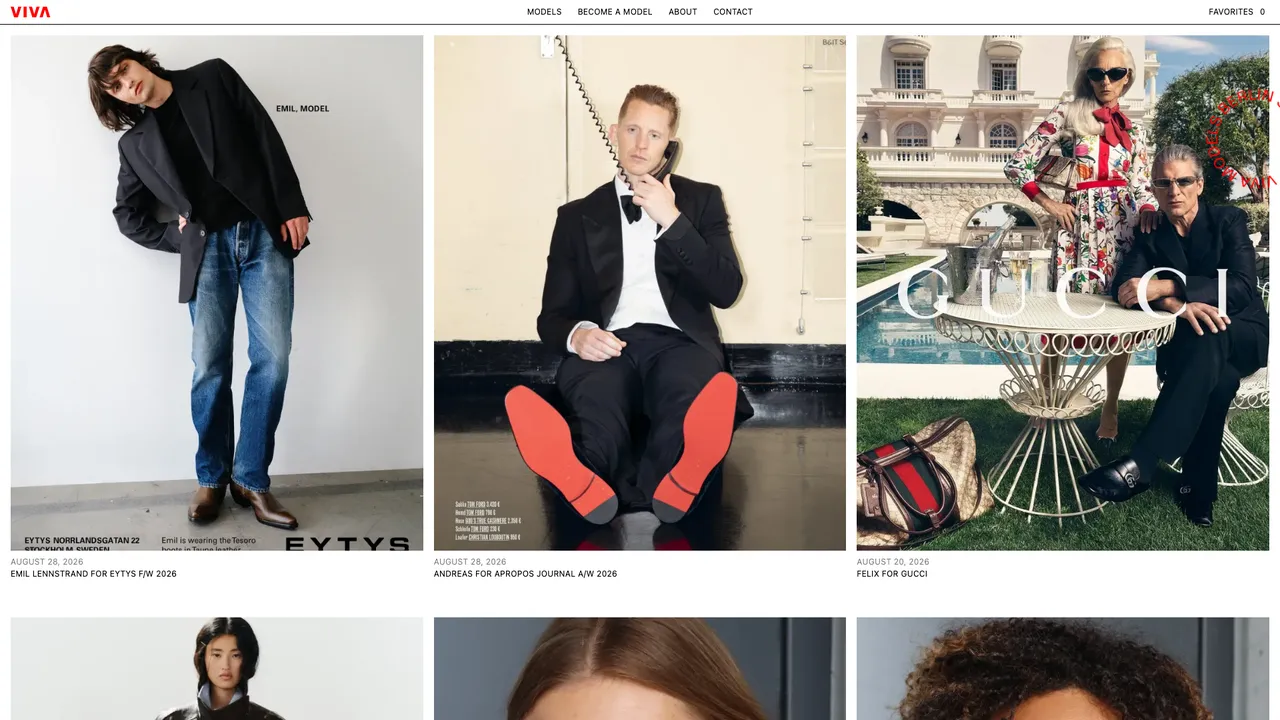
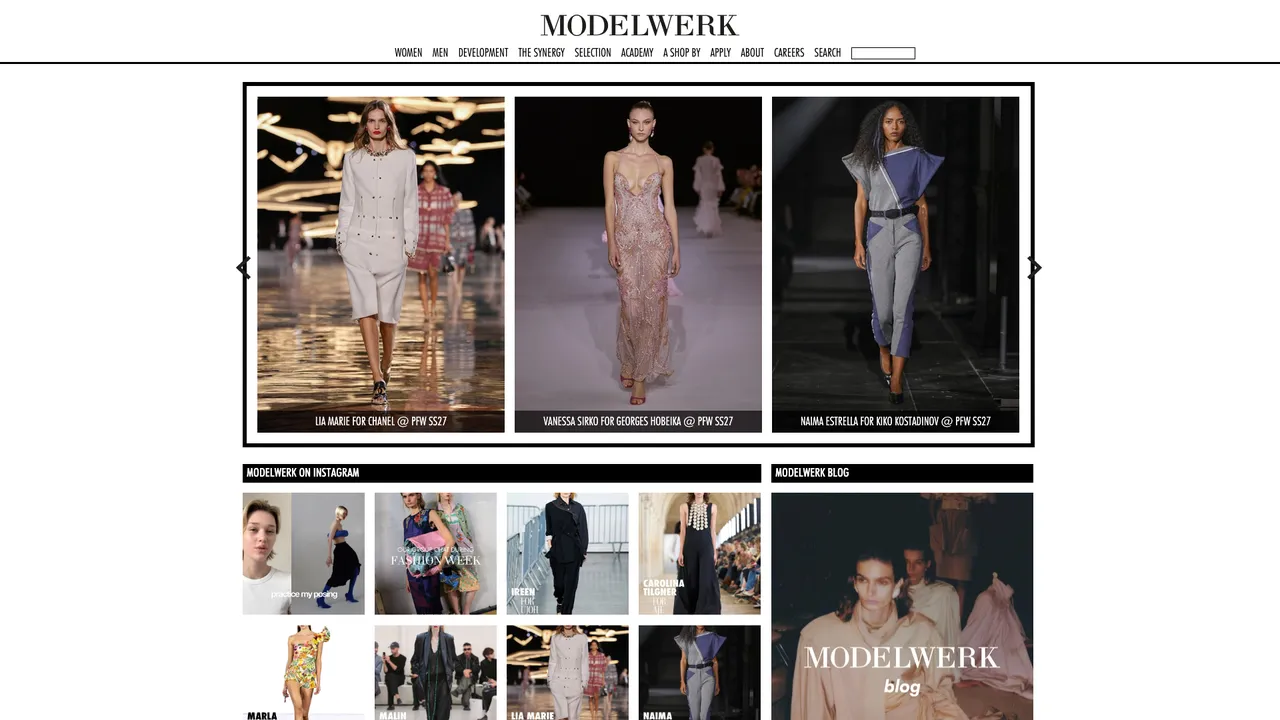
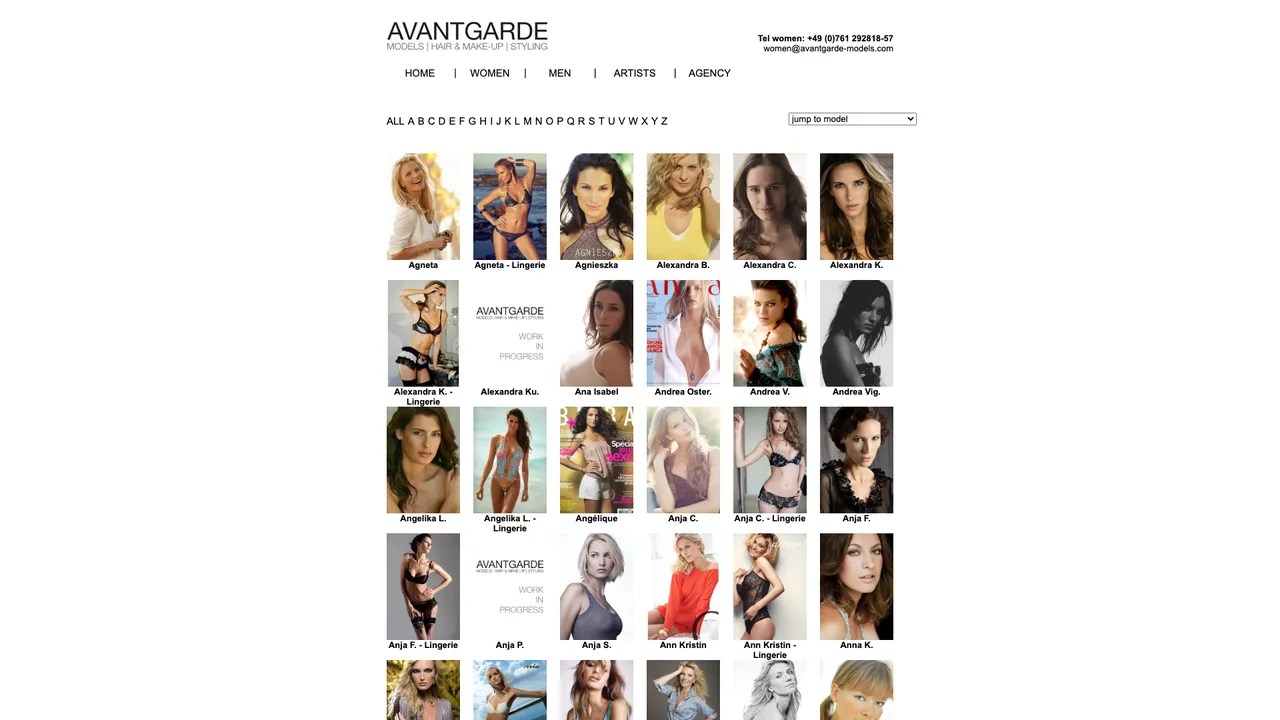
- Germany's model market has no single centre: our catalogue lists 32 agencies in Berlin, 30 in Hamburg, 11 in Munich and 10 in Düsseldorf. In all it has 137 agencies.
- Agencies have needed no licence since 2002. The law forbids taking a fee in advance, and in practice an agency takes 20–30% of the fee from the model.
- Models mostly work self-employed. As an EU citizen you need no permit, and if you only fly in for jobs you do not need to register either.
- For a non-resident, tax is withheld only on the part of the fee paid for image rights, and a model under 15 needs a permit from the supervisory authority for each job.
The model market in Germany
Unlike France or Italy, Germany has no single fashion capital, so its agencies are spread across several big cities. In our catalogue most are in Berlin (32) and Hamburg (30). Then come Munich (11), Düsseldorf (10), Cologne (9) and Frankfurt (7). Leipzig, Nuremberg and Stuttgart have three agencies each, Bremen and Erfurt two each, and another 25 agencies work in smaller towns.
The public broadcaster NDR calls Hamburg Germany's model capital: the big e-commerce and catalogue companies About You, Otto and bonprix are based there. Zalando was founded in Berlin in 2008, and Berlin Fashion Week takes place there twice a year: in 2026 it ran from 30 January to 2 February and from 2 to 5 July, and the next edition is set for 29 January to 1 February 2027. Düsseldorf hosts the order days Düsseldorf Fashion Days twice a year (next: 27 January to 3 February 2027), and Hugo Boss has its headquarters in Metzingen near Stuttgart.
The Federal Employment Agency's job profile names work for catalogues and online shops first, so Germany is above all a commercial market: there are many e-commerce and catalogue shoots and fewer runway jobs than in Paris or Milan. For Lithuanian models it is a nearby, steady market that they often reach through a mother agency or by flying in directly for a confirmed job.
How agencies work and what contract you sign
The permit for private job placement in Germany was abolished in March 2002. Since then an agency only has to notify the local trade office that it has started business (Gewerbeanmeldung); this is a notice, not an approval. There is no public register of model agencies.
Even so, the rules on job placement (Social Code Book III, section 296) set several points that matter to you:
- the placement contract must be in writing and state the fee; an oral fee agreement is void;
- a fee is due only once the placement leads to a contract with a client;
- the agent may not ask for or accept advances;
- assessing your skills and advising you are part of the placement service, so they cannot be charged for separately.
Commission: the legal cap and the practice
The 2002 regulation on agents' fees (Vermittler-Vergütungsverordnung) names photo models, advertising types and mannequins directly: the placement fee may not exceed 14% of the placed person's pay, or 18% for jobs of up to 7 days, VAT included. The cap is written for placement into employment.
In practice German agencies treat models as self-employed and take commission on both sides. The booking terms of the association VELMA set the client's commission at 20% of the agreed fee plus VAT, and one Cologne agency says the model is usually charged 20–30%. We found no court ruling on whether the statutory cap also covers self-employed bookings. So before you sign, ask which commission will apply and to what amount, and make sure it is written down in figures.
Booking terms
The VELMA booking terms, which many agencies rely on, describe the usual arrangements:
- a working day is 8 hours and a half day 4 hours; make-up and hair count as working time;
- overtime is paid at 15% of the day fee for each started hour, and the first 30 minutes are not charged;
- an option lapses unless it is confirmed 3 working days before the job;
- a booking cancelled late or without good cause is paid in full, and one cancelled because of the weather at 50% (cancellation fee);
- a travel day is paid as one day fee for bookings of up to 2 working days and as half a day fee for up to 4;
- usage rights are granted for one year, in Germany only and for the agreed purpose; wider use needs the agency's written consent and an extra fee (a buyout).
The law also says that a clause binding a job seeker to one agent only is void. The sources do not say how this fits the exclusivity that is common in modelling, so discuss its scope and duration before you sign.
Self-employment and insurance
Models in Germany mostly work self-employed. The Federal Fiscal Court ruled in 2007 that foreign photo models who come to the country for a short time can work self-employed, and the Hamburg Chamber of Commerce classes photo modelling as a trade, not a liberal profession. Status is decided case by case, depending on whether you work under instructions and are integrated into the client's organisation; the German pension insurer can issue a binding decision.
Models are not on the list of occupations of the artists' social insurance fund (Künstlersozialkasse), so do not plan on relying on it. If you live in Germany, health insurance is compulsory, and a self-employed model arranges pension and insurance personally.
Boards and requirements
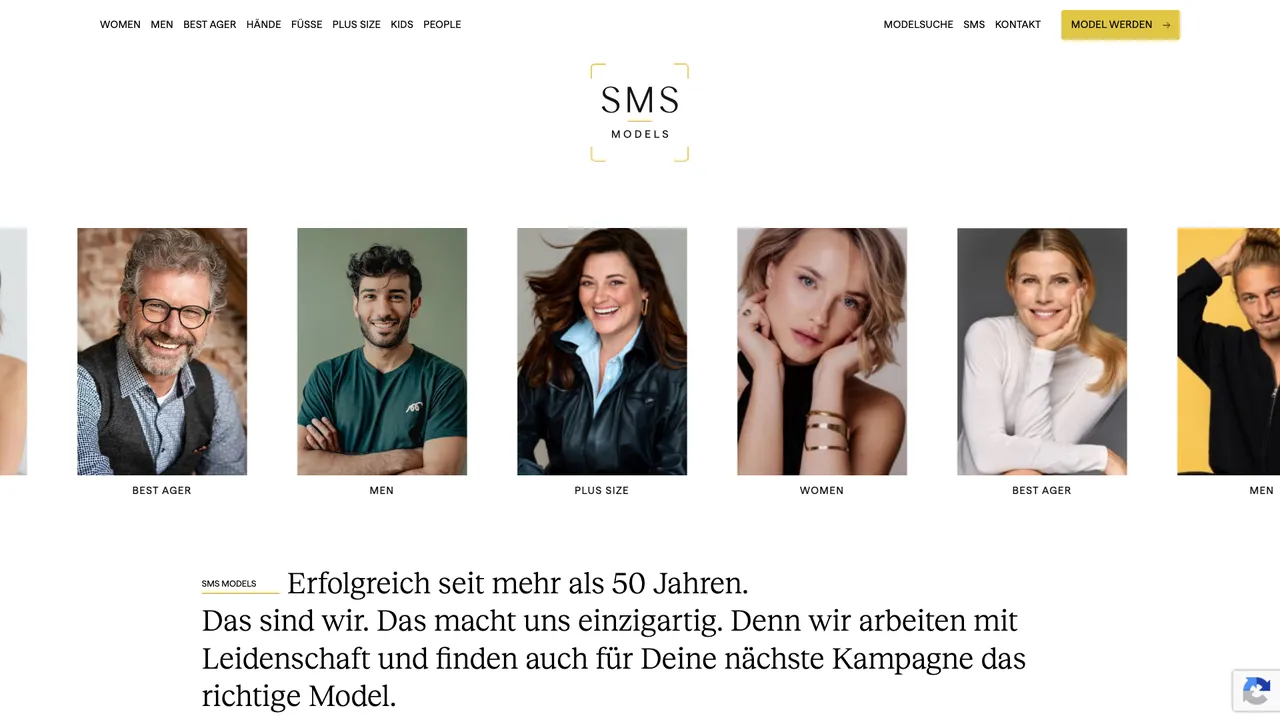
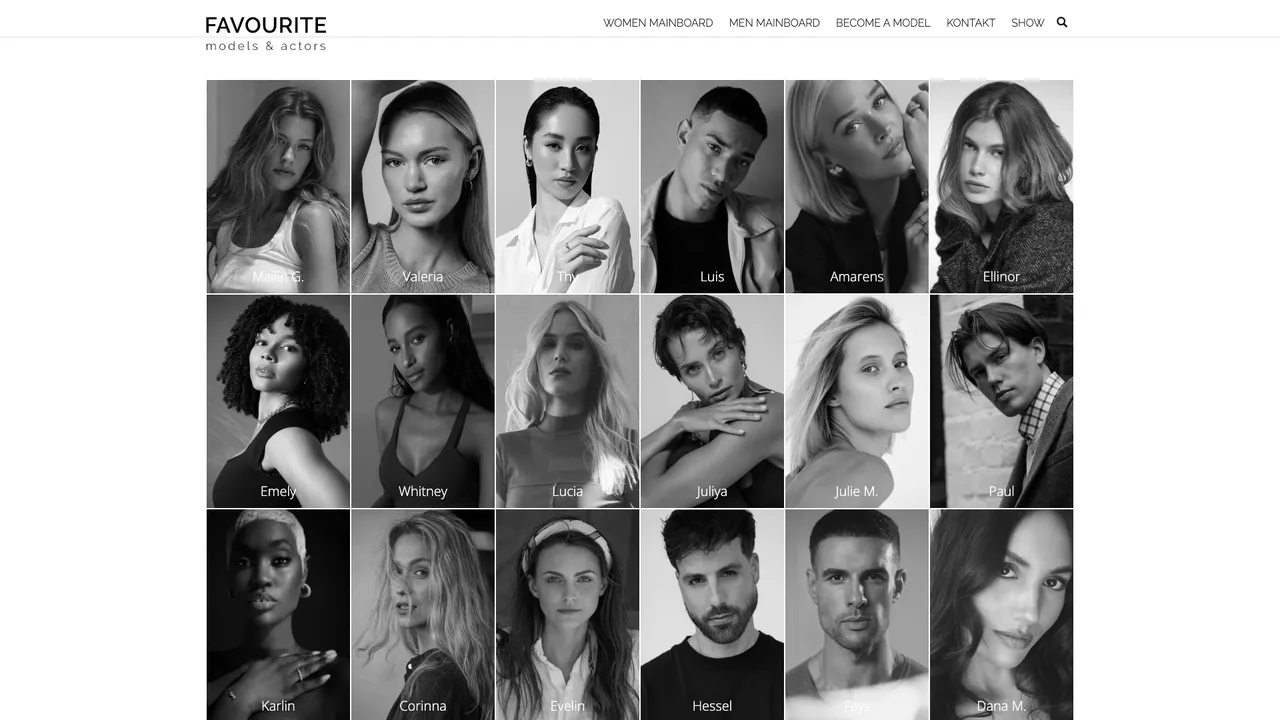
German agencies divide their models into boards. In our catalogue, 95 agencies have a women's board, 89 a men's board, 54 a commercial board, 51 a talent board and 44 a new faces board. Twenty-nine agencies have a senior board (often called "Best Ager" in German), 24 a curve board, 14 a kids' board and 8 a sports board. The mix shows what kind of market this is: much of the work is in advertising and catalogues, which need people of every age, build and look, so commercial and mature models have more opportunities in Germany.
Runway requirements are covered in the guide runway model, and the types of modelling work are compared in types of modeling. You can filter the catalogue by board: women, men, commercial, talent, new faces, senior, curve, kids, sport.
How to choose an agency
We do not rank agencies. The catalogue lists every professional German agency that has a live website and model board and whose core business is representing models, as well as the German offices of foreign agencies. We left out model schools, sellers of paid Sedcards, photo shoots or courses, event and promotional staffing firms, databases where anyone can upload a profile, and actor-only agencies.
Each agency profile shows what we were able to check: the company name, register number, address, boards, and whether the agency is on the last published member list of the association VELMA (June 2025, 11 agencies). VELMA was founded in Munich in 1992; it published no membership criteria, and its website was offline in October 2026, so membership is only one sign among others.
German law (Digital Services Act, section 5) requires every website to carry an Impressum with the company name, address, manager, register court and number and VAT number. The company register at handelsregister.de has been free to search, without an account, since 2022. Before you sign, check:
- that the website has a full Impressum and the company can be found in the register (sole traders may have no register number);
- that the agency has a board that suits you and a live model board;
- that the contract is in writing and states in figures the commission, duration, scope of exclusivity and how to end it;
- that you are not asked to pay in advance for a profile, a Sedcard or a photo shoot;
- which costs (apartment, travel, tests) the agency may advance and how you will see them on your statement;
- that you can take the contract home and show it to a lawyer.
A longer checklist is in the guide how to choose a modeling agency, and risky contract clauses are covered in modeling contract.
Under-age models
The Youth Employment Protection Act (Jugendarbeitsschutzgesetz) treats anyone under 15 as a child, and treats young people of 15 to 17 who are still in full-time compulsory schooling the same way. Child labour is banned, but the Land's supervisory authority can grant a permit for advertising events, film shoots and photo shoots.
- Children over 3 and up to 6 may work up to 2 hours a day, between 8:00 and 17:00.
- Children over 6 may work up to 3 hours a day, between 8:00 and 22:00.
- No permit is possible for children of 3 and under.
- The permit needs the parents' written consent, a medical certificate no older than 3 months and the view of the youth welfare office (Jugendamt); supervision must be ensured on set, 14 hours of unbroken rest must follow, and schoolwork must not suffer. Work may start only once the written permit has arrived.
- In Hamburg the client applies at least 10 days ahead and adds a school certificate; permits normally cover no more than 30 days per calendar year and child. In North Rhine-Westphalia the application is due at least two weeks ahead.
- Young people of 15 to 17 who have finished compulsory schooling may work up to 8 hours a day and 40 hours a week; at photo and film shoots until 23:00, followed by a compulsory 14 hours of rest.
For parents before a trip to Germany
- Ask the agency to show you the permit for the specific job, or the application for it.
- Agree in advance who will be the chaperone and where the minor will live.
- Do not let a child go alone to "castings" in hotel rooms or private apartments.
- Do not agree to unlimited usage rights for the child's images.
Taxes
You become tax-resident in Germany if you have a home here or stay here habitually; a continuous stay of more than six months always counts as habitual from its first day. Most Lithuanian models who fly in for jobs remain non-residents.
Non-residents are subject to a 15% withholding tax plus a 5.5% solidarity surcharge, 15.825% in all. An important exception applies to photo models: under the Federal Finance Ministry's letter of 9 January 2009, tax is withheld only on the part of the fee paid for image rights, while pay for taking part in the shoot itself is normally not German-source income. A simplified rule applies to day fees of up to €10,000: the rights part is 20% of the fee up to €5,000 and 45% of the amount above €5,000.
| Day fee | Rights part | Tax (15%) | Solidarity surcharge |
|---|---|---|---|
| €2,000 | €400 | €60 | €3.30 |
| €8,000 | €2,350 | €352.50 | €19.39 |
The simplified rule does not apply when rights to film footage are also granted. The sources do not say whether runway work counts as a performance on which tax is withheld from the whole fee, so ask the agency before a show.
Germany and Lithuania have a double tax treaty, signed on 22 July 1997 and applied since 1999; a 2022 protocol applies from 2024. Under it, income from self-employed work is taxed in your country of residence unless you have a fixed base in the other country or stay there more than 183 days. The treaty does not work by itself: the client still withholds the tax unless you already hold an exemption certificate from the Federal Central Tax Office (BZSt); otherwise the tax can be reclaimed later. The model applies personally, online, and adds a certificate of residence from the Lithuanian tax office.
If you are a self-employed resident of Lithuania invoicing a German company, you normally do not charge German VAT: the client accounts for it (reverse charge). Model taxes in general are covered in the guide model taxes.
Papers and registration
EU citizens may live and work in Germany without permits: a passport or ID card is enough, and an employer has no right to ask for a work permit. If you only fly in for jobs and keep living in Lithuania, you need none of the steps below.
If you move to Germany:
- Register your address at the registration office within two weeks of moving in (Anmeldung).
- After registering you receive your tax identification number (Steuer-ID) by post. If it has not arrived within three months, contact the BZSt.
- Arrange health insurance: it is compulsory for everyone living in Germany.
- Notify the local trade office that you are starting business (Gewerbeanmeldung).
- Within one month of starting, send the tax office its registration questionnaire through ELSTER; you then receive your business tax number.
Scams and warning signs
The paid Sedcard scheme is well known in Germany. A police prevention website describes mass castings in hotels where applicants sign, on the spot, a contract for several hundred euros for an online profile. Legally it is an advertisement they have bought, the contract runs for a year and renews itself, and the seller denies the 14-day right of withdrawal, although consumer advice centres consider that denial unlawful. The advice centres give one rule: a reputable agency charges only once it has found you work and does not ask you to pay for a comp card or a photo shoot. Warning signs:
- a mass casting in a hotel and a contract you must sign at once;
- a fee for a profile, a Sedcard, a compulsory photo shoot or a course;
- a one-year contract that renews itself;
- the website has no Impressum, or you cannot find the company in the register;
- you are invited to a "casting" in a private apartment, or asked to come without your parents;
- you are asked for nude or underwear photos, especially of minors.
If someone contacts you in the name of a German agency, check the contact on the agency's official website or ask your mother agency. More signs are listed in the glossary entry modeling scams.
How to apply
Most Lithuanian models reach Germany through a mother agency: it sends German agencies digitals, measurements and a video, and once there is an offer it negotiates the terms. If you apply directly:
- Choose agencies by city and board: the catalogue above can be filtered.
- Check the agency's Impressum and its register entry.
- Take photos in daylight without make-up: face from the front and in profile, and full length. Measure your height, bust, waist and hips accurately.
- If you are under 18, include your parents' contact details.
- When invited, ask in writing for the contract, the commission, the apartment cost, any advances and who will pay for travel.
- Prepare for castings with the guide model castings: how to prepare.
Jurgita.com is owned by the model agency Supermodels, which works as a mother agency and places models with agencies abroad. Applying and the open call are free; how they work is described in Supermodels open call.