


In short
- A beauty pageant is a competition in which a panel of judges picks one titleholder for a season. A modeling agency is a work representative: it finds a model paid jobs and earns only from them.
- Pageants score personality, interview, stage presence and community work. Agency clients care about height, measurements, how a face reads on camera and reliability on set.
- In a pageant the contestant often pays: entry or sponsorship fees, gowns, coaching. A legitimate modeling agency never charges to register or attend an open call.
- A crown can bring visibility and confidence, but a modeling career does not need one. If modeling is the goal, the shortest route is an agency open call.
Anyone who has been told they "could be a model" eventually meets the same fork in the road: enter a pageant or approach a modeling agency? Both worlds use stages, photo shoots and runways, so people often treat them as one industry with two doors. They are two different activities with different goals, different judges and money flowing in opposite directions.
This guide explains how pageants work, how agencies work, where they overlap and where they do not. We cover the big international titles in a separate guide to Miss Universe, Miss World and pageant requirements, the national title in Miss Lithuania, practical prep in pageant preparation, and model search contests, which are something else again, in modeling competitions.
What a beauty pageant is
A beauty pageant is a competition in which judges score contestants in announced categories and crown a winner and runners-up. The large international systems, such as Miss Universe and Miss World, run through national franchise holders: each country selects a delegate in its own pageant, and she goes on to the global final.
Modern pageants are a long way from a swimsuit parade. Miss America began awarding college scholarships instead of cash prizes in 1945, and in 2018 it dropped the swimsuit competition and said it would no longer judge contestants on appearance. Miss World puts its charity programme, Beauty With a Purpose, at the centre, and its 2026 format fills part of the semi-final places through Beauty With a Purpose, Multimedia, Head-to-Head debates, Talent, Sports and Top Model challenges.
Many systems still keep the classic trio of interview, evening gown and swimsuit or activewear. In the Miss USA state pageants, for example, the three are scored equally.

What a modeling agency does
A modeling agency represents a model in the job market. It finds bookings (campaigns, catalogs, shows, advertising), negotiates fees and usage rights, sends the model to castings, builds the portfolio and places the model with agencies abroad. The agency earns an agency commission on the work the model does, so its interest is a long, busy career.
No stage decides an agency model's success. Clients do, every time they choose a face for a campaign. That is why agencies look at things a pageant panel never sees: whether the model is punctual, keeps their shape, photographs differently with different photographers and fits the sample clothes. Our guide on how to choose a modeling agency explains how to tell a reputable agency from a scam.
 Model training with SupermodelsTry it in practice with an agency teamIn the model training we work on the walk, posing and working on camera, one to one or in a small group.About the trainingfrom €69
Pageant vs modeling: side by side
The table gives the main differences. Every pageant and every agency has its own rules, but the logic holds across the industry.
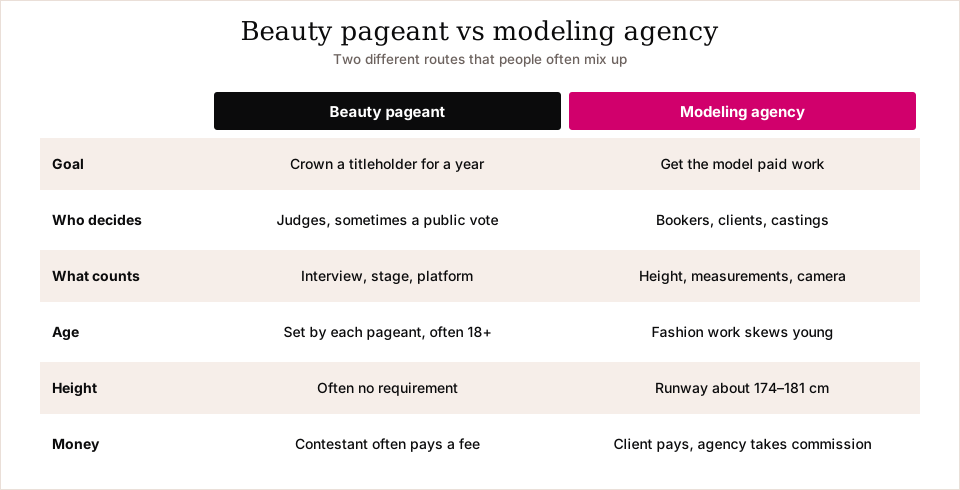
| Beauty pageant | Modeling agency | |
|---|---|---|
| Goal | Crown a titleholder who represents the title for a year | Get the model paid work |
| Who decides | Judging panel, sometimes a public vote | Agency bookers, then clients and casting directors |
| What counts | Interview, public speaking, stage presence, community project, appearance | Height, measurements, face on camera, pictures, reliability |
| Age | Depends on the system: Miss Universe 18 and over with no upper limit, Miss America 18 to 28 | Fashion work skews young; commercial work is open to all ages |
| Height | Often no requirement | For runway, women roughly 174–181 cm (5'8.5"–5'11") |
| Money | Contestant often pays fees and buys wardrobe; winner gets prizes or a scholarship | Model pays nothing to be represented; agency keeps a commission from fees |
| Time frame | One season, title for a year | Contract for several years, career can last decades |
Age, height and measurements: where the rules are stricter
Many people assume pageants are the stricter world. Usually it is the other way round. The big systems have opened up in recent years: the Miss Universe Organization has allowed married women and mothers since 2023 and removed its upper age limit from 2024, so any adult woman can enter. Miss America keeps an 18 to 28 window. Many state and national pageants say outright that there are no height, weight or measurement requirements.
Agencies are stricter here because their clients cut sample size clothes and book models who fit them. For runway, the usual guide is about 174–181 cm for women and 183–190 cm for men (more in our runway model guide). Supermodels, a Vilnius agency, asks for women aged 14 to 22 and at least 170 cm, and men aged 16 to 25 and 185–190 cm. On the other hand, commercial, plus-size, mature and petite modeling are open to a far wider range of people; we map every route in types of modeling.
So a tall, slim twenty-year-old can choose either path. A shorter or older woman who speaks well and has a cause she cares about may have better odds in a pageant than at a fashion agency.
Who pays whom: money in pageants and in agencies
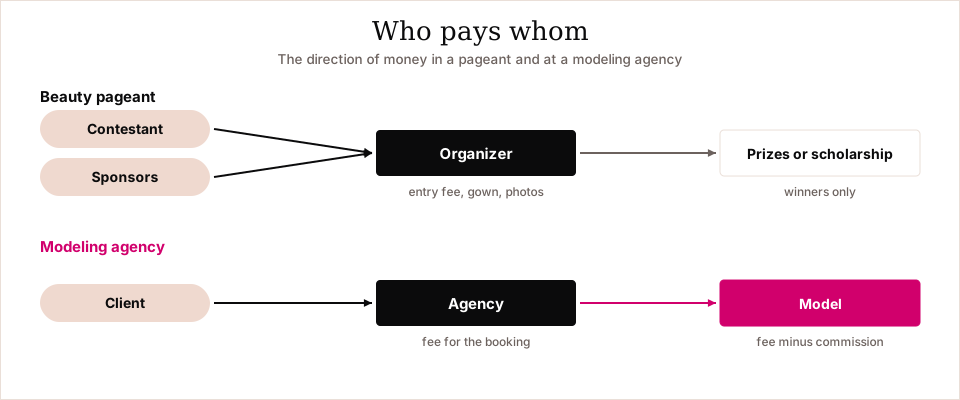
This is the difference people talk about least. In a pageant, the contestant usually pays. With an agency, the client pays, and the model receives the fee minus commission.
Pageant costs
Many pageants charge an entry or sponsorship fee. Miss Hawaii USA, for example, lists a 550 US dollar entry fee covering workshops, photo and video shoots, logo wear, transport and meals at events, while other states ask contestants to raise a sponsorship fee from local businesses. Add the evening gown, shoes, hair and makeup, headshots and, for some, sessions with a pageant coach. Not every pageant works this way: some are free to enter and funded by organizers and sponsors. Ask for a written list of every cost before you sign up.
Agency money
A reputable modeling agency charges nothing to register, attend an open call or meet you. It earns only from your work, keeping the commission set in your modeling contract. Some costs (test shoots, travel abroad, a model apartment) may be advanced and recouped from future earnings, but that must be written into the contract. New York's Fashion Workers Act, in force since June 2025, bans upfront fees and caps agency commission at 20 percent, and the US Federal Trade Commission warns that being asked to pay for photos or classes before any work is a classic sign of a modeling scam. For real numbers, see how much models make.
Do pageants help a modeling career?
Short answer: sometimes, but a pageant is neither required nor the fastest route.
What a pageant can give you
- Stage skills. Rehearsals teach you to walk in heels, stand, hold a pose and manage nerves in front of an audience.
- Speaking. Judges' interviews and on-stage questions train you to answer briefly and clearly, which helps at castings and in press interviews.
- Visibility. A titleholder spends a year at events, charity work and in the media, which can lead to hosting or advertising work.
- Confidence. Many former contestants say the experience and the friendships mattered more than the crown.
Why a pageant does not replace an agency
- A different beauty ideal. Pageant styling (full glam, big hair, sparkling gowns, a wide smile) often runs against what fashion clients want: a natural face, clean skin and a flexible look.
- A different walk. The pageant walk is soft, with turns, pauses and smiles for the audience. A runway walk is straight, rhythmic and neutral. Agencies sometimes have to coach the pageant habits out.
- A title is not a portfolio. Clients book from pictures, digitals and measurements, not from a sash.
- Time and money. Preparing for a pageant can take months and a real budget. An agency open call takes one meeting and costs nothing.


The agency open call: a different route into modeling
If the goal is modeling work rather than a title, go to an agency. There are two ways in: an open call at the agency or an online application with simple, unedited photos. A booker checks height, measurements, skin, proportions and how you look on camera without makeup. If you fit, the agency invites you in, explains the contract, helps you shoot your first test pictures and starts sending you to castings.
Supermodels is a Vilnius modeling agency founded in 2001 and a member of the international agency association M.A.M.A. It signs a contract with every model and works with leading agencies abroad for international placements. It does not run or partner with any pageant. If you meet the criteria, you can apply through the Supermodels open call.
Want stage skills without entering a pageant? Walking, posing and speaking on camera can be learned through model training or the Supermodels Masterclass. They are the same skills a pageant coach teaches, adapted to modeling work.
Pageant red flags: what to check
Most pageants are run fairly, but some earn their money from contestants rather than sponsors or broadcasters. Before you register, check:
- Who runs it. Does it hold an international franchise or is it a one-off event? Who were past winners and what are they doing now?
- Every cost in writing. Entry fee, compulsory workshops, compulsory photo shoots, wardrobe, travel. If the list only appears after you register, walk away.
- Prize terms. Is the prize cash, a scholarship, a contract or gifts? Does the winner owe the organizer a year of unpaid appearances?
- Contract and image rights. Many pageants take the right to use contestants' images. Read where and for how long your pictures can be used.
- Paid coaching and "guarantees". A coach can help, but nobody can guarantee a placement. Avoid packages that promise a crown.
- Minors. In teen pageants, parents sign the contract, and child pageants draw criticism in many countries over the sexualization of children. If a minor competes, a parent should be present at every stage.
The same rule applies to agencies: paying upfront for registration, classes or photos is a scam signal. Our glossary entry on modeling scams lists the warning signs.
How to choose: pageant, agency or both
| Your goal | Better fit | Why |
|---|---|---|
| Work as a model at home and abroad | Agency | Agencies get the bookings; clients do not care about titles |
| Become known, host events, work in TV | Pageant or both | A title gives a year of visibility and on-camera practice |
| Speak for a cause you care about | Pageant | Many systems score a community project |
| Win money for your education | A scholarship pageant | Miss America prizes, for example, are scholarships |
| Build a personal brand on social media | Either, depending on direction | We cover influencer and creator work in our content creator guide |
The two paths can run in parallel, but order matters. If you are young and meet fashion agency criteria, go to an agency first: a modeling career has a shorter window, while pageant age limits are far wider. If you already have an agency, talk to them before entering a pageant, because some title contracts restrict advertising work during the reign.
What to avoid
- Paying for a "guaranteed" final spot, agency contract or international pageant.
- Trusting events called "model contests" whose main product is photo shoots and courses.
- Changing your body or weight drastically for one evening. In pageants and in modeling, health is the foundation of the work.
- Signing a contract on the spot without reading it or talking it over with someone you trust.
- Assuming a title will open a modeling career on its own. Pictures, measurements and an agency open it.
Frequently asked questions
Is a pageant the same as modeling?
No. A pageant is a competition in which judges crown a titleholder for one season. Modeling is paid work booked through an agency, where clients choose models for campaigns, catalogs and shows.
Do I need to win a pageant to become a model?
No. Agencies sign models based on height, measurements, digitals and how they look on camera. A title can raise your profile, but it does not replace an agency.
Do you have to pay to be in a pageant?
Often, yes. Many pageants charge an entry or sponsorship fee, and contestants buy their own gowns, styling and photos. Miss Hawaii USA, for example, lists a 550 US dollar entry fee. Some pageants are free, so ask for every cost in writing.
Does a modeling agency charge to sign up?
A legitimate agency charges nothing to register, attend an open call or meet you. It earns a commission from your bookings. An upfront payment request is a common scam sign.
What is the age limit for beauty pageants?
It depends on the system. Miss Universe accepts women from 18 with no upper limit; Miss America accepts 18 to 28. Teen and junior pageants have their own age groups.
Is Supermodels connected to any pageant?
No. Supermodels is a modeling agency: it scouts models, signs contracts with them and books work in Lithuania and abroad. You can apply through its open call.
Sources
- Miss America, Sign Up: eligibility (age 18 to 28) and The Competition (scholarships since 1945), checked October 2026.
- PBS NewsHour, Miss America eliminates swimsuit competition and won't judge on looks, June 2018.
- WWD, R'Bonney Gabriel Reveals Miss Universe Ends Age Restriction, September 2023 (no upper age limit from 2024).
- People, Miss Universe Rules Contestants Have to Follow (married women and mothers eligible since 2023).
- Miss World, Miss World's Official Format for 2026 Revealed, August 2026.
- Miss Hawaii USA, FAQs (550 US dollar entry fee, no height, weight or measurement requirements, three equally scored categories), checked October 2026.
- New York State Department of Labor, Fashion Workers Act.
- Federal Trade Commission, Modeling Scams.
- Supermodels agency information and application criteria (supermodels.lt, checked October 2026).





Comments (0)
No comments yet. Be the first!
Only logged-in users can comment. Register — and you'll be able to share your thoughts on this article.
Register