
In short
- Our catalogue has 100 Dutch agencies in 36 places: 50 in Amsterdam, 5 each in Haarlem and The Hague, 4 in Rotterdam, 3 in Utrecht, 2 each in Diemen and Heerlen, and the other 29 one each in smaller cities and towns.
- The catalogue lists every business that represents models and does not vouch for them: each profile shows what we found, including fees charged to applicants with their prices, courses, company details and press reports.
- The Netherlands has no licence, no register and no agency association: the permit for private job placement ended on 1 September 2003. The Wtta system that starts in 2027 is for businesses that lend out workers, not for model agencies.
- Nobody sets the commission. The figure we found most often in agency terms is 20%: at some agencies the model pays it, at others it is added for the client. Some agencies charge a registration or website fee of between €7.50 and €75.
- An EU citizen needs no permit, and the BSN number used for tax and pay is free to get. A child under 13 may work only with an exemption from the Labour Authority.
The model market in the Netherlands
Fashion and advertising work in the Netherlands is concentrated in and around Amsterdam. Our catalogue has 50 of its 100 agencies in Amsterdam. Several more work in Haarlem (5), The Hague (5), Rotterdam (4), Utrecht (3), Diemen (2) and Heerlen (2). The remaining 29 agencies are spread one each over 29 places.
Some of those are Amsterdam's neighbours: Amstelveen, Badhoevedorp, Lijnden, Hoofddorp, Ouderkerk aan de Amstel, Nederhorst den Berg, Bussum, Hilversum, Almere and De Hoef. In the west and centre of the country we found agencies in Capelle aan den IJssel, Schoonhoven, IJsselstein and Lisse. In the south they work in Eindhoven, Tilburg, Etten-Leur, the village of Zeeland in North Brabant, Maastricht, Roermond and Weert, and in the north and east in Groningen, Leeuwarden, Heerenveen, Surhuisterveen, Emmen, Odoorn, Enschede and Apeldoorn. We found no agency office in Breda, Nijmegen, Arnhem, Zwolle or Delft.
One agency that spoke to the authors of a 2020 evaluation commissioned by the Ministry of Health described the market this way: there are two branches, commercial and high fashion, with a large middle group in between. In the catalogue that shows in the types of agency.
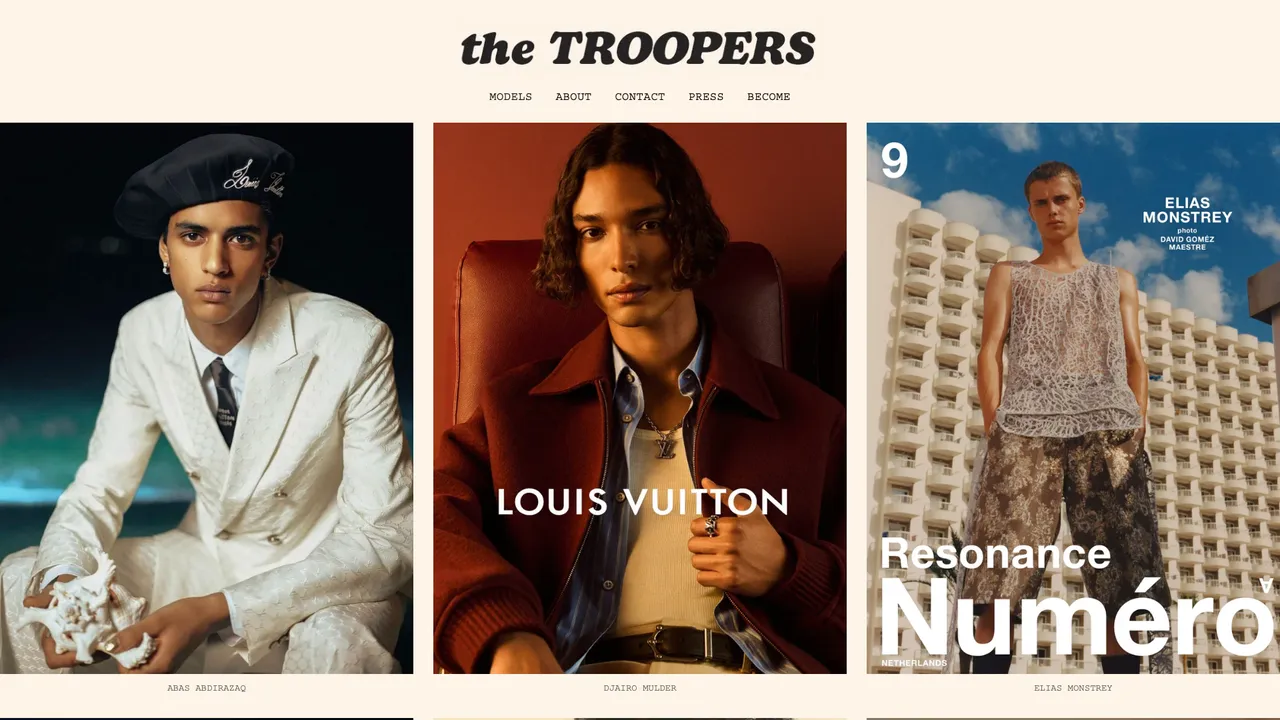
- Fashion and mother agencies. Ulla Models says it was founded in 1978 and was Amsterdam's first model agency. Platform Agency was called Paparazzi Model Management until the turn of 2021 and 2022. Marit Simons, the founder of CODE Management, spotted Imaan Hammam at Amsterdam Centraal Station in 2010, as Het Parool reported. Maartje Verhoef, a discovery of Micha Models, walked 66 shows at the international fashion weeks in 2014. Republic Men, MaxMen and The Troopers represent men only. LET IT GO Management and The Troopers call themselves mother agencies, and Rule Model Management in Rotterdam works that way too.
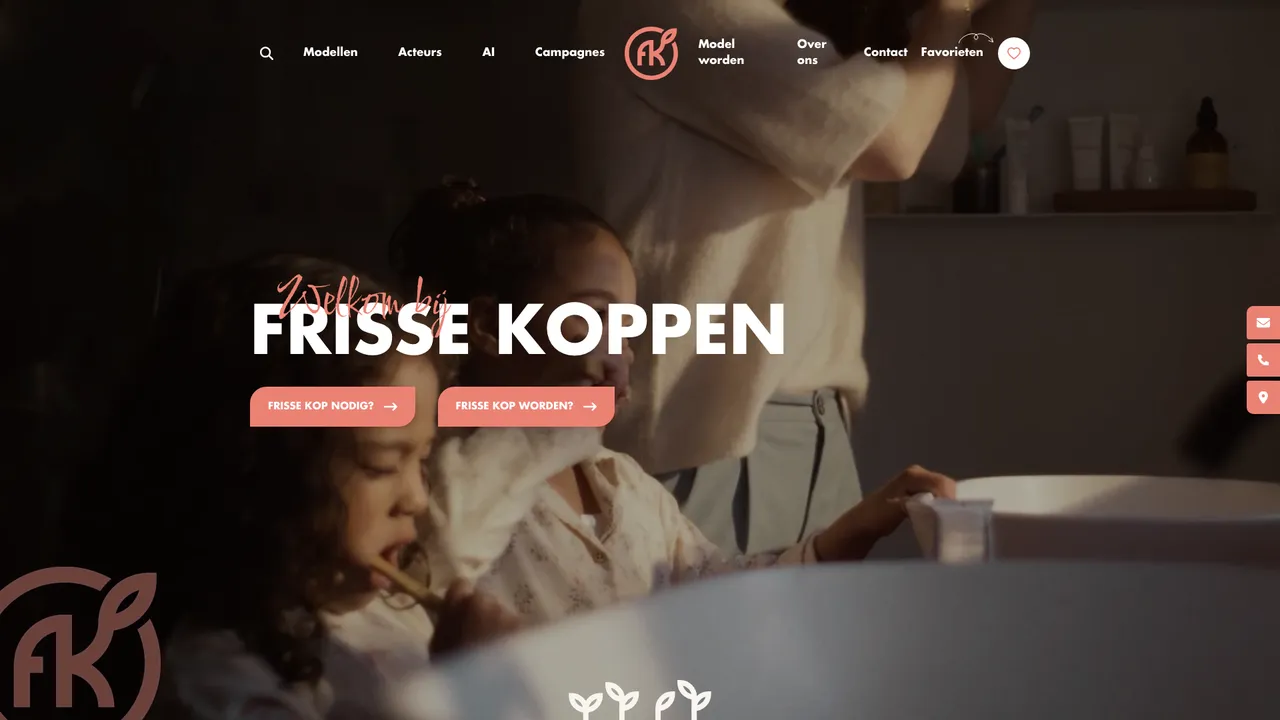
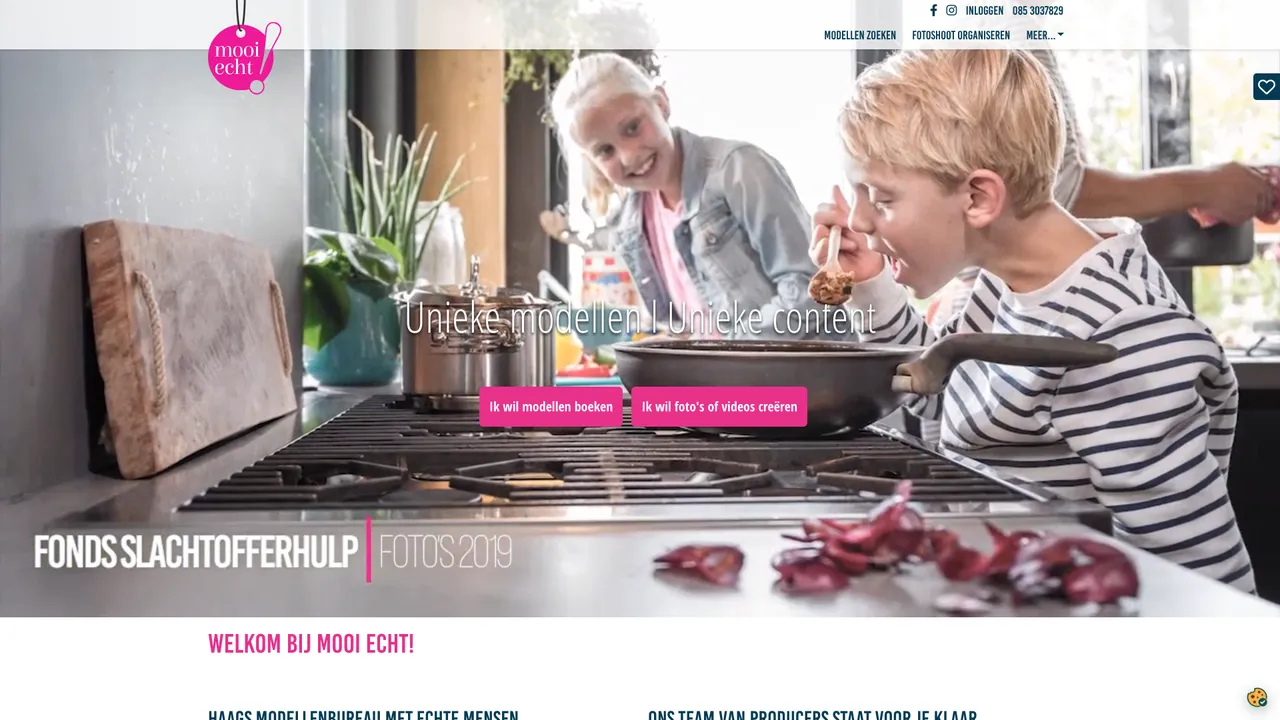
- Commercial, "real people" and casting agencies. Antimodels has looked since 2002 for people with a characteristic look, for whom age and size do not matter. Frisse Koppen in Tilburg says it represents the whole of society and receives 75 to 100 applications a week. Mooi Echt! in The Hague works with "ordinary people". Dutch Casting Agency reports a file of more than 40,000 models, actors, extras and hostesses, and Bullet Models more than 16,000 profiles.
- Kids agencies. Kidz Management, Hip4Kidz, The Faces, La La Agency and The Kids, which reports more than 500 children aged 0 to 18, represent children only.
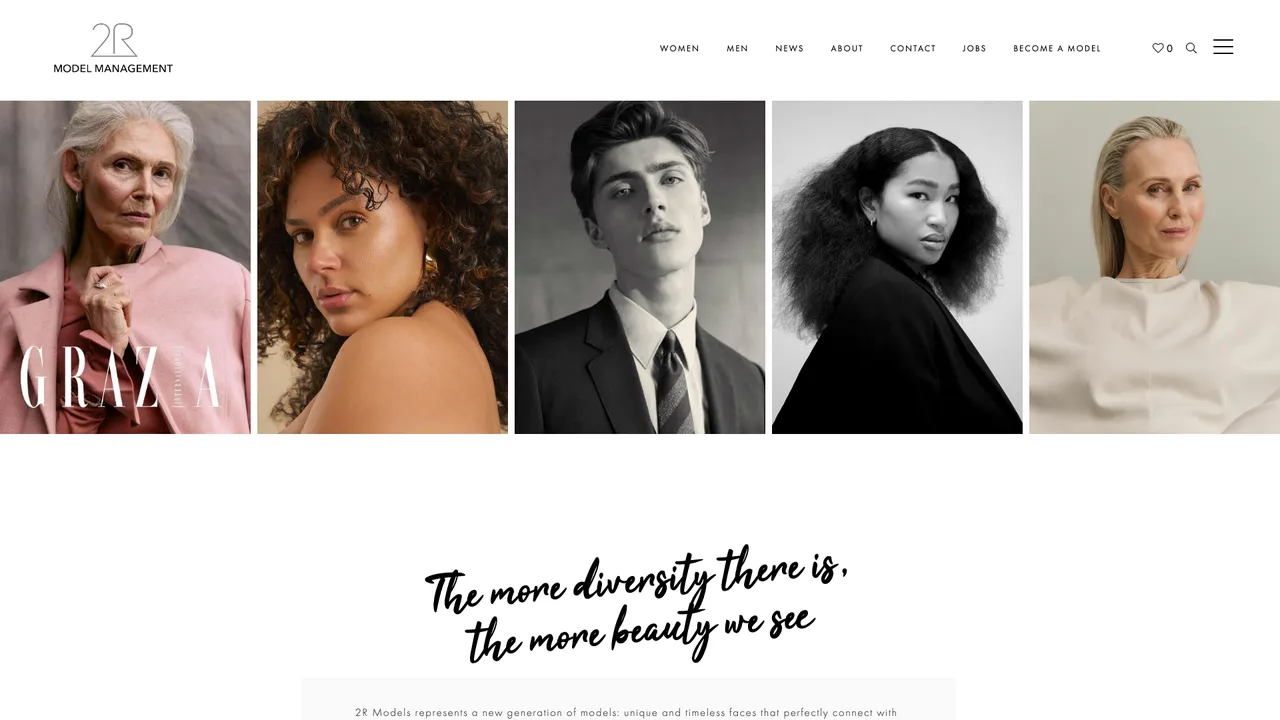
- 50+ and mature models. kleyn & groot Casting / The Seniors in Haarlem has had a separate unit for models aged 50 and over since 2001. 2R Model Management has focused on models of a classic age since 2017; its owner told the public broadcaster NOS in September 2026 that demand for older models has clearly grown.
- Curve and in-between sizes. Euromodel says it was founded in 1967 and was one of the first with an eye for curvy models. New Generation Model Management and Skins Model Management have separate boards, and Inbetween Models was founded for models of in-between sizes.
There are narrow specialists too: The Composers represents professional dancers, Amsterdam Model Agency mainly supplies fitting models to clothing makers, and Belle & Co in Utrecht calls itself an agency of "green models" for sustainable brands.
Among the clients whose head office we confirmed is PVH Europe: Amsterdam is home to the global headquarters of Tommy Hilfiger and the European offices of Calvin Klein, and the company reports 12,500 associates in the region. Vogue wrote that Karen Mulder, Doutzen Kroes and Lara Stone all got their start at home in the Netherlands. The 2020 evaluation calls the Dutch market healthier than that of many other countries, with more diversity and less strict requirements, and says models' negative experiences were more common abroad, Paris above all.
Amsterdam Fashion Week was founded in 2004 and takes place once a year, in September. In 2017 the stylist and entrepreneur Danie Bles acquired it from Telegraaf Media Groep and replaced the January and July editions with a single September showcase; the organiser calls it the leading fashion platform in the Benelux. The 2026 edition ran from 1 to 5 September at venues across the city. The organiser has not announced dates for 2027; it has said only that its sustainability requirements, adopted from Copenhagen Fashion Week, will be fully rolled out in September 2027. The event is also in our fashion calendar.
"Amsterdam" in the name does not always mean an Amsterdam address
The catalogue files an agency under the place where its office is. The office of Elite Amsterdam is in Hoofddorp, Euromodel, which presents itself as Euromodel Amsterdam, works from Lijnden, Not Your Mother Agency, styled NYMA Amsterdam, is registered in Haarlem, and Kidz Management prints Amsterdam although its postcode belongs to Diemen. Be-Pretty Models calls itself an Utrecht agency, but its terms say it is established in Schoonhoven. The exact address is on each profile.
How agencies work and what contract you sign
The Netherlands has no licence, permit or public register for model agencies. The only statute about labour intermediaries is the Wet allocatie arbeidskrachten door intermediairs (Waadi). It once contained a permit for private job placement and a temporary regime for the cultural and sports sector, but those articles lapsed on 1 September 2003. Since then anyone can start an agency after registering the business with the Chamber of Commerce (KVK). The 2020 evaluation, which the Ministry of Health sent to parliament, says so plainly: anyone can call themselves a scout or start a model agency, and no requirements are set for agencies or scouts although they work with minors.
The Waadi still regulates two activities. Job placement is help with finding work or workers where the aim is an employment contract. Supplying workers means making workers available to another business for payment, to work under that business's supervision and direction. A model agency that represents self-employed models fits neither definition neatly. We found no text from a ministry, the Labour Authority or a court about model agencies under this Act.
A new admission system (Wet toelating terbeschikkingstelling van arbeidskrachten, Wtta) enters into force on 1 January 2027, and the Netherlands Labour Authority enforces it from 1 January 2028. It is not a model-agency licence. Admission is needed by a business that makes a worker available to another business for payment, where the worker works under that business's direction: temp agencies, secondment firms and payroll firms. Applications run from 1 May to 30 June 2027, and from 1 July the new authority, the NAU, assesses them and keeps a public register. The conditions are a certificate of conduct, a deposit of €100,000 and compliance with a standards framework. Models, artists and casting agencies are not named in the Wtta material, and job placement is outside the system. A self-employed person who works for the client personally and decides independently how to do the work probably needs no admission, the official site says. So do not expect to find a model agency in the NAU register: its absence there will prove nothing.
What the law says about fees
Article 3 of the Waadi forbids asking a job seeker for anything in return for job placement, and article 9 forbids asking a supplied worker for anything in return for being supplied. Both rules are written for employment. Most models work self-employed, and no official text or judgment says how these articles apply to them. The wording does not ban commission from a self-employed model's fee, and we found no exception for models or artists either. So we write neither that a registration fee ("inschrijfgeld") is banned in the Netherlands nor that the Act does not apply to model agencies.
The police offer a more practical test: a reliable agency advances the cost of the first photo session and deducts it from later earnings, and real agencies never try out their models through a webcam.
Commission
No law or association sets the commission. The figure we found most often in agency terms is 20%, but who pays it differs:
- The model pays. Not Your Mother Agency says models pay a standard 20% agency fee and have no other costs. Under the terms of MULTA Casting the talent owes the agency a 20% mediation fee on what the client pays, and administration costs are also deducted at payout.
- Both the model and the client pay. ZAZA Casting keeps a 20% mediation fee from the model's fee and charges the client a further 20% agency fee.
- Added for the client. Mix Models, Euromodel and The Force Models charge the client 20% on top of the model's rate; in the booking conditions of APL Models the 20% commission is also payable by the client. 92 Model Management adds 20% to the model fee and, as a mother agency, takes 10% of earnings worldwide.
The online booking platform Modelwise, which is not in the catalogue, keeps 30% of the total the client pays (of €1,000 the model gets €700) and tells clients that this already includes "the standard 20% agency fee". We found no commission rate published by a classic Amsterdam fashion agency, so we do not call 20% a market rule. Before you sign, ask which commission will apply to you, on what amount it is calculated, and whether the agency also takes a share of payments for usage rights and of a buyout.
Fees for applicants and courses
Some agencies in the catalogue take money from applicants or sell services next to representation. This is what we found on their own websites:
- Bullet Models: a paid "Online profile", which clients can see on the website, costs a one-off €19.95; the free profile is not shown on the website and, in the agency's own words, gives a smaller chance of jobs. Photo shoot packages cost €169, €199 and €249, and a casting video €29.
- EGO'S Models: no registration fee, but placing photos on the website costs €72.60 per calendar year; the amount is set off against the fee for the first job.
- Moederannecasting: a one-off registration cost of €30 for a child, €30 for an adult with their own photos and €50 if the casting photos are made at the agency's office; updated photos in the studio cost €30.
- ZAZA Casting: a one-off €15 administration fee for creating a profile, once the profile has been approved.
- Hebbes Casting: a €14.99 administration fee for registering with photos; the agency also sells photo shoot days and Hebbes Academy courses.
- ID Casting: a one-off registration fee of €75 which, the agency says, is settled only against the first assignment; it also sells portfolio shoots and Casting Academy trainings.
- kleyn & groot Casting / The Seniors: €25 for registration and the photos taken in its studio.
- Be-Pretty Models: a one-off fee of €7.50 for being added to its system.
- Kidz Management: a €70 administrative fee per year, offset against the first paid booking (no booking, no cost), and a €175 fine for a no-show.
- La La Agency: €25 a year for a place on the website, only in a year in which the child got a job; the amount is deducted from the payout.
- Young Model Management: a 45-minute portfolio shoot costs €225 for the agency's models and €275 for other children; each extra photo costs €7.50.
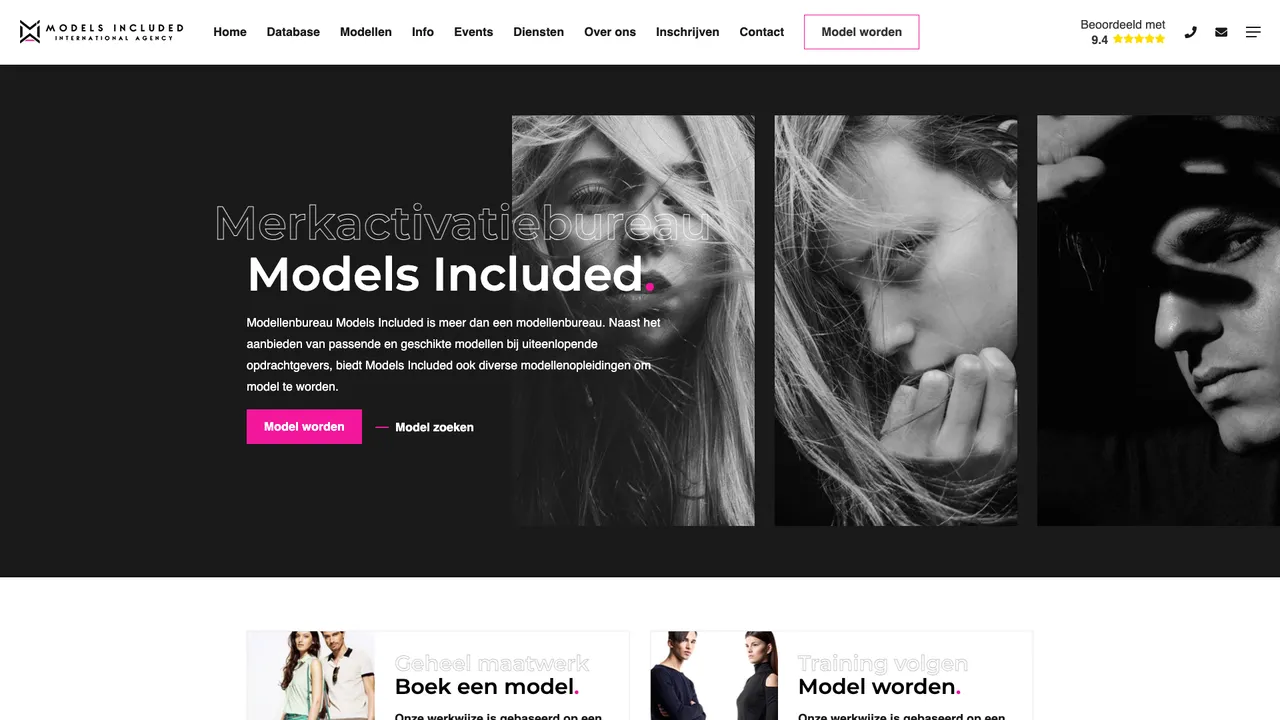
- Models Included: the catwalk course for beginners costs €179; registration is free for models who already have a professional portfolio.
- Dutch Casting Agency: registration is free, and an optional photo shoot at the office costs €25.
- Inside Out Models: registration is free; a model who cannot issue an invoice is charged €2.50 in administration costs per settlement.
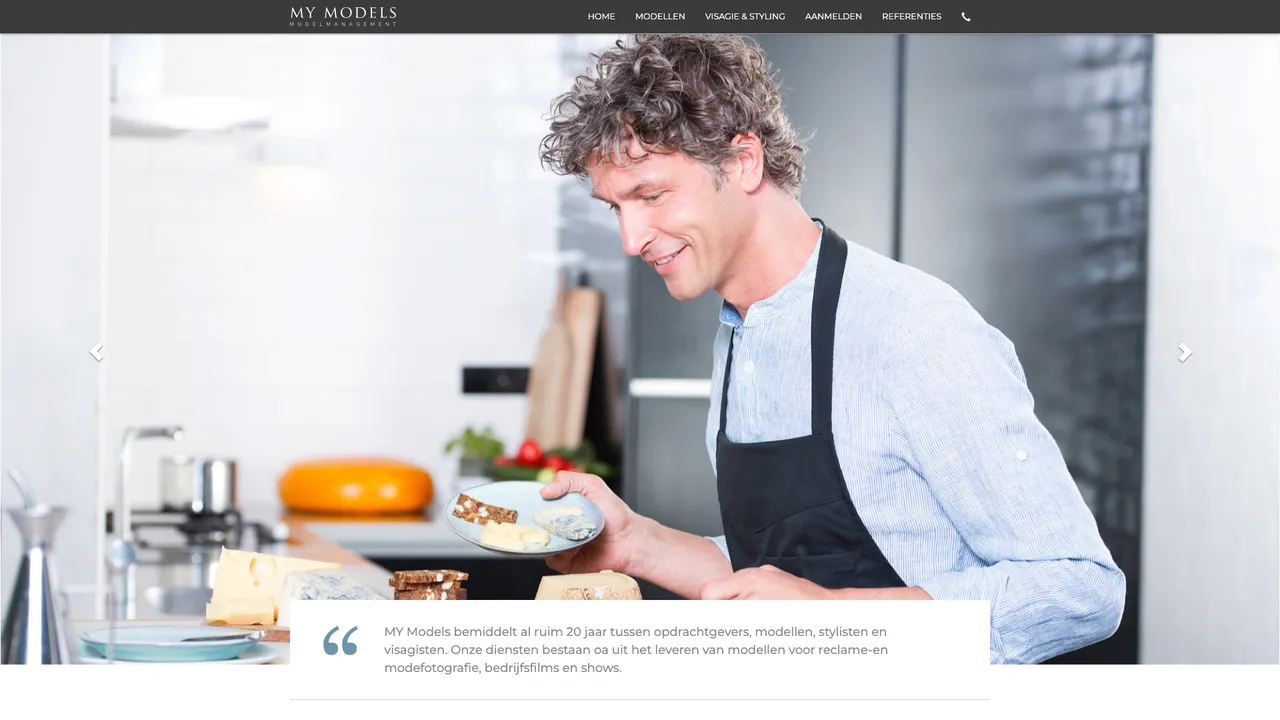
A few more agencies offer paid first photos or courses for which we found no price on the site: Galucci in Maastricht charges "material costs" for its portfolio shoot, MY Models in Enschede refers applicants to a paid test photographer, and DC Models in Etten-Leur runs a paid 13-lesson course once a year. Ask for the price in advance.
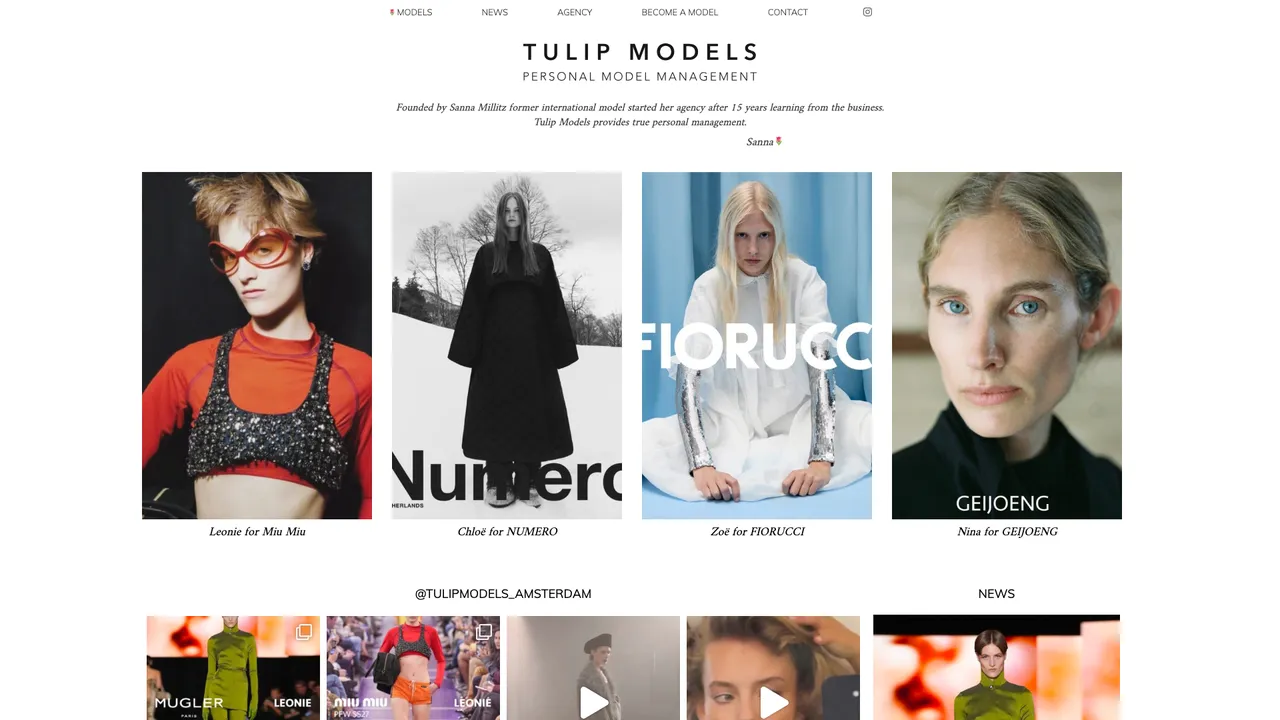
Other agencies state outright that they take nothing from applicants. Platform Agency writes that you should never have to pay to apply or sign to a modelling agency. Elite Amsterdam states that its scouts and agents never request payment and never ask for nude or lingerie photos. Tulip Models, A Models Amsterdam, Antimodels, Thea Meulenberg Casting, Shootz, The Specials, Rule Model Management and Jenphia Models also say clearly that they charge no fee.
The contract and getting paid
No statute describes the contract between a model and an agency, and we found no rule on a cooling-off period or a maximum contract term for models. In a 2019 survey of fashion businesses about three quarters of respondents said they conclude contracts or work agreements with models; of the temporary contracts, 45.9% ran a year or longer and 43.2% a month or less. A Dutch entertainment law firm advises reading first the commission percentage, the exclusivity, the duration and how the contract ends, and how income is split between a mother agency and other agencies.
Published agency terms show what to expect:
- You are paid once the client has paid. Mix Models, whose models work as freelancers, says so. Kidz Management pays fees out 2 to 3 months after the booking, and Inside Out Models says the wait can sometimes be up to three months. Late payment by clients was named by both agencies and models in the 2020 evaluation.
- Exclusivity. Kidz Management and The Faces do not allow a child to be registered with another Dutch agency. La La Agency signs no written contract but asks for at least six months of exclusivity and applies a three-month notice period. ZAZA Casting does not require exclusivity.
- Fines. Under the terms of The Faces a participant may not cancel within 48 hours before the work starts, and a no-show or late arrival can cost a fine of 100% of the agreed fee, except in cases of force majeure.
- Image and nudity. Euromodel's conditions forbid using a model's image for AI purposes without the written consent of the agency and the model and a separate fee. MaxMen sets a minimum age of 18 for bookings involving nudity.
One court ruling is useful to know. On 7 March 2012 NOS reported that Ananda Marchildon, winner of Holland's Next Top Model 2008, had won her case against the model agencies Elite and MTA. The court held that the agencies could not demand a 90 cm hip measurement because it was 92 cm when the contract was signed, and ordered them to pay the remaining €65,000 of the prize. The case concerns the earlier management of the Amsterdam office.
Employment status: employee or self-employed (zzp)
There is no separate statute on the status of models: a model is an employee, a fictitious employee or self-employed (zzp) under the general rules. For agencies the rule that matters most is the one in the payroll tax handbook about intermediaries. Where there is no real employment, a person who works for a third party through an organisation can count as a fictitious employee, and then the agency pays through payroll and withholds tax. The rule does not apply to someone who has a business of their own, or practises a profession independently, and carries out an assignment through an intermediary for their own account and risk. How the tax office applies it to model agencies is not confirmed.
In practice we saw both routes. Under the terms of Mix Models, models work as freelancers. The platform Modelwise says a model with a business registered at the Chamber of Commerce sends an invoice, while one without gets a receipt form and remains responsible for declaring the income. Read in your contract which route applies to you.
- False self-employment. The enforcement moratorium ended on 1 January 2025. In 2026 the tax office still imposes no default fines, but it can correct assessments and fine intent or gross negligence. The soft phase ends on 1 January 2027.
- Planned changes. On 6 March 2026 the cabinet kept a legal presumption of employment for self-employed people earning up to €38 an hour; a new act for the self-employed is to replace the part of the bill that was dropped. We did not check the start dates in the statute.
- Minimum wage. From 1 July 2026 it is €14.99 an hour from the age of 21 (€14.71 from 1 January until then). It applies to employees, including those paid through an agency's payroll, and is not a floor for a self-employed booking.
We did not check which country's social insurance covers a Lithuanian model on short jobs in the Netherlands, or whether you need an A1 certificate: ask Sodra before you travel.
Boards and requirements
Dutch agencies divide their models into boards. In our catalogue 71 agencies have a women's board, 58 a men's board, 34 a commercial board, 28 a new faces board, 25 a talent board, 22 a kids board, 14 a curve board, 10 a senior board and 6 a sport board. One agency has no boards assigned: IBE Models in Emmen works only through an Instagram account. The mix matches the market: next to fashion models, many agencies represent commercial models, actors, children and families, and ten have a board for mature models.
Fashion boards set height and age requirements. CODE Management looks for girls aged 14 to 25 who are 174 to 180 cm tall. Mix Models takes girls from the age of 14 at 172 to 182 cm, and boys at 184 to 191 cm. Skins Model Management asks whether the applicant is between 174 and 182 cm tall and wears size 34/36. Tulip Models looks for girls and women aged 13 to 24, between 172 and 182 cm. Touché Models takes applicants from 170 cm and from the age of 16, MaxMen men aged 15 to 35 at 184 to 191 cm, and Republic Men applicants of 15 or older at 186 to 190 cm. New Generation Model Management has wider limits: women from 170 to 182 cm, men from 180 to 192 cm, and clothing sizes from XS to XXXL.
Commercial agencies look at it differently. APL Models represents people aged 4 to 80 and has no height or size requirements. 2R Model Management writes that age and measurements do not play a major role, though the preferred height is from 174 cm for women and 182 cm for men. Amsterdam Model Agency looks only for experienced models aged 22 and over, and Euromodel and It's me Model Management in The Hague take adults only. Runway requirements are covered in the guide runway model, and the types of modelling work are compared in types of modeling.
You can filter the catalogue by board: women, men, commercial, new faces, talent, kids, curve, senior, sport.
How to choose and check an agency
We do not rank agencies and we do not vouch for them. The catalogue lists every business in the Netherlands that represents models and runs a model board. That includes agencies that charge a registration, website or photo fee, agencies that sell courses and photo shoots, agencies that also represent actors, extras or influencers, and agencies about whose company we found little data. We left out only hostess and promotion staffing firms without models, open databases and booking platforms where anyone can sign up, actor-only and extras-only agencies, schools that represent nobody, and agencies that have closed.
Each agency profile shows what we found, good and bad: the address, boards, founding year and history, the company's name, its KVK number, fees charged to applicants with their prices, courses and press reports. We found a KVK number for 75 of the 100 agencies. We show no association membership, because we found no working association of model agencies in the Netherlands.
A few facts are useful to know in advance:
- Several agencies belong to one company. Ulla Models, MaxMen and The Specials in Rotterdam are trade names of Max Models B.V., and Touché Models works from the same Amsterdam address. Ida Models and MULTA Casting in Haarlem belong to MULTA Media B.V., and Kidz Management and 92 Model Management are one company.
- Two agencies have no website. FIC Model Management in Utrecht and IBE Models in Emmen work only through Instagram, so we could check neither an address nor a KVK number.
- A few websites have not been updated for a long time. The footer of the Elvis Models site says 2019, and we found no dated sign of activity later than 2021. The Favourite Models site has no models gallery, and the site of BRAD Models in Bussum carries a 2021 copyright line. Ask whether the agency still takes on new models.
- One agency has changed what it does. The founder of Margreet Models said in a 2024 interview that she no longer works as a model manager, but scouts new faces for Amsterdam agencies and sells online training.
- Two KVK numbers are printed incomplete in the agencies' own documents. The number in the terms of Amsterdam Model Agency is shorter than eight digits and Jamm Models prints seven, so we could not check them.
You can check a company yourself. Every Dutch business has a KVK number of eight digits and must register within a week of starting. Anyone can search the trade register (Handelsregister) free of charge by name, address or number at kvk.nl. The Civil Code requires a business website to show its identity and address, contact details with an e-mail address, the register and registration number and, if the business charges VAT, its VAT number. A site with none of these is a warning sign. A VAT number can be checked in the EU's VIES system with the prefix NL: the number consists of the letters NL, nine digits, the letter B and two more digits. A KVK number proves that a business exists, nothing more. Before you sign, check:
- that the agency has a board that suits you and a live model board;
- whether the website gives a name, an address and a KVK number, and whether you can find the company in the register;
- that the contract is in writing and states in figures the commission, duration, scope of exclusivity and how to end it;
- whether the agency charges for registration, a place on its website, photos or courses, how much, and whether the charge is compulsory;
- whether the model pays the commission or it is added for the client, and whether there are fines for cancelling;
- how long after a job you will be paid, and how you will see deductions on your statement;
- that you can take the contract home and show it to a lawyer.
A longer checklist is in the guide how to choose a modeling agency, and risky contract clauses are covered in modeling contract.
Under-age models
In Dutch law a child is anyone under 16, and child labour is banned. The exception is cultural (artistic) work, and fashion shows and audio, visual or audiovisual recordings, online as well as offline, are named among the examples. The rules depend on age.
| Age | What is allowed |
|---|---|
| Under 7 | Only with an exemption from the Labour Authority: up to 2 hours on a school day and 4 hours on other days, breaks, waiting and rehearsals included; no more than 6 days a year and 3 days a week; 14 hours' rest, always between 19:00 and 08:00 |
| 7 to 12 | Only with an exemption: up to 4 hours on a school day and 7 hours on other days, 12 hours in a school week; no more than 24 days a year and 3 days a week; rest always between 23:00 and 08:00; a 30-minute break after 4.5 hours |
| 13 and 14 | No exemption needed, the child-labour regulation applies: in a school week up to 7 hours a day, 12 hours and 3 days a week, not between 23:00 and 08:00, up to 24 days a year; in a holiday week up to 35 hours |
| 15 | In a school week up to 8 hours a day, 12 hours and 3 days a week, up to 24 days a year; in a holiday week up to 40 hours |
| 16 and 17 | Up to 9 hours per shift, 45 hours a week and 160 hours per 4 weeks (school time counts); 12 hours' rest, always between 23:00 and 06:00; no night work or overtime |
- For a child under 13 the exemption is requested by whoever has authority over the child during the work: the employer, a parent or a producer. The Labour Authority stresses that this is not the party that runs the casting, so not the casting or model agency as such.
- The type of work is approved first, and the children and working days are then entered in the Authority's portal. An authorisation code can take 5 working days, and private persons apply by e-mail.
- Commercial work always needs an exemption, including a performance on the internet. None is needed only when the child works without a contract and the performance is incidental and non-commercial, for example a music-school show.
- Expert supervision is required before, during and after the work, and it must be possible to stop the work if a parent or the chaperone thinks the child's safety or development is at risk.
- A child under 13 who works on a Sunday must have the Saturday before free. Both the employer and the parents are responsible for keeping the rules.
We did not check whether these working-time rules bind a client who books a 16-year-old as a self-employed person and does not employ them. No Dutch law sets a minimum age or body mass index for catwalk models: such rules existed only as the fashion industry's voluntary promises. The 2018 national model survey covered 299 models: their average age was 18.8, and 31% were minors.
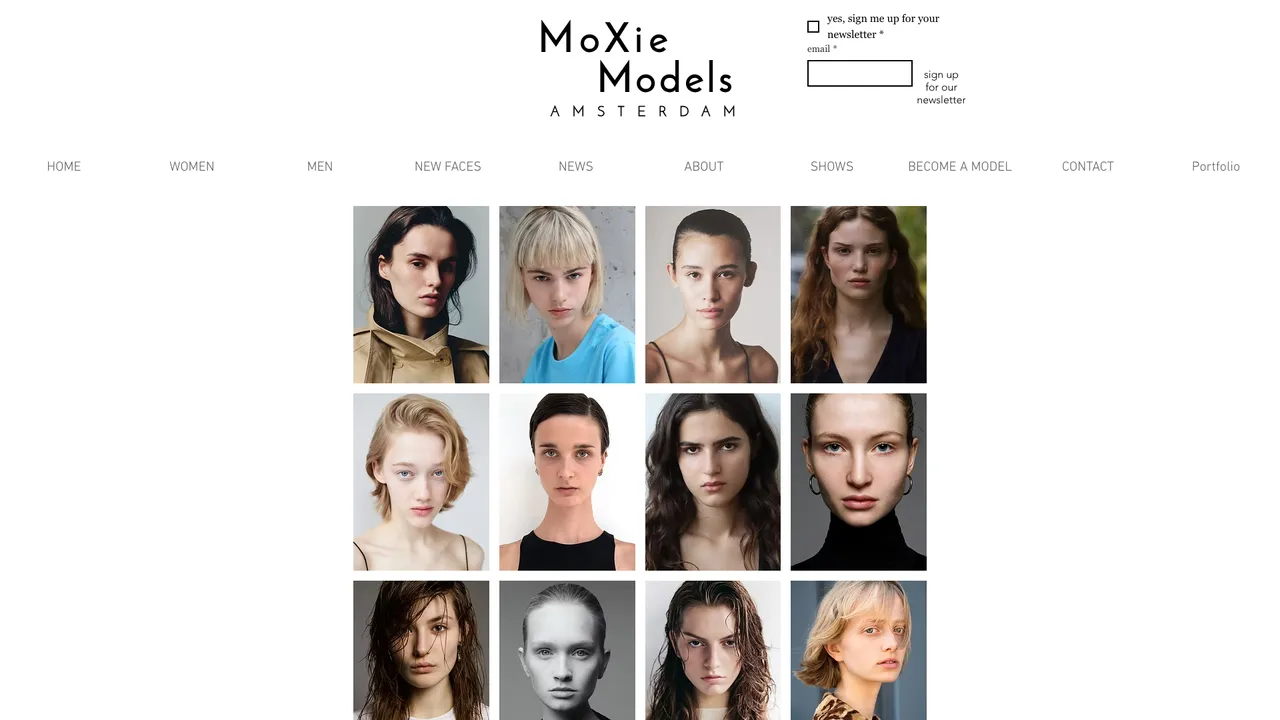
The agencies' own rules differ. Platform Agency prefers models aged 18 or over but accepts younger ones, and a parent or guardian must come to the intake. Micha Models lets people under 16 submit their details only with the permission of a parent or guardian. The founders of Moxie Models write that many of their models are still at school, so school always comes first. 92 Model Management stresses that it never requests payments, revealing photos or private messages, and that a parent must apply for anyone under 18. The profiles of some large agencies carry press reports about how test shoots with under-age models were handled: read them there.
For parents before a trip to the Netherlands
- If the child is under 13, ask who is applying for the Labour Authority's exemption for the specific job.
- Go to the agency and to the shoot together with the child, and agree in advance who will supervise.
- Do not let a child take part in a "casting" by webcam: the police write that real agencies never work that way.
- Do not agree to unlimited usage rights for the child's images, or to exclusivity without a written contract.
The Model's Health Pledge and its end
The country's one code of conduct was The Model's Health Pledge (TMHP). The Ministry of Health started talks with the fashion chain in 2015; the pledge was signed in 2016 under the programme Alles is Gezondheid and launched at Amsterdam Fashion Week with thirty organisations. A foundation and an online platform followed in 2017 and a confidential reporting point in 2018. The initiator was Marvy Rieder. Models, agencies, clients and media signed; there were 61 signatories in 2019. We found no list of the agencies that signed.
The pledge said that health is essential to the profession, that the job should be shown realistically, that an independent body should monitor the pledge and that clients give no assignments that harm physical or mental health. A later guideline explicitly banned nude photography with models under 18, and the evaluators summed up the industry's own arrangements as no nudity under 18 and no modelling jobs under 16. These were voluntary promises and not law: TMHP worked as an advisory platform and not as a legal enforcer, and one organisation was removed from the network for refusing an improvement talk.
In its first three years the reporting point received more than 120 reports: about half concerned unclear contract terms or unpaid invoices, and some 30% transgressive behaviour or intimidation. Its example contract was downloaded more than 800 times. A report dated 1 December 2025 says that TMHP stops in 2025 and that the reporting point continues together with an independent foundation; we found no working address for it. A few agency websites, for example those of Ulla Models and It's me Model Management, still mention the pledge, but today it is not a working quality mark.
Taxes
What tax you pay depends on your status. If an agency or client pays you through payroll, tax is withheld at once. A self-employed model sends an invoice and declares income tax personally; we did not read the income-tax rates and deductions for the self-employed, so we do not print them here.
| Tax | 2026 |
|---|---|
| Wage tax with national insurance contributions (under state pension age) | 35.75% up to €38,883, 37.56% from €38,883 to €78,426, 49.50% above that |
| The artists' scheme (artiestenregeling) | 35.75% for an artist living in the Netherlands, 20% for an artist living abroad; it does not apply to people living in a country with which the Netherlands has a tax treaty |
| VAT | general rate 21%; the small-business scheme (KOR) exempts a business established in the Netherlands with a yearly turnover of no more than €20,000 |
| Minimum hourly wage (employees only) | €14.99 from 1 July at age 21 and over; the amount for 1 January 2027 had not been published on the day we checked |
Be careful with the artists' scheme. It is meant for short engagements of no more than three months, where the client withholds tax from the fee, and the tax office defines an artist as someone who performs before an audience and delivers an artistic performance: musicians, comedians, acrobats, actors. Models are mentioned neither in the 2022 guide nor in the 2026 payroll tax handbook, and we found no tax office position on them. So we write neither that the scheme applies to models nor that it never does.
For a Lithuanian model this is what is known:
- Lithuania is a treaty country: the tax treaty between the Netherlands and Lithuania entered into force on 31 August 2000 and has applied since 1 January 2001.
- The artists' scheme does not apply to an artist who lives in a treaty country: the client files no payroll tax return, and only administrative duties remain. According to the tax office's overview, where an artist's or athlete's contract is shorter than three months the Netherlands gives up its right to tax.
- Salary is taxed in the Netherlands as the country of work, unless the 183-day rule applies, counted over twelve months.
- Our sources do not settle how a non-resident self-employed model's fee is taxed under the treaty, or whether a model counts as an artist.
- The small-business VAT scheme is for entrepreneurs established in the Netherlands; since 1 January 2025 an EU version has existed for entrepreneurs from other countries. We did not check its conditions, or how VAT works when a model living in Lithuania invoices a Dutch company.
So before your first job, ask the agency in writing how it will pay you and what it will deduct, and talk to a tax adviser in Lithuania. Model taxes in general are covered in the guide model taxes.
Papers and registration (BSN)
Citizens of the EU, the EEA and Switzerland need no residence permit in the Netherlands: a valid passport or identity card serves as proof of lawful residence, you do not register with the immigration service (IND), and your employer needs no work permit for you. For the first three months there is no further requirement. If you only fly in for jobs and keep living in Lithuania, ask the agency whether it needs your BSN in order to pay you.
- BSN. The citizen service number (burgerservicenummer) is the number used for tax and payroll. An agency that pays through payroll must identify you and record it.
- Staying less than 4 months, or living abroad. Register as a non-resident (RNI): in person and by appointment at one of the 19 municipalities with an RNI desk, with a valid passport or identity card. Registration is free of charge, you leave with a letter containing the BSN, and you can then apply for a DigiD login. EU citizens may choose any RNI desk. A child under 16 must be present, with a passport or identity card and a birth certificate.
- Staying longer than 4 months. You must register in person with the municipality (BRP) within 5 days of arrival; you then get a BSN if you have none. Waiting times at municipalities can be long.
- Invoice or receipt. Ask the agency whether it will pay against your invoice or through payroll, and whether it will pay into a Lithuanian bank account.
If you are not an EU citizen
A non-EU national needs a permit. For work of less than three months the employer obtains a work permit (TWV) from the employment agency UWV, and for longer a combined residence and work permit (GVVA) is requested through the IND. There is an exemption for artists: no work permit is needed by a person living abroad who works in the Netherlands for no more than 6 consecutive weeks within 13 weeks exclusively as an artist, musician or visual artist. Models are not named in that exemption, and the word "fotomodel" appears once in the implementing regulation, in a clause about service suppliers from Cariforum countries. Whether the authorities treat a fashion model as an artist is not confirmed. The IND also has a residence permit for self-employed persons, but we did not verify its conditions, nor the rules on short-stay visas. A non-EU national can register at an RNI desk only in Breda and Venlo. Before you travel, ask the Dutch agency or client to confirm in writing which permit you need and who applies for it.
Scams and warning signs
Dutch media and the police describe three recurring patterns.
- Pay to be listed, then silence. On 8 June 2020 the AVROTROS programme Radar reported on Prestige Modelmanagement: people who signed up each paid a €120 registration fee and heard nothing more, and one complainant received a lawyer's threatening e-mail about his Facebook page. That business is not in the catalogue.
- A fake scout online and a webcam "test". The police describe fake scouts and fake photographers as online groomers and "loverboys". They advise checking that the agency has a real website and having a parent call a landline, not a mobile number.
- Scouts who charge. In the 2020 evaluation one respondent said that you need no training to be a scout, and yet scouts ask a lot of money for it, often at the model's expense.
A fee on its own does not mean a scam: some agencies in the catalogue openly charge a registration or website fee or sell courses, and we say so on their profiles. What matters is whether the price is clear in advance, whether you can take your time to decide and whether anyone is pressing you. The agencies themselves warn about impostors using their names: The Specials writes that many people currently pose as model scouts and advises anyone in doubt to contact the office directly, and Jenphia Models warns about people who pose as its representatives. Warning signs:
- someone writes in an agency's name from a personal account and gives only a mobile number;
- a "casting" by webcam is proposed, or you are asked for nude or underwear photos;
- a fee whose amount nobody states in advance, or one you must pay at once;
- the website gives no name, address and KVK number, and you cannot find the company in the trade register;
- a contract you may not take home, or one without the commission;
- a minor is invited to come without parents.
If someone contacts you in the name of a Dutch agency, check the contact on the agency's official website or ask your mother agency. No agency should ask for money for a comp card in a social media message. More signs are listed in the glossary entry modeling scams.
Where to complain
- The police, telephone 0900-8844, or the anonymous line Meld Misdaad Anoniem: when someone holds photos or webcam images of you against your will, or threatens you.
- Fraudehelpdesk, telephone 088 786 7372: the first desk for cases of fraud.
- The Netherlands Labour Authority: takes reports of underpayment, excessive hours, bad working conditions and illegal work, and grants the child-labour exemption.
- Het Juridisch Loket: free first legal advice, including on work and income, for example about a contract or an unpaid fee.
- ACM ConsuWijzer: the consumer desk where you can report a problem with a business. Whether a model who paid an agency counts as a consumer there is not confirmed.
- For minors approached online: the helpline Helpwanted, now presented under the organisation Offlimits, and De Kindertelefoon.
How to apply
The safest route to the Netherlands is through a mother agency: it sends Dutch agencies digitals, measurements and a video, and once there is an offer it negotiates the terms. If you apply directly:
- Choose agencies by city and board: the catalogue above can be filtered.
- Read on the agency's profile what we found about fees for applicants, commission, courses and the company.
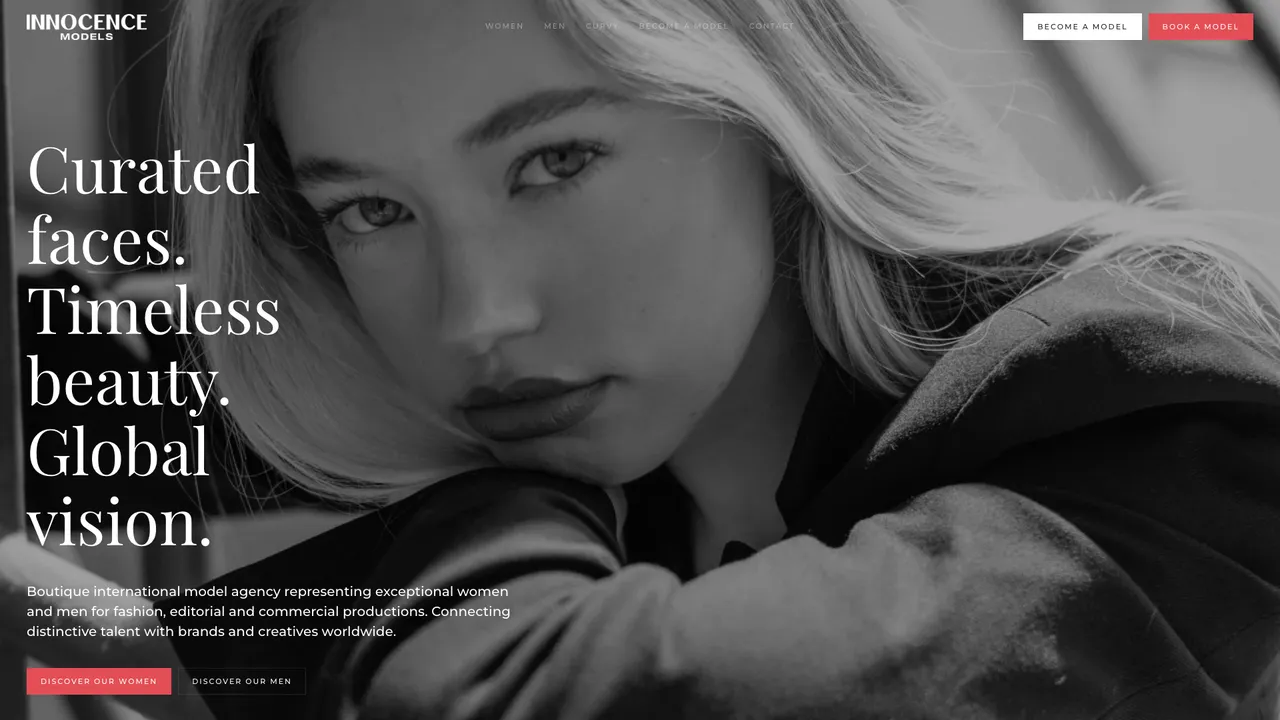
- Check whether the agency takes applicants from abroad. Innocence Models accepts applications only from people living in the EU, PARKER MGMT from the Netherlands and neighbouring countries, and Moxie Models only from people based in the Netherlands.
- Take photos in daylight without make-up. A Models Amsterdam asks for two phone pictures without make-up, SUPER Model Management for three, and The Troopers only for a selfie of your face taken outside in the shade.
- Measure your height, bust, waist and hips accurately and compare them with the agency's requirements.
- If you are under 18, include your parents' contact details and be ready to come with them.
- Wait as long as the agency says: PARKER MGMT answers in less than 3 working days, Innocence Models within 7 days and 2R Model Management within two weeks. Skins Model Management writes that no reply within 4 business days means no. Platform Agency and Linda Models hold no open calls.
- When invited, ask in writing for the contract, the commission, the payment term, every fee you would pay and who will cover travel and housing.
- Prepare for castings with the guide model castings: how to prepare.
Jurgita.com is owned by the model agency Supermodels, which works as a mother agency and places models with agencies abroad. Applying and the open call are free; how they work is described in Supermodels open call.